The Lord of the Rings: Duel for Middle-Earth
Games in This Video
1 game is featured in this video — it unlocks as you watch.
Transcript
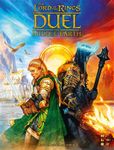
It's time to duel Lord of the Rings style. Today we're talking about The Lord of the Rings Duel for Middle Earth. A one versus one light strategy game where two players will go head-to-head to decide the fate of Middle Earth. This one is by Repos Production and it's a Lord of the Rings version of the gameplay system in Seven Wonders Duel with some thematic and gameplay tweaks. To start off, this is not a review copy. I played it with Larry, then I went out and bought it the next day and I've been taking it to coffee meetings ever since. In Duel for Middle Earth, players will choose to lead the Fellowship of the Ring to save Middle Earth or they're going to choose Sauron and they're going to try to subdue Middle Earth. Players have three paths to victory. The first is to move the ring track to its goal.
For the fellowship, Frodo and Sam have to get to Mount Doom. But for Sauron, the Nausegoul has to get to Froto and Sam. The second path to victory is to gain support of all races of Middle Earth by claiming these green cards that represent elves, dwarves, humans, etc. The third way to win is to conquer Middle Earth by having presence in every region of the board. The game takes place over three chapters. Each chapter has its own unique deck of cards and a specific setup on the board. Three cards will always be in the discard pile after a chapter setup. So, the random assortment of what's available on the board and what may have instantly ended up in the discard pile provides a different experience with each play. Each turn, players may choose an available card or claim a powerful landmark. There are several types of cards. The gray cards are resources that will be needed to play more powerful cards and landmarks as the game progresses. The gold cards are money that can be used to pay for resources that you may not have. The green cards are the race cards, which are a win condition, and they can get you powerful abilities that can augment your plays for the rest of the game. For example, play a soldier whenever you play a ring card, take an extra turn when you pick up money cards, things like these. The blue cards move the ring track and they get you additional perks as you get closer to your goal. Finally, the red and purple cards let you place, move, and remove troops on the board. Side note, if you're color blind, each type of card also has a symbol. So, the triangle cards are race cards, diamond for resources, etc. and so forth. It's a
thoughtful touch. Players can choose to play the card for its effect, or they can discard it for coins based on what chapter they're in. In other words, chapter one gives a coin, chapter 2 gives two coins, chapter 3 gives three coins. This may be necessary if it requires resources that players don't have to play, but cards can also be discarded strategically to gain money or prevent the other player from gaining something that they need. Landmarks require a lot of resources, but allow you to place towers on the board and will give you powerful abilities, such as destroying an opponent's grade resource card, looking through the discard deck to play a card, or choosing the race reward. Sauron kicks the game off and players will take cards one after another. As cards are removed from the board, new cards are flipped and become available. After each chapter, the new cards are placed on top of the board, and whoever was supposed to go next takes their turn. And players will do this until a player achieves victory or all cards are claimed by players. If neither player achieves victory, the player with the most presence on the board wins. If both players have the same presence, both players share the victory. That's the game. But what are my thoughts on it? Honestly, I really enjoy this game. It's a quick learn and it's an easy game to teach and it provides an interesting amount of choice and strategy to achieve victory. The random drops for each chapter force players to adapt to their strategy based on what's available or what your opponent may want. For example, I may
want to move the ring track, but if my opponent is gathering too many races, I may discard a card I can't afford just so he can't have it. Players who plan their draw orders several steps ahead will often be rewarded because they can force their opponents to draw less beneficial cards or they can manipulate the draws to get a card that may not be available yet. If you like having a specific strategy and only working toward it, this game may frustrate you. You may be able to win with your starting strategy, but if both players are paying attention to their opponents, turns become a dance to move yourself closer to victory while simultaneously blocking what their opponent is trying to do. Even with the RNG of what cards are available and what I can draw, I felt my victories were earned and I could learn something from my losses. As I said before, I bought this copy and I took it to coffee shops when I was meeting up with people for meetings or whatever. You won't be able to play this on an end table, like a card game, but the board presence is flexible enough to where you can make it work if you're at Starbucks or whatever. It's been a great game to teach and to play with new people on the fly. And everyone I've played it with, everyone I've played it with has enjoyed it, too. Also, I love the art. When I first played it, my wife walked over and she just wanted to gawk at how pretty the art is. So, props to the art design on this one. I really like that they went with their own style as opposed to just using faces from the movies and stuff like that. Although, I do love the movies. I'm a big fan of what they did with the art here. As far as criticisms, I'd say not all victory paths are created equal. I've played
this plenty of times with plenty of different people, and since snagging it up, I've seen a lot of victories through conquering the map or collecting the races. It's really hard to get a victory by moving the ring. I've been able to do all three. I've been able to do all three multiple times. It just feels like the other ones have been more viable more often than not. Either my opponent needs to be too distracted to see what I'm doing or I need to luck out and get some combo pieces in play in order for that track to be viable. This is a shame because the ring track is a cool concept. It just feels less like a viable strategy and more like a thing I need to block so I can focus on one of the other two paths. If you've played this one, feel free to comment below. Let us know if you've had a similar experience or if I'm missing something or maybe it was just my games. My other criticism is the storage box. If you don't care about this, feel free to disregard my beef here. But if you're a stickler for storage, you'll see that the box doesn't sit all the way down.
You'll often have tokens and cards jumping around. It's not terrible, but I have considered throwing the cardboard bar to insert out and just using baggies. That isn't great either, so jury's still out. I've just been using it as it is. Overall, The Lord of the Rings Duel for Middle Earth is a blast. It's a quick and easy learn that has a decent amount of strategy and replay-ability. If this kind of game appeals to you, if you love Lord of the Rings, if you want to play with a spouse or a friend, I highly recommend this game. It was a no-brainer for me. The Seven Wonders Duel game has a few expansions, so I'm really hoping that Repos production gives this one the same treatment. You better believe I'm in for more Middle Earth, especially when it comes time to duel.