2 Quirky Card Shedding Games
Games in This Video
2 games are featured in this video — they unlock as you watch.

Transcript
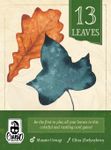
Hey, everybody. Today I am going to be sharing my thoughts about two card shedding games. Uh the first of which is 13 Leaves, which is already out and available to purchase. Uh this one is a three to six players, 20 minutes to play. And the second one is an upcoming game found project called Junk in Gems. Um I've been fortunate enough to get an early prototype copy here. Um and you know, I've covered a lot of these card shedding games on the channel over the years. I generally like the mechanism, but I thought um these two were worth a bit of coverage because they have something a little bit different about them. Um you know, an element of quirkiness. So, uh let's start with 13 Leaves, which is um definitely the simpler of the two. Um not like the other one's terribly complex, but this one is a bit more familiar in the way that you are getting rid uh of your cards.
You are simply playing quantities um of the same numbered cards. Um but the twist on this one, instead of playing in like a communal pile, you know, where you're constantly just adding to it, trying to trump the previous played set, uh this one you are actually playing out in a in a display uh of cards, putting them in the relevant columns based on the number. So, you know, for example, if I played out two sevens, I I played the two sevens right in the center and they would stay there and not be covered up by different numbers. Now, in order for the other players to follow and to stay in the round, they need to play um a quantity card of what's already available, but they need to play either um on either end of the extremity. So, for example, if um if I had a seven, they could play either I say I played two sevens, they could play two sevens again and and you know, double the value in the middle, or they could play two say fives, or they could play two 10s, as long as it's higher than the highest or lower than the lowest. But the trick here is once that display of cards starts to build up, you can no longer fill in those gaps. So, it's if the um if the player went from sevens to tens, then that means that eights to nines are no longer eligible to be played. And of course, if you are in the driver's seat here, you can use that to your advantage based on the cards that you have and lock other players out being able to play uh the sets that they want. So, I like that extra little level or layer of um kind of tactical maneuverability in this game
and it works really well and it kind of keeps its simple core function of being a card shedding game, but it has that little bit of um another presentation or the restriction element to the game and it takes it to a different dimension. So, I really like that about the game. It's definitely the standout feature of it. And and it's just quite, you know, funnily frustrating when you get locked out of playing the cards um that you still have in your hand. And of course, that is going to um be great for your opponents. Um the way that this game works is, you know, the winner is going to be uh immediately declared as soon as someone gets rid of all of their cards. Um as long as you can or if you're in a position where you can no longer play a card on your turn, you can pick up a card in the central display and then build up your hand for the next round. Um and once everybody's all but one players have um, you know, have passed and can no longer play, then they will lead the next um the next hand or the next trick if you want to put it uh that way. So, um very simple stuff. Again, very familiar. You know, 80% of this is familiar to a lot of the other card shedding games.
But again, I love that element of the being able to only play higher than the highest or lower than the lowest. It's a an element or mechanism of a game that I of games in general that I tend to really enjoy with games like, you know, a Hanabi where you can no longer fill in those gaps. I just think it really works well here mixed with a card shedding game. So, definitely a um a certainly a pleasant surprise for me with this one. Now, this one's very affordable. Um I just picked this one up on a whim really and I I tend to like card shedding games. Um it's got Simone Luciani as a co-creator of this one as well. So, um I thought, you know, all these things are working in its favor and you know, who'd have thought that the game is actually very good and it's going to be sticking around in my collection. And it's a true filler because this one is not like you um it's not like you need to play several rounds or work towards a certain amount of points. You can do that if you want to, but it's a true filler in the sense you can play just one round of this in 10 minutes or so and have a great time with it. So yeah, a big fan of 13 leaves. And again, if you want to build a solid card collection card game collection, then this one is certainly worth your attention. Now, let's move on to the I think pretty the funkier of the two. This is Junk 'n' Gems. As I said, this is going to be an upcoming Game Found um campaign. So I will leave the link uh below for that upcoming campaign. As I said, I've been very fortunate to to get an early copy of it. Now, this one is certainly a step above in terms of its complexity to a lot of other card shedding style games.
And that may work in this favor in this particular and niche example. Because I think over the last few years, there's been quite a saturation of card shedding games. And they all are quite similar. Um and they have to kind of reach for something different. This one's not hasn't been hasn't shied away from reaching um and maybe being more catered towards, you know, more gamers rather than a more casual um audience. But um much like a card shedding game or is a card shedding game, you are trying to get rid rid of all your the cards in your hand. Um but in this one, you are swapping cards throughout the game. And also, you need to reach a points threshold before you are eligible to go out at all. And the way the game functions is super simple. You are just swapping cards from your hand with ones in the display. Uh the way the swapping works is is fairly quirky where you can um change the value of that card and swap it for up to two other cards up to double the value of the cards you've played. Now, that might sound a bit weird, but when you play it, it's it's quite simple. So for example, if I discarded a two, I could pick up to up to two cards up to a value four in total.
And what I'm trying to do is I'm trying to build sets of the same color. Once I've reached a certain value of um well, card value in those sets, I can play them in front of me as an action and that will start to contribute towards my point threshold. Uh, each of these sets will score in a slightly different way. So, some of them might say, um, you know, they're just a a face value of points. Some of them are worth more if you get pairs of the same type. Some of them are worth points based on other cards that you've collected. And uh, each round the game progresses, you're going to try and reach a higher and higher points threshold. And but once you play a set, um, not only will we will keep one for the point scoring, you'll also um, get a um, either an instant ability or an ongoing ability, which can be game-breaking things such as maybe changing um, your target points value or uh, maybe you can buy three cards with a single action and when you're swapping, which can be very helpful. So, yeah, I like the way that this game has a a small degree or a hint of engine building to it. And it again, I always mention I love it when these things are drip-fed in the game where everyone starts the same, but the more sets you play in this one, uh, the more you start to build up that engine. You can really do some cool things um, with your previous efforts.
So, that's pretty much how the game works. Um, you're either going to play until someone gets to a certain point threshold overall um, or play four rounds. Um, it's going to take a bit longer than a game like um, Thirteen Leaves, but if you want to, you can house rule it and play, you know, let's just play one round or um, play who's got the most points at the end of two rounds. Um, you know, whatever you want to do. This game gives you that freedom uh, to do that. Uh, all the production here is very nicely done. You know, the cards are lovely. This is a a I think it's a fairly polished prototype. Um, but it works extremely well. You know, the box says 45 minutes to play. I think you can probably shave a bit off that. You know, one to four players. You know, there is a solo mode here. And again, if you want to take that next step or want a little bit more meat on the bones of a card shedder, uh, this game offers that um, which, you know, most of them don't. They are mostly kind of throwaway breezy start tells of start breezy types of games. Uh, whilst this is still very easy to digest, there are still more moving parts with that swapping mechanism, with that points threshold, and with that engine building of the cards that you have played. So, definitely a pleasant surprise for me.
You know, I wasn't sure what to expect. I was going in completely blind. Um, but I could see this one really hitting with the right audience. So, uh, if that does interest you, you do you and you do want that next step, um, card shedding style game, bit of set collection, bit of engine building, then check out Junk and Gems. So, that's it, really. Those are those, um, well, my brief thoughts on these two different, but familiar, uh, types of games. I just thought it was good to, uh, to talk about something a bit different, um, and shed some light on these games that don't get a lot of coverage. So, uh, hopefully you have enjoyed the video. If you have, please be sure to hit like and subscribe to the channel, and check out my other content, too. But, for everybody else, I will I'll see you next time on Chairman of the Board. Bye-bye.