Ezra and Nehemiah | Multi-Purpose Cards Driving Decision Making (Board Game Overview & Review #97)
Games in This Video
1 game is featured in this video — it unlocks as you watch.
Transcript
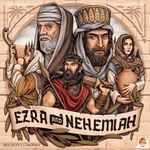
hello everybody my name is Ilia and my name is Tyler together we make up c a couple that loves to play board games and we love those crunchy ones that hurt your brain we do and we've got another one today that we're going to talk to you about from garel games called Ezra and Nehemiah this one is published by garel games like I said it's designed by Shem Phillips and Sam McDonald with the art also done by Sam Phillips now this is a prototype copy although it's pretty the final version it may look slightly different this game is also coming to Kickstarter so if you want to learn more feel free to hit that link down below but today we're lucky enough to take a look at the Prototype and share some of our thoughts in this review video now before we jump into the overview the point of Ezra Nehemiah is to score the most points and how you'll do this is by rebuilding the city of Jerusalem now you'll get majority of your points through rebuilding the walls and Gates rebuilding the temple and teaching the Tora to returning Exiles now the other ways you'll get points is also by exploring a little bit outside the city utilizing your people in various ways and making sure that alter keeps the fire burning with that out of the way let's take a quick look at how the game works let's do it as always you'll begin by setting up you'll first prepare the main board according to your player account you'll distribute the rubble around the board set up the scroll tiles place an alter card in the designated space and three hero cards along with the gate cards off to the the side of the board
with a supply of resources coins and food each player will receive a player board with a random development tile of each type on top of that they'll receive 16 workers of which six will start in the main Supply they also receive a tent an alter marker a victory Point marker 10 character cards and 12 wall cards and finally one of each blessing markers one worker from the main Supply will be a starting levite for each player for resources each player will start off with five silver three food tokens and the resources specified on the bottom left of the player's guard tile you'll choose the first player and proceed to place workers as Gatekeepers in Reverse turn order once gates are chosen you're now ready to play Ezra and Yemaya are played over three rounds or weeks each round is structured over 7 Days the first six days are for work and the seventh day is for rest where essentially the maintenance occurs on your turn you'll play one of the four cards in your hand you can play in any of the three spaces and each space may only have two cards Max so as the round progresses you'll cover cards you've played before after playing a character you now play one of the three main actions you'll use banners visible on your player board to complete that action red banners help you work on the temple and keep the altar burning gray Banners are used for clearing rubble and constructing walls and Gates and blue Banners are for teaching the Torah and traveling to those camped and Tents around the city let's look at the temple and alter main action in the altar space
you'll first be able to place Levites by paying food to increase the amount of actions you can take in the Altar and Temple or to help increase your red banners building your temple will grant you victory points along with various resources additional workers or movement in the map of the city each time a sector is filled bonuses will be granted as well you're also able to place resources on the altar to keep it burning wood requires three red banners while Cinder requires one both these Grant movement on the alter track alter track grants you a rewards for each space you move on to and at the end of the round will grant you additional bonuses or detriments depending on your placement now let's look at the rubble walls and Gates you'll first choose only one space to focus on for that turn to clear Rubble you'll simply need the corresponding gray banners once cleared you'll gain the corresponding blessing bonus and the rubble cleared spaces are then eligible to be built on you can build walls or Gates by paying the required resources these will grant you an immediate reward and points for the end of the game anytime you connect a wall to a gate or a gate to a wall a connection bonus on top of that will be gained this applies to both the owner of the wall and the gate now next is the Torah and tenting around the city action you'll teach the Torah by placing your work on the scroll tile you'll pay the cost on the left and silver to any scribes you're not your own to get to the space your worker will remain in the space from then on at the end of the game you'll score points for each scribe based on the role they're in and sometimes the scribes they occupy you can also tent around the city you need a
certain amount of blue banners and sometimes a resource to move one to four spaces for each move you'll gain the corresponding bonus now those are the three main actions in addition to the main action you can also choose to take one single auxiliary action this may be performed at any point during your turn you can use the tradeability of the character card you played this turn or turn over a development tole by paying the indicated cost this in turn strengthens your player board and provides victory points for the end of the game now in addition to the main action and the potential auxiliary action you can also choose one trade and or One Elder to place Traders provide immediate resources silver or food while Elders provide players with additional banners and sometimes resources have upgraded now once you've done that you'll redraw your hand back up to four cards you'll keep playing until everyone has had taken six turns and now it's time for Sabbath you'll first assign farmers and laborers if you have any work workers left over you'll then resolve the profits judgment following that you'll have to feed every one of your workers with the exception of Levites for any worker you're not able to feed you'll lose two victory points you'll then choose one of the six cards you've played and tuck it on your player board you then score this card in any cards already there and prepare for the next round in the second round you'll tuck two cards and the last round you'll tuck one at the end of the third round once you finish this phase you'll begin final scoring you'll first convert all your resources to Silver score one point
for every five silver two points for every development tile you flipped three points if you're the alter leader victory points on walls and Gates victory points from scribes and finally victory points for the Scrolls in the top row based on their unique scoring condition you'll compare the scores and a player with the most points wins now will you be able to collect all those points and win I know I'll try I sure might try Tyler beat me in a tiebreaker yeah that felt really good but you won the first time we played I didn't win the first time we played that was ni but what did you think of Ezra and Nema I loved it I think I've say this with every Garfield game that we cover and that we do I think they keep getting better yeah and the complexity just flows so smoothly in this game initially you open it and you are overwhelmed not only is a box like fill to the very top as they always are but the rule book is a hefty amount of P PES as you read there's a lot of information but as you learn the game everything just connects so smoothly and I found this one unlike any other it was fantastic to learn it was great to play and I want to play it again and again I mean it definitely has elements from other games that we're familiar with from garel that they pull in and like wrap into Ezra and Nehemiah but it has been a lot of fun to play a lot of fun to explore the different strategies and there's a lot of pieces well particularly from paladins that I uh really like connected the dots with and thought was exciting to see well that's exciting now let's jump into it what are
some of the reasons you think people will enjoy this game M I'm going to start with talking about your own player deck so basically like as you have already learned is you'll draw cards and you'll have them in your hand and then you'll eventually you'll play them but then you also have to put them into your scoring zone so there's there's a lot going on with just your player deck and it's like a multi-use channel so you'll be able to play your cards to do specific actions and plan ahead in that in that particular way but then you also are able to use their abilities that they have and then later on you actually have to strategically think about like which ones are you going to get rid of to help you score points right now because maybe you're really ahead in that um particular scoring opportunity or even just so you can have that extra Banner to use later on in your next rounds I think that's really fun and it's so funny too because typically the scoring opportunities that you would want to use the ones you've been advancing the most by taking them you're taking away banners for the next turn so even though you're adding one you're taking away that potential three Banner so that balance of the decision- making is so intricate and so interesting and so many times I've had games where I was one Banner away from doing an action and there's almost nothing you can do to make up for that Banner unless you use up that worker yeah if you use up that worker it's it's can do it so I think balancing all that is so interesting and it's something I personally really love in games of like having the ability to
balance like which card am I going to play it makes sense to play this cuz of the banners but I really want this tradeability so weighing that in every turn is really fun yeah and then it comes down to even placing over top of one of the cards that you already have on your board you're only allowed to have two in each pile but even then like when you've got three down and you have to decide which one to cover hopefully you've been planning ahead so you can work towards that but at certain times there's like I could take the banner action I could take the red banner action but I have to place it here versus here and what do I end up wanting to do next turn it's a lot of fun to be able to like mix and mingle almost those strategies to really push yourself forward and that's one of the biggest reasons I think you'd like to check out Ezra Nehemiah now if you also enjoy complex games this is a complex game oh yeah there is a lot in this game it's an involved rule book there's an involved rule set but what I will say is that it flows together really smoothly now in essence you only you play a character you take one of the three actions and then you follow through those actions and you do that six times uh there's obviously complexities and intricacies with various of those actions and Sabbath phase and just in general but um the way that it flows like once we' played it a couple of times it was so easy to jump back into we barely referenced the rule book uh it felt really intuitive and the board really helped as well with a very psychography and graphic design yeah yeah it seems like a lot once you set it
up but like Ilia said is once you get going you'll still have those complex decisions to make while you're playing the game but the actions themselves and the way that you once you've decided what you're going to do the way that you proceed with that really really smooth feels really good and there's a lot of like tactile and visual um references that allow you to know you're doing the right actions you're not missing something things like that and another thing I'll say is the element of planning ahead this is another one of those games where if you love planning ahead and trying to connect all the dots and making a perfect strategy work out this is going to be your piece of cake this is like the grand dessert you've been waiting for because a lot of this game is making sure that you have enough resources enough actions enough banners enough planning that you can do what you want to do at the very end to score yourself the most points yes yeah there is a lot of information that you have for yourself and other players around you that you're able to almost utilize but more importantly because you go through your whole deck you do have that opportunity to almost well plan ahead decide where you want to go utilize and optimize certain um scoring opportunities things like that so if those are really like check marks on games when you're looking to play this one highly recommend to give you a little bit of insight this is how my brain works when playing this game for example I think of my end goal of like
wanting that top piece of the temple but hey it requires two gold I have no gold how can you get gold well there's three different ways you can get gold if I go here this turn I can get one gold but I can also take advantage of this thing to get another gold this on a later train so you almost kind of have your object like I when thinking about this game have my like end objective oh yeah and then I think backwards and see how many turns and if I'm able to do those with the baners with the resources with all the things I have to do those things mhm yeah there's definitely like a good strategy tip is like pick something and work backwards from it but the that actually kind of leads into things about things we can talk about about why you might not want to check this out and the reason I say that is because you can because you're able to plan ahead and there's other players working around you you do have to be very adaptable in your strategy every game although it feels the same honestly depending on the first four cards you draw can make or shape your strategy completely and that's really interesting to see and even then maybe you're a few cards in you you might have to swap completely maybe somebody is more heavily leaning into the resources that you might need for a certain thing or they're taking up spaces they they've written the Scrolls that you want to write those types of things are really interesting to have to like adapt on while also still being able to plan ahead and not and hopefully not like break your strategy um which I
find very very tug and pull and if you're not super invested in games where you have to adapt then this one might be a little too much this definitely is a game where every player's turn matter significantly to your own strategy everything everybody does will affect you one way or another whether's taking the resources you want or taking that second last spot because you want to get that last spot in the altar to get additional food or how far you are different tracks if you're ahead in these different ways everything everybody else does has an impact on you which I love because it's not necessarily a negative player interaction where you're always blocking people because at the end of the day you're doing what's best for you but in turn that could really shape up somebody else's strategy because you deterred them from doing something that they really wanted to do yeah exactly and then even to that because there's like a tight Resource Management that's going on not just with food coins um but there's also tight Resource Management with the banners and being able to take specific actions so if you can't get to Five For example on the blue banners you're not able to get to a certain spot on those um on that scroll area and that can be kind of deterring um and you'll have to decide where else you can go same thing can be said with the red banners and the gray banners and those actions that are associated with it so it's interesting to see again those decisions that you have to make but my point being is that it is a tight Resource Management game so if those are games you lean lean away from probably
might want not not want to check Ezra and nmi out mhm I think the last thing I'll mention here too is if you don't enjoy that planning ahead which I think goes opposite of that earlier Point like this is a game where you really have to plan what you're going to do a few moves ahead now you certainly can show up on your turn and do the best that you can but you will not do as well as if you had a plan all along or if you building up to something because the points can definitely vary in this game you can score really close scores where you tie but there can be a really large Point division based on what you do MH mhm yeah and then I think my last point to the whole game is that this is a time commitment it's a two-hour game so if it's your first time playing it expect to be there for at least 2 and 1 half hours I would say um if it's definitely one that takes a bit to get into but once you're into it like we've already said it is pretty smooth sailing and yeah that brings us to overall what do we think I really enjoyed this game uh I want to play it again I want to play it more it definitely is at the top tier of the Garfield games for me I don't know where quite it lives yet cuz we've only played it a few times we haven't played it in the 10 of some of the other games uh but I'm really curious to see where it ends up because so far it definitely has been a huge hit yeah I agree this game is very smooth like I said is or like you said garel games continues to get better and better at this and I get really excited every time they announce a new game um waiting for Paladin see
get knocked off its uh high horse essentially for me and what Tyler means by that is paladins is his favorite game yes if you don't know yeah so uh SO waiting for that to happen but I'm really excited because every time they come up with a new game there's like different nodes of all their other games kind of put into this and then the other thing too is the art gets better and better I think Sam Phillips is getting really dialing in on his style and I really really love to see that so that just elevates the game a little bit more for me but overall fun game it takes a a while to play a little bit to ease into and I will say my opinion on it is that it plays better at higher player counts you didn't like two-player I didn't mind two-player but I I definitely preferred it at a higher player count we managed to play a two and three we've not play but three was better than two in my experience yeah and you even wanted to yeah okay well last question before we hit us with the question of the day is now we've talked about kind of the broader sense of what we thought but how do you think it Compares an anthology Series this is the fourth game in anthology series the other games are Hadrian's Wall Raiders of scythia legacy of you and now nemiah now if you were compare those four games where do you think this one lands and they're all very different games yeah I will preface this with the fact that they are such different games we've got a roll and right a solo a uh
worker placement and then like a a lot more like there's a lot more in this um I think that in terms of this one I think we still need to play it a little bit more cuz Hadrian's Wall is like up there for me uh but I think it would fall like somewhere probably in the middle two or three uh for me uh out of the four so yeah how about you you're not going to say which like what the oh Hadrian's Wall would be my favorite it would be a tossup between Ezra Nehemiah and Raiders of cyia and then Legacy would be at four um I'm not much of a solar solo gamer so that's probably why and um yeah I just haven't finished I haven't played enough of Ezra to know where it lands between those that and Raiders I think for me it's very similar but instead of Ezra and Raiders I think it's actually Ezra and hadrien wall so hadrien wall is still my favorite I think that solo campaign is just fantastic but I can see over time this one overtaking it m this one does have a solo mode too so it' be interesting to see how that one have not tried it solo but I am Cur I think it's also because I've played so much of Hadrian Wall that like I feel like I've uncovered every little crevice of that game as I could uh where there's still a lot of Discovery in this one in terms of strategy that's fair now for our question of the day what is the longest amount of time you've spent playing a board game just one a single board game
is it Twilight Imperium perhaps just going to say if it's not or if it is tell us about your experience with that day what happened what was your highlight did you have snacks uh was everyone just sweating by the end of it like what was the setting in the story that's fair I think back to most recently we were playing hegemony mhm and we uh we didn't actually we weren't able to finish the game because we ran out of time I think it does because it it was a it was a statement to us learning the game and with a limited I think we we had like three hours three hours and we did the teach tried to play the game it took 3 hours and we I think we got a little over halfway and we long as we've played a game 3 hours uh one full sitting I think I would think so I think so I'm not sure though maybe uh that's my most recenter one would maybe come to mind on Mars was tough but I don't remember like being like we've been here 4 hours 4 hours later so yeah tell us about your experience down in the comments below and if you enjoyed our video give us that Thumbs Up Hit That subscribe button if you're new here cuz we make weekly board game content where we talk about games like this and so much more and in 2 weeks we'll be doing a poly Alin November where we look at polyomino all of November gear up and get ready to stack you don't always stack polyominoes oh
exactly bye he