Vines & Flowers: Tile Laying Done Vertically!
Transcript
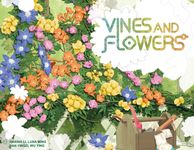
Are you someone who likes to dabble in green things? Or maybe you just want to find that zen space on a Sunday afternoon to tender to your plants, drink a cup of coffee, or even build your very own pagola out of cardboard. This is a game called Vines and Flowers. And today we're going to take a deep dive and have a look at what it's all about. Hi, my name is Danny. I'm an avid modern board gamer from Australia who love sharing my passion for this hobby with you, my friends, and my family. Let's get this video started. And don't forget, if you also like green things, don't forget to subscribe for more. Vines and Flowers is a 3D structure tile extension game where players are going to be drafting different vine and flower tiles from a central market area. They're going to be adding a tile to the main pagola structure that all players are collectively building on. And however many flowers that they pass through that is of the same color, that's how many flower tokens of that species they'll acquire into their collection. And so at the beginning of the game, players are going to have access to about five tiles. they'll have some in their hand and then basically players are trying to strategically and look at the structure and find the best way to connect those vine paths together to get a lot of different species of flower tokens into their supply. So on your turn you basically will be able to take two actions and you can take the same two
actions if you like. One of the actions is taking a vine tile from the market area, and that might mean taking the first one for free or paying a certain number of flower tokens in order to get some of the other tiles that are further in. You can also place a vine tile from your hand onto the pagola. And so, you'll be able to have a maximum hand limit of three tiles. And then if you connect it to the bola, you have to connect a vine to a vine space, a flower to the matching flower color space in order to complete a track. And that will then score you certain pedal points which requires tokens into your personal supply. And you want to try and keep those tokens secret because they're very important for determining the winner at the end of the game.
Some of the vine and flower tiles actually have preprinted creatures on them. So when players place those tiles onto the main structure, they'll get to activate that creature's bonus. If a player places a tile with a B on it, they'll actually get an extra move. Essentially, it's like an extra action on your turn. So rather than just having the two, they'll get three. If a player places a butterfly, they'll get a wild flower tile which kind of represents all four flower species. It's in the shape of a little disc and you place it onto the pagola and that's going to block off one end of the pagola from other players from attaching further tiles to it. So essentially kind of creates like a dead end. If a player has a ladybug tile, they'll be able to acquire these little ladybugs, and they essentially act as wild petals, and they will count towards certain petal species depending on which one you want to allocate those ladybugs to at the end of the game. And placing a spider tile on the pagola allows you to immediately take another tile from anywhere in the market. And if that tile has a particular effect, you get to resolve that effect as well. And this invites for some variation and strategy into the choices that you make and timing. When to use these tiles and use their effects to help advance your game is part of the game play. Just like some beautiful blossoming flowers, there are also some public contracts that players can
fulfill throughout the game where players can place four, five or six of the same petal color in order to gain two ladybugs which they can use at the end of the game to kind of swing and I guess have a little bit more maneuverability in terms of when it comes to determining the win at the end of the game. However, these contracts will need to be fulfilled in sequential order. And if one particular color has been used to fulfill the first contract, that same color can't be used to fulfill the other two contracts. So, it means that are you going to spend four yellow pedals in order to get two ladybugs and five pink pedals and then six blue pedals? It's kind of a head-to-head competitive element because whoever fulfills them first gets the advantage of those ladybugs, which is super powerful. Now, fulfilling these contracts also has a double-edged effect. Each of these contracts has a hummingbird tile that's above it. When a player fulfills one of these contracts, that hummingbird tile goes into the cloth bag and will potentially be drawn on a future round and added to the market area. I'm going to talk about these hummingbird tiles now and what exactly they do.
The hummingbird tiles add a new dynamic and element to the game. If a hummingbird tile during the hummingbird phase is ever at the beginning of the market row, that hummingbird tile is going to activate the negative effect on one of those event cards, which could affect all players. And this kind of adds and shakes things up a little bit. But if a player takes the hummingbird tile, they can actually get a personal positive effect. And so these hummingbird tiles are depending on where they are and how they appear are going to impact the game play. It's interesting to see how this is going to play out because the hummingbird tiles are also going to be the timing mechanism that will trigger the end of the game. If all the tiles in the cloth bag r out, then the end game is also triggered, too. When determining the winner at the end of the game, players are going to reveal their screens and each player is going to group their species of flowers like so, ranging from their lowest number all the way to their highest number. Players are then going to compare their two rarest flowers. And whoever has the most number of tokens in their rarest flower is going to win. So, for example, if this second player had two ladybugs, they might decide to place the two ladybugs here, uh, giving this yellow a boost to four. It's still the rarest flower species, um, with the lowest number. And therefore, now it has four points. It will beat player A who only has three points.
So, what did you think of vines and flowers? Please let me know by writing your thoughts in the comments section below. Now, if you found this video super helpful, please uh subscribe to my channel, like this video, share it with your friends and family, and there are lots of other amazing board game YouTube videos that I've made on my main YouTube page. If you want to buy me a coffee a month, and help this channel grow, then head over to my Patreon page. I would truly appreciate it. Otherwise, let me know what your favorite plant themed board game is and your favorite plant species as well. I like a good pathos and even a money plant actually as well. And I hope your next board game experience is a zen and amazing one. See you soon.