Beyond Solitaire Podcast 202: J. Rey Lee on Unsettling Catan
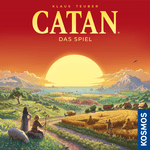
Games in This Video
1 game is featured in this video — it unlocks as you watch.
Transcript
It's ad break time. I am proud to announce that the Beyond Solitire podcast is sponsored by Central Michigan University's Center for Learning through Games and Simulations. Right now, they have a crowdfunding campaign on Backer Kit for not one but two different games. Making History by Nick Proctor and Witch Hunt 1649 by Martha McIll. Making History uses scattered information about a breakup to teach historical lessons as players try to piece together what really happened, while Witch Hunt gives insight into the social and economic forces behind witch hunts in Scotland. Both are fascinating and you should check them out before the campaign ends on August 7th. But for now, let's get on with the show. Hey gamers, this is Liz Davidson from Beyond Solitire and this week at the pod I'm here with Jay Ray Lee. Uh he is a writing teacher at the University of Washington both bottl and he's also the author of unsettling katan detached design and eurogames. This is the very first volume in the tabletop game series coming out from the University of Michigan press. So how you doing today?
I'm doing good thank you. Glad to be here.
Yeah I'm super happy to have you on to talk about your book. Uh so for people who know absolutely nothing about this series which is probably a lot of people because it's new. um what is the idea behind the series and how is your book kind of matching that as the leadoff title?
Yeah, that's a great question. So, the basic idea behind the series is that we're trying to reach a space that we think hasn't really been reached so far in board game discussions. And so, um there isn't really a lot of books that are even just featuring individual hobby game titles. Um, honestly, if you look at the history of publication, there are books on chess, there are books on Go, that might be just about it. Uh, there's a lot of great conversations that are happening on your channel, on BG, on a lot of different places, but we don't really have like a book publishing industry that is concerned with games on the level that we see with pretty much any other media you can name. like you can go to the library and find you know thousands of of analyses of novels of films even now video games. Um so we want to reach that space that hasn't really been reached yet and we want to do it specifically in a way that bridges the gap between academic understandings and a popular general audience because we really think that keeping things siloed within academia isn't really going to help much. So, like we could proliferate this thing if we want, but if it can't engage with the community, then um we feel like there isn't necessarily um a huge point. And I should say that um I keep saying we here and um Paul and Aaron, the editors of this were previously on your channel, so I don't want to be the one who's speaking for for everyone, but that's kind of the the feel that I'm kind of bringing to um to what we're doing.
Yeah. For context, everybody, I I'll remember to link this in the show notes. Uh Paul Booth and Aaron Charmelo were on this uh show several seasons ago and mentioned that this book series was going to happen and so now we are finally coming full circle. It's really launching and your book comes out in November, right?
That's correct.
Excellent. So I um I think Katana is a really obvious starting place for a book series like this. Um but what made you want to write about Katan specifically? Yeah. So, uh, it's funny that you say that because that's what Paul thinks and that's what Aaron thinks and it wasn't really my idea. I actually wrote a design diary post on this a little bit. Um, so I've written about kiton 2017 maybe just an article in analog game studies. Um, and I think it's really important for me when I'm writing about um, big issues in games that I want to talk about games that are um, well-known and influential. So, um, I wrote an academic article um, probably the one that's kind of like most closely related to what you do in terms of like the the historical wargaming thing and I used risk and so like people who are in the wargaming community would probably freak out maybe, you know, to be using risk as an exemplar for that. Now, I don't specifically argue that Risk is an example of that kind of historical wargaming, but I wanted to argue about sort of like colonialism and mapping in how like we literally draw pictures of the world on our game boards. And so, I wanted to make that more accessible through Risk. So, in terms of Katon, when Paul and Aaron kind of floated the idea of like this is a great launching point for the series, I really wanted to be able to say, how can we have a really interesting conversation that comes out of a game that is recognizable, it's
popular, it's simple and familyfriendly in some ways, um has a a status in the gaming community, but isn't necessarily the kind of thing that would um be lifted up as this is the best example of historical gaming. This is the most best example of philosophical gaming. This is not necessarily something we think about as um doing something that's trying to make a social statement. And you know, I just believe in general with media that stuff exists in every medium, right? You have great people on your channel who are doing great stuff with board gaming. You have great stuff in the world of art and film and and literature who are doing all kinds of great stuff. But sometimes, you know, I'm just like a pop culture guy. And so, you know, I want to ask, okay, well, what what's going on with Marvel? You know what I mean? Like, what's going on with Taylor Swift? Like, these are the things that I think are impacting our culture. And so, being able to talk about that, you know, this is the kind of thing that when I talk about it with my students, you know, they light up.
Like I had countless Swifties, you know, who are in my class who were able to like write a a little uh piece on on Taylor Swift and and to pull meaning that's related to the meaningfulness they engage in their life because when they listen to that music, it is meaningful to them on a personal level. And so then we when we teach critical thinking and analysis then the critical thinking and analysis is now also meaningful to them on another level which is again the whole point of this series to be able to say that you know we can't just analyze things that academics find fun and interesting like um you know when I was in grad school you know and you know dered and this kind of theory was the thing it's like people would dig up the most deridian novels you could find and so like there's these authors who are writing this really experimental stuff that's designed for the critical theory and then they use the critical theory to analyze the novel and be surprised. I found something interesting here. It's obvious that that's going to be there because that artist was trying to like get theorists attracted like they had the fishing hook with the little dairy worm on it and people would grab it and then they would write those articles.
And those articles aren't all bad. Some of them are bad. Um, but again, yeah, like if you if you wrote on uh on Marvel or Harry Potter or whatever it is, like I'm I'm personally more interested in that.
Nice. So, you mentioned teaching uh and pop culture. What is it? I mean, you're teaching writing right now, but um what is your area of research and are games the primary thing or are they part of a larger hole?
Um they're the primary thing now. So, my training is in um comparative literature and philosophy. And I was actually in the middle of kind of working up my first book on um kind of like the philosophy of names and descriptions in these um realist novels. And um I was doing this project on Lego for fun on the side kind of and uh it took over. that was that started out as a 15-minute conference presentation and turned into the outline for an article which turned into the outline for three articles which turned into the outline for I think I published a book and two other articles on Lego. Um, and it just kind of happened because I was just looking at one that kind of popular thing of, okay, this is a medium that is just really influential in people's lives. You know, you know, uh, I had a fun conversation where, you know, you're kind of like at a mixer and you're you're talking about what you do and um, and I said, I write on Lego. Um, this was a while back and, you know, one of these academic type people's like, "Oh, you mean this Italian poet Lego?"
and like, "No, I don't know what you're talking about. I'm talking about the toy." Um, and so, you know, um, I just I I did I was getting into it and I was thinking about it and I was doing my library research and I was just not coming up with anything. People weren't talking about it much. Um, and so, you know, I feel like this is just like a big gap area for academia. We don't really engage with certain aspects of popular culture. And my suspicion is we specifically don't engage in aspects of popular culture that relate to play because we don't have good theorization of what it would look like to combine play and media. So when we talk about play, we talk about developmental psychology. When we talk about media, we talk about traditional storytelling forms of art like literature and film.
And even video games is able to kind of like worm its way into that conversation because there's enough of a narrative element. And like the switch from the early Pac-Man arcade mo moment to these big sprawling narrative games really attracted all the literature and film scholars to be able to say like I can still come up with something. And then we've developed now new ways of talking about video games. There's now terminology that exists that applies to video games that applies to nothing else in the world. Um there isn't really terminology that applies to board game studies that applies to nowhere else in the world except on BG and the way people talk about mechanisms and stuff within the design community and all those kinds of things is not coming from an academic space um necessarily. And so again, bridging this gap and being able to say we're developing a new form of discourse um here on Beyond Saltier, here in in the board gaming community and board gaming is not developing its own new kind of discourse because academia doesn't pay attention to this kind of thing. Um and so again, the series tries to carve out a space for that. My book tries to engage in that. I have one chapter that could be the throwaway chapter for you. If you love Katon, you can throw away this chapter.
But um it's it's just a chapter on this discussing what it means to look at a board game and actually kind of doing a little bit of media theory on that and saying okay you know how is this different from film how is this different from literature and and you know for me setting that up before like diving into all my analysis was was really important and interesting um for getting that out there. Um, but I mean I think the other thing that I really want to not lose sight of is analyzing katan. And because we don't have all these books on single titles out there, I really wanted to spend a lot of time in the chapter saying, okay, let's pay a lot of sustained attention to this kind of thing. So have a whole chapter on placing hex's, have a whole chapter on rolling the dice. And this, you know, katan can be broken down into like seven very simple mechanisms. you know, nobody has confusion about rolling the dice is, but like being able to spiral a whole conversation about, okay, um rolling the dice and that relates relates to the idea of fate fatalism versus rationalism. And so like all these big ideas and the way that Eurogame engage that is maybe specifically different than the way that um you know like um EKA for no pun included recently talked about um sausage sizzle as a way of doing kind of a similar thing to what I'm doing with katan of saying okay this simple thing can have a big reason but be behind it but the way I think he talks about randomness and that is very different from the way that Euro games handle randomness where they're like let's give you randomness but then take it away because um too much randomness would be like this anarctic space that we can't handle or or whatever the
reason. All right. So, to pull it to the book specifically, um, you know, for I just want to kind of read this quote for everybody out there because I feel like this is the this is your big like the thing that you're unsettling, right? Is is is Claus Twerber's uh thoughts about his design itself. So like in one of the title pages it says from him, I'd expressly designed Katan to be a peaceful game in which participants did not fight but instead traded and cooperated with each other. A game in which every player, even if they lost, could retain their dignity and be proud of the little empire they had created. There's a lot going on in there.
Yeah, I'm able I don't know if I I haven't counted it if I've quoted that in every chapter, but um at least more than half of the chapter I throw that same quote back in there because I think there's so many dimensions of the design and the culture that come out in that book. Um, so the first one being just the idea of the peaceful feelings. Like I want to create um a game that feels peaceful to people. And I think that for me if I you know I didn't really live through the early history of Eurogame. So I always feel um like I I wish that somebody who who experienced that could kind of like speak up and and weigh in on this conversation of how people were really feeling and thinking about it at the time. But I look back at some of these games um and unfortunately I can only talk about Katon in the book, but I think about El Grande, I think about um Through the Desert, think about Carcassone. These are all mean area control games. So when we think about Euro games, we don't think about area control being the dominant mechanism, but like almost every early euro game that I think of that's really had a major impact was it was area control, it was mean, but it covered it in something. And so like El Grande said, um, let's have this super brutal mechanistically cutthroat game, but then let's kind of invent area control in certain sense.
And I'm not going to argue if it was really the first or not, but um by saying we're not actually killing each other when we fight over this territory. were vying for influence and somehow at the end of the game um I've beaten you through cutthroat maneuvers but because it's more of a cold war than an actual war I can actually feel kind of good about myself um and these other things you like carcass own uses its pastoral setting and the fact that you can share points and things like that and so you have all these things where it's like what you're doing should feel violent but the games don't and so I actually kind of have a poll that someone ran on on katan to talk about like does it feel aggressive or does it feel peaceful? And some people think it feels aggressive, but some people feel like it actually feels peaceful despite the fact that nothing that you're doing in the game really feels all that peaceful, including the part that in that quote Toyber talks about saying is the peaceful part. It's a trading and negotiation. Um, for me, again, trading and negotiation is another one of those genres. It's a cutthroat genre. You know what I mean? um like you've um I just listened to you talking with um Zoe Alred about um this kind of weird semi-coop space where you know if everybody can win and you have negotiation in that it's a very different feeling but that's not what we're talking about like when we talk about trading and negotiation games we're talking about we cooperate to an extent in order to have one person eventually be the winner when that person is you know the winner you know it eliminates the cooperative element
that Toyber is talking about. Um, so, you know, it's just like all these things like how can we put a twist on things to make what we're doing feel peaceful. Um, and then, you know, that seems like it's like a weird niche design conversation. And so, if you're not a game designer, who cares? Well, for me, I'm not a game designer. Um, but the reason that I care is that last part where he talks about you can feel proud of your little empires. And so then the idea starts being well okay well what if you combine this idea of we want cutthroat mechanisms to feel peaceful with the idea that we have these implicitly colonialist themes feeling peaceful now I'm starting to get like red flags right um and I don't want to specifically blame you know any of the designers you know tober actually thought about colonialism and was trying to genuinely create something that he thought would be uplifting for society as a family gaming kind of Um, and so, you know, I I don't want to discount that at all. Um, I really respect what what Tory Brewer was doing there, but at the same time, just saying, um, well, sometimes you want a cutthroat mechanism combined with a violent theme to make you uncomfortable.
And so, that's why the title of the book is Unset Link. Um, I know that a lot of people who love art of any kind love art that makes us feel uncomfortable. Like, you know, if I watch a film and I say that it made me cry, you inherently think of that as a compliment.
Yeah.
Right. You you didn't The first thing that popped in your mind was it, oh, this film was so bad that he had to run screaming from the theater, right? Like that's not what you think. Like with with every other form of art, we say, "Okay, if this moved me, if this elicited reactions, and it's not just crying and sadness, but like anger and frustration, things like that." that um you know like all the way back to Aristotle the idea of catharsis and just like pushing people through these rough emotions in art because like it's part of the human condition is that we need to experience these kind of emotions. Um that's what we want, right? And so if we if we close that down and then specifically if we close that down and pair it with these kind of complex themes like colonialism or capitalism or it doesn't have to be those um specific ones even though those are the ones I talk about the most in the book but really pairing it with anything that's um of any sort of ethical or emotional complexity and then you try and close it down. I think that that's just kind of a negative for how gaming functions as art.
So you mentioned the first part of the title is called unsettling katan but this also leads I think into uh the fact that we need to talk about the second part which is detached design in Eurogame. What is detached design? Is this a term that you have coined yourself for this book and what made you choose this as the focus?
Yes. So it is a term that I coined for the book. Um it I went through several different iterations of thing that I want to talk about. um you know how you name things is complicated and there's a little bit of chicken and the egg what comes first and so like I looked at abstraction you know I looked at um historical fantasy I looked at you know detachment different kinds of things but um what we talked about with peacefulness and the generation of that peaceful feeling detached design I'm calling um kind of like the culture of producing peaceful feelings and so the best way to illustrate that through Eurogame specifically is everything that Euro games are famous for is kind of an example of detached design. So Euro games are famous for putting mechanisms over theme. And so they're saying don't feel. I mean that's basically the implicit message when you say that the theme doesn't matter and the mechanisms matter. And so that's a form of detachment. That's being able to say like we've elicited emotions but you're detached from them. You're removed from experiencing the emotions. And this is why I quickly rejected the idea of talking about like abstracted design. Um because abstracted is like literally removed. I could take all of the theme out of Katon and just say this is Hex Island, you know, try and accumulate the most green and win or something like that. But Katan isn't that right. It is an island. Um it has a theme to it. Detachment says, I'll give you a theme, put the mechanisms over the theme. Um, and so there's a kind of like emotional repression that's happening of
um, I want to bring something artistically in a person and then stamp it down. Um, so the aesthetics, the second thing that Eurogamers are super famous for is just being beige. Um, and you know, there's a there's a way the way that people talk about it in the community is sometimes people are too lazy or they're too cheap to come up with good art or they just don't care about that. So, it's a low priority. I don't think that that's true. I think it's a high priority for them to create art that creates a certain kind of feel to it. And when we think about beigeness, we think about um a certain kind of nostalgic view of uh history. Like we put um sepia filters on anything that we want to to put that onto we, you know, we think about parchment and like like the beautifification of reality is the putting it into this kind of like detached historical space where you feel like um it's history, but I'm specifically putting that frame that makes me feel a distance for it. There's actually a lot of board games that actually it's not just beige, but like, you know, the board will be, you know, framed with like a little ink well in the corner or a little notebook or things like that that makes you framed like you're not immersing yourself in the world, but you are yourself a historian who's sitting outside of the game looking at papers about the world or things like that. Um, you know, so like, um, ArchNova doesn't do the beige, for example, but I think about that as like a really great example of, you know, the detachment from running a zoo of, you know, like you feel like a middle manager in that game because the graphic design is all like um file folders and things like that that makes
you feel like an administrator. And so like that's an example of aesthetics that are specifically um designed to be detached. Um and so you know and then another one is the idea that um all Euro games are multiplayer solitire instead of interactive. Um and that's another form of detachment because like if you can detach yourself from the social space and say like I'm with you but I'm not interacting with for with you meaningfully. Um and again that's a little bit of a misconception. These games are interactive in certain ways, but the point is that the design is in some ways suppressing or detaching you from the feeling that you're interacting with someone. So, um, we take away the aspects that feel too cutthroat. We take away the direct attacking and then we allow for like all those early euro games where we are doing interactive things. We are doing cutthroat things, but we feel like we're kind of like all peaceful around the table and things like that. So those are just a couple examples, but like for me, detachment was really interesting because it provided a key for all of these things that we actually observe within Eurogaming. Uh, and we've named them within Eurogaming, but we haven't always thought about them as all different symptoms of the same core phenomenon. And that that same core phenomenon is an ideological one. And it's the ideological one of kind of like closing our eyes to what we're doing, turning away from the artistry of our actual art. Um, and you know, like I don't want to be like a big like make a big political deal about this, but like I think that that's just not good art.
That's not what we want. Um, I would love to see people who have just more immersion in what we're doing as a medium. Um, it's part of, you know, you you can analyze stuff that doesn't do that, but you know, I think just doing that as much as possible is what we want. Um, and it at the very least just raises interesting questions. So, lets me feel, okay, this artistry isn't just bad art. It's not just bad graphics. It's not just bad um whatever. It's doing something interesting that I can talk about. So, yeah.
Yeah. I find it very interesting that you mentioned that you don't want to get all political about it. Uh I do think this is an inherently political conversation and I I want to talk about how you manage that especially because when we talk about detached design you know a lot of times what we're detaching from is colonialism which is something that has a huge legacy in our world now and not a positive one. Um so Toyber himself tries to kind of get around colonialism very explicitly. Uh, but you also mentioned, you know, games like Americ
what it is that you are in fact detaching from, which is sometimes pretty serious. Uh, and then your desire to not quote get political or not put value judgments into the work. Um, I think in some ways just the gap between where we are and where we want to be is so big that I don't feel like I can carry the ball the whole way in some ways. And so it's not that I want to say that political conversation shouldn't happen, but before I can even have a conversation about Marico and like whether it's a good idea to make a game that is about colonialism and shows the bad sides about it or whether it's a bad idea to make a game about colonialism or whether it should be done in a different way. Um, and I do talk about the expansion um, in the final chapter and how that twists things in an interesting way. Um, I think that, you know, we just need to do some shedding ourselves of the myth of detached design before we can that conversation can even get off the ground. And so, um, when I say I don't want to be political, there's obviously political implications to both the games that I talk about and to the way that I talk about them. Um, but I think that what I want to do in the book is just kind of focus on the way that the desire to not have the political conversation um is structured. And I call it detached design instead of detached emotion because I actually think that this is built into the art.
Like the art is actually saying let's produce a culture of detachment around itself. And so once you deconstruct that, once you unravel that, once you recognize the problem, you name the problem, you can see it for yourself, then you can start having other conversations, whether it's within the design community or within the player community, and now we can have a big political debate about things if we want to because we've freed ourselves of some of the baggage that makes that debate impossible. Um, and just for me, I think, you know, um, this is the the first book in the series, and I just don't want to be too ambitious, honestly. And so like when I got to some of those political possibilities for conversation, where I got to the places where I could make a statement, I was like, "Okay, I'm going to let the conversation develop. I'm not going to weigh in too heavily there. I don't want me to be the person who's saying this is the right way to do everything." Um, I just want the conversations to happen.
And so, like, I think of myself as the clearing the ground person, not the necessarily having the conversation person. Um, but I very much hope the conversation will keep happening and I know the conversation is happening. I I feel like that might have been a too egotistical way of framing it. Um, so like it it's it's already happening but uh I think the more that we unsettle certain aspects of the things the more that the conversation will be unbburdened to be able to flow and move more freely. Um, and I really have a lot of faith in the creativity of our community. Like I think that um once those conversations happen more and more and more, people will come up with all kinds of great ideas that I won't necessarily have been able to come up with myself. I think people will come up with ideas that contradict each other, but then they'll implement both of those ideas and I'll be happy to have two contradictory viewpoints on my shelf next to each other. Like I think that that's a great thing. Um so again, like for me, the only goal is to open up the space for conversation as much as possible. And anything that I could say that would narrow that and push it in a single direction is something that I wanted to avoid.
Interesting. Um so another thing that we're kind of detached from I guess that comes up a couple of times um in the book is you know Tyber wants to present the game as cooperative. It's inherently kind of conflicty because somebody has to win. Uh but you know the presence of knights and armies within a game that is apparently about peaceful settlement does seem a little bit jarring uh when you really think about it. So how do you maintain a sense of peace and cooperation while also having those things present in a game?
Um well I mentioned this a little bit but we um we talk about the UN has has a peacekeeping force. Uh we talk about the United States as America's global police force. Um that's not a good thing by the way. Um but we actually that's a contradiction that our culture has embraced for a long time. Every war that's ever been waged has been waged in the name of peace, right? And so we strongly believe as a culture that there are non-pieaceful methods of forging peace. Um and so like this shoot first ask questions later mentality um or even just the threat of it. So we talk about kind of um you know the idea is if everybody has a nuclear bomb then nobody will drop one because we can't handle the consequences of it. Um and so this mutually assured destruction is another idea. And so we've integrated war and peace in our cultural imaginary for I don't know how many thousands of years. Like that's just the way things are. Um, and so when a game says, um, you're not allowed to fight with anybody, but you're going to get points for having the largest army, that is kind of a representation of mutually assured destruction. Like you gain power by doing a show of force, not necessarily by exerting force. And there's a belief that that's a peaceful thing. And I want to unsettle that. I want to unsettle the idea that the only way to produce peace is through militarization. Actually, when you say it out loud, it almost kind of unsettles
itself. You think, wait, why why would someone think that um the best way to forge peace is to mass-produce weapons? Well, um this is one of the things that gaming can make you ask yourself, right? Um I think the game itself, like the the design of Katon doesn't do anything that specifically encourages people to think that way. Um, I think that that's a conversation that uh, as someone who's coming in and writing about it, I want to I want to be able to have both to both to show the contradiction that a game can say peace and then, you know, kind of do imagery of war, but then also to dig into that and say that this reveals something about itself. And this is also to to mention this is something that happens in tons of Euro games. And so, like we mentioned, you know, Euro games always want this peaceful feeling.
You're gonna find a soldier or a gun or something on the art of so many Euro games that aren't about that at all. It's just it's it's in the air that Euro games breathe that when you talk about history, the piece is maintained by this military apparatus that we just take for granted and we don't question it. And um you know, literally my only job, the only thing that I do is I just ask questions about things. That's just that's just my thing.
Yeah. Uh some of the questions I also appreciated in the book um were sort of talking about representation of people in these games. Um there are soldiers and knights uh but laborers are not really entirely visible in a game that is in fact about settling and gathering resources. So um I guess that's actually you know that's a major problem that people have discussed in war games. I mean not words in Eurogame uh for some time. Um you know notably Jason Pres did a lot of work on that for on shelf stories that you spend um that you spend workers without any regard for their humanity. They're people that you don't pay. Um, to what extent do you think that Katan kind of laid the foundation for that versus just it was expressing something that we all just kind of naturally are willing to elide.
Yeah. Um, that's a good question. I think in comparison to some of those other games that I mentioned like El Grande, um, I think labor is much less of a question for that. So, I think, you know, Katon definitely um, made an impact on that. um you know the idea of economic war being peaceful and military war being uh not peaceful is something that is at the heart of Euro games and so um like I mentioned so many Euro games have a military component somewhere in the art or theme but almost every Euro game um it's e it's economics that is the actual battleground and so the idea is that um we have this culturally capitalist notion that any kind economic competition is inherently good for society. Rising tide raises all ships and these kinds of things. And so there's so much positive emotions around capitalism. So with with colonialism in Eurogame, it's the dirty little secret.
We want to have it, but we recognize that it's contradictory. And so we use detached design to kind of like smooth out the things. And see, so even some of the most controversial colonialist Euro games do that. So, Puerto Rico, it's like, okay, we're kind of representing slavery, but we're going to make these workers discs so that it doesn't feel like it. Or I talk about like in Mombasa, we're like literally colonizing um Africa, but the rule book says, please don't think about that too much. um which is in the history of art, the move of like let's make this evocative art about a theme and then like just add a little tag to the side like in the museum next to the painting. Um just look at the art but don't think about what this is about. Okay, I'm going to get go off on a rant here. Um but coming back to like um labor and katan u labor and capitalism are built into eurogs so deeply that it's hard for them to do the kind of denial that they do of oh just pretend the military stuff doesn't exist. You can't pretend that the labor question doesn't exist in Eurogame where the most popular mechanism is worker placement. Um and so Katan didn't invent worker placement certainly and that's not what it's doing. But the idea of katan is let's have an economic competition fundamentally. It's about the growth of society. It's about it's really about working people because it's about the people who settle the land, farm the land, build new settlements for each other. And so when you're competing
over territory in Katan, you're competing over living space. You're not competing over um borders or you know because the borders are all crisscrossed each other. You know, it's not national might or power or things like that. you're competing for like, let me just get the most flourishing land to produce the most food for the the highest number of people because your points are tracked by your cities are worth two points, your settlements are worth one point. That's basically just indexing population. So, you could kind of argue that um the winner of Katan is roughly the the civilization with just the highest population at the end of the game. Um but it just it pretends that labor doesn't exist, right? So, like it shows the knights, it doesn't show the workers. And I think that, you know, when you have this kind of like top- down managerial thing in most Euro games where um in most Euro games, you're not playing as a person with a backstory or a single character. You don't know anything about yourself. You're playing as the empire, the little empire. Um so, you're playing as the the some population or the administrator of the population or some noble who's trying to get prestige or whatever it happens to be. Um, and so, um, you're playing as someone who can't do anything in the world. So, when you play a dungeon crawl or something like that, I'm a hero. I have a lot of strength. I have magic. I have something that makes me powerful.
The thing that makes you powerful in Eurogame is I'm the one who controls the industrial apparatus. I'm the one who controls the labor. I'm the one who is the manager who tells people what to do. And so, um, capitalism is based on the fact that capital acrrues capital. So p the rich get richer because they they have the laborers do the work and then they skim a piece off the top of all that work because if I own the apple orchard, you know, I can have a thousand people each pick some apples, sell the apples at the market and then they each just give me $10 or something like that and then I've done nothing and I've made money. And so in Eurogame you don't do nothing. You make strategic decisions but it's all based on profiting off of labor. And so then the question of representation of who is represented, who isn't represented, and how they're represented. Um, so I just have like a little graphic where I just take the worker meeples from every game that I talk about and I just line them up and I took a picture of it. It's just like look at how all these things all like the mele is actually the single brand image for hobby board gaming, not even just Eurogame like um so many channels and so many things like you you can get merch that's just Meeple merch. Um, the word Meeple is coined by a gamer, Allison Hansel, and there's a whole weird thing about the company trying to steal that term from them and trademark it or we don't need to go into that, but um, it's short for my people and it has
this kind of inherently possessive like these are my people. Like I am not the commander of mighty armies. I'm the commander of mighty labor forces and I'm the manager of it and I'm detached from that. I don't have to feed them all the time. I occasion like feed your people is almost the only worker humanizing mechanism that's remotely common in Eurogaming. And even that is really problematic because you have this kind of rule that's often you feed the people or you lose victory points if you fail to feed the people. And so the the implication there is that you're more than welcome to starve your workforce, but they won't die and they won't quit, right? You'll just lose prestige for being just like a bad boss. But there's no actual it's almost like not a moral accountability. is more just like a um social capital accountability and like as the the detached manager um you know I the last time I played Stone Age I won the game on a starvation strategy where I just like I bit the penalty for for not feeding my workers and then had a huge workforce and got the points other ways. And so, you know, it says basically um you know, as a simulation, it's not bad for that to be a simulation to be able to say, "Okay, let's explore this possibility in games, but it's just worth noting that that's a common thing where like um if I'm not interrogating my own gameplay, like I just feel
smart." Um, and we have, you know, I don't I definitely don't want to go here, but I'm kind of accidentally going here, but like we have um who I will not name who said in a debate, I'm smart because I exploited my workers and didn't derail the campaign at all. And so, like, that's just the culture that these games are engaging in. And again, I'm an unsettlement guy. I'm a philosophical question asking guy. And so, I just want to ask, well, what are we doing here? Right? That's what it all boils down to. Yeah. So, clearly there's a lot we should be doing that we should probably think about and it it's not comfortable and it's not going to necessarily make us feel like we are good. Um, but we're all playing these games anyway. You're gaming. I'm gaming. How do you deal with the feelings of unsettlement versus the desire to play and also not wreck people's game night or like get so political that it chases people off that you want to think with the question. Um, there's a time and a place for everything, right? So, um, I'm not saying that we need to be in this critical mode all the time. I'm not in this critical mode all the time.
Sometimes when I'm playing game, I'm just playing the game. Um, and sometimes I'm thinking about it later. So, like a lot of what I talk about, um, the way that it's written might feel like I'm having all like I'm describing having all these thoughts and feelings during the actual moment of the game night. That's not usually true. Usually it's like a um there's a work of reflection and I'm part of you know as like a writer um my goal is not necessarily to become the kind of person who thinks this way at every moment of my life but to be able to unravel the things that are already present in my life. So the thing about detachment is it's different from emotional deadness. It's different from saying I don't have the capacity for emotions. It's about saying I'm not experiencing my emotions in the moment or I'm not naming my emotions. And so the retrospective kind of looking back later and figuring out what was going on, it's kind of like detective work and that's something that um I'm able to kind of maybe do after the fact. Um, and so it doesn't ruin my game night honestly. Um, to be able to do that, um, for some pe like everybody's different.
if there are games that you know if playing Mombasa will ruin your game night or will ruin game night for others because I actually think that there's a big hosting ethics of if you are inviting new people to something you want to be really careful about what you invite them to do because there's a kind of social contract of you know they're asking for you a good time and not necessarily colonizing Africa right um and so like I do think that if if I was going to say like there's some games that I would change my game night over. It's a specifically changing my game night over the welcoming of new people and public spaces and things like that. I would literally change my behavior over that. Um, in terms of my own personal play and my own personal fun, um, I'm I'm, you know, as somebody who's who's been talking about, you know, I grew up loving literature and then got a PhD in literature. I love game grew up loving games. Now I'm writing about games. Um, I believe people when they say that any sort of critical stuff about the game ruins their experience. And if that's that's you, then you make your own decisions. I just don't experience that.
Like thinking about things more deeply for any kind of art, any kind of media that exists just only enriches the experience for me. And and yeah, there are maybe particular games that I become less happy with, but there's other games that I become more happy with. it. Um, and and even, you know, I can still play just like a silly thing and it it doesn't bother me. Um, so yeah, I mean, I think that I don't know if I have great advice for this if everybody needs to navigate it for themselves, but I just don't think that it's inherently contradictory to say we need to have conversations and we can just have silly fun. I think we can do both.
All right, I want to pull this back to academia and academic culture. Um so this is perhaps just my personal experience although I think a lot of people who are postac had this while they were in um I felt like a lot of the work that I was doing was not supposed to be popular work and that there was almost like a current against having things that were too pop culturally or too like not for an aggressively academic audience. And so, how do you see your book's placement uh in terms of its place on your CV and in your academic career?
Oh, well, I mean, that's easy. Um, being on the being on a writing teaching track, um, my research is just not weighed heavily into what I do. And so typically what happens is the people who are specifically on the tenure track, who are specifically doing their first books in order to actually get tenure are heavily constrained in what they're able to write. And so what you see is sometimes the most boundary pushing work is either a senior scholar who's already proven so much that they can just do anything that they want and people will publishing it anything that they want to say. Um that's not me. Um, I'm I'm the person who's kind of like on the fringes of, you know, the academic job market. So, I can I can do anything that I want and nobody will will comment on it. And so, I do think that, you know, both when I was writing on Lego and was writing in board games, I had this initial shock of I'm way too late in the game to be this groundbreaking on things like that. Um, but then I looked at, you know, the people who were writing things and it's like, okay, um, everyone who published on Lego was writing something that wasn't necessarily doing like new Lego focused theory because this person is a psychologist and here's how the thing that they wrote about Lego has to be legible to their psychological institution. This person is a historian.
This person is like every single person like when you come familiar with academic reading, you can kind of like read a little bit and say, "Oh, I can guess what your background is. um because of the way that you're writing about it. And so what happens is pop culture analysis tends to be done by people from all across all kinds of different disciplines. We're using pop culture to become a little bit more accessible while talking about something that's core to their core discipline. And so what happens is Lego studies never becomes Lego studies. board game studies never becomes board game studies because there's no institutional structure that says we will actually support the publication for a bunch of board gaming stuff which is why when Paul and Aaron created this book series they're able to say okay these books are going to be shorter and less academic than a typical academic publishing because the people who are writing these books we're trying to lure people who aren't necessarily trying to use this as their tenure publication book they're trying to just like do good research And so like if we create a space for people to say here's a place where you can publish good pop culture research that doesn't have to be legible in every single way that your typical stuff would do. Um if you create that space people will come into it and there has been a lot of interest in the series from from authors wanting to do this. Um so it's it's great. Um I'm I'm happy that we're able to do that. Um academia is changing a bit. So like this sounds very negative. Um there are specific institutions who are like having meetings and saying okay um can we actually revise our tenure requirements
to say that we will accept you know creative art projects or pop culture projects or things like that. There are more institutions that are offering you know grants for um faculty to do public scholarship things like that. So there is a recognition I think that academia doing things the old way is not going to work for us long term. um which is great. So um I'm I'm glad that I could be in this moment where that kind of change is is happening but it's slow. Um academia is one of the more ins slow conservative um kind of things. Not necessarily politically conservative but right
if you want to make any sort of change you have this massive inertial resistance on behalf of people who've been doing things a certain way for 50 years. And there's such a sense that when you want to make a big change, you can't be just like the corporate person like come in, bring a new CEO, throw everything into disarray, and then that CEO leaves in a year, like um academia just doesn't move fast at all. But it is moving. It is happening.
Yeah. And then how do you feel about so one thing that I've really enjoyed watching change just from doing my podcast over the years um is I feel like academia slowly also you know as we've talked about increasing its willingness to take certain things seriously. So like video game studies is now huge. Um but I feel like board games are still lagging a little bit behind. uh what is your perception of board games as a growing academic topic and do you think that we're going to see more in in years to come?
Absolutely. I think we're definitely on an upward trend. I will say um I would bet strongly that we're never going to match video games. Like I just don't see that happening. Uh and the reason for that is that um video games have a very specific function within academic studies which is the kind of like the bridge between um humanities art-based criticism and digital cultures. And so um everybody knows that the internet has caused a social revolution kind of like on the order of the industrial revolution. like anyone says okay you know you know we've we've lived through and we've experienced this massive social transformation the internet did it social media did it um AI is now also doing it and so um when people are in cultural studies and and when people are things how do we define our moment how do we define our generation that's the first thing that a lot of people look to and in terms of humanities are typically underfunded if you can say I have a humanities project that can appeal to an understanding of digital culture.
There's just an influx of money for that. So, institutionally, video games have kind of become the art form that you analyze if you're interested in art, but also in digital culture. And so, because of that, um, you know, they have it's just easy for journals to take off. It's easy for grants to take off. It's easy to, um, create new majors. It's easy to create new, um, you know, faculty tenure track positions. It's e, you know, because like universities are fighting to like, oh, can we get a video game scholar? And that's again the conservatism, this is not universally true. Like there's still push back against video game studies, too. But like there is also excitement around video game studies. If we produce this program, we're going to get undergrads, you know, like running from the hills to join this video game studies program because they want to be game designers.
Um because, um, all the money in academia is from computer science and computer scientists. like all my students play video games and they take computer science and they want to be game developers and things like that. And so like the whole institutional apparatus is designed to support video game research. Board game research won't ever have any of that. It just won't. Um but I think just the the broader openness of academia to other things is going to create a space that um is good for everything else that's left out. So, it's not just board gaming. It's just like any other, you know, like LAR or cosplay or, you know, reality TV or like like just all these fields that have been previously marginalized that are that are all growing. Again, we're not we're not all having meteoric rises the way video game studies did. Um, and board gaming can also benefit a little bit from the rise of video game studies, too, because like, you know, if an institution creates a game studies program, it's not impossible for them to offer at least a few classes or things that are related to tabletop in there.
So, it's, you know, I don't want to say that there's um, and certainly theoretically there's some overlap as well. Um, so it's not a strict competition between board games and video games. Um, but there are some ways in which the dominance of video games also helps board games feel overlooked at times. And so people will have a game studies journal where they publish theory of games that and you read the theory and says this doesn't work in tabletop because what they mean is video games the whole time. And so like that is that is a problem. So we are in kind of it's a good and bad mix I think in terms of that.
Fair enough. Uh, and then before I ask you a couple of stopy questions, you've done an article about Risk, you've got a book about Katan. Uh, what other kind of game related scholarly projects are on your menu?
Um, so right now I'm working on this blog, The Looking Glance. And so I'm really just trying to um extend in some ways what I did in the book of having these conversations that are somewhere between academic and popular. So I I'm calling it like personal and philosophical reflections because I want to engage myself as a player. Um I I don't really think of this as academic writing although um I think if you read it it'll be obvious that I am academically trained. Um, but you know, like this conversation that we had about the institutions and the publishing, um, I think I kind of realized working on this book, well, if I'm not beholden to doing things in a certain kind of set format in order for my for my job to to exist, then can I actually expand myself? can I push into into spaces that I'm not as, you know, familiar or comfortable with and actually just develop a way of having these conversations that um is a little bit more in tune with, you know, gaming culture and a little bit less in tune with academic culture. Um, and for me, it's been just it's been really wonderful and fun. Um, I feel like I'm becoming a more playful writer in some ways. And I think that there's academia has a big workplay problem. Like we take things seriously in a way that makes it feel like work. And your earlier question about well is this going to make game nights less fun? That's because of the workplay binary. The the
feeling that the writing has to be workmanlike which is going to take the fun out of things. And so for me I'm really trying to do philosophy that is playful in a way. um not necessarily silly, but playful, like engaging in the concepts and just saying like I can just turn this idea over and over in my head and put the put that out on the page and that that would be just like a fun engaging experience for me um and hopefully for my readers as well. But I really want to, you know, like push into um writing that's really, yeah, challenging me to engage in it in a way that's more more playful, more gamelike, and is, I think, more appropriate to the medium. Um, I think that's also part of the the problem that people have writing about play is that um we always have this emphasis on the thesis, on the argument, like I want to say this specific concrete thing. I want to make this particular concrete interpretation.
And because games are so slippery and because they can transform and they're malleable and they they move around, it's a it's a little bit harder to come up with a concrete thesis on a game. And so I think if you can learn to love the journey of exploring and and you know having both sides of the issue and things like that, I think the more that um you can actually kind of develop a writing mode that fits with what's uniquely um good and valuable about games, that is itself fun. Um, and so that's that's what I'm getting excited about these days.
Nice. So, I'm assuming you're playing games. Uh, what have you been playing lately that has brought you some joy?
Yeah. So, um, the the big one lately is I dusted off my, uh, old copy of Seventh Continent. Um, so I've been soloing that after I don't know how many how many years since the last time I played it. Um, and it's really interesting. Um, I think this is um I don't know if it's a game that I love per se, but it's a game that interests me. Um, so I'm I'm digging into that. Um, my my game group is we're going through a journeys in Middle Earth campaign. So, that is a game that I I do love. That's that's one of my favorites right now.
Nice. Uh, and then if people want to follow you online or track your work, uh, where do you like to be found?
Yeah. Um I am on Blue Sky and BG as J Ray Lee. So J rele. Um my uh blog that I just talked about is looking glance.com. Uh and the the book itself, Unsettling Katon is um on the University of Michigan web page. Um and important note that um it's not just available for pre-order, but it is an open access book, which means that in November when the book is published, everybody will be able to read the ebook for free online. Um and so um a big part of the so like we talked about the the goal of reaching an audience but um the press is putting their money where their mouth is and we want to reach an audience by literally making this information available. And that's not on me at all. I had nothing to do with that. That's all the all the props go to um the the press for for doing and funding that. Um but that's something we're also so so excited that we're able to they were able to make happen. So, so that's great.
That's fantastic. Uh, Jay, thank you so much for coming on the show. I've really enjoyed this conversation. I'm very excited about your book in itself and it's the launch of something bigger.
Yeah, thanks. Um, I'm very glad to be here.
All right, everybody out there. Uh, thanks so much for watching. Uh, please like, subscribe, comment, ask questions, and most of all, happy gaming.