10 Best Games to Play WITH Your Kids (Ages 4–8)
Games in This Video
3 games are featured in this video — they unlock as you watch.


Transcript
This is Board Game Dad and today I'm finally going to be doing a video that viewers have been requesting for years. We're going to be talking about games that you can enjoy playing with kids between the ages of four and eight. Now, on this channel, I always like to focus on games that adults would enjoy playing even if they didn't have kids. So these shouldn't be children's games. However, with this age group, 4 to 8, there are some accommodations that need to be made as children at that age, especially four years old, are still learning uh the structure of gameplay, taking turns, objectives, and uh trying to win a game. So, a lot of these games are going to teach the concepts of strategy board games, but with rule sets that are simple enough that you can teach it to the youngest uh members of your family. So, the first game on this list is for the youngest players. This is really good when you're first introducing kids to uh taking turns and the structure of gameplay, but it's also really fun and excellent intuitive rules.
It's called Magic Mountain. And in this game, it's cooperative. Players are taking turns dropping marbles down a incline slope and trying to advance the good witches to the end without advancing the bad witches. What's cool about this game though is that the implications of every decision where you place the marble can be easily visualized. you can see what the likelihood is of your uh of the actions that you take. And I think it really worked well for my kids when they were young uh be because they they could visualize cause and effect. That's what this game does really well. Magic Mountain. So that's number 10. Number nine is called Honk. Honk is a set collection game with an element of like [snorts] dexterity visualization. You're trying to collect geese from a pile and you can only take a goose if it is not covered by another goose. So it allows kids to sort of visualize their plan. They want to go for the the geese at the top of the pile first. The ones that are at the bottom of the pile they're not going to have access to. but you can kind of plan ahead a little bit. So, the way that you attract these geese is by using your turn to take food cards. It's a lot like Ticket to Ride in that regard. You're
using a turn to either uh collect the food or use the food in order to pull a geese in, but because of the way that the geese are just all scattered and face up, it lets kids plan out their turns in advance, which is really effective and a really cute game as well. Number eight is an excellent game for people of all ages. I play this with my kids when they were about four, five years old. I also play this with my wife and my mom. Uh the game is Mountain Goats. And what I love about it is it's a dice rolling game with a little bit of arithmetic. Uh you roll four dice and then you can group those dice however you want in order to move mountain goats up the mountain. So you're trying to get different totals. When my children were very young, especially my second daughter, she would count on her fingers in order to try to figure out the totals and choose the goat that she wanted to advance for points. So I really liked it because the arithmetic was just so simple, but the objective was also very clear. You get and and fun. You roll some dice, goop them together, and you get to cute little goat moves up the hill. This is an excellent, excellent choice for all ages. Truly all ages.
Number seven is called City Chase. This is a hidden movement game, which means asymmetrical gameplay. One player is trying to hide, the other player is trying to find their opponent. What I like about this one in particular is this is one of the simplest uh hidden movement games that I've found, and it's also very attractive to children. Uh there's a car moving around a grid of buildings and there are helicopters that are searching for this car. So during the game, one player is closing their eyes or if you're playing four people, then three people are closing their eyes and one person is moving the car through the city once they've made their movement. The players whose eyes were closed open up and they try to move the helicopters and find the the person who's hiding. Uh really really simple. A lot of hidden movement games will try to add on extra rules to kind of enrich the game. I have in the past recommended mind management for that reason, but this one is ideal for younger kids because the pieces are so attractive and because the rules are just so so very simple. City Chase. As you're looking at the clips of me playing with my kids, you probably noticed that they're all different ages. I've recorded a lot of this video over the course of many years, but this next game is one that I started playing with my daughter when she was only four years old. Uh, it's called Planet. And in Planet, you have a
threedimensional globe, and there are pentagonal tiles that are magnetic and will adhere to the globe. The objective of the game is to make your planet attractive for wildlife. So very simple to understand. The mechanics are actually kind of complicated because it's three-dimensional. There are lots of adjacencies to plan for. What you're trying to do is find areas of land that are connected and of the same type. So it's really a tile placing game at heart, but it's a fun game because it's very easy to understand and win or lose. My kids have enjoyed really playing it because they like the three-dimensional planet. They like the animals. Uh, this is one of the more sop sophisticated games, not just in the tile placing, but also in duration. It takes more than a half an hour to play this game. So, this is one of the more uh advanced games, but it's an awesome one as an introductory game for kids playing it.
Number five is called Guardlings. Guardlings is a press your luck tile placing game. Uh all players have a bag of tiles. They are simultaneously drawing from their bag in order to place the tiles and get gems which they can use to buy even better tiles. But the mischievous little gnomes will steal your gems. So, the key to game play is to identify when it's too risky to continue drawing tiles. If you get too many gnomes, you're not going to have as many gems to buy the better tiles. And then depending on the duration of the game that you want to play, it's the first to a certain number who will certain number of gems who will win. This is a really good game because the simultaneous gameplay means everyone is doing something at the same time. and it keeps people uh engaged. The next game is called Drafttosaurus.
Drafttosaurus is a game where players are going to be passing a handful of little dinosaur pieces and they're going to be picking one dinosaur to put it into their park for scoring. Another simultaneous gameplay because everyone is choosing their dinosaur and then passing at the same time. kind of like Seven Wonders or Sushi Go, but very stripped down, simplified, and with a theme, dinosaur park, that's really attractive to kids. So, simple game set, two sides of the board for different types of dinosaur parks. Uh, excellent introductory drafting style game. The next game is a game I expect a lot of people to have heard of before, Code Names. But this is the code names pictures edition because I have found with the original code names that processing all of the words can be a lot for children to do. It's a it's a lot of information to take in at one time. But when you have simple pictures and you're looking at uh 20 cards all at once, a child can process 20 pictures a lot better than they can process 20 words.
This one has just been a ton of fun. I have enjoyed playing with my kids when they were young, both as guessers and as hint givers. It's really cool to see what they come up with uh when children are trying to give the hints and code names pictures.
Hammer two.
Hammer [snorts] two. I'm going to say this.
Yeah.
The second one's harder.
Yeah. Number two is called Scribbly Gum. This is a flip and right game that plays any number of players. So, it's great for large families. I've played it at a party with 12 kids. It also works for all ages. What's going on is that each round there are several cards. They get flipped over in order and every player is simultaneously drawing a path for their worm in the scribbly gum tree. The objective of everyone's worm is to get a complete meal. So, you want to get a nut, a leaf, a flower, and at the end of the round, you get a point for every meal the worm is consumed. But there are some really nice fun bonuses. You can get an extra move. if you can get a wild. Uh, and there are different sets of objectives that can give extra points as well. You can put those into the game or take them out if you want to keep it simple.
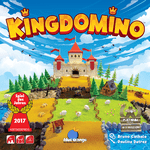
Very easy to teach to anybody of any age. Scribbly Gum. I have some special tips for those of you with large families. You probably noticed that Scribbly Gum has virtually unlimited player count. It's a great game for that. Guardling says it plays four, but we have two copies and combined and with very few rule changes, our copies play eight. And then if you go to the perfect boardgame.com and you explore family games, you can set the player count filter to the number of people in your family and get recommendations that are suitable for however many people you have. The perfect boardgame.com is my personal project. So, please do check it out. And finally, my last recommendation is my long-term favorite. This is just an excellent game and it has been for years. It's called King Domino. Uh you may already be familiar with this one.
This is a drafting game where players are simultaneously drafting a tile and their turn order. That is a cool mechanic about this game. The you can get a better tile, but a better tile means you'll go later in the following round. You can get a worse tile, but then you'll get first choice next round. It's a brilliant mechanic. It's why this game has lasted so well. Um, and then I was talking about arithmetic earlier. The scoring involves some multiplication about the size of your space and the number of crowns in each colored area. So when one of my kids was like six, five or six years old, she would try to count out her score, which was a really appropriate challenge for her. So that is King Domino. Uh it's one of my favorite all-time favorite family games.
Later on, as my kids got older, I we now play Middle Ages, which is a lot like King Domino, just a little bit more advanced. So, those are my best recommendations for true strategy games that even adults would enjoy even if they didn't have children. But you can very easily introduce these with kids as young as four, taking into consideration some of the accommodations that need to be made. As again, I will say every child is different and some are going to have greater challenges with learning how to take turns and learning the objectives of trying to win a game. Just remember to be patient and make sure that a gaming experience is fun. Thanks for watching. See you next time.
Bye-bye. I'm talking to my wife about today's game and she's like, "Well, in the last episode it was a zoo themed board game and you had all these jokes. What have you got for a game that's themed about kingdoms and castles?" And I just look at her and I shrug my shoulders, but she wasn't impressed with that. And I'm going, "Well, what? Isn't that the court gesture?
Hey, my name is Ben and today on Board Game Dad, I'm going to be talking about King