QUICK & Simple Rust for Warhammer Scenery
Games in This Video
1 game is featured in this video — it unlocks as you watch.
Transcript
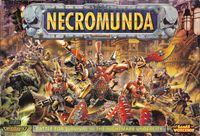
In this video, I'll show you the fastest and easiest way to make your terrain look naturally rusty. No airbrush, no oils, no fancy stuff. In last week's video, I showed a piece of terrain that I'm working on that I had been having some serious kind of analysis paralysis issues with. It was a zone mortalis tile for Necroanda from Games Workshop. I had built it and well actually I built two of them so far. Uh but I built it later last year with the idea that I was going to work on painting both of those tiles and everything like that over the winter. I primed them dark brown with a rattle can primer uh on one of the last kind of nice rattle can days uh in in 2024.
And then I just let them sit all winter and didn't do anything with them at all. Like I said, analysis paralysis. I wasn't sure on the colors or techniques that I wanted to use. Well, after that video, I just decided to go for it and make it happen. I was initially thinking about airbrushing some metallics over the brown primer, but then I decided that actually I'd just prefer to dry brush a silver metallic over all of that brown. Now, you'll have to take my word for it since I didn't shoot any video of the dry brushing the metallics and all that kind of stuff. The plan was originally to try out this paint scheme on these two tiles first and then maybe make a video of the process on the next two tiles when I'm, you know, which I'm starting to build right now, but they're not finished yet. Also, dry brushing the silver looked terrible after I got it done. Like just god awful. Real bad. But you have to trust the process. After the dry brushing, I went back in and painted in each square on the floor with grim black speed paint from the Army Painter.
This actually went pretty quickly since the stuff is so fluid being a speed paint. Also, the the transparency, and there's not a lot of transparency, but there's a bit of transparency with Grim Black. It kind of makes a randomly sort of modeled look on those floor tile bits if you only put on like one coat like I did. If you put on two coats, it will become much more opaque. I basically did the same thing then after that with blood red speed paint on the sides of the columns and the pillars. And again, the dry brushed silver from the previous step helped to make it so look that like the red areas, you know, inset into the pillars weren't all just one solid color. Happy accidents, I guess. At this point, I was happy again with the way that my tiles looked. However, they were far too clean. Necroanda is about rust and filth primarily. And though I'll probably be using these tiles for games other than Necroanda, I still wanted rust and filth. I watched some zone mortalis videos on YouTube to kind of get some different ideas for weathering and stuff like that, and I saw people using dry pigments sometimes, which I find kind of delicate for terrain.
doesn't necessarily hold up as long as I would like properly, you know, or some people using fancy expensive rust effects like dirty down rust, which I find pretty expensive at 20 bucks a bottle. I wanted something I could use out of all the stuff that I already had. So, I hit up my compadres on the Army Painter Factory team. There's a whole bunch of us now, and we have a Discord channel where we can like chat and talk about silly stuff. I asked whether I should just thin down the fresh rust effect paint from the Army Painter fanatic line and whether I should use water or maybe I should use some other kind of medium. I was pretty much like fishing for ideas at this point, but in this particular pond, uh there's some really smart fish in it, so I figured I'd certainly catch a good idea. I may have gone with too far with this fishing analogy at this point. Fishing or not, the glacial geek mentioned that he'd used rust tone wash on his rain and iron robot host that he'd painted up on his channel. Pachchow. And frankly, I'd kind of forgotten about rust tone. It's a newer wash, you know, and there's so many different colors of washes in the Army Painter line, and I have a tendency to very frequently out of habit stick with the holy trinity, which is going to be, you know, dark tone, strong tone, and soft tone. But I added rust tone wash to my list of potential ideas to solve this terrain problem. I knew it
wouldn't work by itself for what I kind of had envisioned in my head, but it had certainly would help to achieve the goal. Then heresy for heretics pachchow suggested double brushing on some fresh rust effect paint. Now, I hadn't heard of double brushing before, but he explained it as uh kind of like dabbing on the fresh rust, which is pretty thick as is, and it has some sort of texture particles in it, stuff like that. Dabbing it on with a brush and then feathering it out with some water in a bigger brush. That kind of sparked an idea that basically became what I ended up trying. And I'm pretty happy with how it turned out. His idea made me think of ink and water. You've probably seen those videos, you know, dropping blobs of ink into a water tank with glass sides and then filming that the way that the ink, you know, spreads out in the water and all that kind of stuff. It looks real cool and trippy. My thought was to kind of do something like that, but on each square on the necroanda tiles, right? I'd basically almost flood the tile with my brush and some water.
And then I would then use that same brush to sort of splotch in a mixture of some fresh rust effect paint and a lot of the rust tone wash and and let the water do its job, you know, and spread everything around naturally. Kind of how rust ends up where it, you know, does in the real world. However, I would need to add something. In theory, the rust tone wash, like pretty much all true washes out on the market, uh the rust tone wash should have an additive in it to help break the surface tension of the fluid as it dries. You put it on the model and then as it dries, the surface tension breaks early. There's something in washes to make it do that. This helps to make sure that the pigment in the wash stays in the crevices and doesn't spread out too much into the flat areas that you painted on. However, I wanted this mixture to do both. I wanted it to collect in the crevices, you know, and hopefully dry brighter orange in those spots with the opaque nature of the fresh rust effect, but then also kind of stain the flat areas more with the transparency of the rust tone wash. So, I guessed that speed paint medium might do the trick and then I tried it. In my mind, I got it on the first try. I would mix a little bit of fresh rust and a lot of rust tone wash. Probably around one part fresh rust to five parts rust tone,
but your mileage may vary a little bit. Then I added some speed paint medium. right around twice as much as the fresh rust that I added. So, you know, if I added a glob of fresh rust that was about the size of a drop, I'd add two drops of the speed paint medium. And then I would mix all of that together with the back of a brush handle. It's a trick I learned from Sam. This keeps gunk out of your bristles if you use your bristles to mix, right? So, instead you you don't want gunk in your bristles. Use the back of the handle to mix your paints. The color will look maybe a little bit darker than you might expect, but the initial result looks pretty much right. To apply, you just get your brush. And I'd use a bigger brush for this, right? Like not like a house brush or whatever. I used a an Army Painter monster brush because it's a great big synthetic. It's it comes to a good point and I I like those brushes.
I load it up with a bunch of water, like basically paint water from your paint cup. And then you just slop it on to the square that you want to work on. Right now, if the thing that you're working on, the tile or whatever that you're rustifying doesn't have individual squares like the necroanda tiles do, then I would probably slop on a bigger area, right? You know, that would probably make more sense to to to work on. But for this, you know, this necroondata tile thing, one square at a time actually works pretty great. Once the square is like pretty wet, then grab a dollop of the rust mixture that you've made of the three different things and then slop it directly into the water on the area. Kind of just get loose with it and move it all around however you want. I knew I wanted more of the brighter rust to gather kind of around the edges of the squares in the texture area. So, I made sure to plop more of the mixture kind of into those areas when it was all initially wet. Sometimes I would then add a little bit more water to the mess that I'd kind of already made to help make the transition a little bit smoother to the rest of that particular square or whatever. But honestly, you can do it however you want. The trick is kind of flooding the area with water and then adding the rust mixture of fresh rust, rust tone, and speed paint medium to the wet areas. fluid dynamics and then evaporation kind of handle the rest.
The final look to the rust wash and and understand that this project isn't done yet what I'm showing you here. There's a lot more to do to the terrain, including some sponging on areas of darker rust here and there after I do a few more steps and a little bit more silver dry brush and all that kind of stuff. But the final look to this stage of the rust is pretty much exactly what I envisioned in my mind's eye when I started asking questions and you know then experimenting. It's not crazy bright orange, right? But there are some areas that are brighter orange in the crevices like there would be with real rust. Also, the mixture kind of tints the silver metallic very easily and makes it look corroded and older. The best thing about it in my mind is that it's quick and easy and cheap. The three bottles come to $14.19 retail according to the website. And they're not only just useful in this recipe mixed together for this terrain rust, you know, wash thing. Instead, each of these individual bottles has its own uses as well. Fresh rust is amazing for spot rust effects and for texturing models. Rust tone is great for aging metallics all over the place. It's not on just on terrain, but on models of all kinds, weapons, whatever you want to do.
And the speed paint medium is great for turning your current speed paints into excellent glazes as well. Like I said, it works great on the tiles, the floor, but it doesn't work quite the same on the walls, at least not as I originally mixed it. Right. When I first tried this technique on the columns and pillars of my zone mortalis tiles, the water, you know, you put on first, you flood the water on there, mostly ran down the sides rather than pooling and drying on the on the surface itself, it ran down to the bottom. I'm finding now that mixing the three ingredients, one to one to one, right? So, one part rust uh you know, fresh rust, one part rust tone, and one part speed paint medium. and then using that and brushing it onto the walls directly like dry in streaks from top to bottom and then going back and adding a bit of water to your brush and streaking it some more really gives the effect that I'm actually looking for on the walls and it still uses the same three bottles.
So, if you're interested and you don't have any of the three bottles, you know, that I mentioned in this video, like already in your collection or whatever, head over to your local game store and pick them up. If you want to try it out on your terrain projects and if you can't get it from your local shop, then you can save 5% off at for your entire order from the Army Painter store on the web and help support me in the channel by using the link down below in the description. Or you can just enter offer code factory uncle 5 at checkout. Either way saves you 5% off and helps to support the channel. I love the grungy and rusty aesthetic on most of my sci-fi terrain projects. And I really enjoy that this process is so quick and easy and doesn't require like special oil paints or other pigments or fancy effect fluids or stuff like that. And yet, I'm still super happy with the results with this quick, easy, and inexpensive process. Do you like rust? Is there something that you'd try differently in this situation for terrain? Let us all know down in the comments below and knock the rust off via depressment of the like button while you're down there as well. It really does help the channel. Also, subscribe if you want to see more videos like this every single Friday. It's free. Thanks for watching.