Scarabya Board Game Review & Runthrough: Tetris Anyone?
Games in This Video
1 game is featured in this video — it unlocks as you watch.
Transcript
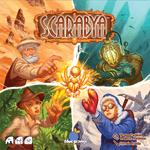
what are you looking for scarabs will a board game about looking for scarabs actually ah now that's clearly a stick it's a board game leverage stick which I'm going to use to get it right out of the bushes ha found it Scarah buyer is a Thailand game of ancient proportions where plays taking the role of archaeologists as they place different shaped tiles on their play boards to create excavation sites these excavation sites are uncovered negative spaces on the play of wards scarabs are the left uncovered score plays points provided that they're in an excavation site or four squares or less the player can strategically place their tiles most effectively to maximize their points will win the game a game mascara bhaiyya is played over 12 rounds plays begin by selecting a colored frame assigning the greatest Explorer role to the youngest player who then builds their game board by using the four large tiles whilst also placing the 3d pimple shaped rock obstacles inside the holes the other players then copy this set up exactly each player's archaeological site contains three types of spaces a scarab space and empty space and a rock space
across each round the great Explorer draws a mission card from the deck and reveals it these cards tell players which tile shape they'll be placing on their board for the round place simultaneously take their corresponding tile shape of their own color and place on the board ensuring that the placement of their first child covers at least one of the four central squares tiles placed may not overlap with other tiles they cannot extend beyond the frame or be placed on top of rocks subsequent tiles added to a plays board must be connected adjacent lead to an existing tile players earn points by enclosing uncovered scabs using their tiles ensuring that the enclosed area is four squares or less this is known as an excavation area at the end of a round if a scarab is enclosed in this way it scores points equal to the size of the excavation site for example the scarab in this excavation area would score two points if multiple scarabs are enclosed this way the player scores points for both scarabs equally once the scarab has been scored a token is placed on top of it to indicate that this has been completed play continues until all mission cards have been drawn and final scoring is completed the play who has earned the highest number of points wins the game five things you should know if you thinking about getting scared by a football game collection number one scarab eye is an excellent spatial puzzle it puts a really great refreshing twist on the polyomino tile placement board game genre unlike in other games like patchwork where you're trying to use the tiles to cover up all
the spaces here you're exploiting the negative uncovered spaces it's really pleasing to see that when you have created in an excavation site with three or four squares inside them to have two scarabs in them to be able to score double points placing tiles early in the game has a flown effect later in the game so it's really important that players know the composition of the mission deck and also to have all this tile splatter in front of them because as the gang gets towards its endpoint plays need to really think carefully about how they're placing these shapes on how the other tiles will fit into this big puzzle so it's a game about horde planning adapting to different situations and think about how you're gonna subdivide the space that you're given a brand new shelf do-do-do-do-do do-do-do-do-do do-do-do-do-do do-do-do-do-do do-do-do-do-do do-do-do-do-do number two each game of scarab i'll always feels really tight and as players get towards the end of the game the game feels more and more restrictive the 3d obstacles that are included in the game really shape the decisions that play is made from turn-to-turn at the beginning of the game players are simply placing their tiles down hoping not to cover up some of those scarabs whilst were the seventh eighth or ninth top plays and then now weighing up whether they should cover up some scabs in order to exploit the points going abilities of another
scarab somewhere else on the board being able to make these very wave decisions really makes this game quite interesting and the way that the tiles can all fit together and the different variations of how they fit together makes the game very replayable number three similar to other board games like uber and number nine scarab AI has minimal player interaction especially at the multiplayer mode here plays a mainly focus on what they're doing on their own board and not worrying about other plays plays may sometimes look at what another player does especially at the beginning of the game and copy their tile placement but that is the extent of how players actually interact with each other towards the end of the game place may compare their boards and how they place the task to see who was most efficient but that is as far as it goes however the game does include two other modes head-to-head mode and solo mode in head-to-head mode two plays are essentially racing to find as many scarabs as they can on the same archaeological site plays take turns drawing mission cards and placing a polyomino tile onto the same board at the end of a player's turn if they successfully enclose a scab they earn points the player with a highest score after all wishing cards have been drawn wins in solo mode a player is attempting to cover all of the scarab icons on the archeological site before the mission deck runs out despite its simplistic rule set and short play time the game can be prone to some analysis paralysis that means
during the mid game when there's about five tiles left over players can often spend a long time trying to position their tiles in lots of different ways to try and help maximize this score by the end of the game this can sometimes hold up the other plays and stop the game from finishing in a satisfactory amount of time number 5 scarab art is already entering into a board game genre that's quite over populated you've got games like cottage garden Indian summer number 9 and patchwork if you don't have any of those games they just mentioned scarifier might be a game that you try before you buy it's well worth a look it's got an excellent table presence it's got some really good decision and spacial decision-making opportunities as well as a very simple easy-to-learn ruleset perfect for the family if you have all these other games already where scarify difference is that this one is more about using the uncovered spaces and trying to maneuver around particular spots on the wall in patchwork players are purchasing polyomino tiles using buttons and attempting to sew a quilt by covering as much of their own player board as effectively as possible in number 9 plays a stacking and placing numbered shape polyomino tiles adjacent to each other to create a really strong foundation plays then try to stack as many tiles on top of each other as possible without leaving any overhangs the twist in this game is that points are scored based on the numbered tile placed multiplied by how many levels up it is different enough for you to peak
your interest but whether you should buy it that's something that you need to decide by having it going up first thank you once again for joining me for another board game review board game century I really enjoy showing you and bring you these great wonderful exciting games if you really like my videos please like subscribe and share and once again I want to say a huge thank out to all the viewers and subscribers who continually support this channel this is Danny Sonya see you next time goodbye