AquaSphere Review - Chairman of the Board
Games in This Video
1 game is featured in this video — it unlocks as you watch.
Transcript
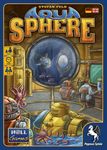
Hi everyone, today I am talking about Aquasphere by Stefan Feld. Now this game goes back to 2014 I believe. And if you watch my channel, you probably know I'm a huge fan of Stefan Feld. If you checked out my top 50 board games of all time this year, um Stefan Feld holds quite a uh prolific um coverage of my top 20 or 30 games. So he really is one of my absolute favorite designers. Um Aquasphere is a game that's kind of received a few kind of mixed reviews from my general consensus of what I've kind of information I've gathered. Um and I think I know why that is. I think it's probably due to the fact it's so um well, it's pretty much theme-less. It's a very mechanical game um and the theme itself doesn't make any sense. Um but if you're that far into Stefan Feld games, you probably don't care. Um this game plays two to four players and takes about an hour and a half to play.
So this game might sound quite difficult to um to wrap your head around as I'm explaining it because as I said, it's it's completely theme-less. So there's no real links I can kind of um you know, link things to to help break things down if that makes sense. But essentially, um the game plays out over over two boards that everyone's using and you've got your own player board as well. On one of the board, you are controlling a scientist and in one of the boards, you are controlling an engineer. Now a turn is going to be pretty simple. You're going to either use uh your your scientist or you're going to use your engineer. So the scientist board is pretty simple. You are just going to kind of navigate up this track um and collect these different actions to program for your sci- or for your engineer to do as a separate action. So that one's pretty simple. So you've got this track with all these different um well, modular um actions on them.
And as you move from spot to spot, you are collecting that action and putting it ready to use on your other player board. And when you use those other actions, you are going to do a number of things which score you points in lots of different ways. So this is very much one of your traditional Stefan Feld point salad games um where you're going to get points in, you know, loads of different ways. Um and again, a lot of these ways you're getting points don't make too much sense. So, um so, one of the actions you can do is to um to fight these different octopods. They're like these little um I suppose they're things that give you negative points if you're still on the space with them at at at the time of scoring. But, as you defeat them, you actually score points based on a kind of set collection method. Um you know, if you kill one, you get one point. If you kill two, you get three points. Kill three, you get uh five or six points. I I can't remember, but that's generally how it works. Um you are also collecting crystals, which again count in set collection methods um when it comes to a scoring. And it can also be very important because when you score a certain amount of points, if there are red lines to go through in order to go to the next bracket, and you need to discard a gem in order to do so. Um so, it's quite important that you always have one in your kitty to use, otherwise you can kind of um just completely waste your actions or waste points that you're get getting because you're just going to get completely stuck at one of those red lines. And you can get clocks, and the clocks are really useful because they let you take additional actions. And they also let you traverse the um the uh engineering board.
You can get new cards into your hand, which give you kind of unique powers. So, when you take certain actions, you can get bonuses. Um and additionally, they give you points as well based on the current round of the game. So, the earlier you get those cards, the more points you're going to get, which is really nice. You got that tension of um you know, getting things done early. Um you can also um take more of these storage tiles, which increases your capacity to do things because at the start of the game, you have a tile which kind of uh or a a separate kind of uh sort of storage area, which dictates how much things you can store at any time. So, if there's only two crystals in there, but you want to collect three crystals, then you can't have that third one because you haven't got the room to store it. Um and again, you can you can choose to invest in increasing your storage capacity. So, you can kind of cater to doing certain things. So, if you really wanted to focus on killing those octopods, you can um you know, completely focus on increasing the storage to do that. So, when you use that action, you can actually demolish a bunch of them at once rather than just doing a few at a time.
Um and you can also kind of set yourself up um for other actions as well. So, that's generally the the things you're doing, but as you as you take those actions, you are actually um taking one of your robots from your player board and you are deploying them onto onto that section of the engineering board because that engineering board is um basically a modular wheel uh made up of I think it's six different um different sections and they're all pretty much identical with slight differences. Um but when when you deploy them, you either you you kind of claim that that section of that board and then if somebody kind of uses their or uses one of their actions in the same region, they kick you off that board and move you into move you into a section a separate holding area, which can be a good thing um because you kind of want to get as many um robots as you can off your own player board because um if you take a separate action to kind of deploy your um your submarines on your player board, then you can score a whole bunch of points that way.
So, there's there's loads of different ways you can score points as you can probably tell. Um again, completely no rhyme or reason or logic towards what these actions are. It's really weird and out there, but strangely it does work somewhat. Um but at the same time, I think I think the game only plays out over four rounds and at the end of those at the end of every one of those um four rounds, you are going to score based on how many crystals you have, um you know, how many regions you're controlling because if you have your robot on the on those spaces on that engineering board, and you got the majority, you're going to score six points, which is not insignificant. Um but at the same time, you don't want to be controlling regions with those octopods on because they're going to score you negative points. So, you're going to be very careful about that and to not not to have too many octopods out any at any time and to weigh up, you know, if it's worth having a small sacrifice on the point you're getting, um, you know, to take that hit of those octopods just so you get the majority if that makes sense.
So, lots of things you've got to weigh up, kind of min-maxing throughout, um, you know, increasing your engine by getting cards, increasing your storage capacity, keeping those octopods down, always making sure you have clocks, um, because the clocks are so important because as I said it lets you move around from section to section, um, as a kind of a free action as you're spending them and and moving around making sure you always in a in a place that's going to benefit you. And that's going to be pretty much how the game plays out. It's, um, it's quite overwhelming at first because it's so, um, nebulous in the way it's actually explained and it reads, um, again because it's so, um, so non-thematic, but I think despite the the huge or moderately large rules overhead, because of the way the programming works, you can only go from one section to one section with, you know, with a few options at a time, then you're not overwhelmed in being being able to do everything at once. And you can only ever program two things at once at the same time anyway, so you're always limited to just a couple of actions to take, which is actually, um, is a huge, um, bonus for this game for me because I think if you could always do everything at once or could do more than that the game allows you to, then it could be a bit overwhelming.
Again, these restrictions do actually work in the game's favor for me at least anyway. Um, but yeah, the I do actually really like the flow of the game. It's actually quite simple to to digest once you get playing it. And I think this is definitely one of those games with a an initial steep learning curve, but from then on it it rapidly falls and once you get playing it it plays very smoothly. And it has, um, almost like a breezy feel to it, um, considering the type of game it is. And, um, yeah, I I really do like the vibe of the game. And it has a real fun factor to it that a lot of Stefan Feld games don't. I mean, I I enjoy the, you know, the the brain burnery um min-maxing of Stefan Feld games, but a lot of them I understand that's a personal taste and it doesn't have that generic fun factor. But, I think Aquasphere does a good job of making it feel like a fun game, which is um really nice.
Um so, yeah, decision-wise, there are loads of decisions you can make. There are different strategies you can take, you know, are you going to take a bunch of cards early to build up your engine and get points points earlier? Are you going to try and smash all your submarines down and get them while they're cheaper and try to get your robot supply so you get points that way? Are you going to really focus on killing the octopods? Are you going to focus on um you know, collecting loads of crystals? So, yeah, there's there's lots of different options you can take, which is always a good thing. Um so, yeah, mechanically uh is also um fantastic because, as I said, it's pretty much boils down to two separate actions. And the first one, very simply, program your program um an action. And the second one is use the programmed action. So, again, not overwhelming at all mechanically. Just two one of two very simple choices. I think the third one is to pass. So, no real big deal there.
Um and balance-wise as well, I mean, everything kind of scores relative points. So, there's not a um a particular strategy that just completely dominates. And you can definitely viably win using any of the strategies available to you. But, again, you don't want to let someone run away with a certain strategy. Um you do want to be somewhat diverse um because the board state is going to change um depending on the strategies you want to take. Um up time, I think is is really good. Um the there there is some small um small kind of opportunity for um a or analysis paralysis in this one, but again, I think because you're restricted to only doing a couple of things, then that is pretty much well mitigated. So, I think the up time is is very relatively good in this one. Um and the time investment as well, I mean, the game I think it says about um it can take up to 2 hours, I believe, but you know, from the board there it says 60 to 100 minutes. For me, I think, you know, we got this played in about 70 minutes, which I think is um is a real sweet spot for me. I mean, you know, getting a a game of this waiting done in under an hour and a half is is fantastic. So, no complaints there whatsoever. In fact, it's a it's a real good thing.
Um replayability-wise, I think the the game is is pretty damn good because there are a bunch of cards um and you know, different tiles that come out from round to round. Um you can specialize in different things. Um the board state is always going to be different because there is set up variability. Um so, yeah, I I do like the the replayability and it's definitely um a game you can come back to um you know, more than a few times. Um player interaction is um surprisingly good as well um because of the scarcity of certain things and um and the area control element as well because you I said, you want to get your robots onto the board um and you also want to have your robots in these holding areas as well. And constantly people are pushing them out and pushing them back onto your player board, which can cost you points. So, there is a tension and you do have to be aware of what other people are doing, knowing how many clocks they have on their supply cuz, you know, if if you can work out how far they can travel around the board, then you don't might not have to worry about a few things. So, it's not a game you can completely ignore your opponents.
Um aesthetically, I actually really like the way the game looks. I suppose it's a bit busy initially, but once you understand how it plays out, it actually actually works really well. Um I said, it doesn't it doesn't make any sense, um but it's still it's it's relatively good-looking. And um the components are um they're they're decent. They're not nothing special, but a a an average production for um for Pegasus Spiele and Hall Games. Um you know, that it's all it's all of that certain standard and it doesn't fall below a certain level. So, more than functional and um perfectly fine. And and set up and tear down um is a bit like the rules themselves. I think initially, it sounds like a bit confusing and a bit of fiddly, but once you understand how it scales from player to player, it's actually really easy to set up.
Um I I really do like the progression of the game, as I said, because as you as you develop, you're increasing your storage to do things, you're getting more cards into your pool, um so to get bonuses. So when you you know, when you take a certain action, you might get more resources that you need. So yeah, it does have a good scaling and a good curve to the game where you are doing more in the later turns than you are on the few on on the earlier turns. Um scalability as well, again for for two-player game, um considering quite a big part of the game is area control, works really well. So, you know, for me, two or three players is the sweet spot sweet spot for me for this one, but if I had to play with four, that's going to be no issue at all. Um and comparisons to this game, but there really is nothing quite like it that I can figure out, but in in as a contradiction to that, it does feel like a Stefan Feld game in terms of being, you know, very mechanical, and pretty dry on the face of it, um a bunch of intertwining mechanisms to get you lots of points in different ways.
But I think if you like games like Bonfire or Trajan, where, you know, where where the game is dry, and you're not too fussed about that, then you are almost definitely going to like Aquasphere. I mean, this for me, I always kind of was hesitant to pull the trigger on this one, not only because of the things I heard about it. It just sounded like a bit of a mess, it sounded like a bit fiddly and a bit confusing. And as I read the rule book, that was kind of um you know, verified. But once you get this to the table, it is not like that at all. It is very smooth, very simple, and um still have loads to rack your brain about, and it just lots of fun, loads of strategies, you know, loads of ways to get points, and that's what you want for a Stefan Feld game for me. So this one is right up there for me in terms of Stefan Feld designs. It's what I want from him, and um it went down an absolute treat for me.
So, yeah, definitely one you need to play for yourself in order to appreciate it, I think, rather than actually seeing it played or or reading the rule book. But, yeah, if you can't tell, I really did enjoy this game. I love the the variability. I love the diversity. Um there's in-game scoring as well that's that's um you know, adds an additional wrinkle to the game. The constant um changing um state of play in terms of how many robots you've got deployed, the area majorities, the the um the contrasting octopods that you've got to fight off and you've got to be careful not to control those regions while still wanting to have majority. So, yeah, it is an absolute um a game of spinning many many plates at the same time while still wanting to specialize in just something a little bit better than your opponent does. So, I absolutely love it. Couldn't recommend this one enough. I think it's getting harder and harder to get hold of. So, you know, if you can get a copy, I'd really recommend snatching it up. And hopefully it'll get a kind of a reprint soon. Um but, yeah, absolutely loved it and um undoubtedly holds a holds a strong place in my collection now amongst all the other Stefan Feld games that I love.
So, um definitely gets my um my elite seal here um which I give out very sparingly. So, that's how much I do love this game. Definitely check this out if you like your Felds and don't be put off by what other people say. Try it for yourself. Um I hope you enjoyed this review. If you have, please hit like and subscribe to my channel and check out my other videos, too. For everyone else, I'll see you next time on Chairman of the Board. Bye.