TDG: Cascadia: Rolling Hills with Ray
Games in This Video
1 game is featured in this video — it unlocks as you watch.
Transcript
Hello ladies and gentlemen and welcome to the discriminating gamer. You know my wife came up to me the other day and says I think our kids are spoiled. Like nah all kids smell like that. Today we're taking a look at Cascadia Rolling Hills from FlatOut Games and AEG. Heat. Heat.
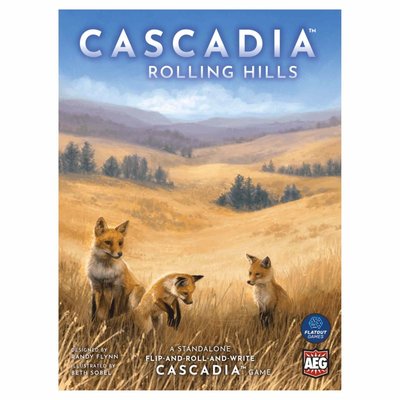
in Cascadia Rolling Hills from Flatout Games in AEG. One to four players are basically uh playing in this. It's a flip and roll and right game. And what you're trying to do is you're basically trying to uh fill out your sheet um with the best natural habitat, so to speak. make sure that you get the most number of points, fill in the most areas, and well, see who can score the most points. So, I tell you what, let me explain really quick how the game plays, and then I'll give you my final thoughts. So, to play Cascadia Rolling Hills, the first thing you have to do is you have to set it up. So, what you do is you figure out which one of the sheets you want to play. There's four sheets, an A, B, C, or D. Okay? And everybody has to play on the same one. So, you're going to give everybody one of those sheets, and you're going to give everybody one of the tally sheets as well because that's how you write your resources.
what you have of each one of the little animals and stuff on it. Okay, you're going to have two personal dice, which is going to be the little small dice. And then you're going to take the four bigger wooden dice. You have three central dice, and then you have one deluxe dice, and you're going to put those in the center of the play area. All right. You're also going to take all of the um the habitat cards. Now, there's level ones and level twos. You're going to shuffle them all up and discard one of each. One, get rid of one level one, one level two. All right. Put the level ones on top of level twos. And then you're going to flip over the top one and put that next to the stack. Okay? And that's basically telling you you have 20 rounds. So when that last card flips up, that's going to be your end round. And then you're also going to take completion cards and you're going to deal shuffle those up and you're going to deal four completion cards, one to each of the four areas. Now, the completion cards are either going to go on the top or on the bottom. All right?
Um and you can designate it because if they're the blue ones go up on the top, the brown ones going to go on the bottom. and they're either going to give you bonuses when you build stuff or they're going to give you discounts when you buy everything. But once you have that done then, you're pretty much ready to go. So, the way the game is going to play out is um one person's going to basically roll all four of the dice in the center of the table, the big big large dice, and everybody rolls their own personal dice. Now, between those, what you're going to do is you're going to figure out which one of the resources you want to use. All right? And that's the tricky part and that's the fun part of this game is you everybody gets to use a center dice but only you're going to use your personal dice. All right. And you're going to look at all the different animals are going to show up on there and you're going to figure out what you have and you're going to figure out what you potentially need to purchase from the row of cards. And but you get to pick out of all those dice one animal that you get to and and however many show up show up on that one. So, if you have, you know, say there's, you know, a couple hawks or birds um on the center dice and you happen to have one bird there, you're like, you know what? I'm going to take the birds because I need them. You have three. Cross off your number. On the next box over, you write three. Okay?
And that's that's just a running total of what you have. When you spend them, you cross it off and deduct it and write the next number down. Okay? But that's the main thing is you're only ever going to use one. Now, the one special dice does have um some uh additional numbers which are actually really helpful because one of those numbers um or one of those will actually show a symbol of three dice and that allows you to choose three different um three different animals that you can actually choose. So, that's the one time you can do that. There's also a a roll one to two times of your personal dice section on that. There's a wild that can show up on that. Um, the one I like is the one that has the nature token on it that shows a minus one because you have nature tokens and that's the bottom row on your tally sheet is you can use nature tokens to manipulate your dice a little bit and that's going to allow you to get a bonus on on those nature tokens and I'll cover those here in just a second. Now, the other couple sides are going to show two different animals. They're kind of split up half and half. You can pick one or the other. You don't get both. Okay?
It's just giving you better options to try to get those. All right. Now, the nature tokens. The nice thing about the nature tokens is the nature tokens are going to allow you to down convert, upcon convert, or take two different types depending on what you start. And you always start off with a couple in the game. Now, for one nature token, you can actually down convert, which means um when you look at the at your tally sheet, the bear is up on the top and the fish is always at the bottom. Well, that's your hierarchy. So to down convert means that if you know if you roll you know four of one animal you can spend that one nature token and then spend use all of those and and turn all those into whatever the animal is below. So say for example you got the birds um the birds is the second one up on the hierarchy pool and you happen to roll three birds and you roll two fish but you know you need a lot of fish. You can spin your one nature token and convert all those birds into fish and now you have five fish. You have the the three birds plus the two. So there you go. you can upcon convert which basically it cost you two tokens to do that nature tokens and what that's going to let you do is basically do the opposite. You're now going to convert up. So it's a way to get those more expensive those elks or those bears that you may need. Um or you can spend three and you can take two types which is sometimes you may need to. So it's really good to have those nature tokens. And like I said if you roll that one dice and it happens to show the negative one on the nature that means you can down convert for free which is nice. you can upcon convert for one and you can take excuse me you can take two for a total of two rather than three. All right. And so that's what you're going to do. So um and now depending on which sheet you play ABC or D each one of them has a little bit
different rules. Okay. So easiest to explain it is I'll just explain it on the A sheet is whatever the card type is that you buy. You're actually going to be writing in for example that particular number. So, if you complete um like say a mountain card that has a number two or three on it, whatever that the number happen to be on it, that's what you're going to write in your little box. Okay. Now, as you go in that particular sheet, as you go down, once you fill in your second one, well, then you're going to get the extra bonus. So, you would actually circle your victory point thing, cross off, and then you're going to be able to take one of the bottom bonuses. And if you keep going all the way to the bottom, you get the second one. If you complete a row all the way across the side, then you're going to get the side bonus as well. And okay, and that's going to help you on those victory points. All right. Um, now every one of the sheets, all four of the sheets have a really great layout in the rule book on how they play on all of the rules. Um, and so they're they're they're all relatively simple to follow.
All right. Now, the game's going to keep going until you flip over that final card. Now, when you flip over a card, whatever cards on the end is going to push itself off. All right. So, you're starting off with one card, then eventually two, three, and four. So, your fifth card is going to take that end card. it's going to push it over. Now, the thing is is anybody can complete in a multiplayer game, anybody can complete the same um card in the same turn. It doesn't really matter. And once you complete the card, it doesn't go anywhere. You can actually complete a card in one row, okay, in one in one turn. And on the very next turn, complete that same card again, okay? Because it may give you the points that you want. Um, so when you turn that last card over and then your draw deck is totally empty, everyone is only going to get one opportunity on that first row to build that card. But that's the end of the game. All right. Once the the game's over, then you're going to take your sheet and you're going to add up all your rows, your columns. Okay? However that particular sheet for ABC, C, or D does the scoring, figure everything out, write down your total score, and whoever has the highest score wins. Cascadia Rolling Hills.
Okay, folks. That's just kind of a high level on how to play the game. I know the game's been out for a while and there's a bunch of videos out there and a lot of playthroughs on this game as well on how to play it and everything else. Um, I just want to give you an idea how it's going to play. Now, me personally, I'm not a super huge fan of rolling right games. Um, there's a couple of that I really like um that I've played. Um, and some of them aren't necessarily rolling rights, but like Hedron's Wall, I absolutely love that one. That one's phenomenal. Um, that's um, but this one here is is really it's unique. And in fact, I like how you have the center dice for for all the people that are going to play. If you're playing a multiplayer game, now I've only played this one solo. Okay. Um, my wife's been the only one here for a while. She's not really big into rolling right game. She doesn't want to play it. Fair enough. But this game plays solo and it plays really good. And the thing is it plays the same solo or if you're playing at multiplayer because the center dice are the center dice. Doesn't matter who rolls them and everybody gets to utilize them. Everybody gets to purchase from the same cards. The only thing that you're doing is you're rolling your personal dice and maybe getting to roll it based on whatever that center dice is. Nothing else anybody else does is going to affect you. So it's basically um when it's, you know, multiplay solitire. you know, if you're sitting around the table, you're just having like your conversations, whatever, while you're rolling, while you're figuring everything out, and when you're done, you got to wait for somebody else to maybe figure out what they're going to potentially do if that be the case. Okay, so the game plays the same no matter how many player players you have. And honestly, for a roll and
right game, I had a lot of fun playing this one. Um, it was very enjoyable. It's a short game, and I think that's the biggest thing that really gets me and and and why I like it so much is because it's only a 20 turn game. It's not it's not incredibly difficult because you know what cards are out there. You have four cards that are available for you to to purchase or do something with. Okay. You you have um oh shoot I forget what it's called. Uh you have the cards above and below the the completion cards which are going to give you the bonuses and whatnot. So, you kind of might have an idea of what row you may want to try to complete something on because some may give you another bonus. Like one's going to let you roll a dice and maybe ignore all the resources of one particular type, for example. Or one's going to always give you like a bonus one or two points, whatever the value of the card is.
So, um you kind of have an idea sometimes on where you may want to try to complete them because some locations may be easier, better than others. Um so, that's one of the nice things about it. So, when you're playing the game, it's like, "Oh, well, these are my resources I have." It's not super difficult to try to figure out what resources you're going to take. And in a lot of cases, it's almost obvious what you want to take based on the cards that are out there. Now, sometimes you're going to have a couple different cards. They're going to kind of sway you. Oh, man. I can maybe go with this one. I can maybe go with that one. I'm not really sure which one I want to do. So, that may be your only hiccup you're gonna have. But otherwise, it's really it it's not that bad. I wouldn't say the game plays you. You're still playing the game because you still got to try to figure it out. And you you need to plan ahead because the more cards that you can complete, the more you're going to be able to um manipulate your board, cross things off, and get victory points there. So, you need to try to complete as many as possible. It's just trying to figure out how you're going to be able to do it with the resources that you that you rolled, okay? And how that's going to play in and how that puzzle is going to work out so that you can spend all those resources to maximize the number of cards you can actually purchase. And that way you can try to purchase at least one card every turn if you can. Now, I'll tell you what, trying to purchase a card every single turn is really, really, really hard to do. So, you know, you're only going to purchase them every, you know, every every couple turns, unless you happen to get really lucky and some of the cards come out come out nice. Um, but otherwise, that's it. It's a nice little game. Um, it sits down. It doesn't play too long. I think
this says 15 to 30 minutes, and I'll agree with that. Uh once you know how to play this game and you know how to play your sheet, yeah, this isn't a real long game. Um you can easily pull this thing out and you can play it really fast. It's a small box. You can take this with you when you go to a pub, when you go to a restaurant or something like that. You can play it right there on the table if you really want to. And that's nice. You can travel with it. It plays great in a hotel. Uh you can probably play on an airplane if you really wanted to, but I would recommend a dice tree. Dice going to hit the floor and they're lost. Don't Yeah. So, but I don't know. There you go. Cascadia Rolling Hills. I think it's a I think it's a really fun game. Um, if you like rolling right games, I think this is one that you may get a kick out of. If you're on the fence with rolling right games, this may not be one that that you want um that you want to look at. Try it before you buy it. But honestly, as far as rolling right games go, I like this one and I'm not a rolling right guy. So, there you go.
That's my opinion. Well, thank you once good for joining us today on the discriminating gamer. As always, we please ask you like this video on YouTube, on Board Game Geek on Facebook, or even on X. We please ask you to leave a comment on any one of those platforms and we'll get to those comments just as soon as we can. And also, um, if you like the content we provide and you haven't subscribed to the channel, I humbly ask you click on the subscription button, join our little family, and even click on that bell and be notified when we drop new videos. Also, if you like the videos that I do over on this channel, I also do post videos over on my personal channel for my personal collection. Um, there will be a link uh down in the details below. And over there, I just do I'll do some unboxings. I'll do some reviews. And I'll even try to do some playthroughs as well. You know, I've decided that when I die, I want fireworks at my funeral. I want to go out with a bang.
on my feet again. And I DON'T KNOW WHERE I'M GOING. AND I don't know where I've been. Please somebody. fell. It was you.