Vantage - The Modern Adventure Game Perfected (Review copy provided)
Games in This Video
1 game is featured in this video — it unlocks as you watch.
Transcript
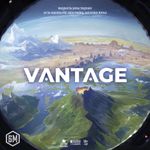
Hey folks, welcome back to the dungeon dive. Daniel here. I hope you're doing well and if you're not, I hope you are soon. Okay, in today's episode we are taking a look at Vantage, the new openw world adventure game from Stonemer Meyer Games and designed by Jamie Stagmire. Now, this game was sent to the channel as a review copy, and when Jamie reached out to me, I thought it was a little weird because usually Stonemer Meyer games aren't in my wheelhouse. I don't think their games are bad. Uh, their games are very good. They make very good games. They just don't usually make the kinds of games that I like. And so, I thought, well, okay, this is kind of weird. But then Jamie also said something. He said that a lot of the things that I talk about on the dungeon dive did help to influence the design of Vantage. And that made me a little nervous because what would happen if I didn't like this game? If if he took some of the things that I really like about adventure games and made a game based on those things and I didn't like it, that would expose me as a fraud and I would have some kind of existential crisis. But uh rest assured, and I'm not going to bury the lead here, I absolutely love Vantage. This is one of the best modern adventure games I have ever played, hands down. End of the story. You can stop the review right here if you trust what I say and just get this game. I have a really hard time
imagining fans of the games that I present on the channel, games that I love. I have a hard time imagining that you would not also love Vantage. So, this game is recommended to you if you like games like Roleplayer Adventures, Destiny's, Sleeping Gods, Seventh Citadel/Continent, Tainted Grail, Wandering Galaxy, Freelancers. I guess I should have put Lands of Galier here. I forgot about that. But it's these kinds of modern adventure games. So, Vantage is not a throwback nostalgia style adventure game like something like Poppers Ladder or Fallen Land or Dungeon Degenerates or Eldrich Horror or something like that. So, when I am talking about a this game being an adventure game, I'm speaking in terms of these kinds of games and not these kinds of games. Okay. So, let's take a look at the back of the box here.
And also we will take a look at one of my very first criticisms and that is that the back of the box totally fails to capture the exciting feel of the game. Guys, I don't know what you were thinking with this box here. If I walked into the store, somebody like me who typically doesn't enjoy Stonemer games and I picked this up because, you know, I like looking at their games because I think their games are welldesigned. If I picked this box up and I looked at it, I would almost immediately put it back on the shelf. There's so much empty space. There's so much great art in this game. The world is vibrant. There are so many things to discover and weird creatures to discover. And I don't understand why none of that is on the back of this box.
You know, the back of the box is so important to convey the kind of game. And this is an exciting adventure game, but the back of the box makes it look really, really dull. So, I think this is one of my major criticisms. And uh I know some people might think that's a little silly, but I think it's important. So, this says that Vantage is an openw world cooperative adventure game featuring an entire planet to explore in standalone sessions that begin with players scattered randomly across the world with nearly 800 interconnected locations on cards and over 900 other discoverable cards. The world is your sandbox. And yes, this truly is an openworld sandbox adventure game. And best of all, it's one and done. This is not a campaign game. And so there are seven things that I want in an adventure game. And one of those is one and done, no campaign. And I was so excited to hear that this wasn't a campaign game. And Jamie designed it to be one and done. And what's best of all is you really can play this game in 180 minutes tops. I have played multiple solo games in well under 2 hours. And so if you want a game that gives you a grand openw world adventure feel, but you can play one game, put it away, and be done with it, and then just get it out later and play another game, then Vantage is the game for you. So, let's go ahead and open this up and take a look at some of the stuff in the box.
Now, this game is a little hard to talk about, and I'm not going to show a lot of it because the main focus on this game is on exploration and discovery. And so, yes, that is another thing that I look for. I want to grab a pen real quick or a pencil so I can check these things off. So, what did we talk about so far? One and done. No campaign. Okay. Um, exploration and discovery. This is a game all about exploration and discovery. And having that opportunity to discover those things on your own is one of the main joys on this game. Now, don't be afraid that you will play this game a couple of times and you will have explored or discovered everything in the game. No, that is not true at all. There is so much to see and do in this game.
I've played this game five times and I don't even feel like I have scratched the surface. So, one of the things you're going to get is this player board and this will be the center of your board. It's called the center. And hey, look at that. It actually does come with rounded corners. Jamie was listening to the dungeon dive. And here you will keep track of your dice in your dice pool. You will keep track of your resources. Each of the players has three resources, health, time, and morale. And if any of those one resources ever gets down to zero, that triggers the end of the game. You will also keep track of your main mission, your kind of side missions, your destiny missions, and some of your challenge dice that are a penalty. You will keep uh those there. So, we'll lay that aside. Now, the rule book. Another thing that I love, and I didn't write this one down cuz it was a little silly, but you you guys know I love a good small rule book. I hate those big square rule books. And look at the rule book.
Look at the size of the rule book here. This is an excellent rule book. And one of the things we can talk about right now is that it is easy to learn and it is easy to teach. So, we got some of that down there. We will return to point 6 in a minute as we talk about setup. But yeah, this game is super super easy to learn. You will have no problem. You could you can be playing this game in probably probably 15 minutes from opening up the book. The the rule book is very nicely made. It's small. It's compact. It doesn't take up a ton of table space. And so then again, it also has a small footprint. And that is another thing that I like about an adventure game, especially one when one gives me this kind of epic feel. and an epic feel with a small footprint is a huge huge plus. In addition to the rule book, you will also get these story books and there are a number of different story books. Each one of these story books corresponds to a certain skill that's kind of like a collector of actions. It's a container of different actions. So when you have an overpower skill, a look skill, take skill, help skill, depart skill, engage skill, and a move skill, there's also a book of secrets. And this book of secrets contains puzzles and other kinds of elements that you will unlock as you play. So don't look at this too closely here. So, the different story books, when you take an action, such as a move action, you index that with the card
that your character is currently on or using, you find that card number and then you do what it says. And this is another thing that I really like because if there is reading, if there are story books, the passages are short. That is something that I look for. I typically don't want to read a novel while playing a board game. So check that point off there. And this is perfect. I mean, just look at these passages. The longest passage you will have to read is one paragraph. Most of them are single sentences. So the writing is kept to a minimum there. This game is designed with a brevity in mind. You won't be pausing the game for 30 minutes to read some preconstructed story. Uh the action is very present. You know, you are always in the action. you are almost never stopping to read and just reading about what your characters are doing.
You are actually doing the things. And so when you're playing with other players, it's nice to kind of pass these around. And what's really cool, again, to make the game easy, on the backs of most of these books, you will have an outline of a turn. And the turns are very easy. Again, this game is very easy to learn, uh, easy to teach. You basically on one turn, you take one action. You can take a location action, a card action, or a depart action. And that's it. And each one of those is basically kind of the same mechanisms. You don't have to keep a whole bunch of stuff in mind. We will go over some of these examples after we've set up the game. And I'm going to play just a couple of turns. So, you will see a few things that you might discover, but uh nothing major. So, don't worry about any kind of major spoilers. Another book that you will get here is the book of advantages. And this is a map book. And this map book also helps you set up the game. So this is your first kind of location here. Location 0000. This is your ship that you are starting on. And this walks you through setting up your characters and generating your starting mission. And this is a whole bunch of maps and things. You will be told to look in this game. You will be told to look in the book of Vantages because the name Vantages is very important.
Everything in this game is presented from the first person point of view of your characters, what you are seeing, and you're having to relay information to the other players who have crashlanded on this ship because some of your gear has malfunctioned. And so maybe they your other players, your other crew members, they don't have a visual uh representation of what you are seeing. So you have to describe things and you are constantly looking for things and uh using your eyes as the player is very important in this game, probably even more important than it is in something like Seventh Citadel or Seventh Continent. And then we also get a few little trays of chits. So there aren't a lot of chits in this game. It's very very easy to uh keep track of. We have some wooden cubes here. These wooden cubes will keep track of your player's uh resources. And also these little uh wooden cubes here are these action cubes. And these can be generated via various actions and various cards. And then these can be spent to trigger additional things on cards that you have acquired in your tableau. We also have these skill uh chits here. And these are very important. And I need to grab another little uh box here. So, these will represent all of those six skills that correspond with the six skills we talked about in the story books. And these can be spent to make challenges easier. So, you want to try to get as many skill tokens as you can. And you will start the game with a number of skill tokens.
Uh these tokens here aren't used very much, at least in the games that I've played. This is money that you can find in order to go to merchants to buy things. You can sell and buy things at various merchants. And um throughout at least three games, I never really generated any money. So this is a lot of tokens for something that um is used somewhat infrequently. At least in the games that I played. There might be other missions, other ways to explore where you are more uh interested in generating money. And then we also have two sets of custom dice. And so these black dice here, these are the challenge dice. These are the dice that you will roll when you are overcoming a challenge. Now, what's really interesting about this game and another thing that I like, but I didn't write this down. This is kind of a side thing, is this is a failforward game. Uh your your your challenges will never fail. You will never roll dice and be like, "Oh, sorry. You have to, you know, you have to do that again on your next turn." You'll never have a wasted turn.
The skill checks, the challenges, they always succeed. But what you're trying to do is mitigate some of the bad things that happen. You're trying to keep your resources high. And if you fail to take care of the dice in your challenge pool, then you will have to take some of that damage. And so one of the first things you do in setup is you you you create your challenge dice pool and you start with eight plus two players. So we're setting up a solo game. So let's take 2 4 6 8 and then two per player. 10. Now, you will probably never need any of these again, so you can put those away. And then these uh this other uh pool of dice here, these are used to generate random skills. Each one of these icons corresponds to one of the icons of the skill. So, as you can see, it's blue and there's that icon. So, this is a move skill. You will be told sometimes to roll these to generate random skills uh for random skill tokens or maybe you will be told to roll these to generate random things to look at. These are also sometimes used for little kind of dice uh pressure luck mini games. So you will be rolling these quite often as well.
And then the rest of the box is just really just full of cards. And I would say that this is somewhat of a complaint because if you're playing with more players than one, uh there is a lot of component fishing and I would not want to play this with more than three players. I have played with three players and for me this is mainly a solo game. So, this game has like over a thousand cards and you are kind of constantly going into this box to pull cards out as you are exploring the world. And one thing that I found is while I was playing with two other players, I as the person who was in charge of the cards, because this uh insert is stuck in this box, you can't you can't really divvy out these cards to other players.
What I found is that I spent a lot of time during the game finding cards for other players and I wasn't really able to focus on my own story, nor was I able to focus on, you know, the things that the other players were experiencing. And so that did bug me a little bit in a multiplayer game. This game can play up to six players. I would never ever want to play this game with six players just because the person who is getting the cards is going to be doing that a lot with six players now. It doesn't bother me at all as a solo player. When I play this game solo, it just kind of works. It's just kind of effortless. And then we also get this spoiler pack of cards and you will be told when to uh when to uh open that up and consult that. All right. So, let's see here. Let's take our Let me find the two books we need for setup. And we will set up our character. We will set up our mission.
And then we will do a couple of sample turns here. So, I will kind of set up my character uh right here. Let me move these dice here. Another thing that I like about this game is you could keep uh everything on a pretty small table. You know, my table is 3x4 and I can very very easily play this game even on a smaller table. Probably on a table half the size. uh maybe if you have a little small tray uh on the side of the table. So that is another thing that that I really enjoy is that small footprint. You know, this game doesn't take up a massive amount of of table space. So let's start with number one here. It says, "Weeks after receiving a mysterious signal from the Traveler, your ship arrives in the orbit of the Uncharted planet." So this is the same planet that you will be uh discovering and you will be exploring each time you play the game. And all of these large cards here, these are all of the different locations. And these are double-sided. So, we have 716 with 717 on the back. And as you can see, the art is very nice. It's very modern, but it it looks good. And everything that you all the locations you see are from your point of view as the explorer on this planet. That is your vantage. Again, keep that word in mind. So create a total number of challenge dice using as eight plus two per player. Okay, we've done that. So we have our 10 challenge uh dice in our dice pool there. Two, each player gains a different skill. You can select or randomize and its matching character card. So you can take your
skill die here and you roll that and that will tell you what skill you take and it will also tell you what character you are playing. So there are six different characters that you can play. Okay. So, we have this purple skill here. That is the look skill. So, I will take a look token. So, I am good at looking. I'm good at observing. And then you uh consult there. So, 1436. So, I need to come over to my character here and take a look at my character. 1436. Okay. So, this is the character that I am playing. I am Saurin the Navigator. Now, the cards will have different icons, different little squares here, and those are where you can lock challenge dice when you roll them. You can lock your challenge die. So, you don't have to take the penalty. And so, I can lock a die here when I take a look action. And when I do that, it also generates one of these action cubes. So, there is a little bit of kind of engine building. As you gain more cards in your tableau, you will be able to generate more of these. Then you can slot these into your character into your various loots and things. And these can also be used as timers to keep track of things because you can discover plants and you can grow plants and at certain times you will put an action cube on one of these and then when that fills up that plant turns into something more beneficial. So these are multi-use. It's very cool. I was surprised by how many different ways we could use these action cubes. So, there are certain things on cards when
placed gain two of these action cubes. I want to make sure that they're actually called action cubes. Are they called energy cubes or action cubes? I don't remember. Uh, boost tokens. Those are called boost tokens. And boost tokens can be spent. This is like a currency that you can spend in a number of ways. So, we will place two there. Then, as you can see also, there are a number of actions associated just with this character that I can take. Master, buy, and equip. We'll talk about these actions in a little more detail later. And this also tells one way that you can spend your boost tokens as sore in the navigator. I can spend one at any time to roll one of my challenge dice. Okay, so we will place that there. So that is our character and we have our starting skill token. Now each player sets their uh time, morale, and health trackers to the mat to uh you you grab the color and then we have four different um uh difficulty settings from brazen to cautious. I've only played at practical, which is kind of the normal difficulty.
So, that is at five. So, I will grab my three player tokens here, all purple, matching Saurin, the navigator's color. And we will place all of those on five here. Now, remember, if any one of these three resources reaches zero, that's the end of the game. And then you do what it says when you die. And that's basically the only way that you can fail in this game is by using up all of your resources. And these will go up and down during the game. There are many opportunities to gain these resources and there are many opportunities to lose them. Okay, four. The first player that is me gains two skill tokens at random. Okay, so let's roll our d6 here. Uh two greens. Okay, so I'm going to be good at helping. And all of those skills are on the side of the box. All of the icons are on the side of the box. So the side of the box is actually a good player aid as well. Okay. So we will take those two green tokens there. All right. Then everyone goes to location 01. The first player gains two random matching this.
There we go. And the matching mission. Okay. So the two dice that we just rolled for our skills also determine our mission. Now, I want to actually reroll one of these because the double colors, if you roll any of the double colors, those are considered to be more challenging, more advanced missions. But, as you can see, there are a huge number of different beginning missions. And these are going to be your main quests. Each one of these quests, from what I can tell, can also evolve into a different quest. And there are also a huge number of of of side quests that you can discover. I mean, a huge huge stack of side quests. And also each of the characters also has their own personal quests that you can undertake. Super super cool. If you like questing, this is the game for you. And I think that goes along with kind of your exploration and discovery. Actually, let's go uh talk about character progression via skills and loot real quick because your character starts here. And around your character, you have a tableau and you can slot cards in your tableau to create rows and columns.
And how you slot those, you can create kind of a better or worse engine for yourself to generate some of more of these boost cubes. You also have an inventory. Your characters can get weapons, they can get loot, they can get companions, they can get new skills, you can upgrade your skills. This game has really has everything that I look for at the character level. And so that is one thing, another thing that I really like. You will also take your character's color kind of uh card here to keep track of where they are in the location. So it's easy for you to find where they are now. So you can put that card back. Okay. because I want to reroll this one. Okay, so we have a look. So, green and purple. So, your two starting skills will also determine your starting mission. So, we got green and purple here. So, we're going to draw mission card 1592.
So, let me find card 1592. And this will be our starting mission. Okay. I've never seen this one before. Again, there are a lot of starting missions and they're all different. And these can also evolve and change over time. It's super cool. So, we want to conquer an entire city. So, this is a very confrontational. I've never had a really confrontational mission before. Okay. Conquer part of a city. Uh, perform this action on a city location. Read entry 1592 in the Overpower story book. So, let's take a look at how these work. So, when you have a challenge, it will tell you which of the six skills you are using. it will tell you how many dice to add to your dice pool and you roll that and then you have to deal with that many icons and so this would do damage. This would go back to the main dice pool. So we would have three damage and these are blanks. We don't have to deal with blanks. So, we would lose three health unless there was a way we could lock those bad uh results on cards in our tableau or on certain slots called impact slots, those uh designated by the lightning bolt there that uh for from other players. When all of these have been dealt with, when this challenge dice pool is empty, whether they're all have been penalties or they're all on cards, then you reset. So, the more slots you have to lock dice, the f that the faster you can move through this
challenge pool and then reset it to in order to empty those things so you can uh keep going. It's it's super cool. I love it. And um there are a lot of opportunities as you are playing to to mitigate these types of rolls. So, it's not just a game where you are rolling dice and and doing what it says. So, this is our main goal. our goal is our mission and we need to conquer a city and so yeah so we put that in our mission there again we can also find destinies there and uh there are a lot of different types of encounters a lot of different types of missions and side missions and destinies and if you complete a mission and a destiny you get kind of a super victory and uh yeah so let's let's continue here then everyone goes to location O1 which can be found on the back of the book here on the back of the book of secrets. Okay, so O1, we're at this location now. Uh, the ship malfunctions. You have mere seconds to escape. Each player gains a different skill. Select or randomize. Okay, so we have one more. Um, another green. Okay, so we have two purple and two green and simultaneously follows the instructions on that card. So this is the location now. This green 05, this is the location that we are crash landing on. And we have this little stand here that we can keep track of the location that we are at. So we are okay. So we are coming in. We are crash landing at location 5 here. And this says that your
escape pod seals tight, ejecting towards the planet in a completely different direction from the others. Gain two random skills. Okay, so we'll gain two more random skills. We gain an orange and a yellow. Okay, I'll place those there. All right. And and it crashes into the matching location. Okay, so the matching location, orange and yellow. Let me find orange and yellow. So 245. So 245 is actually where I am landing. And so this is now the very start of the game. When you're not talking through this, you can be set up and playing in under five minutes. So this is our starting location. This is super cool. I've never seen this location before. Okay. So, this is that the the murky marsh waters are are of unknown depth, but the flowers growing nearby are within reach. So, this main location card here where we crash landed, this is used to block the back of other cards.
And so, every time you go to a new location, you put this card back and you put it back to where your player marker is in the box. And then you put a new card and this is there so the other players around the table can't see the back of the card. And so the other players don't really know where you are. You have to describe that to them. And uh that's the game pretty much set up. And now we are ready to play. I'm going to put this down on the table just so you can see it a little bit. And I'm also going to zoom in a little bit. Okay. So on a turn you can take one action. And those actions are a location action, a card action, or a depart action. And each one of those actions is kind of a different encounter. And let me tell you, there is a huge huge variety of encounters in uh in Vantage.
You will have combat encounters, non-combat encounters. You will have uh diplomatic encounters, exploration encounters. You will have to escape from traps and different types of natural disasters. You can swim underwater. You can discover underwater cities, underwater civilizations. You can climb mountains. Uh you can pickpocket. There are so many different things that you can do in this game. So, if you are looking for a huge variety of encounters, look no further. All of these small cards here, most of those are different types of encounters and different types of things that you will discover. So yeah, I love the variety in this game. And so the different actions I can take. So I can take a card action and those actions are on any of the small cards and those will tell you which corresponding skill and also what you are doing. So, the actions on your mission card, these are usually things that you can only do once per game, and these can be taken as a way to kind of kind of provide clues as to where you need to go and what you need to do. So, if you're ever feeling stuck, if you never really know what you're supposed to be doing, take one of these actions and you might get a clue. You might teleport somewhere or you might uh discover something or this mission might change to possibly become a easier version of the mission or maybe a harder
version of the mission. The other card actions that you can take are on the other small cards that are in your tableau. And so right now as Saurin, I could take a master action, a buy action, or equip action. You can also take these location actions on the large tarot cards. And each one of these large tarot cards will usually have all six skills with an associated action that you can take with that skill. So on location 245, we can climb, we can smell, we can whisper, we can craft, we can gather, and we can pluck. The third type of action we can take is a depart action. And depart actions are noted here in this compass. And those are the connecting regions. So if we want to move to the west here, we will move to card 509. If we want to move to the east, we will move to card 246. If any of these have asterisks, then we don't really know what's there. Those are mysteries. And so if we take those depart actions, we will have to look in the book. And so we don't know what to prepare for when we move to those actions. I did want to take a little bit of time right now to talk about one of the criticisms that one of my friends had while we were playing. And this is the lack of perfect knowledge to inform decisions may be a turnoff to some players, especially at the beginning of the game when your character doesn't have as many options. So, we've talked about all three of my main criticisms.
So, we can get rid of that piece of paper there. Okay. So, uh, my my buddy who I played with and he is the kind of guy who he likes to know all of the information before he makes a decision. And that is not this kind of game. And so, if you desire that in a game, you may not like this game. Part of this game is not just exploring and discovering the world that you are in, but it is in exploring your knowledge as the player. Because as you return to locations, you will know more about what you are actually doing. You know, this is a very alien world with a completely different types of biomes that we are used to. We have crash landed. We're a little bit of uh disorientated here. And so we don't really kind of maybe don't know, you know, what are we climbing? If we choose the climb action, what are we climbing?
Well, you can take a look here and you can kind of intuit it, right? Maybe we're climbing a tree. Um, if we are smelling, what are we smelling? Uh, probably the flowers. Uh, what are we crafting? And so, you don't know the results of those until you look in the book. So, just keep that in mind that uh you will never have perfect knowledge. And before you start to build out your tableau, you will have limited actions. As you get more things to do, things kind of steamroll and you will feel more in control of your destiny as you play. But let's do something right now. Let's take a turn here. Um, let's go ahead and gather. Okay, so I'm going to take one location action. And each location action can only be done once. You can't return here and do it again unless the book tells you. Okay, so this is a take action. So I do have one take token. So we are going to gather at card 245. So let's take the uh gather book here. Let me find uh the gather book or the take book I should say. So we are taking so take you take the take story book and you index card 245. So let me find entry 245 here to see what I am taking. Okay.
So 245 here. Uh so we are x gathering. X means that I can kind of push my luck with the number of dice that I want to add to my pool. Um, intel about the flowers. So, I can take as much time as I want. I will do three. So, I will take three uh challenge dice. I will spend one of these. Actually, no, I'm not going to. I'm just going to take three and I'm going to roll and see what the results are. Okay, so we have a time, a morale, and a blank. The blank you don't have to deal with. I can put that there. The time I do have an impact spot that is empty. So I can place the time there, locking it away from the penalty, so I don't have to take the penalty. Right now, the only penalty I have is a morale. So I will take that and I will move my morale down to four. And now I read the results of 245.
Okay. So this says here, uh, you notice that the plants are aggressive towards any passing animal. For your next action this turn, decrease the cost by X. So I spent three effort. You know, think of your challenge dice. Think of the the the uh the the dice pool that you build for your challenge dice as the effort you are putting in to doing that action. You know, that effort could be in resources, that effort could be in time, it could be in physical harm. So there are a lot of different ways to think about this. And I think approaching this game from that kind of solo RPG uh point of view will help you a lot. Okay. So at the next location, I know that these plants are somewhat hostile towards me. So I get the benefit of subtracting those dice from the dice pool when I do that. So the next challenge will be easier. So that is one example of something you can do. Let's move to a different location. Let's move to location 509. I want to travel to the west. Try to get my bearings. Where am I? Anytime you take one of these numbered travel locations, it cost one challenge die. So, I'll roll that. And okay, so you know, I'm walking by these flowers. I have learned that these flowers are hostile towards me and maybe I scrape one and it hurts me. So, I take one damage. And so, you can kind of fill in the dots of the story as you go. So, we are looking for now for card 509. I put this back in the box here. So, put
that back in the box. And I need card 509. So, now I will take out 509 here. And where am I? 508. 509. So, I have walked to the west here. Okay. So, as you can see, to the east is card 245. Again, I can keep going to 508 or I don't know what's in these locations. This here is something that you need to read out to the player. There are certain icons that will tell you certain things on the locations. So this part of your spaceship made quite a splash when it landed here. Oh, interesting. So part of my spacecraft landed here. U it was either 3 hours ago or 3 years ago. My perception of time is discombobulated. So there's this entity that is speaking to you. It's this uh this source of information that has kind of drawn the players drawn the explorer the the explorers to this planet. And so they will sometimes give you some intel there. So now it's my next turn. I can take one of those three actions. I could take any of these location actions, which is to squeeze, to search, to link, repair, salvage, cleave. I can take a card action to master, to buy, or to equip. I can take one of these card actions, pivot, research, plead, or hone. Or I can take one of these actions here. I can travel to 508. I can travel to 245. Or I can chance it, press my luck, and go north or south. Some of these will be blank where you've reached the kind of edge of the map or whatever.
And that is uh that is basically the game there. Now, one of the things that I haven't talked about yet is an engaging setting. So, that is another thing that I like about an adventure game is an engaging setting and a setting that feels tangible, that feels real, that feels lived in, where when I explore things, it makes kind of a logical sense. And this is one of the best games I have ever experienced for that. There are so many different locations, so many different things to discover. These cards are double-sided and there are interior locations, there are exterior locations, there are locations that will blow your mind. There are ways to explore. I'm not going to spoil it, but uh you know, I I never even thought that I could explore in this game in this way. And and it happened and I was like, "Oh my god, this is so cool." And that continues with even the character progression versus skills and loot. For some reason, I wasn't thinking of this game in terms of character progression when I first started playing, but then you start unlocking uh skills and your skills can be leveled up. And uh I want to grab all of the all of the mission and and um and side mission cards real quick just to show you guys the huge stack of of missions, goals, destinies, and side quests because there is so much to see and do in this game. Uh let me see here.
Uh you can also build shelters. I haven't even gotten to do that. There are so many things I haven't gotten to do yet. So these right here, these are all either main missions, side missions, destinies, personal quests, or evolved missions. So there are so many. There is so much to see and do. So you might visit the same location multiple times, but you will never really know what's going to happen there based on other places that you've been or based on, you know, the the the mission that you are doing at that time. So, uh, yeah, I I wanted to give just a brief turn, but I didn't want to reveal too many spoilers, so you didn't see too many things. Uh, do know that I think each of the characters does have the same basic actions, and those will all basically be the same. So, I guess I can talk about these a little bit. Um, equipping will give you the opportunity to equip your character's kind of uh, bespoke weapon or bespoke piece of gear, the gear that they are known for, their iconic equipment. uh buying that will give you the opportunity to trade with a passing merchant and master. That will give you the opportunity to unlock one of your characters starting skills. But again, there are so many other things to discover, different cards to put in your tableau. I mean, just look at all of these cards, all of these encounter cards. A lot of these are loot and different companions, uh different types of flora and fauna that you can collect.
Uh one of the main missions is to collect uh animals. You're kind of like collecting specimen. And man, that was super cool. But yeah, so let's review here. One and done. No campaign. Yes. So this is a oneanddone game. There is no campaign. You can play a solo game in well under two hours. You can have it set up in about 5 minutes, put away in about 5 minutes, especially if you're putting the cards away as you are playing. So that's great. Uh character progression via skills and loot. There's a ton of it. There's way more than I thought. And I was constantly surprised at the way that I could upgrade my character with these different boost tokens and different slots that I can put a little engine that you can build to become more efficient at overcoming the challenges, a variety of encounters.
I mean, just on this one card, there are six different things to do. Here I have three things to do. As my tableau builds, I will have more things to do. Uh, a lot of the cards will have other actions that you can take. There are so many different types of encounters. Combat, non-combat, like I said, uh diplomatic, um escaping traps, climbing weird things, diving underwater, um exploring caves, exploring uh dungeons, so many different things to do, an engaging setting. There are over 800 different location cards that you will be exploring, and you don't have to build out a huge map. Again, this game fits very well on a table. And so, that's one of the things here. It's easy to learn. You can be learning, you learn the game in about 15 minutes, pretty easy to teach after a couple sample turns. It's very easy to play. You know, all of this kind of falls into that category that I'm constantly looking for, and that is being effortlessly easy. This game approaches that in the same way that something like Lands of Galier or Roleplayer Adventures approaches that. So, exploration and discovery, this is just this is off the charts great. I this is one of those games that after I play I'm still thinking about and I want to play again because I want to explore this planet more. I want to learn more about its denisens. I want to learn more about its flora and its fauna because it's all so interesting. There's so much to see and do. And uh see finally if there is reading and a lot of these modern you know a lot of these modern adventure
games do have that kind of reading. They do have uh times where you are looking at story books, you are looking at paragraphs either in an app or not. But uh if there is reading the passages are short and yeah this nails that as well. I mean most of the passages are one or two sentences. Some of them are a short paragraph but you are never spending more than you know a minute or two reading the story books. So, uh, yeah, basically, Vantage has everything that I want in an adventure game. It has almost nothing I don't want. And I really do think that Vantage is the modern adventure game perfected. You know, again, this is not a throwback game.
This is not a nostalgia style game. This isn't an adventure game like Fallen Land, Poppers Ladder, or Dungeon Degenerates. This is a very modern kind of adventure game. Roleplayer adventures, Destiny, Sleeping Gods, Lands of Galier, Seventh Citadel and Continent, Tainted Grail, Wandering Galaxy, Freeland. I mean, man, I can't believe that we got Wandering Galaxy and Vantage in the same year, man. And no, Seventh Citadel came out last year, or was that this year, too? My god, there's too many good games. Oh, man. My top 10 this year is going to be very it's going to be very very difficult. I I had, you know, I if I was a betting man when I first played Wandering Galaxy, I would have bet that that would be my number one game of the year. Vantage is giving it a run for their money. They're both so good. They're very different. And something that some people may like or dislike is this game doesn't have an app. And I think personally an app might be faster just being able to punch in the number, but uh Jamie didn't want to do an app. So I probably would have appreciated an app, but I also do appreciate just the story books here.
And so far, I haven't really found any kind of uh game-breaking bugs or typos or that kind of thing that can sometimes derail a game that uses this kind of indexing system. you know, I haven't turned to to 509 repair and have it be the wrong entry. Will that happen? There are so many entries. You know, I wouldn't put it I wouldn't be completely devastated if it did happen, but I'm very very happy that it hasn't happened so far. I haven't even looked at Arada yet, so I don't know. But, uh, yeah, that was a pretty detailed review of Vantage. I think this game is pretty great. I love it. And again, I do I I would be really surprised if you have been following this channel for a long time and you like the kinds of games that I like. I would be I would be shocked if you didn't love Vantage as much as I do. So, all right, you guys. I hope you enjoyed this review of Vantage.
We will talk to you later. Bye-bye.