Piñatas Review - Try Not To Be Last One To The Candy!
Games in This Video
1 game is featured in this video — it unlocks as you watch.
Transcript
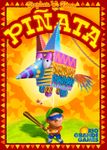
Hey, I'm Alex Radical from Board Gameco and today I'm reviewing Piñatas from All Play. Piñatas is a two to five player trick- game that's all about the timing of going out. Before we dive into this, please keep in mind that while this review is not sponsored, Allplay is a sponsor of the channel, and that comes along with bias that I will do my best to counter, but I want to make sure that you are aware of that. Piñatas is a trick-taking game. The general pitch of this, the whole thing that makes this game different is it's all about the timing of going out. You're going to have a hand of the various suits. There's going to be five suits in play. You're going to start with a random suit as the trump suit. There we go. Elephants are the trump suit. Do I Did I just happen to grab I think I have no elephants. I have no elephants in the starting hand. It is what it is. Uh it wasn't. It was random. Anyways, uh you start with a hand of cards and then you're going to be playing into the trick. You can lead with the trump suit.
So, that part's totally fine. But you could lead with any suit. Let's go ahead and lead with a Let's start with a nice low number. In fact, this will give us a lot of control. is our only orange card. So, we have a bit more control if we play that. Next player goes and takes a look at their hand. This is a mustfollow game if you are able to. So, they over here, they have a seven and a three. They'll hold on to that seven right now because they don't want to give people other points right now. I'll explain what that means. But, they'll play this. That's their three. They're currently winning with a three. This player can take it. Let's go ahead. That's zero is fun. Zeros are strong because they they count as the highest card if they are in a trick with the highest available card of that suit. That's going to depend on the player count because you do remove some cards. But if the highest card in play is there, so in this case, the highest card in play is a 10, which means if the zero was in the same suit as a 10, uh, it would count as higher than the 10. Unfortunately, having it along with the 10 in my hand doesn't really help. We'll just play this. We'll play that. There we go. We got a six.
And now we just won that trick. There we go. Goes to our one trick piles. And now we start off with the next card. So, let's go ahead and We don't want to win too many too early. I'll explain why that means. Uh, let's play a two of green. goes to the next player. They take a look and they're going to play a they can play. Let's play a let's play an eight. Maybe we'll actually win this one. Do we care? Not yet sure. Next player goes ahead and goes. They'll take a nine and they win that trick. Now, this is all well and good, but what are we trying to do? I'm just showing you regular tricking mechanics. The whole pitch of piñatas is all about when you go out. Because when a player goes out, and this does depend on the player count, but for example, I have a simulated three-player game, which means once a player wins four tricks, then that player is going to go out of the round. At that point, they are going to collect points equal to the number of other tricks other players have won. So, if we fast forward a bit, let's say we have another, let's get grab a few cards. Let's say we have another trick over here. We have a trick over here.
This player's one. We have another trick. So, we have another. And we have another. And then we have this player has two. And then this player goes ahead and they win their next trick. So they won a trick over here. They now have four tricks that they've won. You want to take a look at the other players and say, "Oh, look at that. These two other players have two tricks each. So we're going to win four points because we get points based on the number of other tricks other players have won, including players that have gone out. Which means if you math this out, for example, let's say this next player, they keep on going. The next player wins the next trick, and the next player wins the next trick. And then this player wins over here. Now, this player, because they now have four tricks, they're going to get six points over here. They got more points because they went out later in the round. There are more tricks on the table to score four. But when all but one players have gone out, so in this case right now, these two players have gone out. This player took four points worth of candies over here. Let's grab a few candies. We got one, two, three, four points worth of candies that they took. Uh this next player over here, they're going to get six points worth of candies. They'll take a five and a one because again, there's more tricks in the table. But there's one player left the table who did not go out yet. That player instead takes points equal to the number of tricks that they have won themselves, which is usually going to be fewer than the others. Effectively, in this game, going out too early is going to give you a limited amount of points based on the number of tricks that have been won so far. The later in the round that you go out, the more tricks, the more points that you're going to win because there's more tricks that have been won on the table collectively. But if you are the last one standing when that pot period explodes, then you are only going to get points for the number
of tricks you've won, which is usually going to be the fewest amount of tricks. That's the basic hook. You are trying to time when you go out, when you win the right amount of tricks in order to ideally the most points is usually going to be if you are the second last player to go out and get as many points as possible. First player to 25 points wins the game. That's the basic idea. The other things that we have briefly talked about is the zeros and then the fives and the sevens. Zeros count as the highest card if they are played into a suit with the otherwise highest card. Which means if I have a 10 of a color, and again this depends on player count, but if I have a 10 of a color at a three-player game and then somebody plays that, you might think it's safe, but unless the zero has been played already, it's never fully safe. Even the highest card isn't safe. A zero isn't safe because it can be beaten by anything. And a 10 a 10 isn't safe because it can be beaten by a zero. So that adds another element of lack of control that you have to plan around when you're trying to perfectly sequence when you go out. The other thing is going to be the fives and the sevens.
Fives and sevens allow you to split your trick pile into another trick pile, effectively putting another trick pile on the table, which allows for more scoring all around. Having those in your hand is again an important timing consideration because if you do it too early, other players are benefiting from those extra tricks do it too later and you might be left with the fewest points on the table because you didn't even win anything. But if you time it just right, it can even help you going directly from two to four tricks and getting ahead of where players thought you were as far as going out. The last thing to cover is going to be uh the variable variable trump suit each round. The player who went out last in the previous round is going to go first in the next round, choose a new trumpuit, and then you're going to go and continue until a single player has 25 points. That's Piatus. It's effectively a very straightforward trick- taking game with the hooks being that you have a when you go out is the most important cons consideration to try to get as many points as possible, not going out too soon, but not going out last. And then a few points scoring cards that change up the game. [snorts] My review for this is going to be fairly straightforward, fairly quick. There's not a lot of things to cover. Piñatas is a basic trick- taking game. It gives you all the core things you want in a trick taking game. It has, you know, it has cars, it has lead, must follow, it has trumpuits, it has all those basic things that are very present. not a lot of surprises in the basic formula of it.
The main thing comes down to the when you're going out. So, as far as the what I like, don't like to consider others can see others not liking all that. The basic thing that I like here is the timing of when you go out is a fun little consideration as far as okay, I don't want to go out too early, but I also don't want to go out too late. I want to have control over when exactly I can go out, knowing that other players are doing the exact same thing. every player at the table wants to be the second last player going out, which means very often in tricking games, you have this puzzle of, okay, I bid four, so I'm trying to win four tricks. But that's not how this one works. It's not that players have different amounts of bids and different players have different goals of exactly what they want. And then sometimes you can actually have everyone achieving what they want. Rather than this one, everyone wants to go out second last. Everyone is trying to do that same thing, and you're trying to play into that time mechanism to see if you could be the one who is able to do it successfully where the others have failed. That requires knowing your hand, trying to read into the hands of others, taking advantage of those fives and sevens where necessary. It's all about the timing mechanism, and I do enjoy that time mechanism. Outside of that, the zeros and fives and sevens, uh, zeros kind of I I don't actually know if I like the zeros much. That feels a bit I understand the benefit of having chaos and trick taking, but I kind of like the control of knowing I can win something and having that loop around. I can see the appeal for it. I don't like the zeros quite as much. The fives and sevens are nice because those allow you to jump forward two steps which other players have to know that exists, but they may or may not be able to deal with or respond to it properly. But overall, it's a fairly straightforward trick taking game with a timing mechanism that is a challenge to go through. The things I don't like about the game are primarily that it's a one-trick pony.
This is a very basic trick taking game, which the only real hook of this compared to the vast amount of tricking games out there is that time mechanism. There's nothing wrong with that. I like time mechanism. There's just not necessarily enough that makes us stand out. Which kind of brings us to final thoughts. Final thoughts on Piatas. It's a fun tricking game. I've enjoyed playing this one. That time mechanism is satisfying, but I do think it's one that for me personally doesn't have the longevity of many other trick- taking games. In a market full of amazing trick- taking games, this one just has a single hook that doesn't change up the formula enough for it to be one that would make its way into my regular rotation. So, overall, I enjoy it. It's a 3.5 out of five. There's nothing wrong with it. I recommend trying it out, but it's definitely not making its way into my favorite trick- taking games. As far as other game recommendations, definitely check out Rebel Princess if you're looking for a game that's going to mix up a lot of things for you. Some rounds, you do want to be the second player going, second, last player going out of a trick, but other players, other rounds, other things are happening that constantly change up the formula. A princess kind of gives you a a different shift every single round you play, which gives a lot more variety to the experience. And then also check out Skullkull King, another trick taking game that has a whole lot of timing as well as special cards thrown into the mix to keep things interesting. In any case, until next time, I'm Alex Radcliff from Board Gameco. Hope you found this review helpful and as always I hope you have a good