Land vs Sea - How To Play
Games in This Video
1 game is featured in this video — it unlocks as you watch.
Transcript
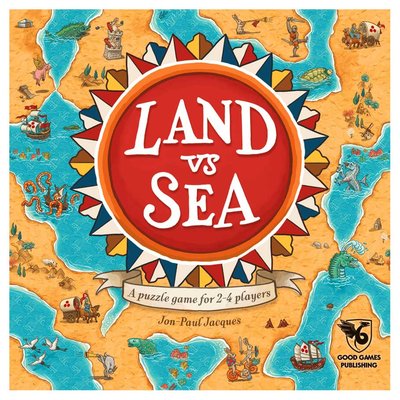
hi and welcome to watch it played my name is rodney smith and in this video we're going to learn the 2 to 4 player game land versus c designed by john paul jacques and published by good games publishing who helped sponsor this video whether you're playing as the rolling waters or the ever expanding landscape it's a race to see who can dominate as you create one of the most unique maps to spread across your game table so join me at the table and let's learn how to play to set up place the inside of the game box nearby to act as a score track and then pick someone randomly to be the land player have them add this token to the zero space as their scoring marker the other player will be the c and they'll use this scoring marker each person should also collect one more of these tokens to use later land and c can also have three or four players but we'll talk more about that later there's also some advanced scoring rules you can play with once you've learned the basic game and we'll discuss those later in the video as well but for now we're going to set up and learn the basic two player game the game comes with a variety of tiles but for now find the one with this symbol on it known as the starting tile and this double-sided volcano whirlpool tile the starting tile you'll set in the middle of the play area putting the volcano whirlpool tile off to the side for now from the rest of the tiles create two shuffled even stacks all of the tiles are double-sided and it doesn't matter which sides are face up but then starting with the land
player they'll take either one of the top tiles setting it in front of themselves when taking a tile you can only look at the top ones and during the game you can never look at the bottom side of a tile until after you've collected it so once i've picked a tile and taken it i can then look at its other side anytime i want but i keep that other side hidden from the other player and when i'm not holding the tile i should put it so that its hidden side is face down but its top side should be visible not only to me but to everyone else at the table after the land player has taken a tile the c player now collects one from the stacks then the land player takes one more and so does the c player so that each of them has two tiles and that's the setup in land versus c players will be playing tiles to create a growing map of land and water masses scoring points by completing pools of water or islands with a few extra ways to score points mixed in as we'll see the game is played over a series of turns starting with the land player and then going back and forth and on your turn you perform four steps starting with playing a tile here you look at both sides of your tiles keeping the underside a secret from the other player picking one to put with either side face up adjacent to at least one of the tiles already on the map the map is made up of all the tiles that have been played into the center of the table so far at the beginning of our game the map is very small just this one tile so the first tile that we place must be put against it a tile's edges
will be made up of some combination of land and sea sides and any sides of the map that your tile touches must match so i could place this tile here or like this but this wouldn't work because now it's land against c as this area expands the next player who adds a tile to the map on a later turn will be able to go adjacent to any of these tiles but if they end up adjacent to more than one tile all of the sides that touch it must match so i could add the tile like this because we have two water sides touching but if i rotated it here this wouldn't work i do have c touching c on this side but here it's land and c most times after you play a tile that step of your turn is over and you'll move on however some are known as action tiles and give you a special action to resolve after you place them there are lots of fun drawings and elements on the various tiles but the special actions are these two symbols specifically this one is the play again action and here we have the steel action when you add a tile with this play again symbol you play your other tile immediately if you have one following the normal rules if you didn't have another tile left then you would just ignore this symbol if you add a tile to the map that shows this steel action symbol then you instead immediately take one of your opponent's tiles you can only do this if they have two tiles if they're down to just one tile you can't steal their last one also you can't
examine the underside of another player's tile you're thinking of stealing you have to make your choice based on the top of the tiles and only once you've made your choice and taken one can you examine its underside if you have both a play again and a steel tile you could add your play again tile to the map allowing you to play this stealing tile to then take a tile from your opponent all in one turn either way after you've added a tile to the map you also check to see if you completed a land or sea area scoring any related points a land or sea area is considered completed if it's entirely enclosed and has no open edges of its type so here we have an open land area and an open sea area but later in the game adding this tile here creates an enclosed land area with no openings so we'd score this when scoring a completed land area give the land player one point for each tile that contributes to that area so here the land player earns one two three four points it does not matter who placed the tile that completed this area the land player will always get those points however the person who completed the land area will now count all of these black cross symbols inside that area and score them as points so if the c player had added this tile here the land player gets four points for the number of tiles in this land area but the c player would get one two three four five points for
the crosses if the land player had added this tile they'd get four points for the land and then five points for the crosses as well in the same way when a c area is completed the c player gets one point for every tile making up the completed c area so here they would get one two three four five six points and whoever completed the c area would then score for any white crosses within that c either way any time a player earns points you move their marker here the related number of spaces on the scoreboard now if a player would ever score more than 49 points as they go past just flip over the score token and keep counting again from the start but know that they've banked 50 points already so this player if they'd looped around they would now have 56 points so that's placing and scoring tiles now it's time for us to discuss the volcano whirlpool tile we had set aside during the setup sometimes you'll create a situation where after placing a tile there'll be a hole that would fit exactly one tile if that also has the exact same type of edge all the way around land or sea land in this case the player who added the final tile creating the hole immediately collects the volcano whirlpool tile and sets it into the space with the side matching the edges oriented however they like and then any scoring would be completed as normal if necessary in this case this land area is now complete so the land
player would gain one two three four five six seven eight points and the person who placed the volcano would earn the five points on the volcano tile plus any other crosses on the completed land tiles if the empty space was all water edges the tile would go in with this side up but otherwise works the same way there's only one of these volcano whirlpool tiles though so if a hole is created elsewhere in the map later that has matching edges all around it will just remain empty so that's how you score in the game after you've placed a tile or tiles if you used the play again action and scored any completed areas from the tiles you just placed it's time for the place waypoint step now this is technically an optional rule you don't have to play with this in your first game when you're first learning but i'll explain it now so you know how it works each player has one of these waypoint tokens and after playing a tile and scoring any points from it if possible if your waypoint token is not already on the map you may then add it to the map into a space that matches its type as long as it goes into an area with an open edge this is the land player's waypoint so it must be placed on a land feature so i could set it here for example but not here as this land doesn't have an open side once placed the waypoint will stay on the tile until one of two possible things happen one possibility is that the area containing the waypoint becomes completed for example if this tile was
set here then this land feature is now finished the other possibility is if the tile containing the waypoint is completely surrounded by six other tiles which it now is in either of these cases the waypoint is then returned to its owner and the person who caused the waypoint to be returned even if it isn't their token scores a bonus point after this optional place a waypoint step of your turn is complete you move to the replenish your tiles step of a turn here you take tiles from either of the two stacks until you have two of them in front of you and again you cannot look at the underside of a tile until after you've taken it if at any point while playing there's only one stack of tiles left split the stack to make a second one that's as close as possible to the same size and that's a full turn and you're reminded of these steps on the back of the rulebook here place a tile resolve the action on that tile if any score any area you might have completed place your waypoint token if you still have it and want to and then draw tiles until you have two again then the next player takes their turn and back and forth turns will go like this until the very last tile has been played both from the piles and also from those in players hands you then check the scores and the player with the most points wins and if there's a tie the tied players share the victory and that's how you play the basic game but if you'd like to add some extra twists to the scoring you can play with the
mountain and coral scoring option so let's take a look and see how that works some tiles have mountain sections along certain land edges of a tile and these will show pictured mountains and trees so in this tile we have mountains on these two edges other tiles have coral showing on c edges which looks like this so here we have three edges with coral when playing if you ever set the edge of a tile so that the mountain edge of one tile is directly adjacent to the mountain edge of another tile no matter who placed it the land player gets one point per mountain edge that makes up that entire collection of connected mountains so if the sea player added this tile here they've just connected the mountains on this tile to the mountains on this tile and these are also connected to two other tiles with mountains so the land player gains one two three four points coral works the same way but the points go to the c player so if a person added this tile to the map they've just connected one two three coral together and the c player gains three points and of course this is in addition to any other points they would normally be owed that's not the only special scoring rule though you can also play with what is known as the caravan and ship scoring some tiles have either this caravan symbol on land or this ship sailing in the water when you place a tile that shows either a caravan or a ship adjacent to one or more tiles that also shows a caravan or ship you score two points and the two symbols don't have to
be connected by the land or sea you can see here this caravan is on the other side of some water and land from this ship but the two tiles are adjacent so it counts also you only score two points even if the tile you place is adjacent to more than one caravan or ship so putting this ship here puts it adjacent to another ship and a caravan but this would only score two points but that's not all at the end of the game you then check all of the ships and caravans again at that time look over the whole map for any two or more tiles connected to one another through adjacent ships and caravans these make up what are known as trade routes and you can have several separate trade routes around the map for example these five connected tiles all have ships and caravans on them then over here we see three more tiles with ships and caravans so these are two separate trade routes you now check each trade route separately and count how many ships and caravans are in it if there are more caravans the land player scores one point for all the tiles in that route if there are more ships the c player scores one point for each of the tiles for example this route here has one two three caravans and two ships so the land player scores five extra points while here we have a trade route with two ships and one caravan the two ships outnumber the caravan so the c player would score three points if there's a tie no points are scored for that particular route now when playing you can use either the mountain and coral scoring or caravan and ship scoring or both together the game comes
with helpful player aids to remind you of how each of these methods work just be sure to have the side face up showing your number of players speaking of which you'll find here in the rulebook how the game can also be played as a three player game where one person is the c another is the land and a third is the cartographer land and sea score as usual but the cartographer's scores mainly from mountain and choral connections while contesting bonus points and trade routes with the land and sea players likewise there are four player rules that will have players working in teams of two land versus 2c using wave points as ways to indicate priorities to their partners but these three and four player rules i'll leave for you to discover on your own otherwise that's everything you need to know to play land versus c if you have any questions about anything you saw here feel free to put them in the comments below and i'll gladly answer them as soon as i get a chance you'll also find forums for discussion pictures other videos and lots more over on the games page at board game geek and i'll put a link to that in the description below and if you found this video helpful please consider giving it a like subscribing and clicking that little bell icon so you get notification anytime we post a new video and if you'd like to support us directly you can join our patreon team which i'll have linked below but until next time thanks for watching
you