Cats and Pyramids and Sand 4 Quick but Solid Games with Bryan!
Games in This Video
2 games are featured in this video — they unlock as you watch.

Transcript
Question of the day. What is your favorite quick and easy to play game? Uh, I like games like this a lot of the time that are in between games. I call them for game nights, like we're doing a full game night or whatever. It's like, hey, let's let's throw that on the table real quick. I always think of like Marvel Remix is a perfect example of this. So, today we're taking a look at four games that are fairly quick. Uh, one is a little less quick, a little more dextrous than the other ones, but they're quick games that I've always I've picked three games that I really find something great about. So, let's take a look first of all at Paradise, Cat in the Tower, Triangulation, and Sand Castles.
Uh, these are games from Arcane Wonders, um, All Play and Pandasaurus. So, let's take a look at how these play right now. We'll take a look first at Paradise because of all these, I think it's my favorite. So, let's take a look at it right now. All right, this is Paradise set up for two players. Now, the box itself is sold as a two-player game. It comes with a map on the back of the Corey that is three and four players, but you need two copies of the game. So, just know it's your two-player go-to. So, you have the Corey set up here. You'll roll the dice and set them in this configuration here with a row on the bottom, row in the middle, row on top. This is four. This is three. This is two wide. Now, what you're going to do on your turn is you're going to take a dice. You're going to put it in your pyramid. Like any good pyramid game, you cannot build on top of air. You'll have to have a solid base of two under one before you build. So, the rules for taking dice go that you have to have three sides visibly available. So, currently the only dice can be taken are this one, this one, this one, and this one. You'll then take it and put it into your area. Now, as you continue to build, and again, that will flip-flop between players, you'll start building up. Now, as you build up, Carl's going to kill me for that. As you build up, once you place a dice in the row with these powers, you get to activate it.
So, this would be reroll a dice in your pyramid. The only rule about powers is you cannot use the power on the dice you just placed. So, you kind of have to strategically think, okay, I need to change this dice, but I'm putting one here, so I get to reroll one. This one is reserve dice. You'll get to pull one from the quarry. Put it over here for reserve. This is change the value by plus or one. Plus or minus one, but you cannot go up and over six and over one. This one is switch two dice in the pyramid. And this one is change a die to any side that you want it. So that one is good because it is last. You only get to use it once, but it's a pretty powerful thing. Over here on this side, you have scoring goals. So each of these is worth five points if you get it. This one it just needs to kind of be um uh symmetrical. So you could do like 2 3 4 4 2 3 2 here. This one is all even numbers. This one is just rising in value. So 2 3 4 5. These have to be um sequential. These do not have to be sequential. This is just even the exact same number and then greater than equal to four. Top one doesn't have one. The other scoring mechanic are these four scoring cards and they're based on the dice colors. So here, this one is worth pairs of gray dice in your pyramid. That will score you four points for each set of pairs. However, if you did this by accident and put one here, that is no longer a pair. It is a triplet and does not count. Uh this one is just unique numbers values of brown dice. The white is for your largest white group. And then this one is just where these light brown dice are on the
pyramid. Scores a certain amount of points. Now, the interesting thing is there are fronts and backs of these power cards, fronts and backs of scoring cards, plus there are more scoring uh tiles over there, and there are a bunch of these scoring cards. Plus, it changes based on the actual color on there. So, there's a ton of variety in this game. You will play until everybody has the full pyramid. You'll score points, five points each for these that you do complete, points for those. Person with the most points wins the game. All right, so that is Paradise. Here's what I really love about this game is it's really simple, but it's not easy, right? It's it's it there's not a ton going on. You're taking a dice that's available. You're putting it on your board, and then you're deciding, "Oh, shoot. I can't play that yet to get that power because I can't build up high enough because of the rules." I love the different powers that you get for placing dice in certain levels. And I love the different goals that you get to score based on the dice that are in certain levels and also the shared goals. and then everything being so modular. Man, this is a good game. It's one of my favorites um that we've played in a while of this caliber, like this weight. We played it like when we first played it was we played it and instantly played it again. It instantly played it again. It's just a tremendous game. I really, really, really like Paradise.
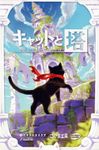
And if you haven't played it, definitely check you out some Paradise. What a fun uh thinky just thinky enough. Got the cigrada feel that we love, you know, and and and just really great. So, check out Paradise from Arcane Wonders. Number two is Cat in the Tower, also from Arcane Wonders. This is a game all about a cat climbing a tower. Think Studio Giblly or that uh Flow movie or whatever it's called. This is a very cute and adorable game. It's got cats in all like different lazy cat positions and stuff like that. But what's really cool is this is a dexterity game, Allah Rhino Hero. since there are folded cards and things that you have to stack and carefully get up to. But then you move your cat up the tower, hence the name because he's a cat in the tower.
Anyway, you are stacking and you're moving and you're putting up. So, let's take a look at how it plays really quick and we'll come back up. All right, here's our tower being built right now. I'm terrified. All right, this is Cat and the tower. So essentially what you're going to be doing is building up the tower and making Toto climb the tower to level 10 for the round first round. So essentially he will start here on the little paw print. On your turn, you will take one of the two action cards here and do the action on it. Then you're going to check goals. Now let's say we're going to pick this one. This would mean I would build one of these, one of these, and a new base. So you would do that by stacking them very carefully on here and then adding a base to it. So essentially we've got those two there and you'll take number two and put it on top. Now Toto can't move until you complete these gold cards. So the goal cards work like this. You can place cats on the level above Toto. So in this case, two feline friends of different colors are touching each other and placed one4 above Toto above Toto. So you can place cats out with the other half of action card. So this action card would let you do that. It says place one feline friend of any color on the floor.
If you've completed that and there are two feline friends of any color of two different colors touching Toto would then be able to move two levels up. So you ideally would want to build two levels so that he can move up two levels first. So once let's say we have two cats out here. So now we have two cats here. They're not touching this. So let's make them touch. So we would put them together and they're touching. Now, it would actually be a waste to do it now, but we could see that this is one for above Toto. Now, what I would do is I would build another level first, and then you'd be able to move Toto one, two to that next level. You're going to play until you reach the goal card. And this first mission is level 10. Uh, and this gets all wobbly and rickety and all that sort of stuff because you notice these are not all the same size. So, the tower starts to get all wobbly like that. If things fall off, they are debris. the whole tower collapses pretty bad. But essentially, you're going to want to play and get those out and you'll shuffle the action cards back up, shuffle the gold cards and things like that to move up further on the tower.
Once you reach that goal, you have beaten that round and you move on to the next round. It's it's very story driven, too. It's very cute. There's also a competitive version where you are racing to get to the top of the tower as different players play. But that is Cat in the Tower. First of all, really cute game, right? It looks good. It's just an adorable looking little game. Um, slightly frustrating because again, you are working with cardboard components or card stock components really. So, it's kind of hard to balance them sometimes, but I guess therein lies the charm and frustration sometimes, but it is really really fun game. I really like uh the way this looks and it's got a little story to tell. You know, you climb the tower, do go further into the game uh campaign style. It's really cute to uh our kids really like this one because it's a great one for dexterity and just, you know, there's a frustration mechanic built in of like cra, this is going to fall, right? So, I really like this. I think it's a cute game, but it's also really fun. Um, and of the dexterity games I've played lately, this one's a really, really fun one of that. And there's another one, uh, Bookshelf by, um, Alleycat Games. It's also really similar in this vein. It's a really great little game, too. It comes in like a a mint and we'll talk about that another another time, but that's a really fun one as well. Next coming up is triangulation. Big fan of the game Decrypto. And no, Joe is not trying to make decrypto light, but the reason I bring that up is there are there's an element of decrypto in and in in
triangulation, of course, where you have to be very obvious enough for your team, but just vague enough or tricky enough that the other team can't pick it up without the third clue. So, let's take a look at what you do in triangulation. We'll come back up. All right, this is triangulation. Your team will get three clue boards, A, B, and C. You then will cl a person who's going to be giving the clues and then the rest of your team will be trying to guess the clues. You've got a little screen here to write behind because all play loves a good screen. So do I. And it's got a great art motif in this. It's got some, you know, cyberpunk looking stuff. And then you have some point counters. And that's it. Now these are all proper nouns. So you know, Jeopardy Tom Cruz, Land Before Time. Oh my gosh. So let's go with land before time and I'll show you. And then we'll do Mike Tyson as well. So you got land before time. You're going to make three clues here. One, two, and three.
Not so obvious that one clue is enough to get it, but not so unobvious that three clues can't get it. But the idea is this. Once you write your three clues down, so for land before time, we would write dinosaurs, sad, sharp tooth or something like that, right? So if you got sharp tooth and sad alone, you might still be able to get that. But what's going to happen is you're gonna turn these over. The other team is going to say, "Okay, show us clue A." Well, they'll get clue A. They'll take a guess. If they miss it, they'll say, "Okay, show me clue B or C." They'll choose choose B. So, they got sad sharp tooth. They say, uh, I don't know, uh, Finding Nemo. Oh, I'm so sorry you're wrong. Well, then your team then gets to turn over the third clue and guess. Now, ideally, what happens is two of these clues on their own should not be enough to give them the answer, but three will be like, "Oh, duh. That's it." You answer, you get the point. If they steal yours, they get a point. And then they still get to take their turn.
That is how you play triangulation. You'll play till someone gets four points or till you're just done playing for the night because let's be honest, this is a lot like just one where you just play to have fun on this game. So that is triangulation. Now, if you know me, I love word games. I love like party game style word games like just one. So Clover, obviously my number 10 nature game of all time. just go back and watch the heads explode both in studio and here in the comments when I said that at the live spectacular uh three years ago, two years ago, whatever it was. Um, but I love those kind of games. So, in this case, triangulation is a game in which you there's something to be magical about like, man, if I'd have just had one more clue, then I'd have got it. Well, that's kind of the point here is you're instead of trying to help in just one with one more clue, you're trying to withhold one clue from the opponent so that without that keystone, they can't get it. I think that is such a fascinating concept and it's quick, it's easy, and anybody can be taught this game almost instantly. It's the only thing that's hard to get is for some people is like, "Wait, so I want to be super obvious?" I'm like, "Yeah, but not too obvious to where, you know, you're starting to stretch out those clues to where two don't make sense at all, but all three together." Boom. I got it.
Dolly fart, man. Lost a good one. Um, but that is triangulation. Big fan of that. Love that. It's a fantastic game. Last but not least, let's take a look at Sand Castle. Sand Castle's I like the concept of because it's a quick drafting game. Um, I don't think it's meant to be more than it is. I think it's meant to be a quick, easy scoring drafting game uh that's played very quickly. It says 20 minutes on the box. Yep. It shouldn't take much more than that, honestly, cuz it's a quick game. Uh it's 5x5 grid. You run out the D, you run out the tiles, then you're done, right? Um let's take a look at what it does, how it plays. We'll come back up to our final thoughts. All right. This is Sand Castles, a little postmortem here. You've got the game built up like this. Essentially, on your turn, you've got all of these tiles that you're going to be drafting from.
Now, there's a certain amount for a certain amount of players. So, in a three-player game, you would draw three tiles out. You flip the top one, and then if you want it, you keep it. If not, you pass it to the person on your left. If it makes it all the way back around to you, you must keep that tile. Then you'll do the same with the next tile. The next tile, then it passes play to the person to the left. You're going to be putting them into your sand castle here and we're going to be scoring based on a couple different parameters. First of all, there's the rows of doors now or sorry, rows of windows. Now, notice it's two rows per tile. So, even though the grid is going to be 5x5 max, this has two rows that you can build in. So, here we have I think 17 18 windows, which gives me um five plus three is eight points for that. Then you have the points per birds. the birds up in the top and it actually increases. It's not a diminishing returns. It's a appreciating returns I believe is what you would call that. You have that. Then you have starfish. Starfish count in pairs.
However, they can count multiple pairs. So this would be 1, two, three. Would also be a pair uh two pairs. So that's six points for those three golden starfish. Then you also have the just straight points. You have shells, shovels, and buckets plus sky tiles. And I really like this about the sky tiles. When you draft a sky tile, you actually place it up here in the top and then they just cascade down and fall. You can't place them yet. So, you'll actually just place the normal tiles down here and on top of other tiles using gravity, but you'll place your sky tiles at the top. And at the end of the game, you'll drop everything down, which can kind of create a neat little cascade when it comes to some of the starfish and other things that match up like that in Windows, too. So, you'll count points and the person with the most points wins the game.
COUPLE scoring things I really like. I like that there's some appreciating returns instead of diminishing returns. I like that there's the I love when a game lets you use a single thing for multiple pairs. That's a really good thing. Uh I like that this sky mechanic falls at the end to where you've got just enough of randomness. Not really randomness, but planning ahead. I really like that. Now, at the end of the day, super quick, lightweight drafting game. There's not a ton of strategy. You're building a sand castle, much like I would with our kids. I would play this with our kids because it's just light enough, but it gets us into what is drafting, how does drafting work, and then from there, we can play things elsewhere. Seven wonders and all that stuff. So, that is Sand Castles from Pandasaurus. Fun little game. I'm Brian Drake here on the Dice Tower taking a look at four quick games. I will see many of you at the retreat and I'll see um that'll be the next time I'll see you this year. But if I don't see you until then, we'll see. I botched that. Anyway, see you soon.
Hey everybody, thanks for watching another video from the Dice Tower. Hey, you want to learn more about us, communicate with us, we have a Facebook group, we have a Discord channel, lots of different ways to get involved with the Dice Tower. can find that in our link tree link below. So just click that. It will take you and you can communicate with us on Facebook, join our Facebook groups. There's lots of cool things that you can find and become part of the Dice Tower. Thanks so much for watching. I'm Tom Bassel.