Power Vacuum Review: Transfer of Power
Games in This Video
1 game is featured in this video — it unlocks as you watch.
Transcript
Hello everyone. Welcome out to the Dice Tower. My name is Chris Ye. I'm Mike Delisio.
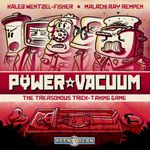
Today we're taking a look at this game here, Power Vacuum. A game is a mix between a trick-taking game and a bit of a kind of um How would you describe it, Mike? Almost like a manipulation kind of a game.
Area majority kind of maybe. Yeah, it's it's an odd duck. It really is thematically here. Uh, comrade vacuum has died, leaving a a gaping hole, uh, for toaster and telephone and these other appliances to try to come up and and take his spot as supreme ruler over the appliance world. It's a very tongue-in-cheek theme here. I'm going to show you how this game plays and then we'll go ahead and give you our thoughts. In Power Vacuum, there's going to be a central control board over here which is going to control the majority of these five different factions vying to be the new supreme leader. Each player is going to take one of these roles over here. A thing to keep in mind is just because your role has a certain color on it, you actually don't have any specific association with those matching colors. Everyone just has their own little board and is going to be dealt an agenda card that we'll discuss here shortly. The point of the game is to collect 40 power. The person who has the most power at the end of a round that uh anyone has crossed the 40 threshold is going to mark the end of the game. The most power will be the winner. You collect these power for one. you can trade them in for fives. And once you have 10, you can trade them in for one of these statue pieces. These don't have any game significance. They just remind you this is 10 points. 20, 30, and then 40. Uh once you've collected the statue, that'll trigger the end of the game.
These, as I said, no other purpose. Each player is going to be dealt one of these agenda cards, which is going to direct you where you want to try to manipulate certain factions out here to have the most and the least power. or you can flip it the other way around so that you're voting that this faction will have the most and this one will have the least power. But players don't have to reveal them uh until as part of the card play phase of the game. So you can reveal before you play a card. Next up, what you'll do is in clockwise fashion, you'll do trick taking which consist of a lead player playing out a card of a specific suit. In this case, the eight of the yellow money uh suit. This player will follow by playing a yellow. If you have the same matching color, you must play it. So in this case, these players have all played out. The winning number of the trick is going to the highest of the lead suits going to be the winning number. This player can either keep a card for the next round or they may choose to take one power getting closer to the point the winning of the game.
Whoever played the lowest numbered card, whether of the matching suit or not, is going to then be able to operate at the control board. they will move electricity from one side to the other and then they will move the plugs. So next trick, next card play, these two factions are going to have a shift of power between them. So as yellow won the trick, they will get to lead the next one. So let's say that they go ahead and they play this one here, the white six. Well, this player over here is out of white cards, so they may play in the red suit, which is the trump suit. The red will win uh even if it is of a lower number than the other cards played. So, this one person over here plays a seven, which is the highest number that of the starting suit. However, the red trump suit always wins. And in fact, even a red one would beat any of these because that's the special power of the red suit. If this player, however, did not have any of the white suit, they could play one of those spies, uh, and they could play this one out here. And the spy special ability is that it will beat the trump suit if the trump suit is out.
So, browns can beat reds if they're there. Reds will beat all the other suits. So, now we evaluate the trick. This player over here won. So, they can collect one of the cards from the trick or collect a power. Then whoever played the lowest numbered card, the one over here, they get to do a manipulation of the board. So they're going to send this over here and then they get to move the plug. So that's the whole idea of the game. You play those out. Now let's go back to revealing an agenda. Before you play a card on your turn, you may choose to reveal your agenda. So maybe this player at the start of the round said, "Before I even play a single card out, while I have eight cards in hand, I'm casting my vote. I want red to have the most power and I want teal to have the least power and ties are are acceptable.
Uh over the course of a few plays, the white player over here when they have six cards left in hand are going to reveal their agenda and show this. And then at some point, let's say that the the brown player here never chooses to reveal it until the very end of the hand. They're going to put it down into this slot. What do the slots matter? Well, the slots show not only how many cards you had in hand when you chose to reveal your agenda, but also how many points you will get for having each correct guess. So, let's say over the course of play, we had something like this where power shifted around, things kept moving. Uh, and this is the end game or let's say that this is the endame state right here. You're going to evaluate this player.
Did they predict correctly? Yes, red has the most power or is tied for the most power and then white has the least. White and teal tie for the least power. This player over here predicted that red would have the most and that white would have the least and they are correct. This one over here had bet that brown would have the most, white would have the least. Well, they were correct on one of their guesses. So, for each correct guess, this player is going to get six points. For each correct guess over here, this player will get eight points. So 16 to this player's six. Now this one over here waited until the very end to reveal their card. And what this means is you have to be perfectly correct in order to earn 14 points. If either of these aspects is wrong, you'll earn zero points instead. So this player over here got 14 points. You'll then shuffle up the cards, red them out. If any player chose to keep face down cards for the next hand, they'll keep those and you'll reset the power board here and keep playing until someone reaches 40 power and they will be the winner of the game with the coolest statue.
So, I mentioned at the beginning here, this has a very humorous theme, has a really, I think, great look to it. I like the production. kind of like the pieces, the art, and even just those little uh thematic tie-ins, so to speak. Um Keen Bean Studio, Mike previously did the what was it? Be Movie or the um Roll Camera, right?
Yeah, Roll Camera, the the uh cooperative game. I think Bmovie was the expansion, right? I That's the only other game by this publisher I've played.
And I think that both times they've they just have great very charming presentation and uh and I love the theme on both of these. Uh, honestly, this one as a as a trick-taking game, it is it's a it's a very interesting one, right? It has the the layers of it has a Trump suit, but it also has then a uh the the spy or the assassin super Trump uh so to speak, and then it has like the power manipulation part. Where where do you want to tackle this first, Mike?
Yeah, it's it's it's hard to figure out where because as you mentioned, it's it it's got a lot of things going on. it has kind of a um you're you're trying to manipulate things without necessarily being obvious about what faction you're pulling for, so to speak. It's got this idea of when you reveal what your faction is, at what point in the round, it's going to determine what you score. So, it's it's it's not a very standard trick- takingaking game. I think that's fair to say. It's it's um this is not a great comparison by any means, but like if you think about a game like Arcs where is it or isn't it a trick-taking game? It uses the the tropes of trick taking as an action selection thing in Arcs. And I think trick- taking is a bigger part of Power Vacuum, but it also is servicing something else. So, it's as I said in the beginning, it's just an odd duck.
It's really hard to even see how to approach it. You mentioned theme. I think the theme is cool. I think the look is great. But in the trick taking, how much of it is really a trick-taking game and how much of it is everything else going on? And I haven't answered the question because I'm not sure.
I I think that it's it's fair to say if you like tricktakers and you want them to be bold and ambitious, this is a cool one to try, right? Because it is so different. the trick taken more I think more in service of that little area control board that hidden um that that idea of like okay I have a a card with two factions on it I want one to be the best and one to be the worst like you said when do you reveal that early on to get more points but now I've shown my hand so to speak what I'm trying to go towards um do I wait and see if other people reveal and they're like hey you want brown to tank guess what I'm going to join you in that and so maybe I'll get some points. Even if, you know, we both want brown to fail, but you want yellow to succeed, I want blue to succeed. Hey, maybe we can kind of tie them for, you know, yellow and and blue succeeding and we all walk away happy, right? It I feel like more of the game is that part of it. It's it's that idea of of not social manipulation. I'm kind of blanking on the term, right? But that idea of like, hey, we can cozy up. Oh, alliances, right? Yeah, let's make it happen. And then at some point, sudden but inevitable betrayal.
Yeah, this could definitely have the the temporary and shifting alliances for sure. Uh sometimes it's out in the open and you know, if if two or more players have all revealed that they want a particular faction to be the number one faction, then they can openly just try to make that happen, right? Uh but it's not always that open and obvious. Sometimes it's like a I could read based on, you know, they keep trying to make red more powerful. I want red to be the most powerful. So you you can kind of read that we probably have the same alliance that we're calling for or that we're working towards. And so yeah, you have that element, too. Um I don't want to step on your toes because I, you know, we've talked outside of the realm of this review about kind of playing this game. Um, so one of the things I'm just going to kind of leave this to you. One of the elements that you often times have in trick- taking games is one where if you have higher cards or better cards, you just are going to probably win. Like there there's not a lot of mitigation in this one. they try to do some mitigation in the fact that um the higher cards are going to going to win the trick, but the lower cards are going to be the ones that kind of manipulate that center area. But that leads to its own problem, doesn't it, Chris?
And and maybe this is what you're alluding to here, Mike. Right. I like that. I like games that have those two kind of counterbalanced things, but what happened to what what has happened to me, and I'm curious if it's happened to you as well, if you're dealt a lot of kind of middle range cards, then it it means that you don't have anything really interesting to do in that round. You're not as likely to win tricks. When you win the trick, you can either claim one power, just get one point, or you can choose to keep a card from any of those that were played in that trick, beefing up your next hand. That's that could be really important. And if you play the lowest number, that's where you do the actual manipulation of the grid. But if you're stuck with a lots of like four, fives, and sixes, that round, you're pretty much not doing anything.
That's exactly what I was getting at because I I knew that you had mentioned that in the past and it hasn't happened to me a lot, but it has happened to me and it leads to a very unsatisfying round. Like you said, you're at at when if you have just a bunch of middle cards, most likely what you're doing is just dumping in the cards. You're not winning the trick and you're not manipulating the vote at all. And so you really feel like you're just a machine feeding other people things. And that could be very uh dissatisfying, unsatisfying. Um it is something that is not necessarily unique to this game in trick-taking games. That's a that's a a hard thing to pull off is to have a game where you have enough mitigation that you feel like no matter what you're dealt, you can have some impact in the round. This does not really solve that issue. I don't know that it's a I don't know how how much of an issue it is, but it happens enough that it is something I think is worth pointing out.
Yeah. And that's kind of where I am with it. And I think when if you think of Power Vacuum as primarily a trick taking game with kind of a cool little side game, I think that's going to bother you a lot when you think of it as kind of this social um you know temporary alliance game and whatnot, right? I think then the trick taking being a smaller part of being in service of that you say, "Oh, that was a bum round, but I'll come around on the next one." kind of a thing, right? Uh or I'm going to hold off on my vote until I see kind of where things are going. Then I'll reveal to get some points, you know, maybe lower. I'll still make something work this round just based on reading the other players. I'm not going to do a ton of manipulation on it, but I got to read what they're doing. I think that's kind of the big switch that was flipped for me in realizing for me, right? And maybe the way to say is this is less of a trick-taking game.
This is more of a game where that card play drives the game, so to speak.
Yeah. And I agree. And then that's why it was a tenuous uh comparison to ARCs, but I I I hopefully people understand what I mean by that. Um, did we want to go into final thoughts
or did you I I think so. Okay. Uh, let's do that.
I'll go ahead and start off. Um, there's not a whole lot I'm going to add to what we've both said. I think that uh it is important to understand that this is a trick-taking game that has a lot of other things going on. And I'm not even sure that you would say it is a trick-taking game first. That's not a good or a bad thing. It just is. I do think, however, if you like tricktaking games and you want some uniqueness, you want something that's going to stand out from other trick-t games, this is certainly one of them. And I think that's its biggest strength is that it takes some big swings. It doesn't connect on all of those uh pitches thrown at it, but it does hit some pretty big I keep using baseball analogies, Chris. I have no idea why. Um anyway, I'm giving it a seven. It's uh it's really close.
because there can be some bum rounds and that can feel very dissatisfying. Like other games that take some big risks, they don't always kind of pan out. But I I I like the I like the chances they took. I like it, as you said, more of a shared temporary alliance game than as a trick-taking game. But I still recommend it as something that is unique um and just fundamentally mechanically works. But a couple of little rough edges keep it from going higher.
I see. Yeah. And that I I agree with a lot of what you said. U given that you agreed with a lot of what I said. So that's a given here.
Uh I'm score-wise I'm coming in just a smidge lower at a 6.5. Like I have a a slightly hard time recommending it. And that's kind of what that seven threshold usually is for for me if I'm giving a score, right?
It's a 6.5 because it is just a little rough around some of those edges. But I I love your analogy of swinging big. It is trying something super different. And I I definitely uh recognize how cool that is. So I think that yeah, if you're in the market for just what Mike described, something that feels different, then this is a cool one, right? But for me, I'm I'm not going to necessarily want to come back to it as much as I really appreciate and love the fact that it is something so different. What a cool thing to do with tricktaking and show that it can be in service of so many other different things. As well as like I said, I find a lot of the humor and the joy in this game and everything. So, uh, yeah, Power Vacuum getting a high score of a seven there, meaning that's getting a Dice Tower seal of approval, saying this is something something cool worth checking out.
Thanks for coming out to this review, everyone. My name is Chris Ye.
I'm Mike Delisio. And uh long live the vacuum
or the iron. Hey, uh thanks for watching another video here on the Dice Tower. Uh we really appreciate you stopping by and checking our things out. Thanks so much for joining us today. And hey, if you really like what we're doing here at the Dice Tower, then there are different ways to support the Dice Tower. One of those ways is through Patreon. And we have links in the description to this video and we have links to lots of other things we do down there. So definitely check it out. But either way, we're glad you watched us. Tell your friends about the Dice Tower. Until next time though, I'm Tom Vassel and I hope you enjoyed this video.