Luthier First Impressions
Games in This Video
1 game is featured in this video — it unlocks as you watch.
Transcript
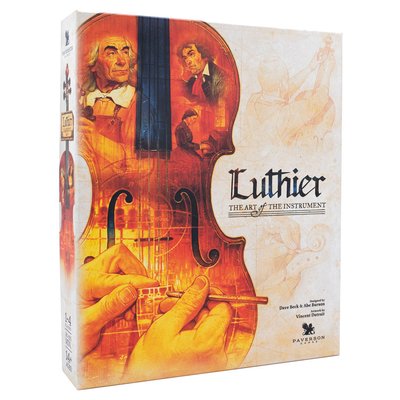
hello everyone and welcome back to the board gaming doctor my name is Phil and I'll be your board game doctor today in this episode I go over my first impressions of luier the art of the instrument designed by Dave Beck and a buron art by Vincent utr developed and published by pavon games if you see that this publisher and the designers sound familiar if they look familiar they are a part of the team who made distilled and that was probably they probably have a few other games under their belt but has been the most successful to date and so this is kind of a followup to that and I believe that this game is still in Kickstarter at the time of this recording so as usual I'm going to go over my highlights what makes this game feel unique mechanically and thematically as well as going over game comparisons and peer review and ultimately my first impressions and this is the example of the game at the end of a solo game uh where you play against a bot and and set it up for two players here um and so as you can see I did not do very well against the AI I was definitely learning how to play this game along the way however I do understand how this game plays now and um you know let's let's so let's talk about some of the highlights here and how this game actually plays so this game is split up into six rounds and you split each round into a couple of phases you first have the planning phase which feur features the uh worker
placement and bidding uh kind of mesh mesh together and so this is what I mean by that you start the game not with all these tokens but um with a few of these and they each have a number representing their strength and their ability you place these tokens onto different spots either on your own Tableau or on the main board and other opponents may play their tokens there as well stipulation is that you play them face down and other opponents will play them face down as well and then after everyone has placed workers you move to the sort workers phase and I'll show you by the way this uh mod on tabletop simulator is fantastic and uh and so I this is probably the best and well scripted uh mod that I've ever seen on this platform anyway on on the resolution phase based off of Turn order uh you choose an area one you know the four are five areas here on the board you either can go to the market and uh trade in money for resources there or you can activate workers that you've placed on your Tableau but if you are placing them on the or taking the workers from the main board you can sort them here or however you can in in real life and whoever has the highest bid and that spot takes that action first and so based off of you know player turn order the order in which you want to activate your workers
may be different depending on the decisions others make during the uh what is called the resolution phase then there's an upkeep phase and you kind of go from there but overall in this game you are trying to as luers or as instrument makers you are trying to uh acquire patrons to your Tableau to make uh instruments for them to repair instruments for them but also to help them perform in order to gain Prestige and points as well as meet personal uh and public objectives for extra points as well you have some track advancement as well depending on some of these areas that you interact with and you also have a sort of area control type of experience going on in the middle of the board where you can uh VI for the first chair for each of these instruments uh if you do so uh particularly building instruments rather then repairing or performing with them you can oust out uh other players tokens gaining the benefits that are shown underneath as well as earning more points at the end of the game than perhaps other opponents would uh so that's the gist of this game now comparing this game to others the first game that I want to compare this to is distilled the other game by pavon that has received a lot of notoriety and success it I I feel like their approach with distilled was very very much a a blended experience of mechanism and theme where in distilled
you would flip over cards and kind of using a pushy luck type of experience try to hopefully Brew the right beers and the right uh combinations of cards to do so in order to make the best bch and that really fit with the theme I I take their word for you know how the process of beer is made but and so that was fantastic in and of itself and this game uh I feel like like the theme is coming through a little bit I will say that it's perhaps not as apparent as it is and distilled through the its mechanisms because this game is more focused on the worker placement the bidding sort of uh action and and mechanical approach to how you play this game but there are little areas in this game where there are some uh theme that that does shine through for example with the patrons that you have here they do uh represent real people in in real life and I feel like I think I read in the rule book that they try to mirror what these performers and composers would prefer uh as far as the instruments and the the uh types of music that they would create as well as well as the rewards that they would give and so I thought that was a pretty neat approach to the uh mechanisms of this game and there are some other areas that this game uh likes to you know approaches that atic integration such as with the performances as you note here uh you
have different tiers of how well a performance might go and that is all decided based off of dice there are ways to mitigate the dice and roll them and also to substitute the base dice with better ones as you advance on tracks Etc and you know play different cards but as in real life performances may not go according to plan or may not substantiate the quality that you were looking for but some performances may just be totally right for you know all accounting for all the variables that go into a performance and perhaps if that does happen you gain a lot more of the reward for that and so I thought that was a nice touch even though there is a little bit of uh dice rolling and luck introduced to this Euro game I think it was done pretty Tastefully moving on to some other games that share some comparisons here mostly with theme I want to talk about games that utilize replacement intertwined with bding like Ruck dawn of keev this is a game that I played a while ago I believe it was a 2019 release and that game feels very much similar to what is going on here if you strip away the theme of both games and just look at the the mechanisms behind them both games offer a bidding slw worker placement style of approach to the way that you take actions in the game and so uh yeah this the same approach really even with some area control uh mechanisms in place too I think there was a lot more similarities than perhaps meets the eye between those two games but I also
thought of games like n of aier which is mostly focused on the bidding aspect but also introduces the the mechanism of having increasing abilities to bid higher throughout the game and nevier you can purchase better uh tokens to bid with and which are represented in coins as you go along in the game whereas here you automatically gain extra workers that are stronger but also have the ability to hire apprentices which can up the value of each of these bidding tokens in their respective spots when you bid with them so that was a nice touch there that reminded me of that game viticulture also strikes comparison particularly with the way that these um bidding tokens can have uh or workers rather that you can acquire in the game that have special uh actions uh you and asymmetric abilities U associated with them if you advance enough in the uh track respective tracks for these and so you can acquire workers that will give you some abilities that are unique from other players and and uh create you know some efficiencies that are are really nice in the game finally the last game that I can compare last two games that I can compare this to are U rosenberg's at the gates of L young where the patron mechanism is very reminiscent of that game where uh each of these patrons have a uh patience track that is tracked and
I'll show an example here if you place them onto your board they as the rounds go by have their patience tracker move closer towards the end at the right you do G gain resources along the way but if they do happen to not have all their requirements fulfilled by the end of or you know by the time that this marker has gone fully to the right they are uh impatient and they won't wait for your services anymore and they leave and you lose points based off of that so very similar to how lyong works with the patrons and the customers that you have in that game where they do have a tracker for uh essentially a timer for how quickly you can fulfill their needs and if they don't then they go away and you lose money another game that this reminds me of is glass Road by Rosenberg where the fact that you can bid with work and have someone else choose a certain worker placement spot to resolve first before you have a chance or any say to do so is reminiscent to the fact that in glass road if someone plays a card from their hand that you have selected as well during that round you have to play that perhaps out of order out of the intended order that you had wished to place it in and so it creates a a space where you have to really think about the possibilities of the order in which you place your workers and being okay with the fact that perhaps one area of the worker placement board is activated
before another and if you can mitigate for that risk of someone else choosing it based off of Turn order which adds a lot of decision space to this game since this is a Kickstarter for peer review the comments are few and far between but most of them are very positive about this game it's a really brilliant worker placement SL bidding system that is utilized in this game combined with tradition Euro style mechanisms that allows for a lot of interaction That You Don't See in a drier euro per se with the interaction of the bidding and activating each worker placement section um and if you have placed workers like I've mentioned before you know that that kind of interaction feels unique in this this uh this space of Euro games in addition to the kind of the ease of play you know really playing a round or so of this game really gets you into what this game is all bount and it's easy to strategize after that there's not a lot of rules burden and thematically uh I guess the Thematic integration is really good as well but this theme of creating instruments is somewhat unique as well you know you think of games like lacosa from last year that sort of tie into what is going on here and so we're starting to see a lot more of these types of games uh come to fruition and for those who do enjoy the kind of you know classical setting of of music and creation of music this game feels very nice to play and is a great representation of that theme so for my first impressions first I do want
to mention the AI and how that works it's pretty straightforward if you take the time to learn it um it's not as daunting as it may seem where you have a deck of cards that you play in front of you and they they're shuffled and they align uh these cards based off of how many workers that the you know the round allows you to have as well as these preferences in which order they are played and that is depicted at the bottom of these cards and so you rearrange these cards according to the preferences for that round you essentially just place your bidding token for the AI on the spots that are represented here the actions that they take to represent each spot is very well uh you know condensed in a way that in a fashion that just gives the opponent more points and you don't have to do a lot of calculation or thinking and there's also different guilds that allow for different preferences throughout the game in case of tiebreakers for preference and so there's a lot of uh variability in in that regard as well so not not bad at all I really enjoyed uh utilizing this AI opponent and as you could tell once again it wasn't as easy as it might seem at first glance and so uh it provides a good challenge there now for the game as a whole I think it functioned very well it was a very smooth playing Euro game uh once again I found it relatively easy to pick up and play after about a half a round or a round or so of understanding the different areas of the board once you
had a good grasp of that then you could you know take your turns I could I could take my turns a lot quicker than than at first and overall strategically I felt this game was really smart in the way that like games uh like you you know games that I particularly like that have a shared common goal which is to say not not in the sense of just getting points but how do you get points you know you usually get a lot of points if you make instruments and uh appeal to the uh patrons as well and and so on and so forth I think if you focus on those areas the other ways of scoring points with the public and personal objectives performing and repairing all of those do come into place uh you know side by side with the main objective of creating instruments and pleasing patrons and I felt like this game was very smart in the way that you could in a more flexible way achieve those goals in case you do happen to have a spot on the board that is activated prematurely you usually had a way to be able to mitigate that and still be able to accomplish what you want to do each section of the board for example has two different actions that you could activate the main action such as performing or acquiring a patron or gaining uh some bonuses like materials and resources to use later on and so there's never a bad action per se that you can take only a minorly inefficient action and the market is very smart as well I failed to mention too that every round that passes the the
uh cost for each of these resources which is animal parts wood and metal changes as you can see here and so it's a very Dynamic Market that fluctuates the prices of what those cost and so that might tailor to some of your decisions that you make and how you spend your money uh in case you do need to acquire a lot of resources you go through a lot of resources in this game especially to make really good instruments to repair them and to you know hopefully acquire better instruments and better patrons who require those U higher Stakes to be made and and fulfilled and so I really like the the flow of the resource management in this game it's it's you know at first it may seem hard to do especially with only a few workers like three workers at the beginning of the game but this game forces more workers on to you throughout the game very much in the sense of like everdell was another game that I thought of where the workers that you acquire is is static in the sense that you gain them at certain times at the in you know during the game and so the opportunities start to um uh emerge and become uh more uh you know available to you and so it really does pick up at the end of you know near the end of the game and I really appreciate that now overall I think if you know would I play this over distilled I think I would I think distilled is a really good game but I think I think this game offers a little
bit more of the decision space that I prefer in Euro games where you do have worker placement and bidding and so there's a little bit more of the you know interaction amongst other players in in that sense rather than in distilled it really you're really just accounting for yourself for the most part you are taking cards from other players beforehand from the market but a lot of this a lot of the stuff that they do unless they brew a certain type of beer before you do really has or alcohol uh really has no Major Impact into what you're doing but in this game that could definitely have a big impact if you uh activate a certain worker spot first you know before something else and and so you have to take in a lot more of you know what is going on in this game to perform well and so it it it feels more additional in that sense is it is it one of those games is is luier one of those games that I am thinking about a lot you know in the days after playing this game not really because it does fall into that more traditional style of Euro game that aside from the worker placement and bidding action which I have seen before in games like ruic uh it doesn't feel too unique or have as much of that that flavor that I'm looking for in a game that I really want to sink my teeth into and if you have listened to the podcast and channel you kind of know what those games are but I think this game is really well done and if you do really enjoy the theme of creating instruments as well as the the really nice mechanisms and how well they do mesh with the theme that is being approached
in this game I think you would really enjoy trying this game out you can do so on tabletop simulator and see if it is a game if it's if this game is right for you so those are my first impressions of luier the art of the instrument thank you for sticking around with me and hope you consult with me in the future in another video but until then thank you for listening and hope you have a great day