Sorcerer City - An Introduction - (Quackalope Games)
Games in This Video
1 game is featured in this video — it unlocks as you watch.
Transcript
hello welcome to quack elope thank you for joining us today we're covering sorceress city by Druid City Games and this video is a bit of an experiment in its own right you see over the lifetime of our channel we've been growing larger and larger with full gameplays and right for you wrong for you videos that are getting up into the 1 hour mark now or how to play is to stretch over every element in detail of a game and we've been looking for a type of content or a style of content that fits that short form and beginner-friendly model and we're not sure if this is the answer but it is one of the tests we're doing this is our an introduction to series where we break down the overview of a game so the theme and the general mechanics splitting those mechanics into the three core factors or features that we think the game does really well or does in a unique way and then also presenting them in a beginner friendly model right so in this case with sorceress city we're going to be talking about tile placement we're going to talk about deck building or I guess tile building in a way and then real time games and we're going to break down what each of those terms mean and the way that sorcerer city implements it then at the end of the video we're going to talk about the cost from table space to how hard it is to learn to how accessible it might be for you and your gaming group and then finally if you like any of the elements exhibited here in this game if some of them piqued your interest we're also going to give you three references or three games you should potentially go
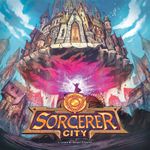
explore and gangs that we hope to have here on the channel down the road that show off or build on one of those varying elements so that's the concept let us know if we do it all right it is still a work in progress and I guarantee this one will go on slightly longer than I intended to because as we've seen in all the other videos I'm I'm not apparently very good at keeping to a script or keeping tight into a topic that being said though this would not be a crackle video if we didn't start off with just a little bit of flavor text and lore to set the foundation for everything we're learning here sorceress city every year sorceress city is built and rebuilt in magical new ways with city blocks and moving and rotating in crazy directions you and your fellow players are rival wizard architects in charge of building the same district over five years expanding and rebuilding to gain the most money influence rom magic and prestige unfortunately sorcerer city has a bit of a monster problem so you must work hard to mitigate the effects of marauding creatures that attack your district Architects compete against each other for the title of head wizard the goal to be crowned the head wizard you must possess the most prestige after five rounds each round being one year passing in sorceress city so that's the stage that's the theme of this game sorcerer
city is a tile placement game where you're going to be matching tiles of varying colors and shapes in order to build a chain or a quilt or a pattern down here in the corner these tiles are then going to score you points different resources that you can use for different things throughout the course of the game every round you'll score a certain amount of resources converting some into others your raw magic resource is able to be converted into gold or influence and then you'll come up to these two scoring locations here or taking whatever benefit you get for being the best or the most effective at that year then also adding a monster tile into your deck or into your stack of tiles that you'll be playing now these monsters are going to have crazy and negative effects that you must work around as you build your pattern in the next year and then finally you're going to be going over here and doing a deck building process or a tile like a stack building process where you're purchasing and adding tiles into the mixture that you're then drawing and playing now sorcerer City is a real-time strategy game that means that you will be cycling a clock much like we're trying to do on this video and playing tiles as quickly and efficiently as you can before the time runs out if the time runs out then whatever tiles you haven't played no longer you get to be added to pattern they don't score anything for you and that could be a good or bad thing depending on which tiles you happen to leave out but for the most part you want to get all of your tiles
out onto the table before the time runs out in a pattern that is the most efficient possible for scoring or earning credits in a variety of different ways some tiles score by having long rows and chains some scored by just having clusters of single color groups and then there's a mix of advanced and more complicated tiles that I have spread out here that score in a whole different series of ways the longer you go in the game the more complicated these tiles get and the more powerful they get in the way that they can be implemented into your final scoring so that's the overview I feel like I've went through a lot of heavy things very quickly and this is supposed to be a beginner friendly video so let's circle back around just a little bit there's three core things that you should be aware of when playing or dipping your feet into sorcerer city first off this is a real-time tile laying and deck building game let's go and break down what each of those three core components mean a real-time game means exactly what it would sound like there is a portion of this game the pressure point of this game where time management and thinking on your feet and reacting quickly is going to be a very very big factor in fact I would say that is the core and not only the most fun but the most interesting part of sorcerer city if you like a little bit of pressure if you like responding and reacting quickly and really thinking on your toes real-time games can shine in that regard but if you don't do well with high stress or you get frustrated
easily or you get a lot of ap action paralysis where you sit there and you try to think of the very best thing to do instead of just moving forward and placing real time games can be a bit of a struggle they can be a hard spot for players like that to get through but like I was saying a real-time game in this case means we're gonna flip the timer or use the app that's provided by the game with a little bit of background music and some nice graphics to hit the button and then you start flipping and you're going to be looking for large color groups or patterns and trying to pay attention to the types of symbology you have on each one of your tiles trying to play down quickly and efficiently which can be quite the task when you're really into the heart of the game you'll find that you've placed cities and districts that really don't match up or that don't score you the best or maybe you'll lean into a single color like I do scoring a ton of gold but almost no influence by the end of your round maximizing and balancing all of these different elements and mechanics and responding appropriately to the type of tiles you pull is going to be critical here so that's what a real-time game means now that kind of bridges over into the second element of this tile laying or tile placement now tile placement games are going to be almost like they sound imagine building a patterned quilt or or an elaborate city map you want things to make sense right being a sequence or a pattern or something that
kind of Orient's itself in a way that feels natural some games deal with that with city building or districts or farming is a classic venue for tile placement games in sorceress cities case you're going to be placing your tiles in more of a quilt or color pattern here on the board like I said trying to match them up and figure out what is the best sequence or combination that'll score you the most points as efficiently as possible now each of these tiles are going to have scoring conditions on them and unlike some other tile laying games the time aspect in this game really adds a pressure point to this tile Lang environment so as you're playing down tiles you're trying to think and react and also trying to read the colors and the symbols that are on your tiles now at the beginning of the game this is pretty straightforward everyone starts with the same group of tiles and so you're just trying to maximize the order that they come out in but as you start upgrading and getting extra special abilities you're going to have to be paying attention to a variety of different scoring conditions and while scoring conditions and pattern matching is a core standard when it comes to tile laying games because this requires you to think on your feet so much these symbols are fairly simple and fairly easy to read but it doesn't mean that there aren't going to be moments where you're trying to do the math to figure out what might score best in specific positions or sequences now the second element of this game is going to go into the complexity
factor the thing that actually scales and starts building up this real time tile placement game and that is going to be up here with I suppose our market stall the area that you do the deck building element now a deck building game is going to be a game where you use the resources that you gather from playing the cards or in this case playing the tiles that you have to then purchase new abilities new scoring conditions and new tiles that get added in to your deck so a deck building game is all about maximizing or perfecting the hand that you have depending on which monsters get added into your deck each with their own unique negative traits that will script the way that you want to build and buy from the market every year of this game you're going to take the resources that you earn from playing down the most efficient quilt possible and you're going to do your best to buy tiles up here that will maximize or make your hand as efficient as it can be for the next year's event so that when you start drawing and placing down more tiles you have more to work with or your scoring is leaning into your strategy a little bit more heavily so if you want to gain influence maybe you'll buy this all green tile adding it to your board knowing that the next time you play you're going to be able to flip through these until you find it sticking it down in that perfect location allowing you to pattern or chain or connect a big swath of green or red or yellow that is the heart of a
deck building game taking the resources that you already have and reinvesting them to do better in the next round and sorcerer city combines those three mechanics in a really interesting and chaotic way well in some cases I feel like it sacrifices on the theme in order to make the tiles visually easy to read and accessible as you play to try to reduce the amount of kind of player stagnation you have I do think it does a really good job at setting up a pressure point for you to cycle and flip and enjoy the process of slamming down tiles and then comparing to your friends to see what happens I think the core element of this game is going to be the way that it combines those two elements with a real-time kind of pressure point mechanic and it does a good job at it it is one that if you're interested in those three elements are interested in seeing how they combine if that sounds fun to you well then this is one you might want to get to the table now the last question in this video series again I'm trying to make these short let me know if you'd like to hear more on a topic or structured in a little bit of a different way but the last thing we want to touch on is going to be the cost to get it started not the price of the game you can find copies at a local store and Friends you could purchase it from Skybound games specifically but instead for a new gamer or a gaming group let's talk about what you should expect when pulling this out of the box in my experience sorceress city plays best at three players that is where you really
have the fun and the chaos of watching other people slam down tiles and having one of them call out time's up time's up stop playing you also have a little bit more pressure when it comes to scoring these kind of round conditions and then also the market so at three players you get to compare you get to have fun you get to laugh out loud when someone pulls a chimera at the wrong moment that becomes chaotic and good at two players you have to introduce a little bit of an AI deck right to give you that cycle that you need and something to battle against at 4 players the table space that this requires the amount of room you need to maneuver and place down tiles and how they can spill out to other edges starts becoming a limiting factor I think for most gaming groups especially new gaming groups along with that depending on the skill and experience of your gaming group I'd say there is a moderate learning curve when it comes to sorcerer city the rulebook is fairly accessible and does a very good job at breaking down every single card and tile and condition in the game but that points out one of the elements that might make this hard for a new gaming group to pick up the fact that there are so many variations and conditions and creatures that you can build into and encounter in your deck it means that there is a lot of variation and variety with this game which is excellent when it comes to something that you want to react to and think on your feet and not quite know what to expect when you're sitting down for a game
night or when you're dipping into your stack and flipping tiles very quickly being said there are going to be moments where you're asking yourself what the heck does the dark mage do when you pull that tile out and where should I place it according to the rules and by the time you get to the end of the game you're going to potentially have four of these monsters in your stack along with more and more complicated and advanced tiles so there is going to be a little bit of rules checking and clarification especially during the first few games until you can get your head wrapped around what all of this symbology means and you can just mentally focus on which of these monsters are coming out and what the heck they do when they come out now you can vary the timer length going from easy medium and hard increasing in difficulty based on how quickly your online timer cycles I believe the one that's included is your standard medium timeframe but I really don't find that as a specific solution to the fact that you'll just need to play a few rounds of this game to really understand what all of these cards do and you may need to pause and read out what one of your monster cards do if someone gets stuck or starts asking about it especially with a new gaming group that can feel a little frustrating and complicated now I know with my own personal gaming group we had a little bit of trouble when it came to the iconography in certain elements of this game specifically up here on the influence rewards track
confusing the Green Zone the prestiges own the victory point zone as the area that you score instead of the influence which is going to be a red zone here now it might be an exclusive problem to me and my gaming group but I think there is a little bit of wiggle room when it to reading and understanding tiles and iconography in the sorcerer city so make sure you go through the rulebook closely maybe doing a demo game or a test game with one or two players so that by the time people come to sit down and learn they're ready to swing into it instead of having to parse out and understand what all of these different symbols the charts the values and the endgame scoring really are all that being said I think sorceress City is a fun and chaotic good time and if you're interested in a game that hits on those elements that we went over this is one you might want to check out now I did promise you I'd give you three recommendations at the end of this video if the elements in this game strike your fancy but you might not like them combined in this way or you really want to dive into one chain specifically so starting with real time games games that happen with a clock or timer create a little bit of pressure while you're trying to achieve the victory conditions here my recommendation would be look up for science this is a game we've covered here on our channel it just left Kickstarter and it does a fantastic job at really building and designing a thematic and gameplay experience that fits into that real time that pressure mechanic very nicely
you're going to be setting up sequences and building blocks in order to solve a genetic problem right trying to find the cure for a disease that is covering the land and you have a time frame in which you need to complete this now that's going to be a cooperative game which is different from this style of game so instead of head-to-head competition you'll be using the real-time element and working with your friends and family in order to accomplish or achieve that goal now when it comes to tile placement games one of the classics that I grew up playing and one that I would love to bring to the channel sooner or later one day is going to be Carcassonne Carcassonne is going to be a map building or city building tile placement game where you're flipping tiles and adding them to create districts or roads or large pastures or adding monasteries there is a ton that you can do in this game especially if you start expanding it but its core feature is going to be that action of flipping a tile adding it to the board and then deciding to put a meatball or deciding to put a score marker a little person down on that location that you just played trying to maximize the city grid so that you score as many victory points as possible by the end of it now unlike this game you're going to be building the map all together there's not a real time element there so you can think through and try to min match where you're playing really building and getting your teeth into a strategy and then for deck building games we are going up here to the market using the resources that you've gathered
from the very last round to add to and upgrade your abilities and your scoring conditions I would recommend looking into Clank now there are a few different versions of Clank there's the original plank or you dive into a dungeon trying to steal treasure from a dragon and escape before the dragon finds you competing against other players who are also rushing down in and trying to run out themselves there's clanking space that takes those core mechanics that deck-building mechanic and applies it to a new theme I think plank in space if you like the sci-fi theme the aliens sort of theme that is going to be a better game overall it has stronger mechanics and it was designed and developed after the original Clank so they've really had fun playing with the deck building elements in it and then finally there's Clank legacy a game that I am planning to bring to the channel very very soon we have some gameplay that is currently filmed and just needs to be edited it is you know the slowest thing I have to do but plank legacy is going to be a journeying adventure through a realm where the story progresses game to game to game adding stickers to the board and mixing some things up legacy is another thing at some point we need to dive into but that would be my recommendation Clank was one of the first games where I experienced and discovered the deck building system and I personally think it's one of my favorite elements when it comes to board game and board game design whatever the case hopefully this has been an informative video I am sure
this has gone on long than I intended it to but this is a new format we're trying to develop let me know your thoughts let me know if there's anything you'd like to see in future installments whether it's different topics or a structure that is maybe more accessible and if you're a new gamer or you're new to source for our city let me know if this was informative enough to give you a sense of what this game is and what your experience will be like at the end of the day the goal here on quack elope is to help people discover games that they will have fun playing at home with their friends and family and so if we've been able to do that then I've been successful whatever the case whatever you do though remember to do the important thing get out and play some games we'll see you next time thank you