Tokaido and the problem with "cozy" games - TCbH Review
Games in This Video
1 game is featured in this video — it unlocks as you watch.
Transcript
I resent the term cozy. I know I shouldn't. Cozy gaming is a thing. It's a thing people love and it's one hell of a marketing term. But the proliferation of said coziness too often blankets good game design. Squishy. Well, that's just cozy. Overly nostalgic without originality. Cozy again. Homogenized decision space. Brother, you better believe someone is going to market that as cozy AF. But the thing is, the spirit of coziness is pure. It's lower stakes. It's welcoming, encouraging. It's, "Hey friend, come on in and have a good time. Don't worry about getting it all at once. You'll be able to feel it out." And in that, Antoine Baoza's 2012 classic Tokaido was kind of a revelation at the time that it came out.
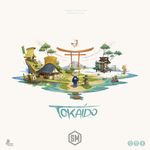
And in the pantheon of coziness upon its recent Stonemire release, still re supreme. Players are each travelers along Japan's legendary East Sea Road, collecting experiences and appreciating the beauty in hopes of having the most lovely time. While other more linear worker placements have come out since Tokayido is one of the first to have players moving forward as far as they want within the current stretch, occupying sequential destinations. Aside from the various sort of set collection you get from visiting similar spaces over and over, from completing panoramas to shopping for souvenirs, what makes it sing is that the player further back always takes their next turn, which immediately has consequences as you balance a hopefully leisurely walk containing a wide variety of encounters with a more deliberate rush to the things you most need. Sure, if everyone moves way ahead, you can take your time and stop everywhere. But if you really need to pick up souvenirs or stop at a farm to get some precious money, you'll need to get there before someone else does. All punctuated by the eventual rest at each leg of the journey, where food cards are drawn by the first player to arrive, and they can purchase a meal they've yet to eat for points, but the remaining cards dwindling with each later arriving player. This bit of design is so subtle, but thematically and mechanically potent. The game outside of
this offers very little pressure. It accommodates and provides opportunity. It's all about how much or little you want to seize. And sure, this can get competitive with point accumulation on the line, but I find players tend to pick favorite experiences each play, setting personal goals more detached from the end all be all of winning. Can I see the most spa macaks? Can I complete all three of the panoramas? Can I make the most donations to the temple? Ultimately, the game is systems light and for many won't provide the sort of friction they look for in games. But it's distinct in its beauty, thematically resonant, intrinsically welcoming, and strategically clever in a way that most supposedly cozy games just aren't. So much so that Stonem had to do virtually nothing to revitalize it over a decade later in this new addition. Save add a welcome and altogether well-designed solo mode and quite ironically make a graphic design flub in the first printings where the dotted road is misaligned from the worker spots. Something they vow to fix in further printings.
Personally, the preservationist part of me is actually a little bit disappointed in that the expansions Crossroad and Matsuri weren't included in this new printing with a carefully curated new box and insert to contain it all. Yeah, Stonemire did combine those two and release those expansions as one set alongside this, but as we grow more distant from some of these gaming icons, having a sort of Criterion release to celebrate and codify its contribution to the medium would be nice. But maybe that's another discussion. As is, Tokaido remains firmly planted in my mind as the cozy game, one that appreciates the moment and embraces the journey. and thankfully will be available for the foreseeable future in its new Stonem home.
Hey everyone, thanks for watching this video and just as a reminder, the Cardboard Herald is entirely audience supported. No money changes hands from publishers to us so that way we can maintain our critical independence. But that means we rely on you for all those likes, subscribes, comments, sharing, and of course checking out our Patreon. so that way we can keep on doing what we do. If you value what we do, then those are ways to support. But above all, thanks for being such a great community. You know, I've been Jack for the cardboard Harold.