Substratum Protocol - Solo RPG (Review)
Games in This Video
1 game is featured in this video — it unlocks as you watch.
Transcript
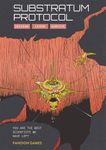
hey everybody welcome back to the dungeon dive Daniel here I hope you're doing well and if you're not I hope you are soon okay today on the channel we are taking a look at sub stratum protocol descend learn survive this is a game that I took a very very brief look at in my last kind of showand tail video of some the new things I had purchased and today we will be doing more of a deep dive more of a detailed review of sub stratum protocol so this is from pandian games and I bought the game directly from their website it is still available with the physical journal and everything that you will need and this is a game created by Andrew Boyd and this is a game all about it's a it's an RPG it can be played Solo or with a traditional GM Le campaign but this is is a game where you are playing as a scientist or a group of scientists and you are descending deep into the recesses of the earth to try to discover the the how the wise this anomaly this anomalous thing that has appeared deep within the bowels of the earth and it is causing Havoc it is causing uh land masses to implode and to dissolve and you need to figure figure out what's going on with this anomaly before it is too late so this says that sub subsurface analysis complete ground shocks detect in all sectors subsurface
fractures spreading gravitational fluctuations error all sensors reading at zero at 7g error solar orbit deteriorating lunar orbit elongating at accelerated rate electromagnetic field failure take shelter take take shelter take shelter so this is the solo plus apocalyptic mystery tabletop RPG when an anomaly appeared at the Earth's core the substratum protocol was initiated and scientists were rushed at all costs to the hastily built fracture Observatory you are the best and brightest scientist we have you are the sub stratum Expedition team so really cool theme I like this I've been enjoying playing games that are kind of outside of my maybe more fantasy or pulp science fiction wheelhouse and this is pretty cool so to play the game solo you of course need the book or PDF you will need your personnel folio so this is where you keep track of your character you will need your team folio this is the team of the other scientists that are helping you when you play solo if you're playing with a group each one of you will play as a scientist and then you probably won't need your mission control folio this is mainly for the GM but you might find some use for this you will also need possibly some journal or some way to keep track of some of the
things because you do want to keep some notes kind of like a field journal and the field Journal notes depending on what you have discovered the the kind of flora and fauna and weird anomalies and weird situations that you've discovered those will help you drive The Narrative and push the narrative forward so you do want to keep track of those you will need a full set of polyhedral dice uh deck of cards shuffled and I have been using this roll andplay sci-fi toolkit to kind of augment some of the Random Encounters one of my main issues with this game is there just I don't think there are enough Random Encounters especially when you uh come up to a thing called the complication and at certain points in the game the GM is supposed to introduce a complication if things aren't going exactly to the plans of the scientist and they kind of lack some of the complications or ways to generate them so I've been using some of the Encounters in role and play to help augment and to help solve that issue so that's pretty typical a lot of these little kind of Indie RPGs don't always come with everything and so we can always turn turn to our other tools that we already own to help facilitate that play and I have taken a very detailed look and review of roll andplay sci-fi toolkit so just search for that if you want these are really handy especially the science fiction version so let's
talk a little bit about substratum protocol here I think the book is really well laid out it's very clean the kind of page layout and the look does remind me a lot of Eco mofos and I like this kind of clean look I think it's very well organized at the beginning here we have our quick reference we have our welcome page and I like how there are bits and pieces of lore and story and World building scattered throughout in the shape of these documents and a lot of times you can kind of go back in and read through the rules and find these little things and those can help you uh when you need to make some kind of decision some kind of narra decision we have some little ideas here for the GM for the mission control and the scientists kind of defining their roles and what to expect out of each one of those positions while you are playing so we have an expedition planning we have our session planning traveling montages NPCs and creatures and the otherworldly there is some combat but you guys it's not a pulp you're not what does it say you're not grizzled soldiers so combat should mostly be avoided but sometimes times you will have to get into some scrapes I think this game does play pretty well as a one shot there is a way to kind of excelerate the play especially when you're playing solo and one of the things that I like about this is that this game has a definitive end goal so we do have an end game trigger
there is something we are working towards and that's discovering that anomaly so this says that sub stratum protocol has a definite end goal while players can back out of the anomaly sector without triggering the endgame the moment they make the last hypothesis the final Montage begins and the game play shifts to that endgame so this isn't one of those RPGs where you will have a campaign that goes on and on and on I think you could solo you could play an entire game in a day especially if you use some of the accelerated rules and with the group you could probably do maybe two or three sessions another thing that I appreciate is that even though you might think this is a game of survival because you are descending into the earth going through these different sectors avoiding dangers and making discoveries it's not really a game of survival in terms of survival mechanisms your characters always have the things they need they have an inflatable pressurized habitat a beep boobop uh Recon Droid that can help him do Recon they have all of their climbing gear and flares and rations so you aren't keeping track of that in terms of surviving the survival is more in terms of narrative and More in terms of what you are discovering so then we get into character creation and character creation is pretty straightforward each character has six different skills we have make break Dash evade think and
Sway and when you create a character you will assign a d10 a d8 and a D6 to three of those skills SKS and the rest of those skills will have a D4 so here's my character here I my lead scientist he is my my my lead of the Expedition Force he is Dr prefab dembo and he is a zoologist and so we have a scientific specialty here a D20 role that you can create your specialty with we have a survival specialist an engineer zoologist a xenobiologist a linguist a thermologist physicist radio ologist and so on so lots of different ways to play your scientist and for my character I chose to put a d8 in make I chose to put a d10 in think and a D6 in sway so the rest of your characters uh chart here your character sheet will have their storage unit they can hold up to three items now narrative items they don't take up uh space the items in your storage unit those can help you overcome challenges so I have a Pathfinder tool and my pathfinder tool has a role of a d10 these rolls they will go down as you use your skills as you use your equipment it's kind of a usage dice system and you will bump those down one uh value down to a D4 you can play rules where you go all the way down to a D2
but usually the lowest is a D4 and then you can take AC to rest and to heal in order to bounce those back up to their starting values now one of the things I really really love about this game is the conflict resolution so we have a number of different actions that we can take we can confront convince study avoid travel understand and prepare each one of those is associated with a certain skill so for instance if we wanted to study something for an Insight or a clue we would use our think and any other skill when you use your skills though those will be dropped down to the lower value of your die after you have uh after you have uh handled the conflict resolution but conflict resolution is determined by a deck of cards so anytime you are doing something so if we were trying to understand something we had found some kind of anomalous object and we wanted to know how it was tied to the anomaly we draw two cards and then we flip those over and we take a look at their values so a six and a four okay so we were trying to understand so understanding would be think plus any other skill okay so my think is a d10 so I'll take my d10 for think and now I need to pick one other skill and you roll those Dice and then
you compare them individually to the totals on the cards um let's see here let's go ahead and sway so charm and manipulate intimidate I'm trying to manipulate I'm going to say that sway is a physical manipulation I'm trying to manipulate this anomalous object while I am observing how it works to try to understand so then I roll my two uh I have a d10 and a D6 and I have a five and a five okay so the five is higher than the four but I didn't roll anything over a six so because I beat the four I take that into my hand the six gets discarded if I had rolled a seven and the five then I would have beaten both cards and then I can take both of these cards into my hand now here's where the game gets really cool the cards in your hand you can spend to help yourself do cool things and one of the cool things or one of the many cool things you can spend your cards on is using your exos suits systems so all of the scientists are equipped with this exo suit and the exo suit has been specifically designed for these kinds of expeditions and they have all kinds of different features and they have different things that you can spend your cards on so you can spend your cards on uh repairing and healing boosting your
actions boosting your die rolls when you take a skill action uh sensory deployment radio fracture Observatory uh that's a way that you can communicate with the GM in a way that they will have to answer a question about what's going on it's kind of a way for the players to push the narrative forward but you can also do that solo and one of the ways you can do that solo is by looking at your cards and then thinking of the deck of cards here as the GM and then you're kind of testing so I want to say that you know I found something out about this anomalous object and I am saying as the player that this anomalous object is going to push me Point me into the direction it's some kind of alien Compass thing and it's going to allow me to pass more quickly into the next area without having some kind of danger or confrontation so I will play a six out of my hand and then we flip this this over and oh it's an eight so no that did not happen but if the player cards is is a higher total if the players card is a higher total than the game Masters card then that thing happens super super cool I love that longtime viewers of the dungeon dive will know that I really like when players can earn a resource and then they can choose different ways to spend that resource to augment bad
luck or to make cool things happen it's a really great area where there's a strong sense of choice for the players to take over the game and I think that does help with the solo play a lot as well so in addition to your main scientist when you are playing solo you will also use a team of NPCs and so my team of NPCs as Dr Baldo the Anthropologist Professor stromie the hydrologist and miss cartright who is a xenobiologist and she is Dr prefab dembo's uh assistant and she is working towards her PhD under Professor Dr dembo's uh tutelage and for your NPCs you can assign a D12 a d10 and a d8 and then all others start at a D6 and so when you're playing you will choose to either use your main character for the stat roles or somebody in your team team as your team members take stress and they take too much stress they will die and it might leave you alone but again you can try to heal now one thing that I forgot to show is after I rolled those totals then I would have to lower each one of those down to its next lower so I used a think so now my uh think would be at a d8 and I used sway so D6 would drop down to a D4 and I'm playing where D4 is the lowest and then I would have to take
some kind of break in order to bump those back up to their totals I think that's really cool that's one of my favorite things actually it is my favorite thing about this game is the conflict resolution how you always do two skills you always roll the die associated with that skill and then you compare those to the cards if you beat the cards you take those into your hand and then if you beat both it's a high success if you beat one it's a medium success and then the GM is supposed to introduce accomplish and this is where I think the game falls down a little bit is it doesn't really talk anywhere in here about complications and I wish that there were charts to roll up or kind of a procedure to generate uh complications more easily especially for the solo player and that's where I have started kind of turning to other resources that have other random charts to roll on to determine what those complications are as the players are are exploring the The Depths here we have our different sectors and you will be moving from one sector to the next starting at the surface at the fracture opening at zero uh kilometers and moving all the way down to the anomaly which is at 5700 km deep into the Earth moving down one sector at a time each sector As you move into it has I believe it's every is a D12 encounters so you never really know
what you're going to get but then the book also says to use these as complications and I wish that there were just separate complication procedures especially for solo play So at the fracture opening you know at the beginning of your game you are moving you're starting to uh move down into the depths of the earth and you might discover a sudden burst of steam and heat from underground vents causing severe burns okay so we would want to avoid this so let's do let's take a look here we have avoid that is evade and a skill okay so we will take our evade die which is a D4 o pretty low actually let's have one of our team members do that uh let's have our team members evade so they will take a D6 and they'll use a dash as well so they'll use a D6 and a D6 okay so let's do two cards here so that's a one and a seven okay so we beat one we didn't beat the seven we would take that into our hand that was a partial success so now we would have some kind of complication the complication can be associated with that steam maybe one of our team members took some damage or took some stress so I could Mark that off that would satisfy that need for stress now at that point I could have also used my lead scientist and maybe they could have used the Pathfinder tool which is at a d10 so this is an item that has a mechanical advantage and any
of those items that you roll up uh when you're creating your character here we have a little chart of of items those can be used as mechanical items not just narrative items I think that's really cool as well to flesh out your character you will answer three questions on these Personnel questionnaire and a World building questionnaire and so for an example here uh uh Dr prefab dembo volunteered for the substrat team after seeing footage of wondrous fauna uh the sub I believe that the sub stratum Expedition is too afraid of the anomaly's impact on Humanity uh Humanity doesn't have an inherit right to exist that is something that Dr dembo believes you know if we were if you were to take Humanity out of the equation of creation out of the equation of the ecology things would just move on and so he is not actually afraid of the anomaly but he's curious about it uh he became a zoologist after a strange encounter with an octopus and let's see his personal Drive uh he he's he he believes that the sub stratum Expedition uh forces are professional but they lack a sense of awe they lack a sense of wonderment about what's going on and for the exos suit design I uh said that there are a number of different noises and lights on the exos
suit that can scare some wild life and so there is some kind of detriment a drawback to having these EXO suits and I got interested in this Expedition by discovering some some Fjord Wranglers who were growing in abundance at the fixtures opening so that's one last thing we'll take a look at here as far as a uh something I really like and that's the best bestiary and so we have a D20 bestiary and these can also be rolled up as complications so you can use these as as complications and we have different types of things different types of weird creatures different types of Flora and Fauna that you might discover and these aren't just things to fight you know you aren't just looking up in this bestiary to look for things that might have a hit points and an armor class and how much damage they do I don't think they list damage or anything at all so what you're supposed to do with these is this is when you would turn to your Expedition journal and you would update your Field Guide about the different creatures and the different things that you have discovered while you are playing and then you kind of connect all of those dots As you move towards the inner core to the anomaly along the way trying to find your Clues and as I mentioned in my quick preview of this game a while ago the clues are printed upside down and this is on purpose so you don't see them you actually have to turn the book over but we have different Clues and different knowledge about the anomaly and then you can use that as you enter the inner core to deal with the anomaly
and then once you do your final hypothesis a thing happens and then you look forward kind of 6 months to a year in The Narrative of the world and kind of illustrate or narrate what has happened to the world what has happened to your scientists and uh what it means to coexist with the anomaly or maybe you've figured out a way to stop the anomaly to to put a stop to its destruction and so overall I think substratum protocol is pretty cool I wish there were more procedures on complications I also wish there were more procedures on travel it's kind of hard to know exactly when you should push forward to a new sector and one of the uh the ways to play solo is to play this simplified method where each sector you just have one encounter maybe a complication and then you move forward and you take a travel action and so with playing that simplified kind of quick way you can very quickly move through the game and get done in a single session but as far as the traveling goes for the regular uh game play the really aren't any procedures that will govern you know how many encounters you should have when should you push forward I wish there was some kind of mechanism like even a D6 roll where you're trying to hit a total on every encounter you get to add one and if you roll a six or
something like that then you are moving forward so I just wish there were better procedures for coming up with complications and better procedures for dictating travel and from moving from one sector to the next but overall I think substratum protocol is pretty cool it's very quick it has a fantastic conflict resolution system a Love Gaining those cards and having the ability to spend those to do cool things is something I really really love and I would love to see more games use that system so all right you guys well I hope you enjoyed this review of sub stratum protocol we will talk to you later byebye