"Cascadia: Rolling Rivers and Rolling Hills" First Impressions
Games in This Video
2 games are featured in this video — they unlock as you watch.
Transcript
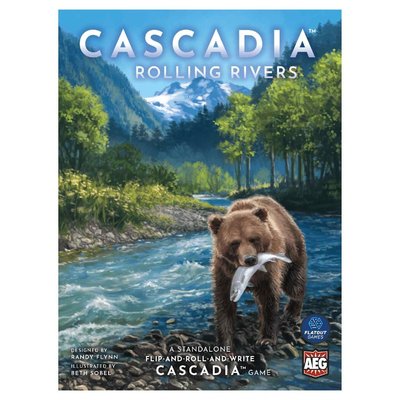
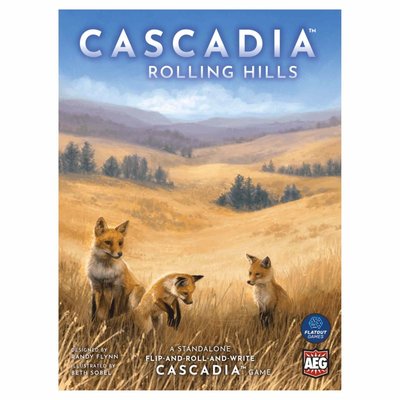
hello everyone and welcome back to the board gaming doctor my name is Phil and I'll be your board game doctor today in this episode I give you my first impressions of a Kickstarter game or a couple of games on right now in Cascadia rolling rivers and Cascadia Rolling Hills these are designed by Randy Flynn art by Beth soble published by Flatout games in AEG this is a game for one to four players although if you combine both of these you can play up to eight and essentially since this is a roll and right game you can play however for many people you want honestly the game takes 15 to 30 minutes to play its complexity is not listed on Board Game Geek yet since this is brand new and on Kickstarter but it is a lightweight game its ranking and rating are not listed as well once again due to it being a very new game as a quick overview in this game you have 20 rounds to collect Wildlife Resources through dice rolls spending them to fulfill habitat of card objectives and filling out your personal environment sheet for points and bonuses along the way the player with the most points wins so some game highlights to further explain these mechanisms first the dice mitigation in this game whenever you roll the dice you gather as many of one type of Wildlife Resource as you can based on what is face up on that dice these Wildlife tokens or resources are listed in descending order from bears and Elk all the way down to Salmon as in most Roland writes these days ways to mitigate the dice rolles are crucial for success as
well as strategic decision- making and in this game it borrows from the parent game the nature tokens which can convert the dice faces in different ways in order to pick up more of a single type of wildlife or even multiple types there is a special die that allows you to take certain bonuses too second the habitat scoring the way that points are scored on your environment sheet as well as the sort of timer of The Game come from fulfilling the requirements of habitat cards the feature in this game is that you start with one habitat available then in the next round another habitat joins the row on round five after you flip over the fifth habitat card the very first one is discarded and pushed out of the way therefore you only have a few rounds to try and fulfill certain habitats before they are gone plus the game randomly assigns bonuses or discounts for the column these habitat cards populate as they go and so part of the puzzle is fulfilling a habitat card on the right column as soon as you can to gain the best benefits you want at the time third the environment sheet and its variations this game can be considered a series as both rolling rivers and Rolling Hills feature different types of environment sheets you can fill out from game to game there are four in each box for a total of eight they vary in difficulty and they essentially give you new ways to approach the game and different bonuses to unlock finally the solo scenarios this game features different scenarios or scores that you can beat in certain ways to give you different challenges to
beat on a solo level this is a similar feature that was seen in past games from this publishing team including Cascadia now for some game comparisons obviously the first comparison that I want to make is to the base game Parent Game Cascadia some similarities from the parent game to the roll and right version like besides the theme and art include the sense of trying to fulfill objectives the variations and objectives that you try to fulfill game to game and the use of the nature tokens to mitigate the Randomness in each game otherwise both games feel different enough from each other and use different me mechanisms you sacrifice the ti laying wildlife and habitat token dual drafting mechanisms from the base game for dice rolling and mitigation resource management for the roll and right version the next game I want to compare is rolling Realms both games rely heavily on sharing dice roll results dice mitigation through personal resources and Resource Management to fulfill a variety of require ments found on cards that are varied from game to game in the Cascadia rolling series it seems that these objectives come and go a lot quicker as they are discarded after a few rounds whereas in Rolling Realms you have nine turns to complete as many of the cards objectives to the fullest as possible to get as many stars and points from them as possible before you move on to the three another set of three different cards in the round technically Cascadia rolling is 20 turns long and rolling Realms is 27 so Cascadia could end up being a slightly quicker game there are other Rolland rights that I could compare this game to
as well but my last one is the Rolland right from Uber Rosenberg Second Chance not a lot of people know that he did a flip and right back in 2019 so recently it follows his polyomino game Style by flipping over two cards with polyomino shapes and you choose one to draw it in a blank 9x9 grid if you can't draw a shape from the two cards you can draw a personal card as a second chance and hopefully continue in the game with that lucky card the last player to be left or in other words the last person who is able to draw in a shape wins the game so there's kind of an element of player elimination here and that's the game so other than being itself a flip and right game there is very little similarity between this Cascadia rolling but the element of flipping over habitat cards and trying to fulfill them as best as you can is kind of reminiscent of what happens in second chance I'm going to move on to my first impressions now since there's not much to review as far as peer review goes since this game is brand new and most of the comments are coming from reviewers who either are paid to talk about this game or have been asked to and So to avoid as much bias as possible going to avoid talking about those at this moment you can go ahead to the kickstarter and check those out for yourself but my first impressions having not been asked and having played this and demoed this on table Topia which is available also through a link on the Ki starter is that and I should mention that I'm reviewing this as based on the mechanisms alone in
the Rolland right version and strictly on the gameplay therein not necessarily any of the Thematic or mechanical tie-ins from the base game since the both games do feel very different from each other and there's very little carried over except for the art the theme and some minor mechanisms here in there I find that this game offers a lot of tense decisions each round especially because of how fast those habitat cards go by by rounds three or four you start to have more options available to you and the choices each round are do I collect certain animals to fulfill habitat cards that are nearing the end of the habitat road to try to at least get one of those fulfilled and add that to your environment sheet or do I try to double down on resources to hit some of the earlier habitats that are coming out near the beginning uh a few times and also follow that route down your environment card and getting bonuses there I felt like At first you know in the first round or two or three rounds it was like okay I roll the dice and I kind of gather as many resources as I can as many of a certain type of wildlife as I can and then later on those decisions get a little bit more muddled which was pleasantly agonizing and this all depends on what is given with the dice you know overall as well as what's on your environment sheet I appreciate the agonizing decisions that you need to make each turn but as Roland WR should do for the most part the time that it takes to make these decisions as well as the sheer amount of decisions to be made are limited to the 20 rounds in addition to
just the scope of what decisions can be made each round you know you only have a handful two or three different types of wildlife that you can take from the dice and three or four different habitats that you could probably fulfill a couple of areas on your environment sheet to pursue it's not going to be as heavyweight the amount of decisions that you need to make in a roll and right game such as Hadrian's Wall there is a good amount of tense decision making in a relatively short amount of time that I find rewarding in this game and the opportunity to save up and make big combos for that one habitat that you've been saving up for when it hits the right column with a certain benefit that you want feels really good to pull off would I play this game above any other roll and rights that I enjoy I find this game pretty near the top of what I consider a really good roll and right for myself I find that this game at first blush to be just as good as rolling Realms which is probably my favorite roll and right and my go-to right now and it has the potential to become as varied as roll rolling Realms is today while a touch bit longer to play Rolling Realms does a great job at celebrating different games and converting their Fame and mechanisms into little Rolland right modules which tugs at me more to explore than Cascadia rolling does initially just because of that somewhat thematic tie-in in a roll and right game the sheer variety of Realm combinations too in my mind beats out the variety that is put forth initially in Rolling Cascadia rolling but time will tell if additional entries into the series makes the game just as
variable would I play this rolling right or the parent Cascadia game I think I would go for Cascadia the base game and I believe that is the case because of how the game looks at the end of the game on the table you get to do different things in Cascadia with tile and token placement that drafting system and you get an interesting Tableau to look at in comparison with your board to other players boards while fulfilling different objectives like you do in rolling cascad rolling along the way the variable objectives that you have for each Wildlife type scratch that same itch as the habitad cards and environment sheets en rolling for me I haven't played with the landmarks expansion for base Cascadia but I suppose that it would give more replayability and variability to the game too so in some I find myself more often drawn to the base game of Cascadia the more I think about the compar Aron for the tile laying and the Tau building rather than pulling out a roll and right because the payoff at the end of the day looks better with a Tau full of tiles that you've assembled rather than a sheet of with numbers and you know things crossed off on it if I were to choose a rolling right to introduce to others I would probably go with cascader rolling because it does what a solid rolling right does these days with an inviting theme and tough decisions that Gamers and non-gamers would like in my opinion if I'm in in a crowd you know of board game enthusiasts then rolling Realms would make sense to me if I were to play a roll and right game however the game goes really well with people
not invested in the hobby anyway speaking of rolling Realms and so I might choose that anyway but I would recommend either game to folks either rolling Realms or Cascadia rolling who want to try a roll and right but perhaps are drawn towards one theme or the other if they are familiar with board games then obviously rolling Realms could make sense if they're you know exposed to wingspan or other games of that ilk but if they really enjoy the theme and the vibe that Cascadia gives off and you don't have the ability to play with the base game say you're traveling and you still want to have some sort of environment that gives you an opportunity to play in the realm of Cascadia then this Cascadia rolling I think is worth a go and will fulfill that desire so those are my first impressions on Cascadia rolling thank you for listening and Consulting with me and hope that you schedule an appointment with me real soon take care