The Lord Of The Rings: Duel For Middle-earth - How To Play
Games in This Video
1 game is featured in this video — it unlocks as you watch.
Transcript
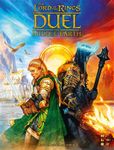
hi and welcome to watch it played my name is Rodney Smith and in this video we're going to learn the two-player game The Lord of the Rings duel for Middle Earth designed by Antoine Boza and Bruno catala and published by repo production who helped sponsor this video sauron's forces seek to reclaim the One Ring corrupt the free peoples and Conquer Middle Earth the only thing that can stop them is The Fellowship of the Ring so pick aide join me at the table and let's learn how to play to set up put this Central board in the middle of the play area and below it assemble these two quest of the Ring track pieces on its left side add this clear tray with the Illustrated side face up so it covers this half of the track and when placed correctly this ring will be on top of the icon you see here then add the this nasgul piece to the far left of the plastic tray so its black ring borders this farle icon these are the double-sided Alliance tokens which you'll organize and stack into piles based on their matching backs Shuffle each stack separately and set one into each Notch above the central board the order you place these in doesn't matter these are the landmark tiles shuffle them into a face down stacked and then deal three of them face up into a row beside it like this now pick one person to play as the fellowship and the other
to play as Sauron the fellowship player collects all these pieces representing their units and fortresses while the Sauron player takes these representing their unit and Fortress pieces the central board is made up of various named spaces known as regions and the Sauron player now adds two of their units to the region named Mordor and the fellowship player adds two of their units to aror now create a reserve of these coin tokens giving the fellowship player three while the soron player starts with just two finally sort what are known as the chapter Cards into three separately shuffled decks based on the runes showing on their backs and just set them aside for use later and that's the setup in Lord of the Rings duel for Middle Earth you and the other player will be competing to be the first to fulfill any one of the game's three objectives if you're the fellowship player you can win by advancing this tray so that the one ring shown here reaches this Mount Doom space at the end however if you're Sauron you can win if you move this Nas goul piece to the ring before it reaches Mount Doom a player can also immediately win if they're the first to have six unique symbols on green cards they've collected these represent gaining the support of the different peoples of Middle Earth
finally you may instead win by being the first to conquer Middle Earth which is represented by having at least one of your pieces on every space of this Central board we'll see how you accomplish these goals later but the first player to accomplish any one of them immediately wins the game is played over three rounds known as chapters beginning with chapter 1 when you're starting the first chapter find the deck with a number one marked at its bottom and collect it now using this diagram shown in the rule book deal the cards going left to right top to bottom into the arrangement shown for chapter 1 and notice some cards are dealt face up and some Face Down based on whether or not the card is shown as light or dark colored in the diag so in this case we'd start by dealing two cards face up and then three cards would be dealt face down on top of those then four would be dealt face up on top of these and so on until it looks something like this you'll have three cards left over which you put unseen into a face down discard pile also notice you'll find a helpful reminder of the chapter layouts here on the side of the box as well with the chapter cards laid out the game can begin where turns will be taken starting with the soron player and then going back and forth on your turn you can either take a Chapter card or take a landmark tile so let's
begin by learning how you take a Chapter card these are the cards we laid out in this pattern and when resolving this action you take any one available card an available card is one that isn't covered by any other card so at the start of the game that means I can collect any one of these but let's say it was later in the game and our chapter cards looked like this as we'll see face down cards can be flipped face up and now our options would be to take this card or this this or this one we can't for example take this card since it's partially covered later in the game as more cards have been taken you might have a situation like we see here in this case if you want to take a card you have to take this one as it's the only available fully uncovered card either way once you've taken an available card you then use it in one of two possible ways one option is to play the card in front of you you then resolve any benefit the card provides represented by the symbols found in this area this is the symbol for coins and its value means we now collect two coins from the reserve just be aware benefits are always optional you don't have to resolve them if you don't want to but you'll usually want to sometimes a card will have a cost to play it in front of you as shown by the symbols in this area you don't have to pay the cost to take the card just to play it so this card is
free to take but to then play it and gain its benefit I'd have to pay this coin cost returning one from my personal Supply back to the reserve if you can't pay the cost you can't play the card however when you take a card playing it is only one option you may instead freely discard it to do this put it face down into the shared discard pile we had already created with the three leftover cards from setting up the chapter then collect a number of coins from the reserve matching the value shown here on its back one coin when you discard a chapter one card so when taking a card you either play it for its benefits after paying any cost it might have or you discard it to gain coins during later turns taking a chapter card will make a face down card available if so you reveal it at the end of your turn with that understood let's go back to learning about the various benefits that cards can provide cards come in six different colors each providing their own category of benefits but you'll only find purple cards in the chapter 3 deck so we'll talk about those later we saw an example of a yellow card earlier these immediately provide you with coins when played gray cards are known as skills these provide you with the skills shown at their top which come in five different types known as ruse strength
courage knowledge and Leadership when you play a gray card add it to your personal area and during the game as you gain more cards of the same color stack them on top of each other keeping their benefits at the top visible skill symbols don't have an immediate effect however some cards show a cost in skill symbols this means to play that card you need to have that skill symbol showing on Gray cards already in your play area in this case I do have the required courage symbol so I could play this in later chapters the cost might show several skill symbols in which case you'd need to have all of them in your play area just be aware each copy of every symbol that you have can only be used once per turn so to play this I'd need two strength and one knowledge skill but in this example I only have one strength however if I had already had this card in front of me well then I'd have the symbols I need to play this in later chapters you'll find cards that provide more than one skill symbol on a single card this for example provides you with two strength however if the skills on a card card are separated by slashes like we see here that means you may only pick one of them to use during a turn but you decide each turn which one you want to use now that said you aren't completely out of luck if you want to play a card but don't have the
required skill symbols it might require you may always pay one coin back to the reserve for each symbol you're missing so if I wanted to play this card I could use these and then pay one coin for for the second strength symbol I'm missing or if I didn't have any of these symbols I could spend a total of three coins one for each missing symbol in order to play this with that understood let's learn the various benefits cards can provide blue cards move your characters along this quest of the Ring track advancing them one space per ring symbol if the fellowship is resolving a ring they Advance the tray so that this one ring symbol moves to the next icon you'll notice that pulls sauron's nasgul piece along with it but it doesn't get any closer to the fellowship on the other hand if the Sauron player is resolving a ring they played they leave the tray where it is and instead Advance this Nas goul piece so that its black ring moves to the next icon in this way their piece is getting closer to the Fellowship of the Ring if the fellowship can ever Advance the ring so that it reaches or would pass this Mount Doom icon they have destroyed the One Ring the game ends and they immediately win however if before that happens the Sauron players nasgul piece ever advances to or goes
past the same space as Frodo in the ring the game ends and the Sauron player immediately wins instead in the meantime certain spaces you advance to might give you other benefits for example advancing to or past this icon gains you one gold from the reserve well this benefit allows you to place one of your units into any of the named spaces on the central board which are known as regions units are the pieces shaped like this well these are the fortresses yellow pieces represent the fellowship and gray pieces represent Sauron if you add one of your units to an empty region nothing happens but if you add a unit to a space containing enemy units you must immediately resolve a conflict there to do this each player returns one of their units back to their personal Supply and then you'll continue doing that until at least one player has no more units left in that region just be aware a conflict only occurs when units from both players are in the same region we'll see later how fortresses are added to the board and they're added to this area of a space But as mentioned I'll be lying the pieces down in this video just be aware an enemy Fortress in a region never triggers a conflict for example if the fellowship added a unit to this space with a fortress it doesn't cause a conflict now if this unit was added here later a conflict would occur and each of
these units would be removed just like this but fortresses are never removed during conflicts and just so it's clear an enemy Fortress doesn't prevent you from adding your pieces to its space having at least one of your pieces in a space either a unit or a fortress is known as having presence there after any required conflicts have been resolved if a player has presence in each region of the board as the fellowship does in this case they have conquered Middle Earth the game ends and they immediately win going back to the bonuses on the quest of the Ring track if you advance to a space with this symbol you immediately take another turn after finishing the current one you're taking and finally if you advance to this benefit you return any one enemy Fortress from any region on the board back to that player this is one of the few ways a fortress can be removed from play and those are all the benefits found on the quest of the Ring track and you'll find reminders of all of these and every other type of benefit provided in the game on this handy double-sided player reference so keep it nearby while playing with the quest of the Ring track understood now let's go back to learning about the benefits provided by other cards you might play red cards let you place a certain number of your units into one region of Middle Earth the number of units will be shown in the center one in this case and then you pick either of the two symbols on
either side which represent the region the units must be placed into every region has a symbol showing to its left here so playing this card means I could add one unit to either of these two regions red cards in later chapters will allow you to place more than one unit but they must all be put into the one region you choose you cannot divide them between the two regions it shows next up we have green cards these will show one of six possible symbols representing the six different races of Middle Earth elves ants Hobbits humans dwarves and wizards as soon as a player has six unique race symbols played in front of themsel they have rallied enough support to immediately end the game in their Victory but I should mention playing Green cards has another benefit during the game as soon as you have two matching race symbols you must immediately collect the top two Alliance tokens matching that race and reveal them so both players can see you then pick one of them to collect putting it in front of yourself and placing the leftover token face down back back on top of its stack you now gain the benefit from the token you collected but as mentioned earlier benefits are optional you don't have to resolve them if you don't want to this particular benefit means that each time you play a green card to the area in front of you you may also resolve these two arrows an
arrow represents a movement so here you can move twice when resolving an arrow move one of your units from the region it is in to an adjacent region which is any connected to it by a red line so I can move this unit to any one of these three spaces if moving a unit causes it to enter a space with an enemy unit pause and resolve the conflict there as we learned about earlier if you're resolving more than one Arrow you complete them one at a time but can assign both to the same unit or each to a different one just remember to resolve any required conflicts after each arrow is resolved we're not going to go through all the race effects in the video as how they work is described on this player aid but feel free to pause the video if you'd like to get an idea of the types of benefits they provide most are ongoing but any provided by ants and wizards occur once at the time you gain the related token so as I mentioned gaining two matching race symbols is one way to gain an alliance token but once per game as soon as you have three different race symbols in front of you you collect the top Alliance token from each of those three races and reveal them you then pick any one of them to put face up in front of you gaining its benefits putting the other two back on top of their related stacks and keep in mind a single race symbol can be used to help meet both conditions two matching symbols and
three different symbols but remember each player can only gain the benefit of having three different race symbols once per game and just so you're aware across all three chapters of the game you will only find two copies of each type of race symbol so keep that in mind if you're considering how many of each symbol might be left to potentially collect now with that we've covered the benefits found on every type of card except for purple ones which only come into play during the third chapter of the game so we'll discuss those later but to summarize on your turn you can take an available chapter card from the display and discard it to gain a number of coins equal to the value on its back or you can play it in front of yourself for its benefit if you can afford to pay its cost that said instead of taking a chapter card on your turn you can choose to take a landmark tile three of these were set face up during setup and you can pick any one of them to take on your turn by having its cost in skill symbols shown here and or paying coins for any of those symbols you don't have however landmarks also show this symbol representing a coin cost you must also pay equal to the number of Fortress ponds you currently have on the central board so if we were the fellowship player and had no fortresses on the board we'd pay no extra coins however if we had two fortresses in play then we'd
have to pay two coins as well as satisfying these skill costs after paying for and collecting a landmark tile you immediately gain a benefits shown at the bottom this is the symbol for a fortress and these symbols together mean that you now add a fortress from your supply to that related region of the board and remember fortresses don't start conflicts this symbol means that we gain five coins from the reserve and the arrow we know means we get to move any one of our units to an adjacent space which could cause a conflict that you'd then have to resolve either way after taking a landmark tile and resolving it you do not replace it with a new one from the stack we aren't going to go through all the landmark benefits in this video but again you'll find them all explained here on the reference sheet and with that we now know how to take a turn you either take an available chapter card or a landmark tile and after you take your turn your opponent takes their turn and back and forth you'll go like this until the final card of the current chapter has been taken then it's time to set up the next chapter here you take the cards of the next chapter's deck and arrange them according to the diagram shown on the side of the box when finished you'll have three leftover cards which you set unseen into the shared face down discard pile at the start of a new chapter you also reveal Landmark tiles as necessary
until three are face up if you run out of landmark tiles just reveal as many as possible possible because players always alternate turns the person who ended the chapter does not begin the next one their opponent does unless they had just gained a take another turn effect in which case they would get to go first in the next chapter now that we understand how a new chapter starts I should point out that beginning in Chapter 2 you will find a new way to pay the cost of a card notice this Green Chapter 2 card has skill costs like you might expect but there's also an icon here known as a chaining symbol if you already have a card in your play area that shows that symbol in its top right hand corner then you can play this card for free ignoring any of its other costs that said if you didn't have the related chaining symbol you could still play this as normal paying its skill or coin costs as usual when you get to chapter 3 you'll find purple cards in its deck and when playing one of these you immediately resolve their related benefits if you like these will mostly allow you to change the central board for example this symbol lets you remove any one enemy unit from any region here your opponent loses one coin returning it to the reserve and this symbol we know allows you to move one of your units to an adjacent region which could start a conflict and those are all the cards and benefits you can resolve and turns will
continue back and forth until the game ends in Victory by a player completing either the quest of the ring or gaining the support of six races in Middle Earth or by conquering Middle Earth itself by having their pieces present in all seven regions if none of these conditions are met by the end of chapter 3 the player who is present in the most regions of Middle Earth wins and if there's still a tie the tied players share the Victory and that's everything you need to know to play The Lord of the Rings dual for Middle Earth if you have any questions about anything you saw here feel free to put them in the comments below and I'll gladly answer them as soon as I have a chance you'll also find forums for discussion pictures other videos and lots more over on the games page at Board Game Geek and I'll put a link to that in the description below and if you found this video helpful please consider giving it a like subscribing and clicking that little bell icon so you get a notification anytime we post a new video and if you'd like to support us directly you can join our patreon team which I'll have linked below but until next time thanks for watching