Luthier - Board Game Review - We Are The Music Makers
Games in This Video
1 game is featured in this video — it unlocks as you watch.
Transcript
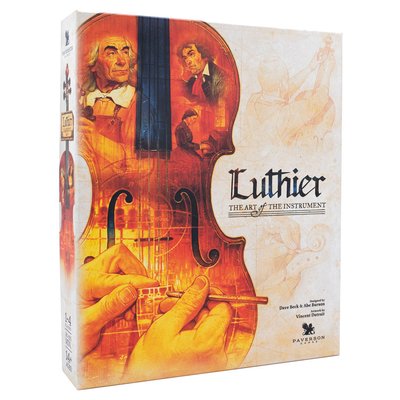
Well, we're boned. Hi everyone, I'm Luke Hector and the Bro, a show where I devote my time to ranting and raving about board games for the beauty more the latter part. Big one for you here. This is not even a review copy. I bought this with my own cash at the UK Games Expo. Probably the most expensive thing I bought there. No surprise. It was about 120 quid or something. Thank you patrons again for your support. But this is Luffier, the art of the instrument, the deluxe edition from Paris Games. So these are the same people who did this still. And I wanted to give this one a look because I demoed it in a previous year with the guided demo that's in this game. More on that later. And you know, I got I got a kick out of it. I thought, okay, this has got some good potential. It looks gorgeous. this I like the theme with it.
This idea of that you're actually making the instruments rather than just simply straight up performing with them. Although you do get to do an element of that and I just thought, okay, this could work. This could have potential. Now, this still was a bit hoham on. It's a neat idea. I like the theme with that as well. But that whole turn and tail, top and tail, whatever they call it mechanic with the deck of cards that you had, I found that was too random and too influential on how well you did in the game. Not to mention the text on the cards was so impossibly small to read that it was a bit of a nightmare trying to get it played really cuz nobody could read what was on the card. So it had good bits, it had bad bits. So the next step in their revolution is this one. Big big box with Vincent Dut Trait's artwork over it. It's been getting a lot of buzz. It's got a lot of high praise from people. Am I going to join that crowd?
Time for the drum solo. In Luffia, you take control of a family of artisans, repairing instruments, performing with said instruments, and also building instruments for patrons who have hired you in order to satisfy their needs. The primary mechanic of the game, it uses these action tokens. They function like workers, but essentially what happens is on the board and on your player board, there are various action spaces that you can go to. And to start with in each round, you plan by choosing your markers. You'll only start off with a few to begin with, but you'll get more as the game goes on. and you will choose one of the action spaces and place your marker face down depending where you want to go. Like maybe I want to go perform. Okay, I'll put it here. Maybe well let's say I'll go to the salon first. Uh but I'll go to my bench and finish this off. Maybe I'll go rough up that particular instrument. I'll put a marker there. Everybody does this in turn on in turn order until your markers are placed. And then in the resolution phase, each again in turn order picks one of the action spaces to activate and all the tokens that are there, yours and everybody else's, will flip over and you'll just put them in ascending order.
The idea is is that whoever has the highest value worker there will go first followed by descending order. And you can use these little apprentices which are basically like little temporary boosts in order to make your value just that little bit higher. Not only are you vying for going first at a particular location because you want to get hold of certain cards before opponents do, but you're also trying to activate certain bonuses on some action spaces where having a value worker of a partic worker of a particular value higher than say four, for example, will get you a bonus on top of the normal action. Even if you don't like when you get a location activated before your turn or you haven't got what you need in order to do it, you can always just do the secondary action, which usually involves taking resources, which is never a bad thing. you might actually go there just for that reason. For resources, you've effectively got money, animal products like, you know, animal hair, that kind of thing. I mean, leather, that sort of thing. You've got wood and you've got metal as well as these inspiration tokens which basically act as a kind of like, you know, you can get discounts at certain actions. In terms of the instruments, they come in all different shapes and guises from trumpets to cellos to pipe organs to Barack guitars.
And they all have different requirements for resources that you need to first rough them up on your bench, which is basically building the like constructing the instrument and finishing them off on the other side of your bench, which involves like engraving and varnishing and that sort of thing. Other actions involve you actually getting the instruments in the first place, uh performing little mini repair jobs on instruments for again for materials for easy points and performing with said instruments in order to get some more money. But the patrons themselves, they have uh like requirements as to what they want. So, I need you to perform this type of music, repair this type of instrument, build me this type of instrument, for example. And they get you bonuses when you complete them, points when you complete them. And as the game goes on from round to round, they give you little gifts, like little bits of resources, but that's their patience running out. And if you take too long, the patron eventually goes away and you'll lose points. Try not to do that.
So, you get nothing. But what it's all building up to is this orchestra in the middle of the board. This basically is like a little area control mechanic. Every time you repair an instrument or performing an instrument, a little marker will go on the respective period of time or the type of instrument and it will basically get you a bonus for being the first one there. It's called the first chair bonus. But if you finish an instrument, actually construct one, you'll get a bigger token to go on there and it kind of overrides any other tokens that are there. But what this effectively is is a primary amount of your scoring. because you'll score points as you go through the game building instruments and satisfying patrons and that. But at the end game, your main two sources of points are going to be some personal goals, but also how many of these first chair bonuses have you got? Where are your markers and are you in control of those areas? Because that will get you more points and it will scale up. This process goes on for six rounds, rinse and repeat, but you'll get more of these point markers as you go through. You might even be able to earn some specialtity ones with special abilities depending on which track you level up, etc. And at the end of the six points, the main extra bit of scoring is the first chairs as I mentioned, but also some personal goal cards that you will have chosen at the start of the game top the points and of course see wins
of course.
So bearing in mind I have got the deluxe version of here. So we'll go through the components a little bit later cuz there are sort of good and bad elements to those as well as the graphic design. But we'll certainly start off with the good bit and that's the artwork is gorgeous. It is Vincent Detroit, which funny enough, most of his artwork is pretty much dedicated gorgeousness. Some games I don't think it works for as well. I mean, I didn't really get into stuff like museum and that. Anything he does with nature is gorgeous, but I think I think his artwork just really suits this one. It's a very cool cover. I like all the other like bits around the sides. The card artwork is very nice, even though there's only so much detail to have. The board looks good. It's just it's just generally a very pretty picture, and it suits the theming of the game. the theme of which is actually done relatively strong here. I mean, yes, it feels a little abstract with, you know, the markers and stuff like that, but I don't know, you can't help but make music references. I like that the patrons are all like people from history, and you can even go into the like the rehearsal book right in the middle to get a full like historical rep uh paragraph on every instrument that's in the game, the Luffia families, and all these different patrons. So, it's good that they actually did pay attention to what it was they were doing in respect to the theme. And even though yes, at the end of the day it boils down to a Euro game, I still think the theming just works. I don't know, maybe it's because I like music. I like this sort of thing, you know, instruments. I give I give anybody who can build an instrument respect. I give anybody who can play an instrument respect. I used to play a keyboard. I don't know. Don't do so anymore. But, you know, I I just like this kind of thing. So, I think the theming works here. Overall, I found the
rule books to be pretty decent. You know, there's a fair amount to read. That is for sure. I mean, it's it's quite textheavy overall. I would have liked maybe a few more working examples for stuff, but generally if you read through the rule book, you will be able to play the game. Just be warned that there are a few little edge rules that have tripped me up in the first couple of games I was playing of this. It's definitely one where you're going to need to really absorb this and get it down. You know, even though the general turn sequence of the game isn't particularly complicated or anything, in fact, it's pretty straightforward. You know, putting markers down and resolving them is easy. It's more what you do on the specific actions and what happens when you like finish instruments. How the first chair bonuses work. You got to really sort of read that a couple of times to get your head around it. It's, you know, it's not worded badly or anything. It's just say it's quite a lot to absorb.
This is light.
That is made a lot easier though by something that I really approve of the rehearsal book. I said it with other games. I've another game I think there was another game recently I said it really worked for. It works in here as well. a guided setup and play through. These I want in more games. I want these in more heavy games. It is a full-on setup and first round play through for four players with, you know, pctoral representation and that. And it goes through all the turns for every player in detail. Tells you exactly what to do, exactly what to take, exactly what to uh, you know, place your marker on, what value, and everything. And it is really, really fantastic as a way to learn the game. Yes, your first game is going to be quite a long time if you play with that guided phrase and then go through it, but you know, and you do need to have the rule book in support mode for this, but it is a very cool way to learn the game and quite a cool way to teach the game. You know, if you already know the game well, but you got to teach it to free new players and they're going to be the sort that you think might struggle with a heavy game because I do think this jumps just about into the category of heavy game because I contemplated if it was medium weight, but I think there's a bit too much going on here for it to be uh medium. I think it's heavy. You know, if you think people are going to struggle, then by all means go through the guided phase.
It worked for me and I thought it was pretty sweet overall.
That just sounds like slavery with extra steps.
This game is definitely going to get your brain cells firing because you need to be able to plan ahead quite a bit in this. You know, you have got to satisfy the needs of Patron. So, you've got to build the instrument, which takes two different stages in order to finish it, but on top of that, you've got to get the materials and you're doing other things as well, especially with the different markers. You're going to need to plan ahead quite a bit. And if that's your sort of game, then you're in luck because you need to know, right, I need to go get the materials here. I need to go get that instrument there. I need to go finish it on my bench at this stage. Finish it there. Can I do it this round? It would be ideal. But no, in that case, do I have time with the patron? Yes, the patron will tick down. It will give me another material that will actually be enough to finish it off. I'll wait till then. It's like there's quite a bit going on. And that is good and bad. We'll get to the bad side of it later, but it's definitely a thinky game.
You're going to be, you know, you're going to be engaged. uh the downtime is not too bad. It's it could be better, but because the locations activate at different times, yes, you're going in turn order, but everybody's you, you know, you might be a situation where, you know, my turn doesn't come for another three players, but the locations they activate all included by markers, therefore, I get to do something on their turns. It is dependent entirely on where you put the markers, and the more stuff you put on your own board, the more downtime that's going to arise. But it does make the uh 90 minutes to two and a half hours time limit that they say on the box uhoh go a little bit quicker in that regard. Now I do have the deluxe edition here and the deluxe edition is a very good edition. It ain't cheap. It cost me £120, but it does have a lot of good stuff going for it. One problem we'll get on to later is still not solved with the deluxe edition, but I do like these very chunky wooden chips. You've got very good player trays for all your stuff.
You've got dual layer boards. You've got a very good sort of insert setup in the box which is very easy to put back together and contains all you need to know. It's a, you know, overall it's a decent one at the end of the day. I'm not sure I'd be keen on storing the game vertically, but horizontally I thought it was a nice package. A good insert, good components, good chunky cards, decent card, you know, tiles, sorry. Cards that I don't think you need to worry about sleeving. I think they've got a good nice finish on them. But I am a bit disappointed with the way that the retail version was portrayed here because you're paying for a lot of stuff here that you would think, well, you know, a retail version would have most of this stuff, right? Hm. Apparently, this is one of those occasions where the standard edition is lacking in some quality of life aspects, and I'm not keen when it does that. You want to change up the component quality from standard to deluxe, that's fine. But there are certain things that I expect to find in a board game in 2025 that aren't present in the deluxe version.
Now, I need to read the list off the Kickstarter page, but here we go. This is the standard edition differences as written on Kickstarter. Okay. All right. No insert. Are you freaking kidding me? I mean, did they tell Picasso no brush? Um, board games need an insert, especially for something as big and complex as this. You can't leave out an insert. Insert should be in every copy of the game. Uh, no dual layer boards. Again, dual layer boards typically something that's a stretch goal that you include in every Kickstarter. Not something you just throw into the 120 version cuz bearing in mind the standard version is not exactly cheap. I think the standard version was selling for 70 I think at the expo. 60 60 at the minimum, but then 70 I think was more realistic. So, you're talking a 50 maybe at best 40 pound increase in price to get yourself dual layer boards. Uh, what have we got here? No insert, no dual layer boards. Coins of punch board, that's fine. You want to give me metal coins, that's not a problem in the deluxe version. Only worker discs are screen printed wood. Okay. And majority of colored player pieces are punch board instead of wood. Now, that I don't mind too much. I mean, I, you know, it would be nice to have screen printed wood in the main game. game. I mean, let's face it, other people have managed it. But, you know, if you want it to be that it's mostly cardboard components in the retail version and then in the deluxe version, you get all the really fancy screen printed wood, fine, that's a cosmetic upgrade. But, no insert and no player boards just feels a bit that just feels a bit cheap because people want
dual layer boards and they are handy in this instance. You know, they store things and slot the cards nice and well, but an insert is paramount for a game like this. I wouldn't want to store this game without an insert. I think it would just be pretty stuffed in baggies and that. Not keen on that front. Yeah, I got to pay an extra load of money in order to do so. So, if you are willing to pay the money for the deluxe version, you are going to get something really nice, but it's going to cost you a penny. It does mean that the standard edition is lacking. It is just that the luxury edition has so much more eagle.
There's a decent amount of replay value in the box as well. You've got a lot of these public objectives that you can utilize for, you know, what you need to achieve during the game. Although I do find that the balance is a little bit off with these. Some of these objectives are easier to do than others. You know, some just want you to get normal perform tokens on the board, but that's easy. But then some want you to, you know, build rare instruments. Well, they're rare instruments. They're hard to build. You know, that objective just feels a lot more harder to do in general. So, the hard ones tend to get avoided and the easier ones get, you know, used more often. So, I find that there are some of these objectives I just outright don't want to use. But I do really like the like different sort of family tiles that you can get. These little tokens that basically take control of a family. They give you a random a different setup with materials and coins and maybe track levels or other inspiration tokens.
Maybe a different, you know, set of instruments or whatever. You know, there's one that lets you that doesn't give you any materials at the start. It just gives you 20 bucks and says go to the market and buy what you like. I find that to be quite powerful at the start of the game. But, you know, these are pretty cool. I wish there was more of them. I think there's only about eight of them in the box. I would have liked, you know, probably double that to be honest. If you're going to do if you're going to do Kickstarter, then make the stretch goals, you know, components standard in all editions, but then work your way up to just giving me more variety with stuff like this. This is the kind of thing I like. But there's a decent amount of patrons as well. You'll go through most of the deck each time, but you know, there are different ones that score in different ways. Uh you've got the different specialtity workers that you can earn. Three different types of which you only use so many of each one in the game and you're only going to have one per speciality worker you get.
So that's going to change things up as well. Overall there is a decent amount of variety in there and that's before you get into the solo mode which I'll touch on in a bit. So I've said that the art in a lot of the components particularly in the deluxe edition is yeah really top quality and really excellent for the money you're paying. There are one or two aspects though that I think they kind of dropped the ball on though. And the main thing I really don't like is the use of cubes as resources. You want me to pay £120 for your game? Give me something better than cubes for resources. Hell, you want me to pay £70 for your game? Give me something better than cubes for resources. Now, I wouldn't mind too much if they weren't designed badly. It's not that they're bad quality, but this is supposed to be animals, the white one. Okay? Metal is supposed to be the brown one and wood is meant to be the one that has like streak wood streaks across it. Okay? Right?
That already is not the most intuitive way to say what cubes they are. But when you look at the graphic design on the board and you know some of the like the cards of what things need, that gets in the way a lot. A lot of times people are forgetting which way round the cubes are. Like they're forgetting, oh wait, this is meant to be the metal one. This is meant to be the animal one. you know, the wood one is fine, but the other two are not so much. And then there are certain like cards and various like objectives and you know, bits like that where you look at the type of symbology that it uses for what is meant to be a metal one or an animal one. And even that's not the most intuitive as well. It's just an extra hurdle that didn't need to be there in the first place. If only you'd just maybe like given us, you know, given us actual metal cubes for the metal one. You could have given us bog standard wood for these. And then the animal one could have been, I don't know, just a different color or a cardboard token. I don't know. They just needed to be differentiated a little bit more cuz we did find those quite annoying.
Hello. Hello. Anybody home?
Some other small blemishes here and there that I find a bit weird. Firstly, the use of dice. I don't get why the dice have to be used for the perform action. You essentially get the card. It's got three different tiers. You roll the dice, add the value of notes plus your worker and any other bonuses and see what you get in terms of money putting out a music token in the orchestra and getting some victory points. It's just weird they throw in this little luck aspect here on top of everything else. But it's just kind of I don't know, it's inconsequential for the most part at the end of the day because if you're in the first tier on one of these perform cards, then you might as well have not done the perform action. you might as well have just gone to the balcony because you can get more money from the balcony than you can from the first tier of these things. So really, you're aiming for tier two and tier three and so you can get your orchestra token out. But the difference in points in that between the two tiers is negligible. At most, it's two points.
Sometimes it's only one point difference. It doesn't really matter. You spend inspiration tokens to push yourself up to the next level and that, but it just feels like you're jumping through a few hoops that are, you know, so like you're jumping through hoops, but they're massive. Like, you know, like you can't physically fail to jump through them. You should easily be able to do it, but it's just like why? I mean, why can't there just be a deterministic way of doing it or some other like aspect to it? This just feels unnecessary. And yeah, you could still roll badly and before and not have enough inspiration tokens to get yourself to the first tier to actually, you know, get yourself a token in the orchestra. And that sucks when it happens. But I don't know, it just feels odd. I mean, you can upgrade these dice. You can get a purple one with the bonus that gives you more resources. But it's just why the balance I mentioned with the objectives, I found them to be a little bit off. I think the balance with your personal trophies is a bit off as well. There's free you can unlock like special abilities and some are definitely better than others. I mean, getting a free resource at the start of every round, as well as having more storage is pretty dang handy. All right, having the purple dye for what you do during perform if you're planning to do a lot of performances, the stuff you can get off that purple dye in terms of resources and cubes and money and stuff is pretty insane. But the one with the special patrons just feels a little bit meh really. I mean, they're easy to satisfy. They've only got one requirement, but they only give you one point. Um, and they'll give you points at the start of each round. But really, the patron, these like elite patrons are
only really worth picking up in say round one or two. After that, it's not particularly worth it. And I don't know, they just don't see, you know, it's somebody else that you've got to satisfy. It's not giving you a bonus. If you activate the other two, you are outright getting bonuses, whereas the elite patron isn't giving you bonuses. It's another thing you have to work towards. So, I kind of find those a little bit mad. you know, we we tend to not take these uh patrons very often when we play these. We tend to go for the other two. And of course, these specialtity workers that I mentioned, they're not balanced either. I mean, some of these, you know, oh yeah, when revealed at this location, it's worth plus one, maybe plus two. That can be nice. But I don't know, you know, some of these abilities are definitely a bit better. I mean, after completing any action, gain a material, pretty handy. But this competitor one, man, I dominated with this one. When used at the balcony to score an objective, you can reduce the criteria by minim by one to a minimum of one. That is dang good because that is the difference between certain amount of points and quite a lot of points in those. Not to mention they're blocking other people out. That ability was pretty paramount in the last time I won this game. And so I just like there are certain times where I'm thinking right I'm going to leave that card out of the game. I'm going to leave this objective out of the game. It's just and you know with the dice and that it's just like they're not bad. They're not major problems, but it's just kind of like, you know, death by a thousand cuts at some stage.
Have you had enough pain?
Never.
The one negative you do need to bear in mind, particularly if you're not a fan of area control, like a friend of mine is the orchestra aspect, which is definitely a big chunk of the scoring, is area control. It is basically vying for those different instruments and trying to get the first chair bonuses. The problem is the first chair bonuses are basically overridden the second anybody builds an instrument. So, you might have repaired a bunch of stuff, performed a bunch of stuff, and got your tokens on there, and it's all pretty good. But the second anybody decides, right, I'm going to build the natural trumpet, and you're on there, you can't really stop them from doing it. You know, there's only so much interaction in this game, other than the fact that you're sort of looking at where people might go and deciding whether I need to put higher workers there. But in terms of their game plan, other than mistiming, which we'll get on to in a minute, there's only so much you can do to screw them over. And if they do build the instrument, then all your hard work getting the first chair bonus originally is kind of gone to pot for the scoring bit because their token would just simply override yours. But on top of that, what I'm getting at mainly is the fact that this game is pretty punishing.
It is. I mean, this game you trying to plan ahead, right, I want to do this, I need this, I need this, I need this, right? In this order, that would be ideal for this stuff to go forward. But because everybody else can decide when and where they want to activate their markers, your plans can go wrong pretty dang easily. And this is not a game that you recover from. If you fall behind at the very start, like round one or two doesn't go well for you, then kiss your game goodbye. You will not pull it back by round six. It's not going to happen. And this has been proven in every multiplayer game I have played. You fall behind, you're done. But having like your plans kind of messed up also means then you have to rethink your entire game plan because as soon as somebody goes, "Right, I'm flipping this one over." And I was like, "Yeah, but I needed that to get the card that I needed in order to build stuff for this round. Now, what am I supposed to do?"
And it causes people to rethink their turns. It increases the um analysis paralysis of this game, which is a fairly big thing. You know, you can, yes, you get involved on other people's turns on a reasonable basis, but the AP factor is there. You're going to have to wait for people to recalculate and redo things. And you know, when it when it does get quite punishing, it does feel a little bit deflating when you have a round that just doesn't feel that good and somebody else already finished their harps accord and got a bucket load of points for it. In terms of its game length, I chuckled a little bit when it was 90 to 150 minutes. Good faking luck with that. But your weak link is this is Earth. Um, yes. Uh, the solo games I played were definitely not 90 minutes. Uh, the four player games I played were definitely not 2 and 1 half hours. I mean, this time limit on there is if you know this game inside and out. You don't need to check the rule book for anything and AP is kept down to a minimum. If you can have that criteria, then you probably can get this done in 90 to 150 minutes. But let's be pretty honest, for your first few games, it's going to easily be at least another 30, if not 45 minutes more on that timer. You know, four player games are going to take you 3 hours plus. And that's not including the teaching setup. I mean, the setup is not bad. With the deluxe version, you've actually got a reasonably quick setup, but the teach is going to take a while.
There's quite a few rules you do need to let, you know, to teach on that front and then it's going to be a good 3 hours of play. You know, the solo mode easily taking me hours and hours to play the solo mode, but we'll get on to that a bit later. It's just, you know, that time limit on the box is optimistic to say the least. And overall, I just feel like the game is maybe one round too long. You know, the game timer goes six rounds and the idea is is that you basically have um you know, two markers that you will gain as the game goes on. So, round one and two, three markers, then you get your number two, three, four, then you get your number four, five, six. All right, so three markers, three markers, four markers, four markers, five markers, five markers. The game does drag a bit when you get to that five marker thing, though, when people have got so many different markers that they're activating on their turns. And six rounds, I don't know.
Now, I get the impression that this one should have been five rounds. Like, maybe cut out round one, give you more stuff at the setup, you know, to make up for round one and then have round two, three, four, and five, and six play out as normal. And I think that would have trimmed the length nicely. But there's no quick play variant in the book. You play this way and that's it. They couldn't come up with a short variant or anything like that, which come on, you can come up with a quick play variant to shorten one round.
We're just so busy. Well, make time. Distilled had a problem that you were very dependent on some luck aspects in terms of its cards. Well, this one isn't quite as bad, but there is still an element of it and it does hurt. There's a part of this game where basically you are going to be vying for certain cards to come out of their respective decks. So, I need particular instruments to arrive. Well, you know what they are on the back of the card, but you only see four and around and you can't even access all four of them. You know, at least certainly not easy. So you may find that a particular type of instrument just doesn't show up for donkeyy's ages. This goes for the patrons. This goes for the perform cards. So there's three different, you know, periods of music you're performing. The patrons, you got four different types of patrons that you're trying to do. So for the purposes of public objectives and your own personal objectives, you are like hoping stuff just gets chucked out of the deck, which yes, people argue that's the case in something like Wingspan, for example.
Wingspan takes you an hour. This takes you three. All right, three plus. It's definitely not okay in a game of this length, but you have ways around it and they do put something in to mitigate it. You have four spaces, one for, you know, two of them are fine and then two of them are costly and the third one is even more costly and it's through the deck. You can basically pay a combination of money, inspiration, and maybe a apprentice worker permanently, which is quite a heavy cost in order to access different tier cards. Now, if you've leveled up on the balcony, you can do this for free, but that takes time. It takes effort. You're not going to be doing that a lot. But four money and inspiration is not too bad. That's okay for a cost. Eight money/ inspiration is pretty hefty. You need a decent amount of spare cash and inspiration to manage eight. You better want that card. But then it gets worse.
If you want to go through the deck and find the first instance of a particular type of card, you've got to pay 10 money or inspiration um plus lose your apprentice worker, which you only can get free in the game permanently. That is insane for a cost. Okay, most people will not pay the eight. I think I did it once, you know, in one game and then after that I don't think I ever did it again. 10 I've seen the occasional person do it. It's sometimes worked, sometimes still whiffed. I mean, you may have got like a an instrument that was a rare version of the type you asked for, which means you didn't have enough materials to build it. Um, it may still have had other prerequisites you didn't want, but even then, 10 money and inspiration. That is a lot to ask for to search for a deck just because the game wasn't nice enough to, you know, spit out a type of card that you needed anyway. Like, I mean, would it have killed the game to give me a woodwwind instrument at this point? Nope. You're just not going to give me a woodwind instrument to repair, are you? Well, well, I better spend 10 bucks to to look through this deck and find the first one that I can. It's uh I don't know. I just they it's being too costly. And don't get me started on the market board. Oh Jesus. I mean the market system fine.
You get to go there and buy materials with fluctuating prices. You can discount it. You can pay four bucks for an apprentice. Not a bad cost. You can pay 15 bucks to level up a couple of tracks. And for the most part, the two tracks are nice, but you're mainly leveling them up to get the specialtity worker. And that happens halfway up the track. So anything beyond that just feels like not necessary. But 15 bucks, if you've got 15 bucks spare, go to the market and buy materials so you can build a really cool instrument. Don't just level up one space on one of those tracks. It's not worth it. Nobody in any of my games has had 15 spare money, period.
Is bread free? Yeah, we'll split an order.
I mean, if I've ever got 15 or more cash, I'm spending it on material so I can finish instruments. I'm not able to just go, you know what, 15 bucks. Yeah, let's just level up this track. Done. not worth it at all. It's way too overpriced. Right, this is a long enough video, but we still need to talk about the solo mode. Now, in the multiplayer, they kind of say, right, you know, you've got the hidden markers. You might bluff as to where you want to go with a particular value or something. Trust me, that bluffing aspect really doesn't happen to a great extent. So, don't worry if that's not your thing. I think that was embellished quite a bit. If you're going to a location, you can kind of sus out what type of value they're putting there. And if they really need something, you can tell they really need it. Why are they gonna like put a low value there? Um, but the solo game attempts to replicate this by basically giving you the reverse side of the board and giving the opponent its own little action deck of cards. So, it gets one card that basically determines some of the priorities it has for certain types of instruments and what objectives it goes for. And it's all named after different locations. I find that quite a nice little thing. But then you get this little action deck of cards, level one to three for all the different actions in the game. And essentially what happens is you start off with the level ones for six cards. And the planning phase, nice and quick. You simply flip over a card, put one of its markers of which it's got face down there at random. So you don't know what value it's putting down there, okay? It's just going to be it. And as the planning phase goes on, you'll reveal the rest of them. And there'll be level one actions for all this lot. There are cubes on
this track here which add as a multi mod modifier to the value of the marker they've put down. So they might have only put down the two, but if it's high priority for them to get an instrument, then they might add three from this track. So that value worker becomes a five. And these markers chop and change based on which action cards come out as well as the sort of setup card you add to the start. That's a pretty neat little idea there. I believe David Digby had his hand in there, so you can tell that there's some of his little workings going into it. Um, but you know, the solo mode is decent. I had fun with it, but it is a little bit on the uh, shall we say high requirements side for piloting it. You know, the planning phase is nice and quick. The resolution phase, on the other hand, not so much. You've got to absorb quite a decent amount of extra rules from the solo rules here. And with each of the actions, bear in mind, there are three levels of that action. So, there's little variations to how the action works based on the level of the card that you need to constantly keep checking in the book because there's no way you're going to remember it. The reference card only tells you about its priority order, not about the different levels of card. But even then, just resolving the AI's actions as well as yours takes a fair bit of time. You know, you've got to remember what the action does, which usually involves you going back into the rule book anyway, unless you've memorized it. But, you know, when you've got to do yours, resolve that, and then you got to do his, and then you got to do yours, then you got to do his, and they're getting like, you know, five, six actions as well as as you are, it does mean that this takes a bit of piloting, you know, not to the stupid extents of something
like Mine Clash games. Mine Clash games are like the worst when it comes to how much effort you got to pilot their AIS. It's ridiculous. But this one maybe goes just a little bit above like, you know, I'm kind of on with Paul Grogan on this where both of us are not fans of, you know, having to put in so much effort to pilot an AI. The simpler you can make an AI to pilot, the more we're going to like it. This one requires a reasonable amount of effort to pilot it. On top of that, it does seem to cheat in certain ways a little bit much. I mean, it's going to be challenging. You play this on the easy difficulty and it's still going to be a challenge. You up the difficulty rating of this and boy oh boy, you're just going to get creamed at times, but there's not a lot you can do to really stop the AI. It puts its markers out at random. You don't know what its priorities are going to be from one day to the next really. I mean, once they're in place, it's not like you can do much about it. Um, you know that certain actions it will value better than others. So, it might influence whether you put higher value markers on certain places compared to the AI, but you know, you don't necessarily know which one of the six action cards won't get used. And even then, as they go up in higher value, they're just going to overtake you most of the time anyway.
So, it's like, all right, I just accept that this location AI is going to have a higher mark and whatever because you just won't be able to keep up with it all. Um, but the way it cheats particularly is with the instruments. It just basically gets its patrons on here. So, it will have a patron. Here you go, so and so. And it will tell you what instruments it needs. And basically, when it gets an instrument, you just place it above their board. And then whenever it does the action to finish an instrument, it does the entire instrument in one go. What? The entire instrument in one go. Doesn't use money or resources. It just simply goes from start to finish for an instrument in one go. the amount of effort that I have to put in to construct your goddamn pipe organ and this thing can basically just go one action done. Doesn't matter what the instrument is. If it's a little violin only has a couple of in um cubes requirement, it'll do it in one go. If it is a rare pipe organ or harps accord or a timony that all require pretty hefty resource costs, it will still do the lot in one go, which makes the scoring for this in the same manner as Galactic Cruise, which had the same problem a bit swingy. You know, this AI can score not that many points if it just happens that it's not using instruments that are particularly high value or it doesn't get that action that often because it can do the action multiple times in a turn potentially.
But it can have times where it just decimates you in points because it's getting the high value instruments and it doesn't have anything in the rules to slow it down for any particular instrument. So the scores for the AI fluctuate so damn wildly from oh yeah, it's not doing too particularly good to it's comparable to a pretty good human player to this is impossible for any human player to physically do. And that is a bit annoying, especially after you've played the solo mode for bare freaking minimum 2 hours. I would say I think 90 minutes is pushing that there. The solo mode takes a while to set up by yourself, but even then to pilot and all, you're not getting this done quick. This is not a speedy solo mode. It's, you know, a half decent solo mode. I'm not ragging on it entirely. I'm just saying that it's going to take a fair bit of effort to pilot and it's going to take you a while to play and it can be a little swingy on its points. But as the system goes, I got to give credit to the mechanics within it. I do think this priority track is really good. I think the action deck is really cool because they will the actions will level up different rates during a game. I think that's pretty smart, pretty cool. And the fact that you can turn a game like this into a solo game, I think deserves some credit as well because it's not an easy task. This game doesn't lend itself well to being played solo. And I think this method does work. It's just a bit above my station as to what I want from a solo mode in terms of its complexity and its uh you know time to play and piloting. But I think that some people
are going to play this solo and get a kick out of it. So I'm not saying the solo mode is bad at all. I'm just saying it's not really for me. I think some of the some others out there are going to like it.
So you're telling me there's a chance?
So with Luffia, there's definitely more positives than negatives overall. You know, a lot of the flaws that I've mentioned are kind of more of a death by a thousand cuts type thing. You know, there's not many flaws that just, you know, outright kill the game. I do think the game is a bit punishing. I do think it's quite, you know, quite long extended, you know, timewise and can lead to a lot of sort of AP and a lot of dissatisfied customers who just get completely screwed early in the game. There are some aspects there, but other little things like, you know, the use of the dice and the, you know, the components with the wood and the metal and stuff, you know, the there they are there are problems, but they're smaller ones. You know, they're not too bad. I do like how it looks, but it is an expensive game to buy for the deluxe set. And I don't like how things like dual layer boards and the insert were left out of the standard edition. I think that's a little bit cheesy. But, you know, if you're willing to pay the price for the deluxe version, you're going to get a nice package overall.
There's a good amount of thinkiness in this game. The planning aspect is, you know, definitely going to test your brain cells. It's going to feel rewarding when your plans come to fruition, but it's also going to feel very deflating when they don't come to fruition. And sometimes you don't have a lot of control over when the plans go ary. You know, you might have your plan set in stone and all it takes is for somebody to flip a action at the wrong time and it just completely messes up your entire round. It is feasibly possible for that to happen, but you know, some good long-term planning aspects, a decent amount of replay value, you know, with the different specialtity workers and the families that you can use and a solo mode that is a bit on the lengthy side and a little bit on the uh high piloting requirement side, but it's not up to extreme levels like other publishers can do. You know, it's a decent solo mode overall, just a bit above my station. But those negatives are still there. And when people have played this game with me, they've been kind of hit and miss.
Nobody has said they disliked the game, even the ones who did badly in it. You know, they have still liked it, but some people aren't a fan of that orchestra like mechanic where, you know, finishing an instrument kind of just kicks you off a space no matter how hard you've worked for it. It's a little fiddly with the rules as to hang on a minute. So that marker, you know, if you have more markers on your opponent and that takes over, as long as it's these particular markers, but as soon as your marker comes on, that's it. Okay, that's done. And the luck aspect with cards having to come out of the deck for certain types of instruments and that, you know, not being easy to control mitigate. I mean, it's so expensive to search through the deck for the type that you want that most people can't afford to do it. And if you've got to spend 10 bucks to do it and someone else doesn't, remember what I've said about all these mitigation games. I say it with civil evolution a lot of the times for people who are fans of that game. If you have to spend all your resources mitigating something that didn't go your way through luck, you are doing worse than somebody who didn't have to. That is done by default. It, you know, those sort of aspects do get in the way. I do enjoy this game and I have enjoyed my time with it. I just don't see myself thinking it's a keeper for its £120 price tag that it asked for me. If id bought this in the standard version, maybe. But then I'd have to lose out on the insert and some other, you know, dual layer boards and that and that would kind of suck a little bit, but you know, not too bad. But yeah, it's a game that I do enjoy playing.
It's a game that I've liked, but I don't think it's up there with the caliber of some of the other games and that. I still think it's decent. I think some people are going to rate it quite highly, but this isn't going anywhere near kind of game of the year territory for me. I'm kind of I mean and aing between a six and a seven. I think overall though I think I'm going to satisfy myself with a high six. You know, this is close to being a seven. A good game, but I think overall I'm sitting on a six. It's above average. You know, some of those blemishes do get in the way overall. It is a long game. It is definitely a punishing game. It, you know, the solo mode is a bit much for me to want to pilot. Even though I give respect to its mechanics and I think some people are going to like it, I think it's just going to be one of those games where some people are really going to love it. You know, they're going to like all the stuff in it.
They're going to forgive some of those blemishes. They're going to love the fact that it's punishing. They're going to love the fact that the solo mode is, you know, a thinky solo mode and that. So, you know, they're going to forgive a lot of that stuff. In which case, I can see them coming out with nines, you know, nines out of 10 pretty easily. And this could still be a solid game for you. I'd still would maybe chop and change between a six or a seven at any particular point, but for the price I paid because I got to factor in how much money this costs even in its standard version and what you're getting in the standard version. You know, the components aren't going to be anywhere near as good and you're still paying a good 70 for it. It's yeah, with that in mind, I don't think I can go up to a seven, but six is still a good score. I would play it. I probably won't keep this copy, but if somebody was to say, I want to play Luffier, have you got time to play it? Yeah, I'd play it and I'd probably still get a decent amount of enjoyment from it. It's just not quite up there with some of the other heavyweight games I'd rather play. I mean, when you're talking like Arnac and SETI and you know, you know, aside from like the Lurers, even a couple of the Mine Clash ones, you Civilization, you know, Star Wars Rebellion, I'm trying to think of heavier euros, particularly Edge of Darkness, you know, when I'm trying to compare it to a lot of other heavier euros, this one just isn't quite up to that caliber, but it's still decent. I still like it. just 6 out of 10 overall. Be interested to know your thoughts. Do you love it? Do you hate it? That's just my view. So that's it for me on this episode of The Broken Melee. If you like what you see, then please thumb it up on YouTube and thumb it up on Board Game Geek when it goes live on the page. Check out the rest of my content. There hasn't been a huge amount of it lately as I've been recovering from a cold and a bug and the
cruise. But uh you know, I'm 99% there. The throat is just dealing with, you know, recovery at a sense, but for the most part, I'm doing pretty well. But check out what I've put out. I've even started doing digital board game playthroughs now. I did one with King Domino Digital and the feedback has been pretty good on that. So, thank you everybody who's been saying that. I think like pretty much 99% of people loved it. So, yeah, expect more digital playthroughs and we'll see if I can do an Ark Nova one when I get back from Manacon. So, take care and remember, regardless if you're the type of person that likes to blow one's own trumpet, it's still only a game. So, bye for now.