How Players and Publishers Choose Between Good Board Games | META Hooks
Games in This Video
3 games are featured in this video — they unlock as you watch.

Transcript
Most games don't fail because they're bad. They fail because nobody notices them. The industry is full of good games, thousands of them. Making a functional game is hard, but it's not that hard. Making a fun game is harder, but again, it's not that difficult. Compared to digital game design, tabletop design is remarkably accessible. You don't need to learn programming. Prototyping is usually a simple pen and paper affair without significant expense. It's a craft available to almost anyone. Lots of people design games for fun, and most of these people are competent. They produce games that work, games with engaging decisions, satisfying pacing, and appealing presentation.
There is no need for publishers to produce bad games. Every year they're shown thousands of ideas by talented designers
desperate to see their creations on store shelves. Now, as a lifelong board game player, I think that's fantastic. But as a designer, it does present a bit of a challenge. In commercial terms, most of those games are invisible. I don't want my games to be invisible. I want them to be enjoyed by as many players as possible. Why would a publisher choose this game when there are already so many similar products available? How does it distinguish itself? Over the last few months, I've been developing a design tool to help answer exactly that question. It's called Metahooks. The framework invites you as a game maker to view your games through four different lenses, a mechanical hook, an experiential hook, a thematic hook, and an aesthetic hook. And the goal is simple. Identify why someone should pay attention to your game. Why should a publisher take notice? Why should a retailer stock it? Why should a customer choose it over dozens of other alternatives.
I'm Adam Porter. I've been designing games for over a decade, and my games are sold in countries all around the world, and span a wide range of themes, mechanisms, and genres. On this channel, I share practical design tools and lessons from my own experience, in hope that they help you to create games that connect with players. Now, my approach to game design is to treat games as products, which means that every game needs a reason to exist. It needs a specific audience that it serves. Now, that's where Meta Hooks comes in. The Meta Hooks framework forces specificity. Your job is to isolate four different dimensions of your game: a mechanical hook, an experiential hook, a thematic hook, and an aesthetic hook. And when you isolate these elements, you expose the strengths and weaknesses of your design. Some games succeed primarily because of thematic immersion. So, think Everdell and Nemesis and War of the Ring. Others succeed because of their mechanisms. Think Azul, Just One, or The Crew. Meta Hooks gives us a vocabulary for discussing why different products attract attention in different ways.
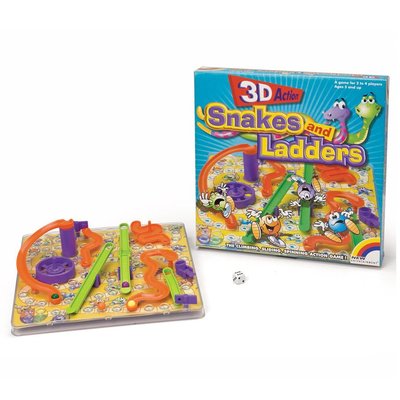
So, let's begin with the mechanical hook. Can you describe your game in terms of mechanisms alone? No theme, no presentation, just mechanisms. We're looking for precision. So, for example, if I were writing a mechanical hook for Snakes and Ladders, it might be roll dice to advance along a track with some spaces allowing you to leap ahead, and others sending you backwards. It's not an especially strong hook, but it is the defining mechanism of the game. For my recent strategy game Emberheart, co-designed with Rob Daviau, the mechanical hook might be worker placement where your workers evolve into specialists, enabling them to exploit different sections of the board and changing how you compete for rewards.
Now, once you've identified the mechanical hook, you should move on to the experiential hook. And this one focuses on the player experience. How do players interact? What emotions do they feel? What decisions define the game? So, a classic example would be A Fella. I've got a copy of A Fella over here somewhere. Here it is. Pocket A Fella. Okay, it says on here, "A minute to learn, a lifetime to master." Don't use that one. It's become a bit of a cliche. But, that is an experiential hook. Ember Hearth's experiential hook might be race rivals for rewards, constantly weighing efficiency against certainty. Commit too many workers and you've wasted resources. Commit too few and somebody else claims the prize.
Third, we have the thematic hook. So, can you describe your game's narrative appeal without mentioning mechanisms? Focus purely on setting, story, characters, and fantasy. So, what about Snakes and Ladders? A thematic hook for Snakes and Ladders could be, "You represent a child playing in a playground. Climbing ladders is always fun, but watch out for those slippery snakes who might send you tumbling." It's not great, but you get the idea. Maybe we could go back to the Indian origins of the game and talk about morality and and rising in the ranks of morality and then dropping back down again through sin and all that sort of stuff, okay? Ember Hearth's thematic hook is lead the king's champions in a desperate effort to rescue dragons from poachers and preserve the last sanctuary of these majestic creatures.
Perhaps your game doesn't have a theme at all. Maybe it's a pure abstract. But even then, I encourage you to perform this exercise. Imagine what the pieces represent. What story could be hiding beneath the abstraction? So, my recent abstract game, Suricata, is essentially an inversion of Tic-Tac-Toe. One piece resembles a meerkat peering across a landscape while termite mounds obstruct its vision. Now, you might decide not to incorporate a theme at all. That's a perfectly viable option in an abstract strategy game, but the exercise remains valuable because imagining a theme could inspire entirely new mechanisms. Finally, we have the aesthetic hook. Can you sell the game purely on its presentation? How does it look? What makes it tactile?
What gives it table presence? What catches the eye? So, for Emberheart, the aesthetic hook might be a large board with space for stunning illustration, a wide variety of unique cards representing different characters and creatures with massive scope for world-building. At this point, you have four separate statements, four different reasons that somebody might care about your game. So, now, rank them. Which hook is strongest? Which is the most distinctive? Which is most likely to attract attention? And which is the weakest? If all four of your hooks feel generic, interchangeable, or forgettable, that might indicate that your design still needs work before it enters the market. But if one or more of these hooks feels genuinely distinctive, you've probably identified the heart of your product.
So, for Emberheart, the strongest hooks are the theme and the presentation. The mechanisms and the player experience are strong, too, but they aren't quite as immediately distinctive. By ranking your hooks, you're really answering a deeper question. What is carrying this product? You're going to need this insight before you start pitching to publishers. And the final stage is to combine the strongest elements of each of these statements into a single hybrid hook. So, for Emberheart, that might be "Rescue magnificent dragons from ruthless poachers in a beautifully illustrated fantasy world, sending specialized parties of workers across the island of Emberheart. But, rescuing dragons is a dangerous game, and not all your workers will return. How much risk are you willing to take to save the island's greatest treasures?"
Probably need to cut that down a bit. Publishers don't just need a good game. They need something to put on the box, something to put in a press release, something retailers can recommend in a conversation, something reviewers can explain in a sentence. The Meta Hooks framework exposes whether that hook actually exists. So, I hope you'll find this tool useful when evaluating your own designs and identifying the most compelling aspects of your game before pitching it to publishers through emails, sell sheets, or video overviews. If you enjoy this kind of product-focused approach to game design, you'll probably also enjoy my books. The Adam in Wales board game design series is available all over the world on Amazon, and it covers topics ranging from playtesting and pitching to product design and personal development as a designer.
I'm going to be using Meta Hooks and several other design tools in a new series of game reviews here on this channel. It's been a long time since I last put a game through the ringer, and I'm looking forward to getting back to it. So, until next time, all the best.