Calimala Review - Chairman of the Board
Games in This Video
1 game is featured in this video — it unlocks as you watch.
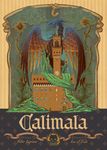
Transcript
hey everyone today I'm taking a look at calamala which is a euro strategy board game published back in 2017. this one accommodates three to five players and takes around 75 minutes to play on average before I get into my review of calamala I want to give a shout out to the show's sponsor keyienda dot Co dot UK who are my go to online retailer here in the UK and if you use my discount code in the show notes you can get a five percent off your first order okay so the main board for kalamala is gonna look like this and but before I get started I should mention that these 3D MDF buildings are part of a deluxe expansion they're purely there for aesthetic reasons and they will not come with the base game but let's break down the board into the different sections so in the top left hand corner here you have these three rows which have been filled in with these modular tiles now these tiles are going to show the order in which all the different categories are going to get scored so the first thing we're going to score are the trade houses and the last and final thing we're going to score is this building here the Santa Maria Dell Fiore again this is going to be completely modular so every game you're going to be scoring things in different in a different way or in a different order at least and I should say this is an area majority Style game uh you have the four different buildings here um and the idea is that we're going to be trying to fill in all these different squares with our cubes to show we have majorities in these regions so essentially um this palazzio Vecchio only has the artwork
um here um but mostly in fact all the other buildings have the three different resources you have wood brick and marble as well as the decoration or artwork there again which we're going to get competing over because when it gets to that point on the board um I.E who's got the most artwork on the board um who's got the most wood donated on the board or even each of the buildings are going to score individually again whoever's got the majority in each of those categories will score the bigger bunch of points and you also have the map here which is broken down into two different categories I suppose you've got these coastal regions here or these ports which are linked by these boats so you have London uh Lisbon and Barcelona and you also have these three Inland cities here which are depicted by these trade houses so you have trois Bruges and Hamburg and more importantly in the bottom left-hand section you have the main part of the book where actions are are taken so you can see here that much like the um the top part here all these tiles have been randomly distributed on these different empty squares and these are all the different actions you can take throughout the game and the way you take these actions is by placing a disc of your color like so onto a spot that is adjacent to two different two different actions and then you get to resolve them both but we'll talk about how that works in a little bit and each player is also going to have their own personal player board that look like this where you have your storage capacity to store wood bricks and marble
and also the silk or the cloth which is the kind of main resource in the game um each player is also going to have a bunch of their cubes a bunch of discs depending on the Play account you can have your own color and you're going to also going to have these white discs which are pretty powerful if you use them correctly and you've also got some of these trade houses and ships which you can pay for and unlock as the game goes on and you're also going to have a deck of action cards here which you can acquire as the game goes on now also at the start of the game we did select a secret objective here so you can see here by the end of the game I want to have the majority in the San Minato building because if I do I'm going to get Five Points second place is gonna get three points and first place is only going to get a single point this will be kept secret however there is also a public objective you can see here Hamburg is getting competed over again the most the person with the most cubes in Hamburg by the end of the game is going to get those five points and three points and one points accordingly so it goes without saying that the person with the most victory points at the end of the game will be the winner and the game is going to get ended by the time that all these different tiles have been resolved and scored or until all the players have played all of their discs and even if you play your discs before all the regions have been scored then you're still going to continue until all these different regions are resolved now the main turn order in this game or the way the game works is so simple and I suppose one of the cool things about this game is that there is
no real phases or rounds you need to play through you just keep playing and when certain things happen that will trigger a scoring and we'll talk about that in a little bit so let's touch on again how the main mechanism actually works so let's say it's the yellow player's turn they're going to have the option to place their disc either they're in color or a white one like so on any of these action spots so let's just say I wanted to go here like so that means I could take a wood action and a brick action in any order I want so I can do this one first and then this one or vice versa now these ones are rather simple where all you're going to do is put each um each action you've taken you're going to take one resource of that type and add it to your player board like so so that's a wood action and a brick like so now the other resource I.E the um the marble works in the exact same way and also the cloth Works in a pretty much identical way where you'll add a cloth to your Storehouse like so however if throughout the game you end up acquiring more of these um cloth warehouses if you take that cloth action you actually fill all of your cloth houses up by one resource so you're going to be a lot more efficient if you end up building more of those and that ties into the build action here and when you take that build action you can build one of three different types of building the first of which we already just mentioned which is where you spend a wood and a brick to build one of these new warehouses you
can spend two brick to build a trade house in one of these three trade cities so let's just say I wanted to build in trois here like so I could do that or finally you've got the um the ship building action where you can spend two wood and add a ship to your main board here just to show your shipping capacity and when it comes to sending cloth to these port cities the Donate action in the center here allows you to contribute either a wood a brick or a marble to either of these buildings um so when you go to do that you're going to take the resources I've got a wood here and I'm going to add it to any of these rows let's just say I wanted this one here because that is my secret objective at the end of the game to have the most coverage in San maniato the decoration action works in pretty much the exact same way where you're going to take one of your marble resources if you have any and add it to one of those rows here and the final two actions here these trade house action and the shipping action and work very similarly and where with the tradehouse action you are going to remove a cloth resource from your storage for each trade house you have so you can see here I've got one in and one in Bruges and therefore I can add a resource to TWA and Bruges now if I had one in Hamburg as well I could do all three of them the shipping action works again very similarly where for each ship you have
you can send off resources to the different port cities so again I had two ships therefore I might want to go one here and maybe one in Barcelona like so now the white discs work in pretty much the same way however they offer double the rewards at least in the immediate effect where if you place it you can take two of this action and two of this action again in any order you want so I could do one of these one of these and then one of these and one of these or I can do two of these and then two of these again whatever order you want so from what I've explained so far it might sound pretty vanilla but this is where the magic starts to happen so say in a future turn the blue player also wants to take this action because they want some bricks and they want some wood they are going to place their disc on top of mine like normal and take those corresponding resources however because there is now a player underneath it they are also going to have that action triggered so they are the yellow play here is also going to get a wood and a brick now in a future turn so the yellow player wants to go here for another time for a second time they are going to get their normal rewards that would and their brick the blue plate is also going to get their wood and their brick and the yellow player underneath it again is also going to get that brick and that wood now if there is ever a fourth disc placed on top like so you will resolve it as normal however the disc at the bottom here this yellow one is going to get removed and it's also going to go onto the first scoring tile like so and that is going to trigger that particular tile's scoring
so you can see here this trade house tile means that all of the trade houses are going to get scored um as kind of worn in its entirety so you can see here only the yellow player has any coverage on those um on those trade house um cities so therefore they are going to get three points now if in the future say the blue player um had a cube here um and it would be like a first place and a second place the first place is going to get three points second place is gonna get two points and third place is going to get one point now if there's ever a tie as in say both players had two cubes in those trade houses um then it's also going to go it's going to go back to who has placed the most discs on these scoring objectives and if it's still a tie then it's going to be who has placed the discs first now if a white disc is ever removed from the bottom such to say here the blue takes this action um again it'll resolve the action there's no more and then this white disc would slide out now rather than this white disc going on the next objective you are actually going to replace it with a disc of that player's color again the player who triggered that scoring effect and they're going to place their disc on it however they are going to get this white disc back into their supply meaning that they've got that double action to be taken again so now if I ever take an action which I cannot fully resolve I.E let's say I went here um I I could ship to these port cities but let's say I didn't have enough marble to build one of these decorations therefore I would have the ability to
draw one of these action cards which I can use at any time during my future turns this will give me one of those trade house actions so I can ship off cloth whenever I want to do that and that applies to all the different ones as well so let's just say I took a marble action but I did not have any capacity to store any marble therefore I would get to draw an action card right at the building action and I couldn't build anything therefore I would draw an action card and as I mentioned earlier you're going to keep on playing until all of these scoring tiles have been resolve of or until the players are placed all their desks which will still lead to all the tasks being resolved and then the player with the most points at the end of the game will be the winner and factoring in these public and private objectives as well okay so let's share some thoughts on Carla Muller and I suppose the natural place to start is with the Action System so on the Facebook this is cool enough as it is where you pick um one of these spots place your disc on it and you get the two adjacent actions now this is huge because sometimes you might just want one action and you're not so fussed with the other one to say I really wanted this um trade house action but I didn't want a shipping action yet I didn't want one of these cloth actions yet it means I might want to do something else before I go there so I can get the full benefits from it rather than just taking the conversation of one of those action cards so that's cool enough as it is especially when it's got the modularity involved but that paired with the way these discs interact with each other is it just takes us to a whole new level because you have to be very careful about who you're helping when you take
certain things you know if I really wanted um to take this to this action here and I have to bear in mind that the blue player is also going to get that action and they're going to get those actions after me as well so it means that if there's an objective that's coming up that's relating to Bricks um I might want to get these bricks so I can donate them but it means that the blue player is also going to get those bricks and donate them and they're going to get final say on it or at least get a say after me so that they can maybe swing things back in their favor and on top of all of this um the layers that come in when it comes to the scoring um just takes us to another dimension beyond that because I might want a an action here I might really want these resources there's already three discs on there meaning that if I go there again um not only am I going to get the resources the other people are going to get their resources but it's also going to trigger the next scoring and which I could or could not be ready for so I love the way that works now when is the time to trigger these things um the four planning as well in the way that these come out is is just absolutely genius because you have to really kind of read the map here thinking what am I going to invest in when am I going to hold back or what am I going to go for for example by reading the first row here I know that the trade houses are going to score it's going to be two port cities and then it's going to be um trois and Bruges scoring which might mean that I might want to go really heavy in the trade houses get a couple of those down and hopefully get them a majority there but also put my cubes in
and Bruges because I know it's coming up for scoring soon um and maybe I'm going to neglect London and Barcelona in order to do that to try and get the overall gain and you know you got to really pick your battles in this one if you're falling behind on something you might want to read further on the scoring criteria and think you know what I'm willing to take a hit here and here in order to score big here and the way that you'll synergize with each other is also fantastic because as I said the trade houses will score but then each individual City will score and the same will apply to the to the um ports and the same applies to the buildings because yeah the wood will score the bricks will score the marble will score and the decoration will score but also for each individual building will score so it's all about that timing on when you're going to invest things when you're going to start withdrawing going somewhere else just holding onto that lead by as small distraction as possible and as soon as that tile is scored you can know when to cut your losses and move on to the next thing and I love that degree of strategy it just adds so much like a longer thread of kind of thinkiness throughout the entire game I enjoy how good each of the different things you can build are yeah the ships are fantastic because it lets you get into the port cities obviously the trade houses are great because it lets you get into those Inland cities but also you want these warehouses so that you can produce cloth a lot faster to get them into those cities in the first place and something that I did kind of consider is why wouldn't I always just build up my engine as quickly as I could to try and get the full benefits from these buildings and that's because by the time you do that there's probably going to be several of these things already have
scored and people are going to start running away from you and having more and more coverage um in those different categories so you really do have to pace yourself and again read the strategy of the scoring tiles here because there might not even be a bunch of ports scoring until the very end meaning that you do not have to worry about that at least for the first you know two-thirds of the game the idea of being compensated with these action cards if you do not get to take the full benefit from an action I think it's a nice touch because this could have easily been a game where if somebody takes an action um you get your disc resolved underneath it but you do not have the capacity for it for example um that goes to waste and that's just tough you you know that's that's on you whereas this one has made that extra effort to be a bit more lenient a bit more forgiving and make you feel more powerful for doing so which no it would have been perfectly happy either way but yeah if I had to choose I would say that this is the better of those two options the way the white discs are Incorporated is also clever because you yeah they're fantastic when you use them straight away because you get to take those double actions or you know each action twice um which is you know pays really quick compensation but it does mean that if people go there after you you do not get to take the Fallout action because a white discs are not assigned to you personally and it also means that you are almost giving a bit of a risk on there because if you put your discs down and somebody else ends up placing their fourth disk down and taking the white disc they're going to get it back into their supply um and also claim the objective
themselves so there is that kind of double-edged Sword of playing those white discs and you need to know when the right time to use them is now something that's become a bit of a cliche and I'm guilty of this is by reviewers calling games elegant or smooth um you know if there's ever an example of that word being used to describe the game then this might be it because I want to reiterate that there is no round structure there is no housekeeping there's no fiddliness there's no convolution at all in this game all you're doing is placing your disc and taking the actions if you get that fourth district um on a stack then you do a scoring and then you continue so I love that I think that's one of the coolest features of this game is that you can come back to this um without a long time playing it you do not need to recall or remember any rules minutia anything like that or silky smooth or logical it flows wonderfully and yeah just an absolute Breeze to kind of digest and understand the variability purely comes from the you know the way that these tiles are laid out and that is more than enough for me because it does change the gameplay experience massively but the action tiles are going to change huge because let's say two resources are right next to each other early in the game that is going to get really loaded on and it might mean that the first few regions are going to get scored rather quickly what if they're more spread out um it might be a bit more difficult to get resources meaning that they're probably going to get resolved in a slower manner but yeah I love the way these different actions are paired with each other and the way that kind of affects the
gameplay and again I want to reiterate how much the scoring order of these tiles really does change the pacing of the game you know maybe you've got all the cities clustered next to each other so therefore you can really focus on those trade houses and then by the time it gets the halfway through the game you can focus on something else or maybe there'll be half of the Cities at the start of the game in half at the end meaning that you have to be really aware of that from start to finish and you cannot just forget it and move on to the next thing the decision to make this a low score on game you know for each tile dishing out three to a one points I think that's a very clever one because it does mean that if you fall behind a bit early you do have plenty of opportunity to catch um back up and it does mean that if somebody's gone to completely stockpiled on one region they're not going to get those huge Point swings that are going to be impossible to catch back up upon so you really want to be winning each region by a small margin as possible which kind of incentivizes everyone to keep on you know mixing with each other different categories kalamala does take around 60 to 75 minutes to play which is naturally a bit shorter than most Euros out there this one doesn't forsake any strategy or depth by offering at that time frame so yeah that's a really good touch not often do you get to play games of this depth or you know this this quality in that succinct time frame so yeah full props for that let's briefly talk about the production for the game which all in all I'm very happy with um yes it's your standard beige looking um Euro which to be fair is going to detract a lot of people I don't think this is a game that's going to invite
non-euro Gamers to try out these type of games because it does have this you know this beige aesthetic which is a big Turner for a lot of people but physically the production is very good um you've got your standard Euro components here your discs your your little houses and your boats and things but the cardboard stock is high quality and very strong cardboard tiles there um the cubes maybe a little bit fiddly I suppose but nothing major to um to worry about I think these Deluxe components here which you can buy for relatively cheap and from my understanding they're you know they are Superfluous but I suppose these little um these little perspex plastic things are nice to keep everything in place because they do have little holes to keep your your cubes in and the same applies to the uh to the player boards now that they're perfectly functional um all the iconography is well depicted here and I've got no complaints at all regarding the other production definitely not overdone but not underdone either okay so let's share some final thoughts on kalamala which I have to say came along at just the right time for me because more and more I'm starting to appreciate and enjoy games with the high depth that I like um but with lower and lower complexity and this game might just be the textbook definition of that they really are very few rules in this game um some very basic area majority which yeah let's be honest is very familiar with a ton of dick games out there but the way it ties back to this key mechanism is a stroke of Genius and it goes to show that you do not need all those Philly rules to make a rich game
now I think without the way the disk interacted with each other this would still be a solid one but the fact that you do trigger other people's discs when you lay on top of them just takes this game to a whole new dimension and makes the consequences cigarette action more and more meaningful the variation in which these um tiles come out changes each game massively and you know what this is just a breeze to play and digest but still offers a rich enjoying and satisfying experience so yeah I really cannot praise this one enough when it comes to the mechanical side of things and the decision space I think that this is definitely one of those games that's not going to change anybody's mind um in terms of getting them into the you know Euro genre of games because it does have a certain aesthetic to it which is going to be a turn off to a lot of people but if you are a nuts and bolts kind of person and you just appreciate good game design then um this is certainly one to try and hunt down if you can unfortunately I think it is out of print at the moment but hopefully that will change soon rather than later because this one definitely does deserve to be out there um available and it does have those almost has those kind of um Vibes that a lot of the classic Euros out there have you know that again going back to that low complexity High depth the games like counter-tutonica and stuff like that this is what really does kind of spark um similarities with me um so yeah I think this game is brilliant I think it's fantastic and I'm really looking forward to playing it more and more um unfortunately yeah it does only play three players up but if you do have that gaming group then um I really recommend you check out
calamala