LUTHIER | My Hot Take
Games in This Video
1 game is featured in this video — it unlocks as you watch.
Transcript
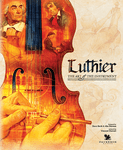
Hey everybody, Kimberly here and I am really excited to share with you my thoughts, my take on luteier, which is the art of the instrument. Players are essentially taking on the role of a family of artisans who are building, crafting, repairing instruments for patrons and of course wanting to earn as much prestige as possible. Now this is a complex game. I think it's around a 3.8 complexity of BGG. And also on the box it says 90 to 150 minutes to play. Of course that depends on how many players you have. All the way from one there is a solo variant all the way to four. Uh so this is a big game. It takes up a lot of space and there are some really really cool mechanisms here. So I'm going to focus my review on the cool things I really appreciate. the things that kind of trip me up or give me just a little bit of grief and then end with my general uh take at the end. So, as a uh worker placement game, players are going to get these workers and at the very beginning of the game, they start with a one, three, and a five. So, for rounds one and two, players get to essentially do three things on this big board of choices. And I think that's pretty cool. Each person is essentially the value of what you want to do there.
And the way this works is players are going to keep these secrets and they are going to one at a time place out one of their workers and all you see is the back of your worker. You don't know what the value is. So no one is blocked out of a space and that's what I really appreciate. You're never you don't someone doesn't take their spot and then you just can't go in that place. But again, the pecking order is going to be based on your value. And then whenever you have multiple players go to the same spot, you're going to be using this as your ordering of highest value to lowest. And if they are tied, it's the player who essentially uh got there first essentially is going to be breaking ties. So this is going to tell you who gets to act in that particular location. And there might be resources and things that go away, cards, uh and opportunities and patrons that you will want that other players might get to first. So, while there's no blocking out of places, which I appreciate with your hidden worker placement, there is a pecking order, but every location is going to have up to two different actions you can take. So, there's always a default, and I find that to be really uh rewarding. Players also have these assistants, and these assistants are going to be paired with your action discs to create more value of one for each of them. They're kind of skinny, so you know what they are. And you also have the picture of the assistant. And so you will pair these if you earn them.
They're not available to you until you actually get them for some reason or another. Maybe go to the market and pull them over to you. And these are going to assist you in your value. Now, this is your turn order track, and there are six rounds in the game. So players are going to be uh essentially following this track. So first round, second round, you are going to have those three workers, 1, three, five. But when you cross over to round three, every player gets their two disc. And now players get to play with 1 2 3 five. And then of course you'll see here when you cross over from four to five, every player is going to receive their fifth disc, which is a value four. So the game is going to grow with your workers and what you get to do. And I think the faceown hidden worker placement in a particular location, of which there are many on the main board that I'm not showing you, is really clever. It's really cool. And because you do it one at a time in turn order, you don't know exactly where your fellow players are going to go, when they're going to go, and how much value they're giving to that particular location. And so that's a fascinating planning turn. And I'm a big fan of planning and then the execution of it.
The game I'm thinking of is Shogun or Valenstein where you have programming and then you just essentially do everything that you have already pre-programmed. I find that to be a really satisfying uh mechanism. So the other thing that I really really appreciate in this game is that at the start of each turn, players are going to have patrons that they are trying to impress and that also give them really cool stuff. So this is a player board. It's just going to fill my screen at this point. And uh for example, I've got uh Paganini here. And Paganini is a patron that I'm trying to of course um uh make something for. And in this case, there's only one requirement. And it's this particular type of instrument. So it's a stringed instrument. And uh I can do any kind of stringed instrument to make Paganini happy.
Paganini is going to give me things whenever I finish them. But every single round at the start of the round, this cube is going to move down on this track and this cube is going to move down. And when the cube moves into the final space, this patron, if they are not pleased with your progress in giving them what they want, which quite often is more than just a primary instrument, usually it's it's several. So if I look here and I get viton um instead of paganini, you'll see wow keyboard instrument and then two stringed repairs or you'll see this symbol here and that's for a concert. You're going to be putting on a a performance or a show and you can do it in that particular style.
Um and so there's going to be different styles of music. There's three different uh images that you see there. So, this guy requires a whole lot more, but every time you fulfill one of the requirements, this resets and they're happy for a little bit longer. Um, so this is a fascinating feature and there is a place to go in the game on the board where you can actually push this cube back up to kind of give a a breath of fresh air because if this ever goes down here, you're going to lose victory points for every fulfilled requirement that you have not met. and you lose them. So, you don't gain the really really cool stuff and you also don't gain the bonus that they might give you, which is here. Um, essentially during the um flame action, which is the start of the round, you're going to get round bonuses for this guy. He's going to give you $5 every single time. So, there's a really really strong strong um appeal to these patrons making sure that they're happy fulfilling their requirements. And that kind of leads me straight into one of my critiques, which is that when you have someone like this guy, again, I'll pull him out. There are requirements. So this is called a primary requirement and that means you have to make an instrument which means you have to essentially um go through several steps of uh gaining resources, paying resources, roughing and finishing and every single one of those is essentially an action. So you have to do one of these keyboards and that has to be
available in the market display. Now these secondaries can be a variety of things. It can be an instrument. It can be a repair of an instrument that matches this or it can be a performance that matches that symbol. So there's a lot of flexibility when it comes to the secondary, but that primary is pretty strict and the only way you can do it again is by doing an instrument. So in this case, it wants some kind of um percussion or piano instrument. So a tony would work because it has the piano keys. Again, here's this card and here's that card. So he wants to have this piano. So, so the timony, what you're going to do is you've got to rough it first by gaining these resources. So, that's four total resources of two types. These are just uh the symbols for them. And then you'll see this is all three of the types of resources. So, this is for finishing. And so, these are each actions. And then you're going to gain what's down here. And of course, you're going to get first chair in the orchestra. So, that's just one thing.
So, it might take several stages. And honestly, the cards might not shuffle. You may not see that card come up. They might all be packed into the bottom. Um, other players might nab the only piano or keyboards or uh, you know, percussion that shows up. Or if you're looking for one of the other types, it's the brass or the um, kind of tuba symbol right here, like the bassoon, the woodwinds. Um, or it might be the uh, other one, which is the strings right here. There's a violin, for example. I saw that happen in my game and one player lost a patron and that was really over. I mean, if you lose a patron, the game is just kind of really it's really hard for you to recover, especially if nobody else loses a patron. So, the loss is pretty big and it's also substantial in upcoming rounds when you have a round bonus for that particular person or an endgame victory point that could have been really, really big. So it was stinky and it's kind of unfortunate that you have to have your primary ingredient or your primary ingredient your primary instrument and that requires many stages in which you might lose your patron if you can even get the instrument in the first place. So it's a little binding and I find that with the flexibility of the secondary um requirements has so much freedom in the kinds of ways you can fulfill it, the primary just seems particularly harsh. And my second critique of this is that the uh performance section seemed incredibly risky. And this game doesn't necessarily reward risk in the way that I think it
rewards all the other choices in the game. So there's a space where you can go to perform and there's going to be matching performances of your patron that they might be interested in. So in this case we've got Vivaldi and Vivaldi really wants this kind of uh performance which is the yellow music notes as opposed to um Siden who wanted that blue music note. And so there's going to be these different kinds of interests and again these are just going to be different movements um of of music. And so you can do a performance and it will qualify for a potential secondary uh requirement which is nice. But getting stuff from that section is really, really hard. And you have to just kind of go all in on performance and hope that it's going to slowly build up and you're going to get things. And the reason it's risky is because you're rolling dice. And so it's kind of like, oh, I could roll the black dice and get a one and do a roll cuz I get a cool roll bonus and still get one. And there's a side that has four on it. So that's like really big. and you you're kind of just like putting all your eggs in that basket for performance. And if you don't fulfill a requirement for one of these patrons, then performance I feel is incredibly undervalued when compared to things like repair and and things like that. Cuz when you repair, you're going to get sure points. You do have to pay resources and you're also going to get a repair symbol that you get to put on the board and those count for uh those count for points and so it'll be really nice to have. and it
also counts for your category to fulfill a patron. So, I feel like repair is a little bit more weighted. I think that it's really hard to sometimes get those specific instruments in the instrument stack, especially if they've been shuffled and they just aren't shuffled for your direction andor other players are nabbing things. So, while I have some really, really great things I like and some things that kind of give me pause, I think this is a really nice like mediumheavyweight game that gives you an opportunity to play the game over and over and over again. This is not a first time play game. you are just barely figuring out what the difference is, how to get things, how to please your patron. Um, you know, how to really maximize your turn, especially when you're placing out your discs so that you get exactly what you want and you're kind of playing it a little risky in your placement, but you know that you're going to be, you know, satisfying your requirements and your needs as as efficiently as possible. And that takes multiple plays. This is a big game though, so getting this out on the table and getting those willing players can be really challenging. And of course, with the multiple plays, it's rewarding because there are all these different families to pick from, and the families give you a starting bonus that gives everybody an asymmetrical start. And you also have all these uh victory point tiles. And so there are tons of these victory point tiles. and you are selecting very few dependent on your player count that are going to be giving victory points for certain things that
may not be valued next game. And so there is a chance for this game to grow and to change and to give you some variety exactly the way you need it with those victory point conditions in your start player families. Um so keep some of those things in mind. Again, there were some things I really enjoyed, some fantastic mechanics that do do reward players and just have a lot of engaging like choices and strategy, but there are some things to keep in mind and some things that I think can frustrate players, especially when you have a tight strategy game that doesn't necessarily incorporate risk or bad luck. And so, it can be a little disappointing in that sense. But this is a really really cool, thoughtful game and I think it's incredibly thematic.
So, that's going to be my take on Lutier, and I cannot wait to dive into yet another game because this one is a game that really deserves multiple plays and returning to it with new strategy, with like enlightened choices, with just really thoughtful approaches that you think are going to benefit you and of course your family of artisans and gain you the most prestige. because this is fascinating. Really, really fun. All right, everybody. I will see you next time. Bye.