SETI Impressions - Friendly Ties Podcast
Games in This Video
1 game is featured in this video — it unlocks as you watch.
Transcript
Hi guys, welcome back to Friendly Ties. Today we are going to be searching for extraterrestrial intelligence. We're going to be talking about SETI. So SETI actually not SEI or we'll get to SEI in a minute. for that. It is the time of year where nominations for the Golden Geek Awards are open on Board Game Geek. And I know that last year we got nominated, thus achieving all of my dreams and goals, but you know, why not do it again? Also, this is kind of becoming an annual tradition. It's kind of a thing. If you feel so inclined, there is a link in the description. You can nominate all sorts of things. Don't feel any pressure to nominate us.
Nominate whoever you listen to. nominate whatever games you like this year. It's a really fun thing that Board Game Geek does every year. And so, this is your annual reminder that nominations are open. And I believe that they closed this Sunday, April 13th. And we will get back to our regularly scheduled programming in three, two, one more thing. So, there is a point in this episode where we do a little bit of spoiling on actually by a little bit I mean a lot of bit spoiling on the aliens in SI. It's not until later in the episode. There is a time code in the description. Thank you, Jonathan. Where you can see when it starts and when it stops. We also give you a warning in the episode. And now we will actually go back to STI. It's a big one. And this game, yeah, it has been banging around in our brains for a couple of months now as we have been playing this one a bunch, talking about it a bunch, and finally we have found the perfect amount of time to be able to play it. The planets have aligned for us to record this episode.
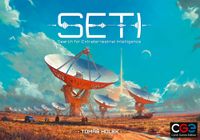
Yeah. Yeah. It came out at Essen last October. The designer is uh Tomas Holik and they designed three games that came out at Essen last year. I I gotta be honest, I heard about it and I was like that looks cool, looks really heavy, lots of icons, you know, maybe I'll get to it. But then Czech Games Edition sent me a press copy, which I am incredibly thankful for and and I was like, well, now that I have it, I guess I should play it. And uh and that and that started that started a whole lot. I played it once, then I played it with I taught it to you, Anastasia, and then and yeah, I've played like eight times. you like 12 and six or seven. Like we've got a lot of plays under our belts of this game that takes like 3 hours. We just played it and even after we played it so many times it was it was like 2 hours and 50 minutes I guess. Yeah, it feels like there's no getting away from how long it is. Uh I mean I think this is something I was going to bring up later, but since we're on it now like to me it's the biggest problem with the game. It is so long. There's there's no way avoiding it. Watch out. Watch out.
We're going to get some comments. They're going to say like they did on Endeavor. Yeah, sure. They're like, "Oh, you could do it fast." You could do it in 90 minutes. Okay. Well, you know what, guys? We can't do it in 90 minutes. Apparently, we can't play games as fast as the rest of you. Yeah, it's it's got a lot going on, which makes sense. I made the joke about the planets aligning. This is probably the number one mechanical thing that that people first see. Like, you got a pretty big board in the middle of the table, lots of icons, etc., but then there's a solar system. like a literal not literal not a literal sun but a plastic piece um that that sticks out in the middle and then you have rings that that that go around it. Um three different layers and you you move them with your finger and it's incredibly satisfying to do this and also it it does a relatively decent job of abstracting the idea of the inner planets orbit the sun faster than the middle and the outer planets.
And you send probes and they kind of wander along. It's kind of a spatial puzzle. But then this is a hand management game, right? Like you have this gigantic deck of cards like it seems like most heavy euro games have these days and you can spend money to play cards down and they do stuff. They're multi-use. Every card can be used in four different ways which is cool. And yeah, and then there's also essentially three resources in the game. You know, the money for the cards, there's energy that you can use to move the probes around the solar system. Generally, you spend energy to do that. And then the last resource is publicity, which is kind of funny. It's on a track on the middle of the board and you spend this to get technology, which you slot into your board. Everybody's got a little console and you slot the technology in and it modifies things, makes things cheaper, makes things better, makes things more efficient, etc. And uh realistically, as you're doing all these things, you are interacting with the three systems essentially. One is landing on planets to find yellow alien data. You are scanning farway stars to get pink. Yeah.
Yes. Pink alien traces like like a trace of that there might be an alien out there and then you get this data from a bunch of ways and you send it into your computer and crunch it and then the algorithm gives you some like ah we found some stuff inside the inside the code or whatever uh for a blue alien trace and you you the pink, the yellow and the blue. come together, they find aliens, and then it it should be like the successful search for extraterrestrial intelligence or the found of extraterrestrial it works this time. It works every time like Yeah. Every time is known for slam dunking finding aliens. Yes, it does. It does have a very positive optimistic view of that uh that search for beyond. Yes, great. It mostly takes place in the solar system. You're not like really interact. It's more like you're like interacting with aliens and that you're like studying them. It's not like they show up and fight you or you're scared of them or anything like that. And mechanically the way this works is when you kind of reveal this alien. It's like okay this this game there's this little like subsystem that has like these rules. Rules are pretty short for each of them at least in comparison to the rest of the rules in the game anyway.
So, the extra hurdle is not all that much, but and and it's I think it's a good and a bad thing. Like, it's it's good and that it's like not a huge lift for what happens when you have a new alien. Um, I thought when I first played the game that these were going to be like much wackier, but with the exception of one of the aliens, I would say they mostly all have the same sort of if you interact with me, we pay you good points, especially if you do it earlier. It's very much like a race to interact with them as quickly as possible. And then also they give you special cards that are more powerful than the cards in the normal deck because it is a hand management game. Yeah. Yeah. Yeah. I mean, I think that is a sign of good design with this game that that that the aliens aren't too wacky because since they do come out in the middle of a three-hour game. Yeah.
No, like literally in the middle if that wasn't clear. Like pause. Let's figure out what this alien is. Yeah. it. Usually one is revealed like two rounds into the five round game and then the other one's usually revealed about three rounds into the five round game. And yeah, if they were really wacky, I could totally see situations where you're like an hour and a half in, you flip over an alien and you're like, "Well, I lost because the wrong alien flipped cuz I haven't been working towards that strategy." None of them really have that, which is good. But also, it means they can't be too crazy to stay within those bounds. Well, what's really fun about it too is, you know, for a game that is ostensibly designed around the concept of, you know, discovering extraterrestrial intelligence, for these aliens to come out and twist the game just enough that I feel like if you feel like maybe you're a little behind or otherwise, the aliens come out and they kind of freshen things up and they give you an opportunity to do something new or different or whatever, you know, just they they complement what's already happening in the game really nicely. But what they also do is just add so much variability to this game. Even even if you've once you've played it a bunch and you've seen all the different aliens, every game is going to be shifted ever so subtly or ever so dramatically depending on how much you interact with them one way or another because of these aliens. And I think that that is really really cool to have happen in in every single game. Yeah. And the game pays you pretty handsomely for interacting with the aliens. It is kind of right like on the box like what it is that you're supposed to be doing. But the game also rewards you essentially just for
exploring the solar system. And so getting further out there and going to like Uranus and Neptune and like getting extra data from those locations is going to be actually a huge chunk of points as well. And so it's sort of interesting. There is I would say like two primary focuses which is the aliens the far away component and then the sort of more local localized component in the system. And both both really matter in the game. I think I could see folks kind of like with Lost Ruins of Arnack being like, "Ah, I want to play like just a monster hunting strategy or whatever." And I think that SI is not is is just like Lost Resnack that it's like that's not a thing. What you actually have to do is interact with all the systems in this game like Yeah. Some more than others, but yeah. Yeah. I mean, I think it's wide enough that you can go kind of deeper in different directions, but for me, this is this reminds me the most of Ark Nova. um just in terms of that fat fat deck that you have. Um the variability and interacting with your cards and how it plays out. And yet the games are incredibly different. They do very different things. This is not a this versus that. It's just for the breadth. The brain space feels brain space, you know, like we were saying, like it's just it's worth it to sit down and play however long it takes. You're like, "Oh man, that was a really satisfying thing that I did there." But I don't know why I feel like this game is somehow both incredibly complicated and incredibly simple at the same time.
That makes no sense. But this has been on the quicker side to teach. You know, I've I've taught this game many times now, and I know you have as well, Anastasia. This looks like a game that'll be a 60-minute teach, and I I've done it in 30 minutes many times, which I think is not bad for a three-hour euro. I think a big part of that is that the actions you take tend to be on the they're pretty clean, right? It's like play a card and then it's, you know, when you when you make a probe, it just goes into play. If you're moving on your turn, moving is like very intuitive, right? Like you just kind of are going from space to space. If you are exploring, it's just like claim these discs and put your stuff there. The complexity comes in and that like there are enough options and you're tight enough on resources that choosing to do this means you can't do that. You want to try to accomplish like a certain goal this turn. the solar system might rotate which might facilitate or harm where you're trying to head. So you kind of like need to try to get ahead of it. So planning around the timing of everything and syncing it all together is the is the part that ends up making it very brainmelty. But the actual actions themselves are very easy to explain.
Yeah. Teaching this game, I always start with the first action is launch a probe. And on your turn, you do one main action and then as many free actions as you want, which is not as bad as it might sound, but the first main action is launch a probe, spend two money, put a probe on Earth, done. Yeah. Play card. Boom. Play card. Pay money. Play card. Right. Do what it says. The icons. Yeah. They're pretty straightforward. And uh Yeah. Yeah. But but how you piece it all together. I I will say for me like I've had a bit of a pet peeve for years about heavy euros where it's like and also free actions where ju just how that can like like really spiral out and make turns go really long and I don't want to sugarcoat it. There could be long turns. There could be absolute analysis paralysis and seti but it's not the free actions that are the the thing that make that happen. And I've seen that happen in other games. Like the free actions are super intuitive. Like generally, yeah. Spend energy to move or like do a two to one conversion to save your butt because you desperately need that one more money. That sort of thing. Yeah.
Yeah. No, but you I think Nick, you hit on it perfectly that the crunching is and and not so dissimilar to the game we talked about in our last episode, Endeavor Deep Sea. Like this is definitely a game where, you know, you can look at things and be like, "Okay, I could do this and then then this and then this, but maybe I should do this and then this and then this and I really need to do that first so that I get the publicity from that and then that publicity is going to give me the tech and then that tech's going to give me the data." Like, you know, you only do one thing on your turn, right? So, you have to break that up and then kind of I almost look at it as a programming game sometimes because I'm just like, "Cool, how am I going to execute what I need to do and in what order?" And like and then somebody spins the solar system and do you swear very loudly?
I find more often than not what happens is I want someone to spin the solar system. I'm like for the slingshot and they're not doing it just yet. I'm like you have so much publicity. Spend it please. Do it. Do it. And inevitably you're like fine. I'll spend the extra energy to move the extra time. And then immediately after that they're like I'm going to spin the solar system. And it's just like oh gosh. which can mean for for a game that has that much crunching of your plan and strategy, you know, the solar system is is really the tactical part of the game. It's also the most interactive part of the game. It's just it's the thing that that changes kind of everything. And so, you know, like a lot of games, at two players, you're going to have a little bit more control over that and a little bit better expectations of that. At three and four, it's going to, you know, progressively become less and less. And so even as we sat down tonight, I've been playing this a bunch two player. We sat down, you know, the three of us were playing and I was like, "Oh my god, the solar system is moving so much." But like just because I've been used to playing it, you know, where I could kind of predict it a little bit more. But it also means that things move around and change a lot faster, too. So can interact with other elements of the board more widely. So, it's this whole game is so clever, especially I for this designer who I had not heard of until this year. So, I will say about the solar system moving, it is a bit of a a tripping point for especially newer players like that. That's probably like maybe the hardest part of the entire game to teach. In some ways, it feels
very intuitive if you think about it from like orbital dynamics or whatnot. like the solar system moves and your probe moves, but like every time I played it, people think, okay, well, you know, Mars is going to move here and then like my probe will be on Mars. It's like, no, no, no, your probe is moving just like Mars. They're both they're all orbiting around. And also, they're three different layers of tiles and they're funky shapes and I think every one of us and everyone I've taught this to at least once has seen like we go to move the solar system and we're like, "Wait, wait, it's doing what now?" Yeah. Yeah. I really thought that was going to move my probe or I really thought my probe was safe sort of thing. Um it just takes a minute I think to to kind of internalize like once you make that mistake once generally you kind of you think twice about it in the future. Yeah, it's certainly the most novel mechanism in the game and I think it's really cool. I feel really intelligent when I use it to accelerate my moves in the direction I want to go or when I line up a really clear easy shot to to Neptune. Um, that's definitely the most satisfying moments in the game. But there's a part of it that I also find a little bit odd, which is that um, when it when the rings rotate, it might sort of reveal an asteroid underneath, which is generally bad for the player, or a comet underneath, which is good for the players, and you won't necessarily know that it's coming. And there's no way.
The game does not have like a sort of arrow that's like the next thing that's coming is an asteroid. Like, it does not give you these warnings. and space. You don't know what's coming in space. Yeah, it's it's it's thematically appropriate and it is it is kind of cool. I think the only thing that I I grapple with in it is that it's a it's a pretty heavy Euro game with a lot of really precise counting and one resource matters a lot. And so like it's spinning into a moment where like you suddenly can't move off of it because of asteroids feels really painful. And essentially for me, what it's put me into in the game is like I I don't gamble on the blank spaces unless I like absolutely 100% have to. Uh and because because there isn't it's right now get across. Yeah. The penalty of like being wrong about it is is just so bad. And technically you could memorize where those things are. It kind of reminds me of kuna or from last year. I guess you could. Yeah. Yeah. Cuz it's just printed on the board and printed on the tiles. Um, but you know, I've played this game eight times and there been a couple times where I'm just like, I got a sneaking suspicion there's an asteroid. The next time this moves, I'm gonna go over there and then an asteroid's revealed. And it's like, was that because I remembered or was it just, you know, superstition? I don't know. Yeah. I think it's one of those things, too, like the first couple times you play, I think it really behooves you to just be really just really chill about the movement of the planets and moving your probe and all that. It's really easy to forget to move your probe. And it's also one of those things that can kind of drag down the game to be like, "Oh, wait a second. Like, let me see if I need to move my pro because
you might do this and you might do that." It's like I think if you're playing this for the first time, I would I would just crunch that. I'll take my turn. It's chill. Like, you know, so it's just something to consider. I'd like to talk a little bit about something that Nick just kind of glancingly mentioned, and that is like the precise nature of the planning and spending of your resources. like you know it's a big heavy euro but there's like I said like threeish resources it it's closer it feels closer to two like publicity you spend it primarily to get technologies cool it's the money and the energy and yeah since you only do one main action a turn you definitely like you said programming plan all these things out but you can also have those situations where you plan everything out and then you get to the end and you realize you are one energy short or the solar system moved and now you're on an asteroid so you're one energy short and y on the one hand I Love that small amount of resources is important. Like, you know, you can get income throughout the game and you, you know, you kind of get income at the start of every round and like if you get income of like $6, you're like that feel like you're like, "I'm getting rich. I'm getting rich right now." And you look across the table and somebody got $7 and you're like, "Are you freaking kidding? How seven?" Seven. And then when you compare it to like Ark Nova where it's like, "I have $58." You know, and the math like, right? You're like, I got to play this animal. It says 17 and that oh, but I got a discount and that one. You're doing all this floating math in in STEI.
It's like, this card costs three money. Are you freaking kidding me? Like, that is a king's ransom. Is am I going to play this three money card? Um, but but but the free action, the two to one, is like the savior of this game. It's like such a a subtle little thing that's easily forgotten, but you can throw away two cards to get a resource or two money to get a card or an energy or two energy to get a card or a money. And and so when you look at all these things as a resource, including this big hand of cards you have, which are multi-use, frequently it seems like you can get there, but then that brings in the AP where you're like, "Okay, I have to ditch two cards to get the money that I need. Well, which of the cards do I get rid of?" It's it's got pros and cons. It's got pros and cons. Yeah. Yeah. And there's other avenues where you can get these resources from. If I do the technology that allows me to use my data to get this stuff, you know, it just it can really compound on itself in terms of like I really need these things. I'll say again from like a just a design perspective. I'm pretty blown away at how the designer has managed to balance this game using ones and twos and threes whereas your games like Terraforming Mars and your your Arc Novas like you know they rely on the fact that things cost somewhere between five and 25. Now admittedly one difference in this game from like any of those other deck kind of games is that the cards in this game are not like your payoffs, right? Like in Arc Nova you are working towards playing this animal. it is it is your objective whereas these are more vehicles towards taking actions
and so I can understand that like it's a little bit easier maybe to like baseline compare stuff. Um but that being said I've definitely looked at a handful of the cards in the game and been like that feels really strong but I don't have proof to say that it's overly strong like skilled enough yet. There could definitely be like grasses greener situations where you're like my hand of cards is okay and then like Anastasia plays a card and I'm like are you joking? What does that card do? Well, but I think that's a feels thing, not necessarily an actual also the like you said Nick, it's the brilliance of the design. For the most part, the cards either cost one, two, or $3. There's a few, there's a zero, there's a four, you know, whatever. There's a few cards other but like the really interesting part of this is that when you're thinking about multi-use cards because like Jonathan said these cards are multi-use in four different ways. And one of the ways is discard them to get a movement which is basically an energy.
Discard them to get a piece of data or discard them to get some publicity. Like that ability to discard them is just as important as whatever you're playing them for in addition to you tuck them and you get income or you there's you know you can use them to scan. I'm usually not a fan of multi-use cards. In fact, when we first sat down to play this, I was like, I don't I don't that's the part I'm not going to like because of that level of AP when I'm looking at these cards. How I hate that choice of like what am I going to do? But as you're playing the game, you're naturally in positions where you are only making four income, five income. So that you're you're if you have a hand of three money cards, you're only going to play one, maybe two of those. So, it makes it a lot easier to be like, "Cool, I'm going to get rid of this card. Cool. I'm going to move this on." So, I think that situationally, you could come across a card that you're like, "Man, that's so good." But it really depends on when you get it. If you get it early on and you have the money to play it, or maybe it's only a dollar, but then when you have it and how much money you have and what you play with it, I think really matters. And so I think it's it's hard it's a hard thing to say that any particular card is so imbalanced because they all Exactly. And they're all designed to be easily discarded or easily played which I think is is just really really smart here in my opinion. Yeah. I mean it it is worth noting that you draw randomly from that big deck of cards a lot. So that that is a bit of a warning. You know, some people don't like randomness
in their big heavy euros. And sometimes you can pick and choose from a little card market, but this is definitely a game about, you know, making lemonade out of lemons sometimes when you just draw seemingly terrible things. But then occasionally, like I know in the game we just played earlier today, Anastasia was like, I guess I'm going to draw a card. I just need to have a data on it. It's probably not going to happen. last action like score eight points and you got a you got a data and it was it was a really high moment, right? It really was. But it speaks to that luck and in a way I didn't even like it because it was such a lucky moment. It was like the choice. Do you know what I mean? Like you I mean if you've watched any of the videos I've done like you know when I like set a goal and I get it randomly from the deck it usually elates me. But in this particular moment, I was almost like a little frustrated at the very end for the for it all to come down to whether or not this card happened to like have a data on the corner and and it and it did and that was fantastic.
But I fortunately didn't matter because Nick doubled my score. Yeah. I mean, Nick had like 60 more but at that time I didn't know that. Right. But I part of it speaks to what we're talking about of like how tight this game is is I wanted to have the data. I wanted to have played the game. so well that I had I had maximized it without needing the luck to to swing my way, right? And that just speaks to what this game does for my brain and what I enjoy about it. And it's like it's I don't even care if I'm winning. I just care if I'm executing my things. And so um but but yeah, so it's it's funny for like you guys said for such a strategic game that how much luck can can ultimately end up playing in him. And you know, you could say the same thing about Ark Nova. That might be one of the reasons why that kind of comparison can sneak in. Um, you hit on something there, John, that I want to talk about. I want to talk about scoring in this game because I think it's a lot more interesting than it is in a lot of other games. But before diving into the stuff that I think is interesting, I also want to talk about, you know, I think the games, particularly long games that feel fun even if you can tell that you're losing, have something where you're building something. And in this game, there's not really necessarily that like building like your zoo like Arc Nova or like kind of, you know, building your little kingdom on the map, but because you're exploring, you're like dropping probes in different places and then maybe like kind of um finding, you know, things from certain aliens and going uh places, traveling across the solar system. I do think that the game comes with a sense of
accomplishment even if your score is not terribly high and I I think that's something that makes the game uh stronger for that. Yeah. Yeah. Absolutely. The scoring itself I want to talk about because I I've I've talked to a friend who actually really disliked this, but I'm I'm a big fan. The game rewards you for scoring points early. Um, when you hit 25, 50, and 70 points, you claim your endgame objectives. And, uh, this game kind of like doss out points everywhere for doing all sorts of different things. You could very reasonably hit those 25 points in the first round of the game if things kind of worked out really great. More likely the second, but even still quite early in the game. Yeah. And it's a genuine race to get there. you know, who focuses more on getting sort of point rewards is then going to get to choose maybe their favorite end goal objective. Um, you and multiple people can take it, but your multiplier is higher for being the first person there. And so this leads to an interesting sort of like players have some autonomy in setting up what they want their endame scoring to be and it's a huge chunk of your score. At the end of the game, your score is going to be like 200 or 250 or 300. And end game scoring is like somewhere between 50 and 100 points. So it it matters quite a lot what you're choosing of these things and you really need to work towards them for a powerful goal. And so it would feel it's on the one hand it can feel I think to some people like it's rewarding someone who's already winning. You're first there so you have the most points
so therefore you get to choose the endgame goal and that's good for you. But the reason that I actually really like this is because if you're not scoring as many points, what you're probably getting is income. And so there's an inversion. And a lot lots of games have this system. You could score points or you can get income because it's but it's obvious. You should get income early, score points later, blah blah blah. This game, I think, does a really nice job of saying the rewards for getting points are actually really good for doing it early in this game. And so there's it's very very viable to say, "Okay, well, my end club's not that great, but hopefully I can make up for it by surging ahead early and then also having better endgame scoring even if my third, fourth, and fifth rounds of this game aren't going to be as good as the players who are just focusing on income." I like that tension. Yeah.
Yeah, it definitely feels like I mean, we just we just experienced that in the game we just played. I I think I did pass 25 points in the first round. I mean, there was a point where I was maybe even 50 points ahead of you guys. Like, I mean, I really ahead and I had like so many points, you know? I was like, and then we were I was joking. I was like, "Cool, now I'm just going to sit I like I then just sat at like 79 points for another two rounds." But I I had just racked up so many and then, you know, obviously was gaining more points in other ways as we went through. But then Nick who at at that point when I had 79 points I think Nick had 18. Yep. Right. And then you know by the end of the game he had 276 and I had 218. So you can see you know how how far we came over the course of those five rounds.
And so I agree with you Nick. really like that because you can almost argue too that sure you get better points by choosing your goals early, but it almost if you go a little slower and maybe you get slightly less points, particularly in a two-player game, you actually have the ability to see what you're going to be better at. That's true. By the time you get there, right, cuz if you like going over 25 and having to pick my end game, I had to then decide what I thought I would score the most points on. And luckily I then kind of twisted my game in that direction. But you want your endgame points to reward you what from what your cards and the board and all these things and the aliens are like naturally giving you. And so in some ways actually waiting a little bit. Sure, maybe you're going to score less points because you're the second on that goal, but you then got to pick the one that was going to give you the most points at the end. That makes sense.
Like you're like, "Oh, I've already done this twice. Cool." versus I'm going to get a pile of points if I manage to do this in the future. Exactly. Yeah. Exactly. And this game this game has a lot of that. So, one of the aliens kind of plays into that. There there's this game is sort of asking you to kind of set what you think you're going to do. And I actually think thematically it does that really well. You know, for a game about searching for aliens, you know, it's also in invokes that publicity. If you really drill into the theme here, you can see where you're rewarded publicity for the different things you do and all of that. It it has a bit of that idea of like if you you're going to set a goal and are you going to accomplish that goal? I think it it plays into that natural theming of if you if we really were searching for aliens, we would we'd be boasting different claims. We'd be doing different stuff. We'd be, you know, getting publicity for our actions, all of that. I think there's a lot of subtle theming here that's that's that's really fun. Yeah. So, one thing that we haven't really talked about at all, and I know it's kind of a contentious thing a little bit online, is the other way that people interact, and that's this scanning, essentially the the signal placing, scanning. Yeah, I I talked about it briefly that um you can get these pink traces by looking to close star systems and whatnot. And the main way that you do this is an very expensive action. It's two energy and one money. Just uh how could you even afford it um to scan? And it depends on where Earth is. And like you take a data
and you put one of your little tokens down. And there are eight little competitions essentially. You put that token down. And once all the data is gone from that 1/8 part of the night sky, whoever has the most tokens there is going to win that little competition. And they're the ones who get to put down a pink trace, which usually gets you points and awesome alien cards and various other effects depending on the aliens that it is. So, you're trying to target where the Earth is, and the Earth is constantly rotating, as we said, for where you can actually put these things down. Lots of cards give you the opportunity to place your signals down as well, like, oh, put one down in blue, or put two down in Kepler 22, like, you know, just this one specific spot. So, you're kind of working all these things together. And I think a this can rub people a little bit wrong, and b this is not adjusted for player count at all.
And I don't really want to throw it all at once, but um this I don't know. We we got to talk about it, right? Yeah. The main reason I like this game at more players, even though it becomes even more long, is because of this the interaction that takes place with this scanning. Um with two players, it too often feels like it's like, well, I don't really know how to scan there because then you're going to outscan me. And in case of a tie, it rewards the person that got in last. And so it feels really bad to kind of like set up in advance and you kind of just like avoid each other and it might end up end up and just you don't interact with this component of the game as much or it doesn't feel as good. Whereas in a multiplayer game, you know, the more people that you add, the more kind of like incidental stuff people are going to get along the way and then someone's going to kind of push that and all of a sudden it becomes very interesting. And so I think the scan the scanning subsystem works just so much better with more people in the game. I I wish that there was some neutral scanning or something when we had some fewer players. I think that would help support that strategy a lot. I mean, for what it's worth, I when I played two players, and I played two players a few times, I actually just use a a variant that essentially you just put one neutral token in every one of the eight spots to make them a little bit smaller so that they're easier to complete. It's worked really well for me. Um, that's, you know, some people think house rules are are sacrilege, but it's it's it's worked out well for us. But I I guess what not just the player count thing, it's like this is also the primary way where like
swear words happen, right? Well, yeah. I mean, it's the when the planets move, when things move, it's it's very hard to control. Like, it's not as simple as just being like, show my hand of cards and just scan. It's like you scan based on your technology. You scan where Earth is. You scan behind where Earth is. Maybe you have a tech you can scan the sectors next to Earth. Maybe you can discard a card. You discard a card from the card row and it has to be the right color. I mean, there's so many variables that when you talk about tension in this game, the amount of times I've just been sitting waiting being like, "Oh my god, I need to scan and I and are we going to get to my turn? And is the variables going to change? Is the Earth going to move?" Yeah. Yeah. Like what's going to happen? I mean I I think that that does make you know yeah it's where swear words can happen because it is the major point of interaction right like I actually found it interesting playing tonight with the three of us as opposed to the last several games I played two-player where I also used the variant that Jonathan was talking about with the one data and I found myself really missing it because I was like you play that way with two players. Not only that, this in the normal game, the second person to scan a sector gets two points. Well, when you play with that, it's the first person.
So, there's like almost a reward to scan, right? You're like, "Oh, I want to start scanning. I want to start doing this." And it you variant it where you put the the neutral at the very first position. Yeah. How do you do it? Oh, we've we've played different variants. I put it at the very end. Oh, really? Oh, that's so interesting. Yeah. just so that it's smaller but that it doesn't interact with the first second player thing. I mean that makes a lot more sense to do it Jonathan's way but my way is also fun. As long as you're having fun it's fine, right? I mean I think in our experience made it so that it almost encouraged you to open a new sector and so that's why right jump in. I think either way works. It honestly maybe works a little too well because we scanned like crazy. Maybe, you know, cuz I don't know.
That's the thing with a game like this where I have to admit this game I feel like is overall tuned incredibly well. I'm sure there is a reason they left the data the way that it is, but it's it's worked out to encourage scanning and two players to to play it with one less data in each sector. And honestly, even in our three-player game, I kind of wish that we had just popped the data out just just because I wanted more sectors to close. I wanted I wanted my scans to mean more. And I know that when you scan, you get that data, and that data you can go put on your computer, on your board, and that can give you stuff. And so, there's all sorts of reasons, but I often find it just so hard to close sectors. Even when I played four players, I felt the same way. So, I don't know. I I I wish that I wish that it was just a little easier to close these sectors maybe or that maybe your pieces stayed behind. I don't know. I don't want to get I love this game. I don't It's perfect the way it is. Don't change anything. But I do like my variant. I just I think it's the whole the whole concept of it is is interesting and also can throw people a little bit off because this is such a multiplayer solitary vibing game with your hand and your puzzle and your resources and like okay yeah sure the solar system can move but that that feels like a like a secondary thing like oh Nick did a thing to move the solar system that messes my plan up but Nick did not do it to mess up my plan so like
okay that's just a wrinkle in in my puzzle with the with the scan scanning, it's very frequently like you you got there. Okay, cool. I'm going to close it. And the next person's like, oh, I can't believe it. I was going to do it on my next turn. And you know, you have it's a very direct point of interaction in a very indirect interaction game. And and that that can throw some people off. Like when we're comparing it to Aran Noa, like there is no this in Archanova, you know. No. Particularly if you take out the aggression guards. Yes. Yeah. I want to say that I don't think that this is multiplayer solitaire at all. I think that aside like the the scanning is obviously an interactive component, but like you're racing to go to certain planets or like accomplish certain things, grab certain traces on the aliens and which one you go on, especially when both are available. So, there could be some tension there of where you're competing. Several of the aliens have you directly comparing values to other players. Sort of like an infamous negative alien that like cares about how much I love that negative alien.
risky points. Um the even like if I go in orbit on a planet, it discounts for everyone the ability to land on that planet. So there's a very real aspect of kind of like drafting after someone, especially at the beginning of the game. So I think that the game features a lot of interactivity. And you're saying that Nick didn't use the technology to rotate the the solar system to stop you. And I absolutely 100% do. I feel like there's a meme in here somewhere. Yeah. Like Yeah, I 100% did. Yeah. I mean, and and if you're going to play this a lot and and play it competitively, like you are going to do that. I mean, that that you you are going to try and mess with people. who are it's not that you're directly it's just going to be like cool I can see that they're going to do that I have the opportunity to do this action first I think I'll do that to mess up the planets you know or whatever else because sometimes the way the planets align God I love this game sometimes the way the planets align you know you can just pop from Earth to Mars right onto you know Jupiter and you're like wow and doing that gets you ton of publicity and it's just it's wild and you like you don't want to leave that for other people, you know? Yeah. Like the super highway to Uranus, you're like, "No."
Yeah. I agree with you, Nick. I I It's easy to say in a game where there's so much crunching and so much thinking about to say it's multiplayer solitaire because you're like, but this this is not this is not that. There is a ton of racing. There's a ton of and the game does a really good job of rewarding you for all of the ways that Nick pointed out and other small ways, you know, just getting even taking your technology. First one off the stack is two points. like just every little way that you can get little points here and there and you know it just it finds a really nice way of doing that. Also, it helps with decisions, right? Because in a game with where there could just be a lot of even decisions, it does make it a little bit easier to choose. Well, it just seems better to take the one that has two points on it or it just seems better to go land on the planet where, you know, I'm the first one so I get a better benefit. And the game also again is interactive there too, right? Because if you land on a planet where someone already is, it's cheaper to land. So I am totally with you. And this might be a little bit of a factor in the game's length, like you know, people messing up their plan or or just crunching through to see if you can make a plan that is defended against. Yeah, you know, we've we've mentioned just a few times that this is a pretty long game, but to to pick on that point a little bit more, I if we're talking about variants, since you guys are just talking about your variant, if I was creating a variant for this game, I legitimately wonder if the players should start off a little bit richer and have the game go four rounds instead of five rounds. Because I've
definitely played versions of this game where it feels like the alien aspect of the game has been like closed out by round four. So round five essentially we're just like doing solar system exploring and like you know collecting straight points from doing that which like it's it's nice to do that but I feel like the part of the game that feels the most exciting which is like the aliens exploring finding the traces like I have hit points particularly in a four-player game where it's like we filled these puppies up like there's nothing left to explore over here. Um, and I I think I like my games to have a little bit I I want them to end like just as I'm cresting the hill. Some people, if you really like that sense of like having, you know, done a full completion, this this does a little bit more of that full completion thing.
Yeah, I am really torn on this because when I first played this game, after the first few plays, I felt exactly that way. I was like, "Cool, when is the Prelude expansion coming out?" you know, that's just gonna, you know, skip you over the first round and we're just gonna kind of get into it, right? I still think I want that, though. The more that I have played the game, the more I have appreciated the the depth of the five rounds. And a and a big reason for that is you you entirely determine your income. So, you get quite a bit when you start. And then the second round, if you haven't tucked any cards for your income, it's going to hurt because unlike most games, like I played this game and um I was playing with my dad and you know, we got to second round. He's like, "Okay, I'm going to draw cards." I'm like, "No, no, no." Unless you've added additional card income cards. You're not you're not going to like refill your hand up.
You're not going to none of that. It's But that's the same thing for your energy. It's the same thing for your money. So what I'm trying to say here is that part of what the five rounds does is that in that first round you can actually feels like do a lot and then in the second round oftent times depending on how you played it it can be like oh my I'm very poor or you know whatever it depends on how you're playing out your game. And so I kind of like the length for allowing you to have one of those rounds at some point, whether it's your second round or fourth round or whatever round where you're like, "Okay, I only was able to do so much. Like, we're going to wait. I'm going to get my income and we're going to, you know, kind of see what happens." And and I think that's that's what's nice about having a nice long game. But I don't disagree with you, Nick, because I too have played it where the aliens sort of gas out and then you're like, "Cool.
Should I go land on moons? like what else should I do now because I'm just trying to piece out my points and then also for a game that has taken however long it takes you know some of you I'm sure 60 minutes out there in the world just racing through but after I've played it for 4 hours you know and then in that fifth round after you've done so much you can get to a point where you're like actually I'm gassed like there's literally nothing to do and then you end up kind of ending on a little bit of a low after all of this stuff that you've done, this massive experience, and you're just like, "Cool. I have $2 and a card and I can't play it." I mean, my dad and I had an experience where he literally we we must have spent like 30 minutes just trying to come up with what he could do with the very limited resources that he had at the end. And like that's just kind of the fun that we have like and you know side quest. It's a puzzle. Exact. Exactly. But that can happen, right? And and maybe that doesn't happen if this game is four rounds and you do start with a little more research. I don't know something. I definitely played a game I I did not win this game where the second round happened and I took a single turn.
Didn't did not feel good. I mean I think I think I played an expensive card and then I was done. I was like oh and I pass. All right. I'm going to go make a sandwich again. Round clusters can be very real. I felt pretty guilty in this game that we had just played because the end of one of the rounds I just like I had so much that I needed to do and because I had sort of intentionally slow rolled my preceding round I just had so many more actions than the other players. So the the AP can come in like certainly on a certain turn, but I find that when you have these like gluts of actions is when it really can slow down the most and you're like everyone's just waiting and there's just nothing to be done and there's there's nothing for them to even like consider during that time, right?
Like they literally just waiting for you. It reminded me a little bit of actually of um Worms. Uh I think it was the last game I played where I felt that way where like the pacing individual players pacing in between rounds just doesn't quite sync up cycle essentially. Yeah. Yeah. Yeah. Yeah. Which is cool for the scope of the game, but can lead to definitely like, okay, we've got like 10 minutes, you you do your thing, you know, or vice versa. I mean, I you know, I did the same thing. Yeah. One thing that is is integral to this game that we've just had, you know, glancing blows with is technology. You know, it Oh, yeah. You know, there are three different, like I said, three different resources and one of them is publicity. And you pick it up in a whole bunch of ways, flying by Comets, Jupiter, whatever. The primary thing you do with it is spend six of it to take a technology. There are 12 different technologies you can take. And you always have those 12. It's always the same exact 12. and you put it on your board and uh it can it can really change things like boom now you can land on a moon or now your computer is upgraded and you get points when you run that data and you can also get that precious money that you needed and I think this is an interesting spot in the design where you know you have a gigantic deck of cards like 200 cards or whatever and then only 12 technologies and always the same 12 technologies um they're little stacks of tokens and you shuffle them up so the benefit that you get is different like you always get a little Benny like one energy or you know one publicity when you take it But I have noticed that like I take different paths through them. There, you know, I mentioned there's like three different areas to
the game like overall mechanisms and the the technologies are split into three different areas. There's the orange area which is all about launching probes and moving probes really well and landing probes and that kind of thing. There's the the pink area which is all about scanning and making that that expensive scan action we talked about a bunch more efficient. You get to do more stuff. And then the blue area where you get to add little modules to your computer. And it's it's interesting how it hasn't really gotten stale for me after eight plays. I don't know. What do you guys think? Interesting. I totally agree. I was just as you were talking I was like I was like, "Yeah, I wouldn't want them to be different." Like 10 plays in and I'm like I I I feel like I interact with them differently every time. I need different things from them every time.
The fact that the backs are different is huge because whatever the resource on the back is that you sometimes you're picking them just based on what that is because that could be so huge for you in a moment and so then whatever that is then will further dictate what you do like I yeah they just haven't gotten they haven't gotten old for me at least not yet just because I've always found interacting with them to be so unique to each play or or even when they weren't. I was then interacting with a different part of the game and so it didn't really matter what they were doing for me. I just needed them to to you know to help. Yeah, it feels probably good that they're static because the deck is the deck of action cards is just so like variable that there's already enough to to consider that having some sort of baseline things I think is very helpful. I will say that when I learned this game, I felt that the the hurdle of understanding the technologies and why you would care about them to me felt like the biggest learning hurdle in the game. And like it's you know four of these 12 do basically the same thing and actually are very elegant and is one of my favorite subsystems in the game. The the computer where you get your data and essentially it just gives you another way to use your data to get resources.
It's very simple and another way to say I don't need income to make sure I get the stuff that I need to do this game. So, that's very nice. But the four for scan and the four for doing probe based actions are all different exceptional rules that do something weird. And I don't think they're created very equally and it's pretty tough to sus out what that looks like until you've played a bit. So, it's a hurdle to to learn, but I'm glad that it stays the same from game to game because there is enough already that you're paying attention to that does change. Yeah, it almost feels like part of extended setup for what your first technology is going to be. Everyone starts the game with four publicity and you need six publicity to get a technology. So, you're not quite there yet, but it's pretty easy to get the two publicity in that first round and then yeah, what technology you take.
We just played a game. I I did I did my worst. It was actually it was the worst game I've ever played of SETI after eight games right before we do a podcast for it. But I the starting technology that I took, you know, I'm even calling it a starting technology. The the technology that I chose, I did it for incredibly short-term reasons. It was like fly through asteroids a little bit better. And like I wanted to get through this asteroid to Saturn in that one moment. And I regretted it the rest of the game. That could have been um a scan thing to make scanning more important. And now maybe I lean into that more. Um, I have played I say eight times. I think at least two of the times I played the first technology I've taken says you can land on moons. So certain planets in our actual solar system literally have moons. And you know they're kind of shown here on the on the the board. And generally when you land on a planet, you can only land on the planet. But if you have the moon tech, the moons are way better. Like you go to Jupiter, there are four moons that you can access in this game and they are incredible compared to landing on Jupiter itself.
So, I've I've played two full games where it was like the first thing I did was take the moon tech and that's all that that was my game. I was just like launch probes, sentiment moons, launch probes, sentiment moons. Versus other times you take a a first technology and and you kind of forget about it because it it wasn't really good. I don't know. Like you said, I do feel like they are kind of not necessarily created equal, at least as far as how they lean into your overall strategy. It's just it's so funny to me because one man's trash is another one's treasure, right? Like it just kind of goes back to the theme that we're talking about in this game, which is timing is everything. Do you want points early or do you want income early? Do you want a better bonus that's going to push your game along or do you want a better action that you're going to use more? Right? Like cuz yeah, the moon techch way better to use more over the course of the game, but getting to launch that probe in the first round and spend that $2 on something else.
Massive. or getting that two data and being able to, you know, put that on your computer that lets you then tuck an income card before the second round at the right moment, right? Early. Yeah. It could be an inflection. And so it's it's just so interesting that when you we have the same 12 texts combined between us, we've played this game, you know, 25 times, you know, and yet we all would evaluate them differently and we haven't even I don't even know which ones Nick thinks is the, you know, so it's it just Yeah, it's just so interesting. I like the data ones. It feels satisfying. He likes the ones we didn't even mention, right? Which is like which are also good resources. And the the thing though that's so interesting which I will point out about the data ones, right? Is we talked about this computer, but you can run your computer and complete it and find alien traces by only using six data. But if you put down the data tech, you could put down as much as 10 data. So you're actually running your computer less efficiently in terms of giving you the blue traces at the end or resetting the row if you will, but you're getting more stuff when you do it, but then you need twice as much data to run it. And so again, I find that to be such an interesting choice. So I I totally agree with you, Nick. I my first game I was like, I'm all about the blue text and then I was like, well, unless I know I'm going to have a way to get a lot of data, I want to be, you know, I'm going to do something else. So it's just They're all good. You're going to end up with several of each. I don't think you're
going to fill your board, though. You can. Like, it just depends on how hard you end up wanting. I mean, there's 12 technologies. I think the most I've ever seen anyone do is like seven, maybe eight. No, I had nine tonight. I think I've seen nine. Yeah. Are you serious? I didn't even notice. Holy cow. No wonder I lost. Yeah, I had nine. And in fact, I I No, I filled my board before. I I have. Really? All 12? Yeah. Yeah. Okay. I think so. Maybe online. I'm now now I'm second guessing possible if you have the cards that support it. Also, I guess if you focus really hard on that and Yeah, you have you have a couple cards that Yeah, if you have cards that do it. Yeah, cuz cards also the game was a huge deck of cards. Cards give you opportunities to do this, do a lot of the things cheaper and better and in different ways. Yeah, we haven't talked about aliens much since the beginning of this. Since the beginning. I do want to just like briefly talk about them. I mean, almost maybe as like slight spoilers, but I do think it is interesting. Skip ahead and we'll put a little marker when you can come back.
Yeah. And I do I do recommend if you haven't played to not read the aliens. Yeah. Don't listen to this. Legitimately explore them like randomly as they come up. Yeah. But naturally is a bit more satisfying. It is really. So we said they're not particularly wacky, but they do bring in new like board game classic mechanics in a way in different ways. Like one of them is like surprise there's a pick up and deliver miniame now that there there is no pick up and deliver and now there is because of this one particular alien. A tier alien. The masites are fun. They add in something different in the game and they are I I really Yeah. Yeah. Yeah. Exactly. They're my least favorite. Another like one man's trash is another one's treasure.
Uh and then you know there's another one that um plays with the future kind of where you're you're constantly planning toward the future. You're essentially saying, "I'm going to get this awesome benefit later once I get X number of points. How do I get these points now?" And it kind of leans in the thing we talked about earlier about like getting points now versus leaning in later. There's uh another one Btier alien, by the way. Btier. Btier. Yeah. Yeah. That's the one that only uses energy, right? It primarily uses energy, which is good. I like when the game I like that when the game asks you to use more energy because I think money is a little bit more powerful than energy is. Um, I just think that the like the riskreward of it or I should say the cost benefit of it is is just is not the most interesting as far as I'm concerned.
That one also I think depends on when it comes out. When that's the second alien, I think it's a little less impactful cuz that alien does a lot of income. That that one particularly tucks stuff a lot more. There's I think it's really because it's so different. But yeah. Wait, which one? The boring one. Oh man, I played with this one so much that I just like I feel like it's just to me. It has like this this tiny little competition thing to get the tiniest little benny's at certain moments and it's fine. We really should be like naming this. What is that one called? It's the anomalies. The anomalies. Yeah, the the the the time the time ones were the centurions. You know what I love about the anomalies though is they they benefit they they play into the rotation of the world and if you're the if everyone else is like this one's boring and you're the only one interacting with them and they do give quite a lot of points at the bottom. They really let you interact with the decks like I I've I've turned on the anom I can't even say them. I've I've come around to them because if you when they when it goes around and you're just like oh my god and I get this benefit just because Earth happened to point at me. Yeah, it's I don't know. I get it. Yeah, they're boring, but they're fun alien. I agree that they're boring, but they're fun to It's nice that it says don't just automatically take the best reward because being at the top, you know, taking a less good reward means that you're going to get the income from
them. Uh unless someone decides that they're going to counteract you or whatever. And that that tension, I think, is good. Yeah. Uh then there's my favorite alien, the uh the Umua Mua. Uh this one favorite really. This is my favorite. Yeah. Yeah. Yeah. Um I think maybe partly thematically because I remember getting really excited when the actual Amua Mua flew through our solar system in like 2016 or 17 or whatnot. Um but uh this one bring it's like a new planet. like it's essentially like you like snap a little little Lego piece onto the board and it's now there and it you can orbit it and you can land on it and it has this kind of fossil mini game and I'll admit the fossil mini game isn't that interesting. I think just thematically I think the is super cool and I just get really pumped about it for but the fossil thing is cool because you can get a lot of points if you collect the fossils and turn them in. I mean it just really encourages you to play with the alien. I I like this one.
Yeah. And if you can land on the planet, there's a ton of data there and there's points. It's just it does create a whole different layer to play with. From a component gimmick point, I just like like snapping it onto the board and you're just like, "Oh, absolutely. Okay, it's now new place to scan. New Yeah, totally." Yeah. Theme and board presence, A. But mechanically, I would say C. Because I don't I I don't think it adds a whole lot to the game. I don't like having like I don't like having this like third resource that I can only use to cash in for a whole bunch of points later on probes with the Masamites. But the Masites can give resources or points. You get to choose. That's true. That's fair. That's fair. Yeah. But if you just if you have the anomalies, then you just you can just get the things that you already were getting. True.
That's true. And then there's the there's the fifth one that um I I left till last for obvious reasons. No, I am so ready. I've been waiting because I knew that you had a lot to say. So, I've only played with them once and in fact, I didn't like them so much that I took them out of the shuffle in multiple games afterward cuz I just did not want them to pop up. So essentially the way they work is when they arrive you uh you actually you all get cards depending on you know various things certain number of cards and you will commit these cards at certain moments and they are endame goals like do x get y like y being a pile of points awesome. The problem is every card has a danger value on it that ranges from like one to seven or something like that. Yeah. A huge amount. Yeah.
And uh and also when you send traces over to the exigence, that also is going to increase your danger value while giving you a bunch of stuff. But the cards don't give you stuff. The cards are only endgame scoring type of things. And when the game is over, everyone counts up all their danger. And the person with the most danger loses 10% of their score or persons if there's a tie or persons which generally is going to average out to in my experience 20ish points. Like if if an average score is like two 200 210ish you're essentially thinking is this card worth worth 21 points to me? You know yes or no. Is it going to put me ahead or not? Um I I will very briefly say the main reason I do not like them. Well two reasons I don't like them. Then I'll shut up and you can talk about why they're great. The first reason is I just The first reason is the cards are boring. Um, you know, for the rest of the aliens, the cards do stuff.
You know, like spend this thing, do this awesome thing. Like you flip over a Masamite card and you're like, are you kidding me? Like $1 and I get to land and I get that bonus card. That's awesome. Or like all of the other aliens have just really like overpowered feeling cards, which is part of the fun. The exoggen cards are just another endgame thing that you're kind of working towards that might just blow up in your face. The other thing I just don't love is I'm not a fan of the the question mark. You don't know how much danger other people are have done. You put the cards face down. So, it's like a big question mark. I mean, the one game that we played, I remember um Anastasia ended, I think you had like 19 danger and Nick had 18, I believe. Yeah. And I would have won that game if Nick had 19 because it would have been an unfriendly tie. you both would have lost 10% of your score and I would and I'm I'm not bitter because I lost. It was just like in that moment it almost felt like a die roll, you know, like because of those because of those hidden things. Anyway, that's that's my spiel about the extrogens. Now you talk about them.
Well, well, okay. But well, thank you for setting that up so beautifully and referencing that game because uh what happened in that game and why I was so glad uh to try them again is that I did have 19 danger. I did lose 10% of my score and I fell so hard on my face. Like it was embarrassing. You didn't even really score your cards, right? No, it was just it was so bad. Like I didn't I didn't score any of my cards. I didn't get any points. I lost 10%. I mean it was just face plant like whatever. But you know to go back to something that Nick said at the beginning of this podcast about being glad that the aliens aren't super wacky, right? This one is wacky. It is the wacky one. It is the wacky one. And I see why if I was playing Si for the first time, I would not play with this one because it is the wacky one. It is players. It is. Yeah.
Because like you said, every other alien you get cards. It benefits you for getting in on the traces early because if you're the ones who discover the alien, you're immediately going to get some free cards and that's going to boost your game and like all sorts of things. This does that, but what it does is just kind of create more goals for you to aim. It's like secret goals. I mean, to go back to the idea of like it introduces another euro idea, it's like it's a secret goal, right? Doesn't give you a lot of immediate rewards within the cards, but what it does do is give you a ton of rewards on the board. And that's what ended up happening. I just played with my dad. We played two players. They came out and I was like, I'm gonna go hardcore into this guy. Like, and again, I had said I fell on my face last time.
I went hardcore into it. That was a terrible idea. But I committed. And this time, I committed so hard. Not only did I commit to the cards that I was playing, but I also committed on the board. And when you really look closely at the alien board, there are so many points on that board. Oh my god. So every time I was getting a trace, I was getting 10, 15, like I was just getting an insane amount of taking crazy Yeah. because I was taking crazy danger, but also everyone was giving me a publicity, an energy, a money, a whatever. Like it was benefiting me massively. And my dad's mistake in that was that he just ignored it. And because he ignored it, it didn't put any pressure on me to there was no competition. 50 danger. Who cares? Who cares? and I could just take all the good spots. So, it's very very interesting. So, then I my score in that game was so massive. I mean, like it it well I don't know now we played with Nick. I don't know by comparison, but in the end, just like you said, I was like, "Okay, cool. I'm going to lose 30 points from this or 25 points from this. It doesn't matter." It and I still won by a crazy amount of points. So, now that by that point was my eighth play of SETI, right? So, I enjoyed it so much more. It was fun to have such a different thing to interact with. It does require everyone to focus on it in a different way. It changes the game a lot. So, you know, I just I want to put that out there because I've heard a lot of stuff about this one being the worst alien and all this. It just makes the game a lot
more interactive and it just means you have to play it differently. And, you know, for a game I've played a bunch, it was nice to have something so different. But, it is very polarizing, very wacky. And that's my spiel on the unnamed alien. What is it called? Ex. Exogen. Exogens. I like how I was like, let's have names and I can't name any of them. Btier alien. Uh, I want them to be a tier. Which one is a tier for you? That's it. The one I would give a C is the one you'd give an A. Btier alien. I want them to be A tier aliens because like I said, I wanted more wacky aliens in the game that do weird stuff and this succeeds at that. But I agree with Jonathan's point 100% that the cards are boring and so you are just going to them for rewards and that's not terribly interesting. The part that is interesting is the fact that players are responsible for attending to each other and then doing a little bit of guessing and then sort of like drafting off of like if someone's clearly just like I'm going to take all the points. I'm going to take the negative 10% then it's like great then I'm going to just aggressively get second place and going to like absolutely reap the rewards for that. But if you're kind of playing a trick on me with like you know maybe your face down card is worth zero you know risk or two risk or something like that I have to be kind of careful about how much I want to really push my luck there. And that tension is quite delicious. I think though the problem that that prevents this from going to an
A for me despite the that the cards issue even like is that you could have a table that is so fearful of kind of like breaking the floodgates as it were that players just elect to not interact with this alien and then there's basically just one alien in play and that super sucks. Yeah. Yeah, that makes sense. I mean it seems scary. You don't have to be afraid of that anymore because I just told you how awesome it is when you're the only one going at it. So, don't you worry. But you, you know, you're totally right. And I I need to give, you know, I tried to give the Masimmites like a solid try tonight. I opened them up. I had two traces. I opened up all the aliens tonight. The guys did not help me at all. What do you mean you tried to give them a solid try? You didn't pick up a single Masamite. I I had two Masamite cards. I tucked one and I ditched the other. No, I That's not true. I did. I did. I did play one. I just Okay, here's the thing. Explain this to me. We're getting into the weeds here, guys. Um, but for just a second there moving in this game t is so hard.
It's not that hard, but like it costs energy. It's hard to move. I already have enough trouble moving my probes around. You want me to move this other thing? Earth could be on the other side of the universe. I can't. I went to Jupiter and waited for literally a turn, like a round and a half. Not a turn, a round and a half until Mars came back to Earth. Stress me out. Stress me out. That took zero energy just chilling at Jupiter. Yeah. No, man. And you just, you know, it's like I that's my problem. I just I don't commit to the Masamites. So, you know, I I need to commit, you know, cuz they do they have good rewards. And the only interaction I've ever had with them in the several games I've played with them is the I've always seem to get the card that like lets you just pick up the Masamite token samples and just immediately reap the reward.
Love that. Love that. Why have to deliver it when I could just do that? True. While we're in fullon spoilers territory, I will say the uh the the non-sponsored playthrough that I put up on on getting games, Matt did a brilliant Masimite strategy in that game. if you want to see somebody just juggling Masimize like crazy. I was I was like in awe of what he was doing in that game. All right, everyone who went away, you can come back now. It's safe. No more spoilers. So, this was uh my favorite game from last year. You know, I I did a Yeah, I did a top 10 list, top 12 list, I think it was, and this one was was number one, which is, you know, kind of funny when uh you compare it to other games of very different weights and whatnot, but I I really did love and I do I do love the puzzle of of the way it works in your hand. Like I said, I just played the worst game of this at eight games in earlier tonight. I probably had the least fun in the game we just played.
But it's not like it doesn't mean like, oh, this game is bad. It's just like, okay, well, whatever. Like, it's not always 100% going to be like completely thrilling. The other seven games have been very thrilling experiences because of all the things that we have said. Um, also, I'm just a huge sucker for sci-fi, like especially hard sci-fi type themes. And, you know, this leans really hard into that. One of my favorite movies ever is Contact, and that's literally about thei, you know. So, so you know, theme doesn't normally uh pull me that much in a game, but I think I think it pulls me here as well. Did this one where this one land for you, Anastasia? I know you were like deep sea and never deep sea forever and then this clobbered to you. You know, I I I feel so incredibly lucky that I have gotten to experience STI and Endeavor Deep Sea in the last three months of my life. if they've been it's just been a gift to get to play both of these games to go into this turn into heavy euros. Man, I I I have not played this deep of games.
I've not spent this much time gaming with just the same games and the same in single sessions, the same length of game uh in in a while, you know, and and to Nick, you said it best earlier like a great game which is like it doesn't matter if you're winning or losing or what you're doing. You're just you're interacting. You're building something and you're creating something and you're executing it. That's what this game does for me. And it's funny because when I first played it, I remember thinking, "Oh, you know, that that was really fun. That was a great game. I'm never going to need to own that. It's it's just it's too big. It's too much. It's too whatever." You had the Arkan Nova experience that we all had where we were like, "Well, I know it now, so I may as well play it again. Like, I've invested the time." Yeah.
Exactly. Then we played it again and it just kind of like it just started creeping on. I kept thinking about I was like, "Man, I really want to go back to that game. I really want to share that game. I want it just it just stayed in my brain." And you know, I want to go back to something that we said, you know, we start we started talking about at the beginning of the podcast how this game is both simple and complicated at the same time. And it's funny because I I came across a Reddit post. Forgive me this little tangent, but I came across as a Reddit post earlier this week where someone had talked about how he and his sons or whatever wanted to get into gaming and they bought STI as like their first game and they just couldn't understand it. It was a lot of really helpful comments of being like, "Hey man, like you know, you got to try these other games to build up to this." And and I think that's very true. But I did take this game over. I was talking about my dad earlier and he's going to get this little shot. Hi, Dad. Like, yeah, I promised him. Hi, Dad. GG. get wrecked in that game that I just told everyone
about. Um, I knew this game I was a little apprehensive because this is going to be the heaviest game we had ever played. But I over the last couple of years have been slowly getting my dad my dad is a gamer, but getting introduced to modern board games has been a new thing for him. And we've been I've been slowly, you know, playing different games with him, teaching him all the different mechanics, and he loves them. And he loves every new game. He's such a good sport. He'll play whatever I want to play. And I seriously love you, Dad. Um, but I dropped this down and I was like, "Hey, I really want to play this. We're going to we're going to do a podcast and I want to do some research. Will you play it with me?" And and he was like, "Yeah." I taught it to him and he got it. The theme really helps. The mechanics pretty clear. Great player aid. Yeah. It took an hour to teach. That play took us like five hours to play, but he liked it so much that I went back two nights later and we played it again for four hours, but to just to be so engaged in a game and to have a game that someone who hasn't played a ton of heavy games could still sit down and just love the crunch. And he just he just kept saying, "Man, this game is just so cool and all of the things it does and to get to share that experience and to just enjoy 5 hours eating takeout and playing games with my dad. It's It's just been an absolute joy and it feels like one of those games that just has that ability, not unlike Ark Nova, to just really capture people just across the board despite being a complex
heavyweight Euro. Yeah. So, I hope that guy on Reddit, I hope he goes and plays a few other games and then comes back to it because I think he's really going to enjoy it. But, you know, Yeah. Yeah. It's awesome. Said he's a banger. Uh the the theme like John said, it's it's it's fresh and feels really good. The way that all of the systems interlock with each other, the really novel solar system uh mechanism with the moving around makes me feel really clever. And there's just some really nice management of resources throughout this game. Uh I know I'm a broken record in saying this. It is just a a bit too long that this won't become a 100, you know, play game for me because uh I I just it's just like impossible. And there are other games that I play that are the same length or longer. But there's something about this one that just it feels a smidge more daunting. Even if it was released on like Board Game Arena, I I know that I I would need to like commit a 100% effort to play the game. And when I play on Board Game Arena, I don't commit 100% and I would just get frustrated because it really does require like all my brain power to be engaged. So, it's uh it's it's a wonderful game. Honestly, I think this is my favorite game I've learned in the past year as well. Wouldn't be surprised it was my top of 2024 if I made a list of things like that. Like, it really is just so good. Um, but it is but it is a behemoth and and that that is going to keep it just not in my rotation uh in a
way that I I kind of wish that I would be able to with this game. That makes sense. Cut to one year from now. It is on BGA and we're all like, "Yeah, we can play it in 90 minutes. Ark Nova in an hour." Would be nice. Would be nice. We'll see. We'll see. Well, for a long game, that was probably a long episode, but we had a ton of fun. We really enjoyed. Speaking of five hours, it's been five and a half hours since we all sat down and played this puppy and worked at three. Well, past my bedtime. Yes. Thanks for hanging out with us. If you liked what you heard, if you have a comment, if you've played it, if you've played it in less time than 4 hours and you want to make us feel bad about how long it takes us to play board games, please go to the YouTube channel and leave a comment and tell us. Um, we love comments. We love reading your comments and you can check that out on the Getting Games YouTube channel. Links in the description. Yep. And we'll be back.
I don't know what's next, but we'll have something. Weird. Bye everyone. Bonfire.