Top 7 Board Wargames | With Designer Hermann Luttmann | Part 2
Games in This Video
3 games are featured in this video — they unlock as you watch.

Transcript
Hi for DMs Guild, I'm and welcome to the second half of our top seven war games interview with Herman Luttmann. This is the series where we bring in historical board game designers and other notables and ask them to talk about their top seven war games. Not that they've worked on, but that they enjoy playing. In the first half of this interview, and I'll put a link to that episode up over my head, Herman talked about four of his favorite war games as well as some of the games and projects that he's working on right now. In the second half, we're going to talk about three more of his favorite war games as well as entertain a couple of side questions. Also, as part of this interview, Herman is giving away a copy of A Plum Island Horror and its expansion, More Bad Things, to one lucky viewer. Now, this is limited to viewers who have an address, a shipping address in the continental 48 states of the United States. Details on how to enter that drawing are at the end of this video. And lastly, this video is sponsored by Noble Knight Games, a board game retailer that ships all across the planet. If you're looking for some of the games that Herman talks about in this episode, they are linked down below. If you do use those links to buy something, thanks very much as it does help out the channel. Let's jump right back in. Uh shall we move on to our list element here? Let's go up to number three on your top list. And again, with the idea that these are seven top games, not necessarily in a ranked order.
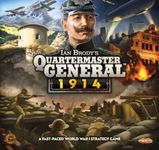
Right. So, my number three would be Quartermaster General 1914.
And this one to me strikes me as a little bit different than the others, too. When I saw this one, I thought, "Oh, that's interesting."
Mhm.
But I'll let you talk about it.
I'd been a a player of the original Quartermaster General, the World War II version. And I and I and I Was it one of my favorite games? No, cuz I felt the history kind of went off the rails a little bit. It takes a little getting used to, too, because the the way the game works is not what you would consider a traditional war game way of functioning. There There are no dice rolls, there's no combat, per se. You kind of generate into a into a space, right? You basically create an army in an empty space.
[snorts]
I'm not familiar with the gameplay, so this is all new to me. So, I'll let you know that
Yeah, I mean it looks it's it looks very simple, but again, going with the theme here, it's a simple game, but boy, it's it's intriguing the way you have to you have to learn the system. It's It's kind of like a new new ball game for everybody, you know? But, once you get it, it's it's really cool. So, the World War version I thought kind of went off the rails a little bit historically. People were flying around a lot that didn't really belong where they belonged. Um but, you got to live You know, the board's not that There's not that many areas on the board, you know? I think it's West Europe, East I'm sorry, West Germany, East Germany, and then Western Russia. You know, it's very large area. So,
Yeah, it's a small map, right?
Yeah, [clears throat] yeah.
And it's a So, they came out with uh What's his name? It's Ian Drury, I believe, is his name, the designer. Ian. Um came out with this 1914, which is World War version of this. Well, for me, this was a different ball game. A, I'm more interested in World War anyway, but B, he did a couple new things mechanically that just elevated the game to it. First of all, the flow I It could be the nature of World War versus nature of World War I'm not sure, but the flow of the game just felt so much more realistic as far as a simulation of World War and where people can go and what happens. But, he did this one thing with the cards that he didn't do in World War and he has these without going into too much geeky detail, he has these symbols on the bottom of each of the cards. So, when you're holding your deck of cards, you also have symbols.
You can do something called prepare. Prepare is you're taking your card, not playing it, you're playing it face down in front of you, and by doing that, you've then instituted whatever the symbols are on it. Now, your opponent doesn't know what they are, right? But, what that represents in such a simple, beautiful way is you building up a second line of defense or on the opposite side, you building up extra logistics for a big offensive. Because the symbols tell you what you can do. So, you build these up and let's say somebody attacks you in Berlin, let's say, you will all of a sudden flip the prepared card and it has two big shields on it, which is your double defense, right? So, now that means I've entrenched Berlin or Eastern Germany, whatever you want to call it, for X amount of time I got this big beautiful defense network. Now, he, if he has prepared the arrow cards, which are the offensive cards, if he can produce more arrows than my shields, now he's actually created a bigger logistical artillery strike that he's prepared over time. So, it's this constant, now aside from just maneuvering on the board and playing the events and all that, you're you have this subgame of preparing symbols, anticipating offensives and defensives around the board. It just works great.
And I I just
of the logistical load that World War I had. You know, you didn't just go attack. You had to prep. Sometimes for months you had to prep for these offensives.
Yeah, I just finished reading um A World Undone, the comprehensive one-volume World War I for which is, you know, ramped up my interest. But, as you're talking about this, like, oh, that's that's all in the history of World War I is just the preparation and the anticipation and trying to figure out what your opponent was going to do. That's that's that's all there.
So, and and and at the same time, if I see my opponent loading up prepared cards, I'm like, what what are they up to, right? I obviously start to load up my own cards or the other aspect of the game is that these cards also have events and things you can do. So, you're playing them also for whatever the card says they are. And these are all historical things. They even have cards called status What are they called? I think it's status cards where it's a permanent effect. So, you know, maybe some aspect of U-boat warfare will And you only get to play one card a turn, too, by the way. So, this is really tough decision-making as far as what you're doing with these cards. Right. You can just play the status card down and it stays there face up and for the rest of the game it does whatever it does.
Okay.
so cool. It's so cool. It's such a great design.
One of these can get expensive
because I've already got Summoner Wars and now Quartermaster General they're going on my list.
second semi-controversial pick. It's not a hex and counter war game.
Yeah, but but I mean it I think it shows too you know, we're talking earlier we took a little little break. You're talking about how you know, the games a designer likes the aspects of those games shows up in their designs, too. And I think you know, this this is there's a variety here of games that you enjoy and I think when you look at your design history, there's a variety of games that you design for as well. You know, there's a one World War I affinity there too, but just that zombies other elements here, too, coming in post-apocalyptic. You know, there's a a range of curiosity that shows up in the games you're playing and also in the games you're designing.
I I think the worst thing a designer can do is pigeonhole themselves into a particular uh era or uh scale of game or complexity of game. For me, yeah, I do design a lot of non-war games, sci-fi, fantasy, horror, obviously. But as a designer, it just opens up different brain paths as of design for you, right? So,
Yeah.
you know, if I'm doing a historical war game, I mean, yesterday I was here. I got my books all over here and I'm I'm studying studying which French units at the Battle of Leipzig come in at what time and where and I've got four different sources. By the way, none of which agree. Okay, so this is the other problem. So So now I got to decide, oh my god, you know, Ney's third core, the one guy says it comes in over here at 2:00. Another one says it came over here but it fought the day before and another guy's source, you know, so you got to get all this stuff together. That's part of the game. It's part of the design process. It's fun to a certain extent when I solve solve the problem and say, ah, all right, so if I compromise with this, it comes out right. Yay, you know, that kind of thing.
When you're doing fantasy and and sci-fi and zombies, you're not worried about that.
Right?
I was going to ask that's that there's like a certain liberating aspect to like Plum Island horror where you can just say, I'm just going to make up this thing.
Yeah.
You're designing for the fun of designing and you're just letting your imagination go. Yes, it has to have an internal logic, right, in [clears throat] and of itself. It still has to connect and make sense in the in its own. But you're just designing for the fun of designing mechanics and effects and things like that and and and like in a sci-fi game, I can just come up with a cool effect and then call it something later on. I'll just justify it some other way, right? I'll just come up with a Oh, yeah, that's a magnum quartz gun that uh, you know,
you guys had. What whatever.
me Let me ask you this question here. If you if someone said to you right now, you can only design historical board games, historical war games, or science fiction fantasy games where you've got free reign, would you do you have a preference in there or is it you really need the balance?
Uh, I think you need to have the balance. If if you made me, you know, if If if you made me say you can only do one more game, I would probably go with like a sci-fi type of thing because I like imagination. I like just inventing things and the another aspect is the graphical presentation, you know, the the
Right.
When you see when you see the aliens that in Kill All Martians that artist uh Ricardo Daryano you're going to freak out. They're gorgeous. And then I'm getting I'm getting feedback from him. So, he's reading the rules. I [clears throat] hate to I hate to go off on a tangent here.
It's okay. This is all about tangents. We have no format. Yeah.
He's looking at the rules and he's got the one particular alien and he's instead of just drawing something, right? He's looking at it and he's going, "Okay, I understand how this one works. He has a claw on his right hand cuz he likes to do this, but he's also got a drone over his left shoulder because he does this." So, he's actually thinking what this creature would look like because of its function in the game. So, he's right? He's not just drawing a thing.
Which you I would think you need that in an artist.
I'm sorry.
think you need that in an I would think you need that in an artist for game like
Especially for a game like that, right? Where he Yeah. Again, but it has to be like I said, it has to be internal internally logical, right? So, he's creating art that works with the game. It's just not a random creature.
I would think that would be a lot of fun as a designer, too, to see an artist's view of a creature
him back and I go I wrote him back and I go, "We have to design another game where I get your feedback on this and I just design around it." It's It was fantastic. It's It's a lot like the um uh Terry Leeds over at GMT when he did Plumb Island Horror, right? So, he's he's taking my admittedly awful artwork and concepts, I could almost see in his emails back to me this this uh this joy, right? Like
Right. Right. Yeah.
Oh god, I don't have to draw a tank, right? Or I don't have to draw a vehicle symbol. I can actually draw a guy on a on a on a Segway.
Right. Right. Right.
Or I can draw a circus clown, or I can draw other stuff that's for me fun to draw because now I now I'm outside of my, you know, my military element.
Right.
If you can imagine an artist being freed up to do that, that's the way a designer feels, I think. I do. Designing something that's Now, that's not to say, you know, I love my historical wargames. Obviously, I spent hours I've been spending 5 days researching Leipzig.
Yeah.
I love it. But, as a counterbalance, this other stuff just frees up my brain a little bit and gets me thinking down other avenues of design mechanics, too.
Yeah. And there's no reason they need to be mutually exclusive, right? I mean, we can we can all play a bunch of stuff and design a bunch of stuff and
For years, the best thing a wargame designer can do is go play go play Descent, or go play Summoner Wars, or go play um uh Sword & Sorcery. Go play another type of game where all of a sudden things will start clicking going, "That's a cool way to do combat, or that's a cool way to do supply, or that's a cool way to do activation. Maybe I'll use that in a wargame, right?" And that's basically what I've been doing, or at least been trying to do.
Yeah. Yeah. I have a broad palette of games I love to play, both you know, sci-fi and fantasy and turn and everything. And I just That's the same thing I say. It's like, "Wow, this is such This is the same action, but you take game A and game B, and they've the vision behind it and how they execute it is completely different even though they're doing the same thing. You think, "Wow, this is amazing that humans can come up with two different completely ideas that both work and are both fun."
Yeah.
covering this new product. Yeah.
Yeah, totally agree.
Yeah. Let's slide up to number two on our list. I'm I'm I'm particularly interested in talking to you about this one, so let's go to your number two game, so I'll let you run with it.
This be Oh, yeah, Blitzkrieg.
Yes. [clears throat]
When people ask me, "What's on your designer bucket list to do?" a new version of Blitzkrieg is probably on the top of
Oh, could you start that today?
Oh, right.
[clears throat]
So, what is it about Blitzkrieg that well, A, I played it when I was just getting into war gaming, so that, you know, it was one of those games that I played all the time when I first entered war gaming and discovered what it was. There's something
[sighs]
There's something about Blitzkrieg because it's not a historical setting. It's a war game setting, obviously. But, because you had two major powers that were vying and there was something so attractive to me about creating your own history. You You would You would You would talk about narrative? So, for me, this was the story of this continent.
Yeah, it's red I mean,
Avalon Hill. Right.
And for people that don't know Blitzkrieg, there's going to be a you know, especially younger viewers probably you know, this is a classic Avalon Hill war game back from the I want to say late '60s, early '70s. You have red versus blue on a big map, so it's a fictional setting and yet it's these two massive continent really nations fighting each other across this map and you know, you meet in the middle and
The cool part was there were five minor countries in between them.
Yes, that's right. Yes. Yeah. Yeah, I I Blitzkrieg was one of my favorite early games, too. And up for a lot of the same reasons where I feel like,
So, I like creating Final history. If you remember that being a baseball fan, there was the great Koufax desert.
Confession, I did not get that. I did a I did a my top Avalon Hill war games video a few months ago and I did not get that until now. So, I never made the connection between the great Koufax desert and Sandy Koufax, the baseball pitcher. So,
Um and I I was so into it that my imagination percolated so much that I then uh uh it was a Avalon Hill general. They started generating armies then for the minor countries and and and naming them. I think they named them after uh composers. It was Crovinia. There was it I forget all the different names, but they he they actually said, "All right, well, this little minor country is now called this and here's what their army looks like." So, now you're now you're putting armies in between Big Red and Great Blue.
Yeah.
And fighting your way through it. So, now my brain's really going crazy, right? Now I'm thinking, "Well, now you can create a whole what happened at Crovinia that caused a war, right? Or maybe the two minors that you're allied to go to fight each other." Kind of like a Korean war situation where you're now helping helping each of the minors. Or there's a you know, there's a terrorist incident or a incursion into your territory by a minor that wants to claim this region and you could just keep going on on and on and on and creating your own world out of this. And that to me, I think that's what Bloody Creek really did for me. Other than the fact that it it had air, it had artillery, it had naval landings, it had all that stuff. Again, very simple, but it was there and and usable and felt right.
And it just that that game just set off my imagination. I just felt like, "What could you do with two fictional countries that are vying for control of this continent?"
Yeah, I
And I I everything you're talking about it, too. I I think you know, it's it feels it always felt to me like it was grounded in World War combat principles. You know, like you've got the all the elements of combat or at least
It was like a It was actually 1950s, I think it started, right? Cuz
Okay.
There were hints later on that you could then start developing nuclear weapons or missiles or something like that. Right.
Right. But that idea, too, like one of the things I liked about it was just the creative approach because you had those amphibious landings.
Mhm.
And so you'd build up for that. It's like, okay, I'm going to try this way. Every time you played that game
You had B checks. You try a different approach. You get all your B checks.
Yes. Yes. But like I thought every time I played it, I felt like, okay, I'm going to try this approach now. I tried that last time. And then you're trying to react to what your opponent is doing, too. Yeah.
So for me, that game wasn't it wasn't so much like the mechanics were unique or anything like that other than being accessible. It was It was basically an old school 1970s war game system other than it added, like we said, the the air and the artillery and the and the naval invasions. It was just the concept It was just the concept of what you were doing that just really triggered my imagination. That's why I loved it so much.
Yeah, [snorts] I totally agree. That's such a great
So I would love love love love to do a fictional continent with minor countries each having their own armies two major powers vying for control of this continent and then just having a nice chaotic table where
Yeah.
incidents occur around that, you know, simple, obviously, not crazy, but
Yeah.
two minors go to war, you play out that war, how much do you feed into each of your allies before you trigger a larger war. I mean, all those things could be part of those those that narrative.
Well, I look [snorts] forward to a conversation in a couple of years about your view and your your envisioning of the modern blitzkrieg. I'll be there.
Uh Um let's slide up to I'm going to let's deviate from our top seven for a moment here. And this is a question I'm extremely looking forward to to hearing you talk about too is, you know, you've got this library of games that you've designed and some of them, you know, so many of them so highly regarded. You've got a wide design palette. My question for you is of all of these and this is like picking your favorite child. I realize that. But of all of the games that you've designed has there been one that has been the most rewarding that you look back on and say, "Yeah, that's the one that really felt good to do."
So, the one that I always mention as the one that was most rewarding to me uh as as a labor of love let's let's say is at any cost which was uh published by GMT 8 years ago? Something like that. 6 years ago. So, that was Metz 1870. There's a few reasons I like. First of all, there's never been a game designed about this topic, all right? It was the four days during the Franco-Prussian War that the Prussian army enveloped the fortress city of Metz. Produced the Battle of Mars-La-Tour which is a famous cavalry mostly cavalry battle. And uh the Battle of Gravelotte-St. Privat which was a huge set piece battle.
And I did the game is about the campaign the four days of the Prussians maneuvering around and but there's also scenarios for just the battles. I just I for some reason Franco-Prussian War interested me thanks to Rob Markham who designed a game for 3W called Blood and Iron. I knew nothing about the Franco-Prussian War before I I played that game and go, "Wow, this is really interesting." And so I started researching and it felt it falls right between the Napoleonic Wars and World War I, right? As far as the uniforms are all very Napoleonic, except for the Germans, they had the the picklehaube,
Right. Right.
and the infancy of the machine gun and the mitrailleuse, rifled artillery, breech-loading rifled artillery, uh small unit tactics. So, you're in between the old world and the new world. It's it's it's right in there. And what I found especially fascinating is that the concept in the wargaming industry was that the Prussians just ran over the French. It was one-sided. It was all over. Blah, blah, blah. No contest. Untrue. If you If you read the battles, each and every battle was pretty darn close. As a matter of fact, at the Battle of Gravelotte-St. Privat, the Prussians were already planning on withdrawing from the battle. That's how badly it was going. And then and then things have happened that changed the course of the battle.
But, when you read all the details of the battle, you find out they're actually much more competitive. So, for as a designer, I'm in a period I love. I have to somehow show that these battles are close-run things. And yet give each side the advantage that that they had, right? Make sure they're into [clears throat] the design. The French were commanded by uh uh a general, Marshal Bazaine, who was basically the French version of McClellan, right? He had a great history, highly decorated, but he hesitated, he stalled. I called it uh um malaise. All right, so the name of the chit is Bazaine's malaise, where it basically when they pull this chit, the French lose control of one core, you you that they can't move, right? You know, that kind of thing. So, this is all the infancy of Blind Swords. I mean, it's essentially the first Blind Swords game.
Okay.
Before he went into the ACW. So, the other reason I loved it is because uh I was so interested in teaching that the history of this period that I wrote a whole study guide. There's a whole separate booklet study guide that goes through the history, why inserts with why I designed things in the game that relate and then how they relate to the history of the you know, so that people could see point by point why things appear in the game and how it relates to the historical story, right?
Mhm.
And [clears throat] probably the greatest compliment I'd ever gotten was I was at Origins one year and a guy comes up to me and says, "Are you Herman Luttmann? Did you you designed At Any Cost?" I said, He tells me that the study guide is so good that he uses it to teach that part period of history in his classroom.
That's awesome.
Yeah.
You cannot You cannot get a better compliment than that. And so, yeah, that was that's my actual uh uh labor of love, I would say.
Yeah, I was going to I was going to say that it feels like a there's a certain element to where you just get lost in the design and it's it's just so much fun. And
Yeah. Um So, I'm going to read I'm going to bring it back. Uh I'm going to smooth out some stuff that, you know, like I said, you know, I'm I'm a different designer than I was 6-8 years ago. So, I'm going to smooth out some stuff and and redo it and do it with a French publisher. The French The French love this game because I don't disrespect them in the game.
Okay.
Right? Yeah. I don't. They get their advantage They were brave brave brave soldiers. But they were failed They were failed by their leadership and in some cases their tactics. So,
Yeah.
And and bad luck, honestly.
Yeah. Why do you think I mean, sometimes we we did you know, we I've been I just finished a couple nights ago a book called the The the That's a really it's a one-volume history of the roughly the 200 years of the the highly the highest focused activity of crusading in in the Holy Lands. And um you know, reading through that, it's amazing how many you know, you read the straight that you know, it was a routing defeat on one side historically, but what happened was the other side was ready ready to withdraw and then somebody died. You know, someone got sick and died [clears throat] and they left. And so it the the whole victory and defeat was literally on a knife's edge and yet historically we think, "Oh, it just happened that way, very one-sided." It's like, "No, that's that could have gone the other way, you know?"
So what just happened is a chaotic event?
Yeah, exactly. Yeah, exactly. Yeah. And that's historically representative, yeah.
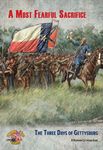
My god, it's that's fantastic. Um Oh, so the other the other design that I would say is is is is the most fearful sacrifice. And the reason I mentioned most fearful sacrifice is because when when I approached Mark about just quick history, I did Longstreet Attacks, right? And I did another game for Tiny Battle on the first day. Obviously somebody always says, "Well, when why don't you do all of Gettysburg, right?" Cuz I did parts of Gettysburg for for a long time. And Revolution [clears throat] at that time was not set up to do such a big game on all of Gettysburg, which is why I did Longstreet Attacks only on the second day.
[snorts]
Um so I mentioned it to Mark and he goes, "Well, if we're going to do it, we're going to make it the biggest, baddest Gettysburg game that's ever been created on the planet." And I go, "Okay.
You sure you want to do this?" He goes, "Oh, yeah. Let's If we're going to do this, we're going super deluxe, right?" And the reason I'm proud of it is because A, we got Rick Barber to do his one of his last maps ever. Uh talk about labors of love. B, I got I got a new system going called the Black Swan system, which is blind swords, but larger battles and using a card system rather than chips. But, C, we got Mark produced probably one of the best-looking games I, you know, I've seen in a long time, and that map is 15 sq ft. And unfortunately now we have set this as the standard for all Black Swan games. So, even for Antietam, I said, "Mark, Antietam's a smaller battlefield. What do we want to do about the maps?"
He goes, "I don't care. It's going to be two gigantic maps."
It's 15 sq ft, and I go, "All right, well, I got to change the scale of the game then if I do that." He goes, "Yeah, go ahead." So, that's what happened now. Antietam slightly more tactical because Mark wanted the two huge maps, right?
Oh, that's funny.
But, uh as far as um the reason I pick Most Fearful Sacrifice is not only did the system come out well, but it it was the game that we we strived to do, right? The the ultimate Gettysburg, at least in our opinion, the ultimate Gettysburg game physically and rules-wise, you know, playable. Still playable. I don't do monster games. Though people will say it's a monster, but it's physically a monster. It's not
I was going to say that if for people that are out there that haven't looked at this one yet, I've I've talked to a number of people who balked at the game because they feel like it's a monster game and they don't have room for both maps and all the stuff. And um there is so much gameplay in that without ever budding the two maps together.
Right.
That you don't need to play that whole campaign. There, you know, you've got your single map, you've got the portion of the map scenarios. There are hundreds of hours of gameplay in that game without budding the two games together. So, I think it is, yes, a monster game at that campaign level, but there's so much more gameplay in there that's not you don't have to go there.
Thank you. And we realized the problem like I I tried to design a number of scenarios, like you said, on one map. Sometimes it it [clears throat] doesn't physically work. Which is why so for Rocket Chu Ga Mu Ga, I I remember that and I said, "Okay, a lot of the action in Chickamauga takes place at the crease of the two maps." So, that's why on the back of one of the maps we have just that spot
Mhm.
on the on the back so that you can play with one
with one map, right? And in And in Tinian we're probably going to do the same thing. Um the uh the um the sunken road battle occurs very close to the crease. So, we're going to take that and now Mark Mark suggested and maybe we'll be able to do this is actually put separate scenario maps for the small scenarios on the back of the maps like the whole for every scenario that we can so that all you have to do is flip it over and and use just already be delineated on the back so you don't have to put out strips or anything.
[snorts]
Yeah.
Anyway, that those were the two but thank you for asking me that question cuz I love talking about Enemy Coast.
Yeah. Well, I'm not familiar with that I'm not familiar with that Enemy Coast. I was saying this is getting expensive for me when we're done.
So, but but it Are you going to So, but I'm going to wait for the redone the new version. Yeah, that'll work out. But then for A Most Fearful Sacrifice I
You know the guys you know Grant and Alex at the Players' Aid it's it's like one of their favorite games at Enemy Coast now.
Yeah. Um but I you know I can't say enough positive things about It was my game my war game of the year a couple years ago and I I We've talked about a lot of things in this intro elegance of design which when And one of the things again, when I looked at A Most Fearful Sacrifice, I took a deep breath and said, "Wow, this is going to be a lift to learn." But I just set up a scenario and I just started playing through the sequence of play and I was going. It's like, "Oh, this is so much easier to learn than I thought by looking at the rulebook." So, it's There's an elegance of play and an ease of learning there that I think is deceptively straightforward. It It's It's much easier to learn and more accessible than you would anticipate. You know, we talk about chaos. We've talked about, you know, designing chaos. That game's got that with the cards, with the events, with just how everything works with combat. It you've got that unpredictability about it. Um and just the, you know, the ability for that game to tell story that's you you've got the boundaries of history, but you are not tied to the historical pathway. So many things can happen. It's just so much fun to play.
I Thank you for saying that. Uh I appreciate that. Um you know, a lot of I I read a lot of the stuff uh sometimes on reviews of the if we you play the whole battle, right? A lot of complaints are, "Well, this didn't come out as it did historically."
I'm like, "As soon as you roll the first die, you're you're in fantasy, right? I mean, or make first move that somebody else didn't make. You're you're you're creating your own battle, right? All you can do is provide the circumstances and the historical abilities, but after that, it's it's really not the Battle of Gettysburg anymore. It's whatever battle you've created."
Yeah. Yeah. And then I think top on you you top all on that, like you say. I think you can just take Rick Barber's map, put it in a frame, and put it up on a wall. So even if you get the game and decide you just don't like the game for what I mean, who would do that? I don't know who would do that, but you could just take the map, put it up on the wall, and you've got your money's worth with a print up on your wall because it's so beautiful.
Oh, I've heard that the Gettysburg enthusiasts will buy two copies of it exactly for that reason. They take the second
Oh, really? Okay.
and they frame the map.
Frame and put it up on the wall. Yeah. Let's slide on to our last question, which is your number one war game. Again, with the caveat this this is seven in a group, not necessarily one number one, but another one here of a game that you like to play.
So the last one is Napoleon at Leipzig by uh well, the copy I have is from OSG. It was also Clash of Arms games, and now it's um uh Kevin Zucker's company uh Library of Napoleonic Battles, I think, right?
Okay.
But it's Napoleon at Leipzig. Um one of the reasons I have this on the list is a I find Leipzig obviously since I'm designing a new game on it. Um one of the one of the more interesting battles, Battle of Nations, went 7 days or you know, 6 days. Uh everybody again, we talk about all-star games, all-star battles, all-star games of battle Leipzig is in. I mean, everybody's there. It's uh it's a fascinating study of why did Napoleon stay there? Why did he fight there? Why didn't he retreat a couple days earlier? It's hard to say. There's a lot of argument about that. Um you know, was it a pride thing? Was it a Did he really think he could pull off a breakout or something? I don't know.
But one of the reasons this game in particular, this was my first introduction to Rick Barber maps. He did the map on the on the version I have. There's many editions. I think I I actually owned every edition of this game. Um it But one of the reasons I really took to it is because when I was in college, I used this to teach my friends at college wargames.
Mhm.
And we were talking before about multiplayer wargames, you know, so few of them. Well, this is one that you could play multiplayer. Because the French very logically break out into two or three pieces and the allies very conveniently break out into about four pieces. So I would have bunch of guys around the table with our with our beers and our cigars and I would teach them how to play wargames and they each had their own little section to to deal with. So it was not overwhelming, right?
Cuz it's a larger game, right? I mean, this is a pretty big map with a
pretty big Yeah, it's a big game.
modestly large set of counters, yeah.
Yeah.
Yeah.
Two maps. Um beautiful counter work. Um Kind of a hand-drawn calligraphy type of style on the on the counters. It's beautiful. Um, I think they used uh Rick did the the original La Bataille series, I believe, and did a lot of that kind of work on that. And and this is kind of moved up it it's moved over that style. But, uh you know, so I could, you know, get my friend Tommy to to be Blücher and all he would worry about is the Army of the South Legion in his front and he would learn how to play a war game and and so for me it it's it's not only a design thing, but kind of a memory memorable thing, you know, where I was able to bring other people into the fold, whether they still play today or not, I don't know. I have no clue, but it was kind of a vehicle for me to reach out to people and say, "Hey, this is this is what I'm into. You know, you can join me for the evening." and and that particular game was so well suited. That one and then Napoleon's Last Battles, also, the one on the Waterloo campaign.
Same kind of deal. It kind of broke down into nice multiplayer but I preferred like Life of the Party.
Right. Right. That's interesting you bring up the the nostalgia aspect of this cuz I, you know, every once in a while I'll think through and list up things, favorite games or or elements like that. And when I did my Avalon Hill list like that, there it's a blend of the game quality and the memories that are attached to it. Avalon Hill those memories sometimes [clears throat] they they last, they stick. It's just some fantastic. And that's I think one of the powers of our hobby, right? Is this idea that we can create these powerful memories that you know, fun is such a blended word, but I think it applies. It's just you you just have great memories that bring out a lot of fun, you know.
I I still remember walking into the local toy store. It was a called Sally's Cycle Shop. They sold bicycles and toys and in the back and there was sitting a copy of Stalingrad.
Mhm.
I was like, "What in God's name is this?" I could still see it sitting there. Right, bringing it at home and playing it with my brother. We played it totally wrong the first time, of course, cuz this is a whole new world of gaming, right? We have no idea. But that and then then we got Midway. I love Midway.
Midway was mine. Midway was a gift from my brother. And I distinctly I remember sitting at our kitchen table and opening it up and saying it was this amazing feeling of oh my god, you can I was probably 11 or 12. It was that and I was like, you can take this historical event and play it out and it can happen in any number of a hundred different way It was just mind-blowing. And I just and I played that game until it fell apart, you know?
Yeah, me too. That's that's and that that's the difference between those days and now. Not to sound like an old fart, but when we got an Avalon Hill game or an SPI game, we played those to death, right? Cuz they were the only ones coming out for the next 6 months or something. So that was the game you played. Now, they're coming in and out the door constantly, right?
Yeah. Yeah. Uh but there is something to be said for that. I mean, this is, you know, I the you know, people toss around the the golden age of wargaming, but to be able to have so many options to do something like you say, which is say let's okay, let's explore this element of history, you know, so many times now what I'm finding is I'll read a book and then I'll be able to say, oh, is there a game on this? And there are three games on this or five games on this battle. You know, back in our day, there probably wasn't a game or maybe there was one and it wasn't done that well or and you couldn't find it anyway. So I mean, to be able to have these connections between history, experiencing the history, and sharing that with other people that you can sit around the table and relive this or play out, you know, the alternate or who knows what happens, as you say, you know, once you make the first die roll, it's a different history.
But it's really just an amazing I I feel we're What's the right We are extremely fortunate to be able to have these experiences in our lives, to be able to do these types of things, you know, which makes I think our hobby really powerful. Yeah.
I totally agree.
Yeah. Yeah. Well, I think we have covered a quite a range of topics here. I have thoroughly enjoyed this and I've learned I think a lot about you as a designer and your taste. It's been so interesting for me to hear you talk about the games that you like and not only that, we've got a fantastic uh list of games to look forward to that are coming out from your designs, too. So
Like I said, I don't know if it's bad time management or just being pro I don't think I don't know, but
No, I I you know, I I'll put it this way. I think you're you know I I think there's a there's a joy and a passion behind what you're doing and I think that's probably why there's so many games that you're creating because it's obviously you it's obvious you love to do this and I think that shows up in the final product of your designs and we talked again
That's an interesting point you made cuz I mean, I'm retired. I just turned 70 this year, so I'm kind of like, all right, you know and yet you know, people ask me all the time, my golfing buddies ask me all the time, "Are you going to keep doing this? You know, you work so hard at this thing." I go, "So so far I still love doing it, you know." Yeah. And and uh I guess this is part of Well, I want to get this stuff done, you know, I want I want to I want to get it, you know, these bucket list items out the door. Um you never know what the future holds, you know, so you try you try to stay healthy and keep keep doing this uh you know, like I said, I play golf now, so that's my new passion, but the good thing about it, it doesn't involve sitting behind a computer all day. I had to find something where you can go out and be active and get some sun and some you know, and that to me in my brain I'm thinking, all right, this is keeping me alive and going. Let's go, you know. So that's good. I can keep doing
But that activity is good for your brain. It's good for design. It's good I mean, it's that's I think that's a big plus. Yeah.
Except for the fact that when I get done with 18 holes, I fall asleep at the computer, but other than that
But uh yeah, I I'll I'll keep doing this as long as I can do it and uh yeah, there there there's some some things I still want to get to um like like a new Blitzkrieg and some other stuff, too. Uh there's some battles. There's a There's a battle in South You know, you're talking about new stuff that people don't know about yet. So, I found this one battle that no game has been done on that I know of, anyway, and that's the Battle of Tuyutí during the War of the Triple Alliance in South America between the Paraguayans and the Uruguayans and the uh Brazilians and the Argentinians, and it's a fascinating little battle, and I am determined to do a design on it.
It's intriguing to me cuz I've been looking at that recently, just the you know, all of the conflicts that erupted in South America, and I feel like that is that is a a dark area not dark area, it's not dark, but it's a it's a a blind spot that really hasn't been looked at often historically or from our hobby's standpoint. So, it's interesting you mention I was thinking about that the other day.
Waterloo of South America. Yeah. Um and I believe the Paraguayans lost 2/3 of their army there. They were like so well-skilled and so aggressive, right? Just crazed, but great fighters. And they were just They just kept coming, and oh, it's just it's fascinating, and you know, again, uh I did talk to Randy. As a matter of fact, when you see him, you can mention this to him that I haven't forgotten about it. He's the only publisher that said to me, "Well, that That's really interesting." Most would say like, "Well, nobody's ever heard of this thing. We're not publishing it." Right?
I feel like that, but there's the entire South You know, where they shook off the mantles of colonialism, there are dozens and dozens of historical conflicts and stories and that it's just not represented in our hobby. Right. And so, yeah, that's
games on the War of Triple alliance but on a strategic level.
Okay.
Fascinating war. Um but
Right.
I was like, okay, well people have done that but how about the story of a particular
Oh, awesome.
you know.
Yeah, yeah. Oh, well, that's exciting, too.
More stuff to do.
Another teaser, yes. But yes, thank you so much for all your time today, for joining us and thank you for all you
I've been a big fan for a long time.
Yeah, and thank you for all you do.
trucking videos when they did them, so.
Okay. That's I've drifted away from that a little bit. I have to get back. That's
Oh, they're great. I never could understand why they were I was never could understand why they were so fascinating and then half an hour later
What? How come I'm still watching this? This is so entertaining.
I know this is the same way for me for playing cuz it's so this is a completely off topic but a friend introduced a friend from New Zealand introduced this park area this a friend introduced me to the game and I played it once and I'm like this game sucks. I'm never going to play this game. And then I so I left it for like two months and then I got a wheel and I came back to it cuz I I don't I don't even like driving. I like I don't like I mean I it's like I feel like I always want to do something else when I'm driving. And so it's like I don't and all of a sudden I start playing and it's like, oh, no, wait, this is actually fun. And then like 200 hours later I'm still going. I never thought I would like it. I still don't know why I like it but it's just something chill and relaxing.
collaborate on a board game version.
There we go.
[gasps]
Well, I mean
Yeah, if they can make a PC game that's fun about that, I bet there'd be a way. I was actually just talking to someone about it, like a about a like there's something so rewarding about picking up something and taking it someplace else and there's a little narrative along the way because you don't quite know what's going to happen. There's some chaos. And again, it's like a baseball game. We've talked about you know, you could have a one to nothing shut out or you could have this 15 to 14 crazy thing where there's you know, tornado and that driving it's the same thing. You could have six accidents or you could have no accidents. Like who knows? So, there is a little story in there, too. But, yeah. Well, that's it.
about watching the scenery go by, or whatever. It's
Yeah, yeah, exactly. Yeah, and what pops into your mind. So, we have gone way off tangent with that one.
No, no, no, it's okay. Tangents are where a lot of the fun happens. So, yeah, we have to explore those in life. But, thank you very much for joining, and thanks for everybody for watching today, and I look forward to your upcoming designs from him. So, this will be a lot of fun.
Thank you for
Thanks, everybody, for watching. Don't quite leave yet, as we are giving away a copy of a Plum Island Horror and its expansion, More Bad Things, to one lucky viewer. The caveat, this is limited to people who have a shipping address in the 48 lower United States. And, how to enter into this drawing. I've put a link down below to a Google form that asks few questions about the games that Hermans talked about in this interview. Could be in part one, or it could be in part two. Check out those questions, answer those questions, submit that form, and if you get all your answers correct, you'll be entered into the drawing for A Plum Island Horror and More Bad Things. Now, the giveaway will be done on one of the monthly updates that I publish. One's coming out in about a week or so. So, look for that to see if you have won this drawing.
Thanks, everybody, for watching. Have a great day.