My City Digital - Playthrough & Giveaway
Games in This Video
1 game is featured in this video — it unlocks as you watch.
Transcript
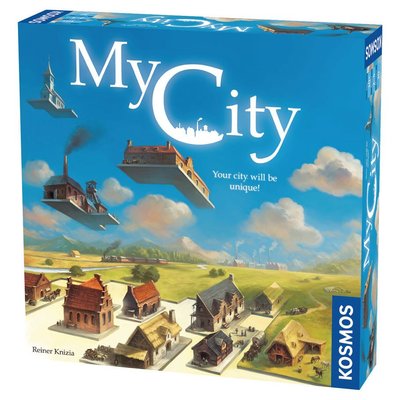
Hi, my name is Paul Groen and in this video I'm going to be showing you the digital version of My City from Spiral Burst Studios. Now, this is not a sponsored video. I have a good relationship with Spiral Burst and they contacted me about this and I said, "Yep, sure. I'm happy to do a video on it to show people how to play the game." I am doing a giveaway, though. So, if you are interested in winning a digital version of this game, then all you need to do is check out the description of this video and there will be a link of how to enter the contest. Basically, you just need to click on the link which will open up a Google form and you need to leave me a comment on this video as well. I'll do the draw in a few weeks time and good luck to everybody. So, what is My City? Well, it's a board game designed by Rhina Canonitzia, published by Cosmos, and it came out in 2020. And it's a legacy style game that's played over 24 games.
Now, for those of you that don't know, a legacy style game means that you're actually going to be physically altering the game components over the course of the 24 games. You're going to be adding stickers to the board, you're going to be opening boxes, etc., etc. Now, what that means is if you've got the physical board game, once you've played through it 24 times, you can't really play it again. That's it. You're done with the game. But thankfully with the digital adaptation, it means you can reset it and you can replay it. You can have as many games on and going as you want. But also with this adaptation, they've done some extra things in there. You can play it solo against the AI. You can play against other players. And there are daily challenges as well. Now, what I'm going to be showing you today is a couple of things. First of all, we're going to jump in and we're going to click on new game and we're going to start a new campaign. Now, I've actually got a campaign of this going on myself, which I haven't finished. I'm about 2/ird of the way through, but for today, we're going to start with a new campaign, but you can see here there is an eternal game. I don't quite know what that is. Presumably, you can play forever. And a randomized game as well.
I haven't explored those, but they are in there as well. So, we're going to say new campaign, and we're going to add me as a player. And we're going to add in one easy AI, which is Blake. And then we're going to add in a hard AI, which is Isabella. And presumably we can add how many more can we add? Oh, up to four. So it's an up to up to four player game. We're going to get rid of that one. So we're going to start the game and we're going to be playing on chapter one. So chapter one of 24. There is an optimistic energy in the air. After a long voyage, you have reached the location where you want to build your new city. At first, everyone just starts building. But soon, there are certain rules that emerge. The proper use of drinking water wells will promote the growth of your city. Now, what I do want to say just as we're starting this, if you watch this chapter one and you think, "Ah, that game's a bit simple for me," what happens is over the course of the 24 chapters, more and more rules are going to get added into the game. So, the game does actually become more complex. It's still a family weight game, but there are more decisions, more depth to the game as you go along. So, chapter one is just a very, very simple one.
And as it says here, there are 24 episodes split into eight chapters. Okay? So, we're not going to play all of chapter 1 today. We're just going to play episode one, which is chapter one. We're just going to play episode one of chapter one. And let's click next. and let's explain how to play. So, essentially what you're trying to do at the end of the game is to have the most victory points and you will get victory points for various things in the game, but you will lose victory points as well. So, it says here that every time you pass, and we'll explain that later on, but every time you pass, you lose one point at the end of the game. Every tree that's on your board that's still visible is worth one point. So, you can build over the trees if you want to, but you probably don't want to because they're worth points at the end of the game. The rocks, however, work a different way. The rocks are negative points because they're big and ugly. And you do want to build over them, otherwise you'll be losing points. And also, you want to try and fill as much of your board as possible. Every empty light green space minus one point at the end of the game. So, let's go in campaign points. So, as well as the victory points, which are for the individual game itself, what you're trying to do is you're trying to be the winner at the end of the entire campaign. So, after 24 episodes, and the way that you do that is by getting campaign points, which are represented by the circle. So, whoever wins episode one will get two campaign points. And you'll see there will get a little uh
thing that they need to do, which is to attach a sticker to their board. Second place will get one campaign point. Third place won't get any campaign points, but will get a bonus. Now, you might not be able to see those icons, but essentially this is a balancing mechanism. So, first place is going to get two campaign points, and they are going to have to put a sticker on their board, which is two rocks. Now, that's bad, but that's the way that the campaign balances out rather than just giving, you know, the best players the most points every time. And third place won't get any campaign points, but they get to add a tree to their board, meaning they're going to have more chance of getting points later on. So, let's start the game and let's explain how it works. So, effectively, each player has this this deck of cards and you can see the deck of cards in the top left.
There's actually 24 cards in the deck. And what I'm going to do is I'm going to click on it and show you they are 23 of the 24 cards that are in the deck. So, there's eight blue buildings, eight red buildings, and eight yellow buildings. Why is there only 23 when I said there's 24? Because we've already drawn one of the cards. And you can see that at the very top in the middle with the little rotation icons. That is the card that I've drawn. And now I have two choices. I can either pass, which means I don't place that building and it it will disappear. That's it. It's gone. But every time I pass, I lose one point. Or I could place that building on the board. Now, there are rules about placement. And as you can see here, the question mark is being highlighted. And it tells you, oh, no, that's the stuff we already knew. Ignore that.
Let's try and remember how you play the game. So, down at the bottom, you can see the number of campaign points we've got, which is zero. And we can see the boards of the other two players. So, essentially, what you do is you're going to drag this building and you build it somewhere on the board. And if it isn't a legal placement, it will show in red. And that's telling me that I can't build there. Why can't I build there? Well, it's because you need to start off adjacent to the river, I believe. I think that's the rules. Yeah, I think you need to start off adjacent to the river. Now, you can't cross the river with a single building. That's not allowed. But there's actually lots of depth in this game. The more you play this game, the more you start to realize that it isn't as simple as it might first appear. And once you get to know the layout of the different buildings, then you will start to get better at this game. Just for this demo, I'm not going to play too well. That's my excuse. And what we're going to do is we're actually going to put it here.
Place done. What it's now going to do is the other players are going to take their turns. And you can see down at the bottom, they've actually placed it in slightly different places. Right. Then I've drawn the next card from my deck. And that is the 2x two red building. So where can this go? Well, can this go next to the river? No, it can't. Because once you've started building your city, every subsequent building has to be placed so that it's orthogonally adjacent to an existing one. So I could put it here. That's that's perfectly allowed. I can put it here. Now, even though that's across the river from my existing building, that's fine. It's still adjacent to my existing building. What you can't do is you can't put a single building across a river like that. So what I'm going to do is I'm going to put this Where should I put it?
In fact, I might put it there. Now, that's actually probably a really bad placement thinking about it. Let's put it there. And what I'm going to try and try and do is I'm going to try and keep those trees in place. Right. Next, we've drawn the blue building. Now, what is the difference between the colors of the building? Well, the colors of the building will get you, I believe. Do they get you points at the end of the game? No, they don't. Chapter one is really, really simple. Sorry, episode one is really simple. All we're interested in is preserving the trees, getting rid of the rocks, trying to build on as many spaces as possible, and not passing if we have to. At some point, we will have to pass because we won't be able to place anything. And if you pass, although I said whenever you pass, you lose one point. That's not quite true because when you pass, you have a choice of ending the game for you. If you do that, you can't play any game any more buildings, but you don't lose the point.
But at the moment in episode one, the colors of the buildings don't actually make much difference. So this is really really simple. I'm just going to put it there. You will see in later episodes and later chapters that the color and the placement of the building is really important. So uh I think we can slot this. Oh, we don't want to cover that over, don't we? Yeah, we want to cover over these rocks, but we want to try and keep them. Is that good? Well, that kind of restricts us on the right hand side a little bit. So, let's maybe put it here. Sure. Let's do that. Again, I'm trying. I'm not going to play optimally. Well, right. Is that going to help us? Well, sort of. That kind of looks okay, but it's not covering over the rocks, is it? Do need to be covering over the rocks. Let's put that there.
I'd forgotten how easy episode one is, but it's a good introduction to the game. Right. So now you can't flip these buildings. You can rotate them, but you cannot flip them on the XY X or Y axis. Is that going to go in there? It does. Well, that's covered over some rocks. So, we'll do that. Okay. Now, what about this one? See, I'd love to be able to put that one in there, but I can't cuz it's not orthogonally next to another building. So, I can't do that. We can put it there, but that's not covering over the rocks. I tell you what we'll do. We're going to put it there. No, we're going to put it there. That's it. Yeah, that covers over the rocks and still leaves me a space.
Right. And again, at any time you can press that so that you know exactly what card you've got left in your deck. Right. Where's this going to go? Um, let's put it there. Yeah, like that. Ah, now I should have been aware of this cuz I knew this was coming at some point. I mean, you're not going to go through all of the buildings, but I think it'll go there. Yeah, that's good. We like tessellation, right? What about this one? Well, I think that can go in there. It's actually really nice playing this game without worrying about the colors. That is where uh that is where it gets a little bit trickier.
That kind of works. Oh, no. It's not adjacent to anything. Oh, it doesn't work. Um, yeah. No. Okay. Right. Well, let's put it in there. Right. We got the long thing one. How many of those are there in the game? There's two of three of those. One in each color. Okay. So, I should have again I should have been planning for this. So, I'm going to put it there. At least that's those nasty rocks covered over. Ah, perfect. And then that can go in there. Nice. Okay. Where's this one going to go? Will that fit there? It will. Yes.
Right. Okay. We're getting to the point now where it's going to start getting tricky to place these without covering up stuff that I don't want to cover over. Remember, you can cover over the trees, but you will lose points doing so. Think I'm going to put that there. And at the point I can't place a building anymore, that's it. That is that is the round over or the game over for me. Yep, that'll go in there. That's looking all right. Okay, this can go down here. It's covered over some more nasty rocks. We've only got five cards left. And again, at this point, you can really start thinking, which ones are you going to get? Because if you get one that you don't like, you can just pass, lose a point, and then you'll get another one.
Um, right. Oh. Oh, right. In fact, we might do that. Yeah. thinking about it. I don't like this building, so I'm going to pass. Here's the choice that I mentioned. You can either end your participation in this episode, which means that's it. You're done. Or you can just pass, lose a point. I'm going to pass. Oh, typical. I'm going to pass that one as well. Right. Hopefully, that's better. Um, oh, I really should have been planning this. Didn't want that one. Am I going to pass again? I don't want to pass again. Let's just have a look. Okay. I really don't want to pass again, but I could put it in there.
Yeah, we're going to put it in there. Oh, I was hoping it wasn't that one. Okay, let's just have a look again. Yeah. Okay. Right. We're going to have to put this one in there. We're going to knock down these trees. Sorry, trees. And then that can go in there. Nice. And then that can go in there. Or I'll tell you what, let's put it up there. It's exactly the same, but looks nicer there. That's it. Paul wins. And you can see why I won. So during the game, I had eight points because you start with 10 points and I passed twice. But then trees, I got eight points for my trees. So at the moment, I'm on 16 points, which means I'm losing. When you just add up the positive points, I'm losing. But I only lost two points for my rocks, whereas Isabella lost four points for her rocks. But then empty spaces, that's the bit where I did really well. So my net score for the whole of that episode was six points, which means I win that particular episode. Now, what that means is that I'm going to get two campaign points, but I need to put a rock on my board. And now I have to decide where that rock is going to go. And this is another really important decision. And I'm going to put it there.
That's it. That is my board permanently altered now. And what we're going to do is I'm now just going to skip ahead to a later episode and just show you how things evolve. If you don't want any spoilers after this, then thank you very much for watching. Don't forget to enter the contest to win a copy of this game. All you need to do, click on the link, enter the form, leave me a comment on this video as well, and I'll do the draw at some point in a few weeks time. But if you want to stick around, we can see a later game. Right, so we're back and what I've actually done is I've skipped ahead to the start of chapter 2. So, three episodes have been played and we are now on episode 4, which is the start of chapter 2. And there were rules introduced not just at the start of each chapter, but actually at the start of each episode. And I'm going to go through them at the start of this part.
Now, the church is coming to our city. Soon, it will attain the position of power that will have to be respected in your city's ongoing development. After all, building sites are becoming scarce. So, we're on episode 4. All of the rules from episodes 1 to three apply, which I'm going to go through in a minute. But now, the new rules for episode 4 are each player is going to get three extra buildings. So, that's three extra cards in the deck. And these, as you can see, these are purplish cards. They're quite big. And essentially, these are churches. And what happens is the churches must be built. So when you draw a church card, you have to build it. If you can't build it, you must end your participation. So assuming you build it, then it is a building as normal. And what happens is, oh, hang on a minute. We got some more rules. There's a blocking card in the deck. So a new card has been added to the deck. And if that's revealed, then the following card will not be constructed. So, that's a little twist that's been added, right? So, how do churches work? Well, well, let's go through the rewards at the end of the episode. First place is going to get two campaign points and that church. Second place is going to get one campaign point and that church. Third place is going to get that one. Okay, we're going to start the game. But before we dive in, let's go through the rules. So, passing is minus one. Remember, you can't pass on a church. You have to build it. Each tree is plus one. Each rock is minus one. And each empty space is minus one. So, new rules that were introduced in episode two are number of buildings in your largest group of each
color. So, what you're trying to do is you're trying to group buildings of the same color together. And you can get a lot of points from this. So, if you if your biggest group of red buildings is five, that's five points at the end of the game. And you do the same for yellow and blue. Also, players will have either one or two wells depending on how well they did in the previous episode. I've got two. And at the end of the game, if you have four different buildings adjacent to a well, then that well is worth four points. Uh, that's it, I think. Yep. So, the wells were introduced in episode 3. Churches introduced in episode 4. We're now going to play a game with the churches, which, as you can see, are in my deck, as well as the blocking card. So, and you can see my two wells. Hopefully, you can see them sort of just up to the right of middle, right? Where's this going to go?
Well, if I what I don't want to do is I don't want to put it there because that means I can't then get two uh four different buildings next to that well. In fact, I've placed those wells in really bad positions cuz I don't want to build on those forests. Never mind. Uh let's put it there. Is that okay? Um no. Let's um let's put it here. Okay. Next one is another yellow one. Right. So now we kind of want to group the yellow ones together. Oh, it's Oh, rats. Yeah. Oh. Um, we could put it there. No, that's not good. I don't like that.
Um, let's put it there. Okay, it's already trickier. So, blue building. Um, okay. Well, we can put that there. Oh, no. That's really bad. Oh, no. It's not too bad, actually. No, we can put it there. No, we can't. It's got to go adjacent to an existing building. Oh, I forgot that. There's good. Let's put it there. Right. What we got next? We have another yellow building. Oh, is this okay? Yeah, that's okay. So, that's a group of three yellow buildings already, but I'm making life difficult for myself with where the other things are going to go.
It's the big blue. Um, right. Okay. So, it could go there. Yeah, sure. Right, red building. I don't know where my reds are going to go, but let's maybe put this one here. Or let's put it there. Not there. There. Yeah, let's put it there. So each of those wells has two buildings next to it now. Okay, red. We can fit this in here. Oh, no. But then if I do that, I can't Oh, no. It's not going to work. Um, it can go there.
Yeah, that's okay. He says, "Oh, well, that's the blue building that I wanted to go in there, so that's good." Yellow. Is that good for me? No, I mean it'll go there. Yeah, I'll put it there. That's a nice big group of yellow stuff. Ah, blocking tile. So, that basically said you can't build the next one. And now we've got this one. So, the blocking is interesting because it does add this little bit of a a random element to the game where you're like, "Oh, am I going to get it or am I not? Oh, where's that going to go? I think that's going to go there.
Yeah, that's good. Okay, so that that the first of those wells, the southernmost one, that's got three different buildings next to it so far. Um, yeah. No, this isn't. Again, you can build over the well, but if you do that, you're not going to get any points from it at all. Ah, that's covered over those trees. I don't like that, but needs must. Hey, there's the one I wanted. Oh, I was I was playing for that one. I'm glad that one came out. Right, we've got our first church. Now, remember, cannot not build the church. Now, I don't remember seeing anywhere that the churches are worth points. Maybe that's in a later episode.
Pretty sure. Yeah. Okay. So, right now, churches are not worth points, but they will be later on. You've got to have certain things next to them. So, we're just going to put that there. Uh, we got another church. Sure. Uh, no. I don't like that. Can it go? No. Oh, no. We don't want to put it there. Where do we want to put this? No, we don't want to put it there. Oh, will it? Oh, no. It's the wrong way around. Oh, right. Well, well, indeed. Okay, he's going to have to go there. Okay.
Right. How about this one? Well, we do want to cover up those rocks. Although I'm leaving myself lots of little gaps, which is generally really bad, but it's okay. Right, I'm not going to be able to put that next to any of my other blues. Now, I could pass. Let's have a look at what we've got left. Okay, I don't want to place this one. Now, placing this is actually going to really restrict me on my other ones. So, I think I'm going to pass this one. And again, I could end if I wanted to, but I'm not going to. Right. Is that any better?
Not really. Um, okay. It's red and it's in my group of reds. Oh, that's horrible. Horrible. Horrible. I mean, it can go there. Okay, come on. I want a tea or that that that'll do. Oh, there's only one other building that I actually want. I I I'm not sure I'm going to get it. So, I'm going to have to put this one in here to get the four points for that. Well, and then just hope that I get one I can place. So, I can't place that one. So, I need to decide whether I want to just stop and I'm going to lose loads of points or pass and lose one point. But then I'm looking at there's only two of those that I can build.
So I'm basically playing the odds to see whether I'll get one of them. But if I do manage to get the blue L, that's going to save me four points. So I think it's probably worth taking a little bit of a gamble. I don't think this one can go anywhere. No. I've done really badly this time. Right. I'm going to pass. See what we get. No. Oh, no. I It will go. That's not too bad. So, we'll place that. No. Oh, no. That one will go as well. Okay. So, yeah, we're actually a net gain on points. We lose two points for covering the trees, but we don't lose three points for the grass. Now, that one we definitely can't play. So, I'm going to pass that.
Oh, seriously. There you go. Right. That goes in there. Come on. In there. Place. Final one. Can't place it. So, I'm going to end. And I'm just going to end. I don't lose another point. Right. Who won? Probably not me. Oh, no. I did. Huzzah. How did I win? Well, I got six points during the game cuz I passed four times. My blue group was worth three. My red group was worth six, and my yellow group was worth five. I got eight points for my wells and four points for my trees. So, I did pretty well on that. And even though I lost two points for rocks and 12 points for empty spaces, my final total is 18. That's not bad. I'm happy with that. And because of that, I get another church added into my deck.
And we can see the campaign standings. Isabella's got six campaign points. I've got four campaign points, and Blake has two. That is all I'm going to show you today. On screen is a sneak preview of episode five, which as I tell you, as as I mentioned, this gives you points for the churches. So, from now on and for the rest of the game, for the rest of the whole campaign, every church at the end of the game, if it has three different colors next to it, it's worth three points. And I believe some of the later ones are worth more points as well. But that's it. That is a quick overview of the My City app. Thank you very much to Spiral Burst Studios for providing me with a a free key for the game and for supporting the channel with the giveaway. And don't forget if you haven't entered the giveaway, click on the link in the description of this video and leave me a comment on this video as well. Good luck to everybody for entering. Thank you very much for watching and a big thank you to all of my patron supporters that fund the channel. As I mentioned at the start, this is not a sponsored playthrough video. I've not been paid any money to create this video and I'm only able to do things like this thanks to the support of the Patreon campaign.
So, if you like the content that I create and you want to support me directly, you can do so at patreon.com/gaming rules. Until next time, take care and thanks for watching.