3 Chapters: My Favorite Mechanism
Games in This Video
1 game is featured in this video — it unlocks as you watch.
Transcript
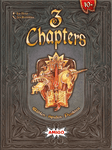
Hey, I'm Jamie from Stonemire Games and today I'm going to talk about my favorite mechanism in the game three Chapters which I played for the first time even though it's a slightly older game. I played it for the first time in Geekway to the West 2026 and I think it was my favorite game of the convention. I had a lot of friends who were talking about it and I played it and I was like this is an absolute delight. Um here's what this game looks like. Three chapters. So it is a game with cards numbered I believe 1 through 50. I think 50 is the highest. I believe one is the lowest. They're all kind of fairy tale characters. And um what you're doing with these cards is kind of trick by trick. A player is playing a card and then each player other player is playing one card and the card the player who played the highest numbered card wins that uh trick. I'm calling it a trick even though there are no suits on these cards. There are attributes but not suits that you need to like follow or anything like that. Um so the highest card wins. They get a few points. That in itself very basic, right? But there's a couple layers to it because that is the second chapter and that is just part of the second chapter. In the first chapter of the game, really the first thing you're doing is you are drafting these cards. So these aren't randomly dealt to you. You receive a random hand, but you're only choosing one and then passing all those cards to the left. So you are building a hand of cards instead. So that's the first chapter.
The second chapter is when you go through and play out all these cards into these tricks with the one additional element being that these cards have scoring conditions or many of them have scoring conditions. For example, beauty says if with beast score 45 points and that means when when you look at the cards that were played into that trick, if the beast was also played, beauty gets 45 points. And so say I I might have beauty in hand, but I didn't draft beast. Maybe I saw Beast. I'm hoping another I know another player has it and I'm waiting for them to play it so that I can then play Beauty. And so they play Beast and then I play Beauty. Beast does get some points. Beast gets uh 20 points, but I get even more. Beauty gets 45 points for doing that. So I'm I'm really hoping as Beauty that I can follow that I can play it on a hand where Beast is played. Um that combined with the knowledge of the draft I think is really really important.
However, there's one other chapter, right? So that this is really cool. I I love the scoring happens during the game itself because the last phase is something that I thought the game was going to be and that is uh at the end of the game you look at all cards that you played during the game. So if I played beauty this might be my final uh array of cards all the cards that I played but um let's say not in this example because in this example some other player played the beast at the end of the game you have all the cards that you played in front of you and based on the cards in your personal tableau you will then score for them as well too. So, let's say in an alternate universe, instead of I me letting another player draft beast, I was able to draft beauty and beast. Now, that means that they were not going to be played into the same trick because I could only play one card in that trick. But it also means that I know at the end of the game I'm going to have Beauty and Beast in my tableau and I get to score them then as well. Um, I love this. And so, I love that endgame scoring. It feels a lot like Red Rising.
Well, actually, it feels a lot like like Red Rising and it feels a lot like Fantasy Realms. two games that I very much love. But I also love that the scoring matters during the game too. During the game, you are hoping if even if you don't have the certain cards, you are hoping that other players will play those cards so that you can score from them in the trick phase in the second chapter of the game. The combination of that scoring off other players cards and scoring off your endgame tableau, which you drafted, which you have a lot of agency over, is really cool. It made this game really satisfying. And even though I only played once, I wanted to play again and I could see myself playing multiple times because it's just that clever. That is my favorite mechanism in three chapters. I'd love to hear your thoughts, especially if you can think of another game like this where you are scoring an endgame tableau, but also based off of things that you definitely don't have that other players have that you are scoring off them temporarily during the game and then scoring those same things based on what you have, what you have played or what you've earned in your tableau at the end of the game. Love to hear thoughts on other games that do that in the comments below. Thanks.