Hidden Gem Board Games
Games in This Video
8 games are featured in this video — they unlock as you watch.



Transcript
Welcome to the eighth episode of spotlighting hidden gems in board games, a series dedicated to fun and lesser known family games that deserve more attention. So without further ado, let's start with a colorful little Knizia gem that deserves a comeback. Everyone wants more coins, but nobody wants the player in the lead to get richer. Bunte Runde is an abstract strategy family and children's game featuring mechanics such as rondel and set collection. Designed by Reiner Knizia, illustrated by Ralph Voigt and published by Winning Moves Germany in 2005. The game is based on Wheel of History, one of the games originally featured in Knizia's Neues Spiel im Alten Rom collection from 1994.
In Bunte Runde, players collect wooden pieces or picture tiles in an attempt to earn as many gold coins as possible. Whenever the last piece of a particular color or shape is collected, a scoring takes place, rewarding players who have collected matching pieces. The player who collects the most coins by the end of the game wins. Overall, Bunte Runde is a delightful little children's and family game that I still dearly enjoy playing. I really wish it would make a comeback with a new edition so that more players could discover this wonderful little game. If you're looking for a fun filler that's all about share incentives, a bit of commodity speculation, and keeping an eye on what everyone else is up to, this one might be right up your alley.
A called classic family game is back and this time it has received a stunning new makeover. That's Life, the called classic family game is back with a brand new edition designed by the renowned board game designer duo Wolfgang Kramer and Michael Kiesling. The game features mechanics such as roll and move, dice rolling, map reduction, modular board, and take that. Originally released as Verflixte by Ravensburger in 2005, the game later became more widely known as That's Life. Over the years, it has received multiple editions, including this brand new Chinese edition published by Yao Fish Games in 2026. In the game, you take control of ambitious scholars as they journey through the ups and downs of the official life, ultimately making their way toward their final destination.
Along the way, your scholars will encounter both positive and negative experiences. You may collect prosperity event tiles, which earn you positive points at the end of the game, or adversity event tiles, which cost you points. You may also come across coy lucky chance tiles, which can help turn your misfortune around by converting negative tiles into positive ones during final scoring. Along the journey, you'll also encounter guards. These are neutral pieces that can be moved by any player. The game ends once all scholars have reached the destination tile. Count the points shown on all the journey tiles you collected. The player with the highest total score wins. That's Life has always been a wonderful family game, and I'm thrilled to see it return in such a beautiful new form. I'm completely in love with this edition, and I sincerely hope more players around the world will eventually get the chance to play.
Chaos, laughter, and flying meeples. When things go flying, meeples start tumbling, and chaos takes over. You know you're in for one heck of a tavern brawl. Fantasy Tavern Brawl is a dexterity-based flicking party game featuring slide push, hand management, and worker placement mechanics. Designed by Adão, illustrated by Tiffany Wei, and published by Amori Studio in 2024. In Fantasy Tavern Brawl, players take on the roles of patrons participating in a Tavern Brawl, competing to score the most points by the end of the game. On your turn, you choose a card from your hand and attempt to extend the tavern by connecting it to the existing tavern area.
How you play the card depends on its race. You might need to place, slide, fling, or drop the card toward the tavern with the goal of making it adjacent to the existing cards. If you're successful, you can then add your colored patrons to the newly extended area or flick them toward the tavern, depending on the card's effects. Each patron on the ground floor scores one point, while patrons on higher floors score according to their floor's value. The player with the highest total score wins. Overall, Fantasy Tavern Brawl was one absolute blast to play. It was one of my favorite games of 2024, and I'd highly recommend giving it a try, especially if you enjoy crazy, chaotic, and super fun games.
Olympic glory, questionable athletes, and ancient Greek shenanigans. It's all fun and games until someone deliberately passes you a terrible athlete. Welcome to Olympia 2000, where even your fellow team managers are out to get you. Olympia 2000 is a card game set during the ancient Greek Olympic Games, featuring mechanics such as sealed bid auctions, hand management, and simultaneous action selection. Designed by Stefan Dorra, illustrated by Franz Vohwinkel, and published by Hans im Glück in 1994. In the game, players take on the roles of team managers, sending their athletes to compete in five different Olympic disciplines. The goal is to put together the right team of athletes and send them into the disciplines where they have the best chance of winning.
Each round, players simultaneously select an athlete card from their hand and reveal it to compete for the laurel chip currently up for grabs. The athlete with the best ranking in that particular discipline claims the laurel chip, while the player whose athlete performs the worst gets to choose which discipline will be contested next. After several rounds of competition, the player who has collected the most valuable laurel chips is crowned the overall winner. Overall, Olympia 2000 is still a really fun game that I thoroughly enjoy playing. It also reminds me quite a bit of Alex Randolph's Hostage Gear. So if you're a fan of that game, there's a good chance you'll enjoy this one too.
If you enjoy games filled with mind games, beating your opponents, clever card play, and a healthy dose of silliness, all wrapped up in some wonderfully quirky artwork, then Olympia 2000 might be right up your alley. A historic Vietnamese palace is getting a second life, and the board game inspired by its restoration is nothing short of brilliant. Restoration from Nugohan Games has won me over with its clever worker placement, incredible combo potential, and wonderfully thinky gameplay. Restoration is a strategy game featuring various mechanics such as worker placement, rondel, follow, and game bonuses, area majority, contracts, multi-use cards, track movement, turn order auction, variable phase order, and variable setup.
Designed by Ton Nugoyan and Mon Tran with illustrations by Ton Nugoyan, the game is published by Nugohan Games in 2026. The game draws inspiration from the real-life restoration of Kien Palace, a historical royal residence located within the Imperial city of Hue, Vietnam. In restoration, players take on the role of restoration teams working to rebuild this historic landmark. The game is played over three construction rounds, each representing a different period of the reconstruction project and divided into five phases, event, construction, artisan, salary, and report. Throughout these rounds, players gather resources, recruit workers and artisans, and develop their capabilities to contribute to the palace's restoration.
The goal is to earn the most achievement points by completing construction tiles, advancing along the reputation and development tracks, collecting manager cards, and earning end-game bonus points from your achievement area. Players assign their workers to different action spaces to collect materials, activate workshops, and carry out actions that help advance their restoration efforts. However, managing your workforce is only part of the challenge. Players must also compete for influence across several workshop areas where gaining the majority can reward them with additional workers in the form of artisans. After the third round, players proceed to final scoring, adding up their achievement points from the various scoring opportunities throughout the game.
The player with the highest total wins and leads the greatest mark on the restoration of Kien Trung Palace. Overall, restoration has easily claimed the number one spot on my list of favorite games of 2026 so far. I absolutely adore this game and I'd love to see it receive an international release so that more players around the world can discover this fantastic hidden gem. If you've been enjoying these game selections so far, don't forget to like the video and subscribe to the channel for more hidden gems just like these. Small hand, big decisions. If you're a fan of clever card games that mess you think about what your opponents are planning, you might want to keep three cards on your radar.
Three Cards is a card game featuring mechanics such as action queue, end game bonuses, hand management, set collection, and simultaneous action selection. Designed by Rustam Mavlilyaviv with illustrations by Marina Vasilevina. The game was published by Remarkable Games in 2026. In Three Cards, players take on the role of pirates competing to amass the most treasure in the form of victory points. The game is played over 12 rounds with three to five players or nine rounds with two players. Each round, players simultaneously choose one card from their hand and reveal it. Depending on the cards played, players can purchase more powerful cards, collect coins, or score victory points.
The trick is that their actions resolve in a specific order and what other players choose can affect what you get to do. The player with the most victory points at the end of the game wins. Three Cards has exceeded my expectations and I've had a great time playing it. This is a very thinky card game with plenty of mind games, especially when it comes to choosing which cards to play each round. Paying attention to what your opponents are doing and trying to anticipate their decisions is a big part of the game. There is also plenty of opportunities to mess with their plans, whether by choosing a card they weren't expecting or trying to prevent them from getting the action they want. There is a lot of reading your opponents and anticipating their moves.
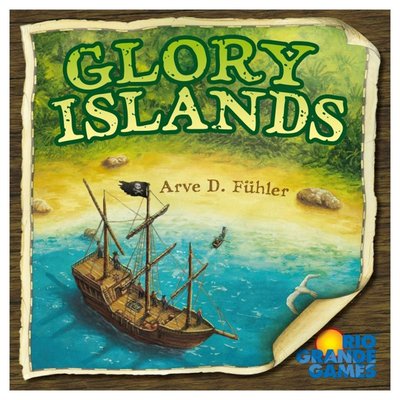
The way the action system works also reminded me of a rock paper scissors mechanic, which I absolutely loved. It brought to mind games like Pick Picnic and I really appreciate how clever the card play feels here. In fact, Three cards reminded me of some of my favorite card games from designers like Stefan Dora, Daryl Chow, and Bernd Eisenstein. If you enjoy thinky card games with clever decisions, mind games, and opportunities to outmaneuver your opponents, Three Cards is definitely worth a look. There's something special about those old-school German-style board games, and Glory Islands is a wonderful reminder of why I love them. Glory Islands is a pirate-themed family game set in the Caribbean in 1660 where players take on the roles of rival pirate captains competing to become the greatest pirate of them all.
The game features mechanics such as area majority, hand management, movement points, race, set collection, and simultaneous action selection. It was designed by Rüdiger Dorn, illustrated by Harald Lieske, and published by Rio Grande Games in 2022. Throughout the game, players will sail their ships around the islands, strategically placing their pirates to claim valuable spaces, collect treasures and barrels, and earn glory points. The main gameplay revolves around simultaneous card selection and hand management, with players choosing sailing cards that determine turn order, how far their ships can move, and where they can place their pirates on the board.
Each card comes with different movement values, placement limits, and special abilities, giving players plenty to think about when deciding which card to play and when. Since each card can only be used once before returning to your hand, timing your moves and managing your cards becomes an important part of the game. As players make their way around the islands, they'll compete for area majorities with those who have the most pirates on a fully occupied island, earning additional glory. There are also several other ways to score points, including occupying pirate fields, collecting different sets of treasures, and making the most of special spaces along the sailing route.
The race continues until the pirate ship completes the route around the islands, triggering the end of the game. After final scoring, the player who has accumulated the most glory is crowned the king of the pirates. Overall, Glory Islands is a super fun family game that I've thoroughly enjoyed playing. It's a genuine hidden gem that brings back that old-school German board game feel with plenty of player interaction, competition, and meaningful decisions throughout. If you enjoy games where everyone is involved, constantly competing for spaces and trying to outsmart one another, then Glory Islands is an absolutely fantastic game that deserves a lot more attention.
A Lifetime in 15 Minutes. Life is full of choices, unexpected encounters, and memorable experiences. But can you put together a life story worth remembering? Life Express is a card drafting and tableau building game featuring mechanics such as closed drafting, hand management, pattern building, and end game bonuses. Designed by Sai Hui H. Young, illustrated by Chu Hui Lin and Era Sotuya, and published by So So Studio in 2025. In Life Express, players set out to recreate their life stories by selecting and playing different experience cards to build timelines in front of them.
The experience cards represent different stages of life, ranging from one to seven, and must be played in ascending order from left to right. Each card features either an icon or a scoring opportunity that can help players earn points at the end of the game. Players can also branch off from their main timeline by using cards with linked symbols, allowing them to create new timelines for other characters they've encountered. Once a player plays an experience card with a value of seven, they must place a life end marker on it, marking the end of that character's timeline. There are a number of life end markers available equal to the number of players, and once the last marker has been taken, the game end is triggered.
Players finish the current round before calculating their final scores across their main timeline and any additional character timelines they've created. The player with the highest total score wins. Overall, Life Express is a fun, quick, and snappy game that I've really enjoyed. There's a surprising amount of depth and interesting decisions packed into such a small game, making it a great option if you enjoy card drafting and tableau building with a thinky twist. A lane battler for up to five players, a whole lot of mind games and interesting decisions throughout. How is this one flying under the radar? Shing Ling Hegemony is a lane battling card game featuring area majority, take that, and turn order stat based mechanics.
Designed by Ag Yu, illustrated by Painter Ming, and published by Dog Bark Train, TBT, in 2025. In Shing Ling Hegemony, players take on the roles of five rival factions competing for control of the sacred sites scattered throughout the realm of Starland. Players will compete for dominance across these different locations using their heroes, their unique abilities, and their combined strength to out maneuver their rivals. The game is played over three rounds, with each round consisting of three turns. Players can choose from five different factions. Each faction has an identical set of 18 hero cards in terms of power values and abilities.
These cards are divided into three sets of six cards with each set corresponding to one of the three rounds. Each set contains six hero cards with power values ranging from 1 to 6 and players can only use the cards belonging to the current round. All sacred site cards begin with their higher total value side face up. During each turn, players select two hero cards from their current round set and place them beneath the sacred site of their choice. However, there are a few restrictions to keep in mind. Players cannot place cards at the same sacred site more than once during a round. They must also use a different card placement pattern on each of their three turns.
Once everyone has played all six hero cards, the round moves into the resolution phase. Each sacred site is resolved from left to right and from top to bottom. Players are then ranked according to their power, earning prestige points based on their position and the sacred site scoring orientation. After the third and final round has been resolved, the player with the highest accumulated prestige total is crowned the new Shing Ling Wang and wins the game. Overall, Shing Ling Hegemony is a fantastic little hidden gem that I've thoroughly enjoyed playing. I honestly can't believe this game isn't more popular. I absolutely love discovering lesser known games that manage to pack such a punch. If you enjoy lane battlers with plenty of player interaction, bluffing, and mind games, I definitely recommend giving this one a play.
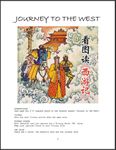
A A adventure comes to the table. What if one of the greatest stories ever told could be experienced around a board game table? Journey to the West is one of the four great classical novels of Chinese literature. It tells the story of a Buddhist monk, Tang Sanzang, who embarks on a journey to India to retrieve sacred Buddhist scriptures. Along the way, he is joined by three companions, the Monkey King, Sun Wukong, Zhu Bajie, and Sha Wujing. Filled with adventure, mythology, and humor, Journey to the West has become one of the most influential stories in Chinese literature and has inspired countless books, films, television series, and games around the world. Inspired by the classic novel, Journey to the West is a cooperative storytelling adventure game where players take on the roles of one of the four main characters and relive the adventures of the classic Chinese novel.
The game is divided into six unique chapters, each featuring its own storyline, objectives, and a powerful demon or group of demons that serve as the final boss encounter. While each scenario has slightly different objectives, the overall goal remains the same. Progress through the story by completing the required plot objectives before confronting and defeating the boss at the end of the chapter. Players will usually lose if the entire game board becomes filled with terrain cards. I thoroughly enjoyed all of my playthroughs of Journey to the West. Playing through all six chapters, trying each of the four characters, exploring the different adventure cards, and experiencing the various difficulty levels took a considerable amount of time, but in the best possible way. The amount of content packed into the box is impressive, and the replayability is certainly there. What I appreciated most is how faithful the game captures the spirit of the novel. You gradually learn about the characters, follow the story as it unfolds, and experience many of the challenges they face along the journey.
Rather than simply borrowing the setting, the game transforms the novel into a fun, interactive adventure while remaining engaging from beginning to end. Overall, Journey to the West truly exceeded my expectations. It successfully combines cooperative gameplay, storytelling, and meaningful decision making into an experience that feels both thematic and immersive. If you're a fan of cooperative adventure games or story driven board games, this is definitely one worth checking out. Whether you're already a fan of the classic novel or discovering it for the first time, Journey to the West offers a more memorable way to experience one of the greatest stories ever told. Oh my god, this is tricky. How hard can it be to put nine planets in the right order?
Well, when they're all face down and you can only say oh my god, things get complicated. Syzygy is a cooperative deduction game designed by Asuka with illustrations by Harra Kellab, published by With Tomorrow in collaboration with Emperor S4. In Syzygy, players take on the role of gods working together to restore balance to the universe by arranging the planets in ascending or descending numerical order. The word Syzygy refers to an alignment of three or more celestial bodies in a gravitational system, which ties directly into the game's central objective. There are nine planet cards numbered one to nine. Shuffle them and place them face down in a row in a random order.
Each player also receives four god chips and a player summary card, all in the same player color. Choose a starting player at random and play proceeds clockwise. The game ends once all players have used all four of their god chips. On your turn, you can either try to move a planet card into the correct numerical order or pass. If you choose to move a planet, secretly look at one of the face down planet cards, then return it to the row in a different position. The must be placed between two other cards, so you cannot place it at either end of the row or leave it in its original position. Afterward, place your lowest-valued god ship on that planet card.
You cannot select a planet card that already has one of your own god ships on it. Whenever you look at a card, you must say, "Oh my god," in whatever tone or emotion you like. Aside from this phrase, no other communication is allowed. If you decide to pass, place your lowest-valued god ship on your player summary card instead. The goal is to arrange all nine planet cards in either ascending or descending numerical order. Once everyone has used all their god ships, flip over the planet cards and check their order. If the numbers are arranged correctly in either direction, everyone wins. Otherwise, the gods have failed to restore balance to the universe.
Overall, Susaji is a light, gateway-level introduction to cooperative deduction games. With its quick playtime, simple rules, and occasional funny moments, it's an interesting option for players looking for a short cooperative challenge. A love letter to tactical RPGs. If you love tactical RPGs, choosing your characters and outsmarting your opponent, then Intelligor Ascension to the Throne might be worth checking out. Intelligor Ascension to the Throne is an abstract strategy war game featuring mechanics such as dice rolling, grid movement, open drafting, and possibly team-based game.
Designed by Anton Shukin, illustrated by Marina Vasutina, and published by Remarkable Games in 2026. The story begins after the Night of Royal Tears, when all 11 great kings and their crown princes were poisoned. Two hidden twin princess survived. Growing up far from the palace alongside other children, whose identities were also kept secret. Now, the rightful heirs and other hopeful contenders are racing to claim the silver throne, recruiting warriors and battling rival groups along the way. In IntelliWar Ascension to the Throne, players take on the roles of the characters from the story and compete to claim the silver throne.
At the beginning of the game, each player drafts six unique units, including one prince and five other characters, then places their corresponding tokens on their side of the board. Each unit has its own card, showing how far it can move, how strong its attacks are, its special ability, health, and experience. Players take alternating turns, with each player activating two different units by placing their activation tokens on the corresponding character cards. Each activated unit can perform up to two different actions, move, attack, or use its special ability. Combat is resolved by rolling dice, with the initial white dice representing the weakest attacks. The different dice feature blank faces, half attacks, full attacks, and one and a half attacks.
To inflict damage, players must obtain at least one full attack, combining two half attacks when necessary. As units gain experience, they can upgrade their dice to become stronger. The objective is to eliminate the opposing prince or defeat every enemy unit except the prince. The first player to achieve either victory condition immediately wins the game. Overall, IntelliWar Ascension to the Throne is a nice game and a great homage to the tactical RPG genre. If you enjoy choosing your characters, making clever moves, and trying to outmaneuver your opponent, this one might be right up your alley.
Well, that's it for today. Thank you so much for watching, and I hope you've enjoyed it. Don't forget to like the video and subscribe to the channel for more hidden gems just like these.