Cities of Venus Preview: Many V-Nauts died to bring you this information
Games in This Video
1 game is featured in this video — it unlocks as you watch.
Transcript
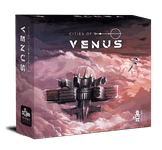
this episode of brains on games will preview a tableau building game about colonizing Venus welcome to brains on games I'm Dr Brian McDonald in this episode we are going to talk about a game that's all about building cities in the clouds on Venus it's a game that was sent to me very recently and that's coming to Kickstarter very soon so I will put the campaign information in the show notes of the video it's a game called cities of Venus this is a game for between two and four players now the box says age 14 and up but I think that the rules are simple enough that the younger kids can figure this one out and it's a game that plays in about 15 minutes for per player so you're going to be playing in about 30 to 60 minutes let's take a deeper look at cities of Venus cities of Venus is a light to medium strategy game where a lot of what you're doing is drafting cards that you're going to slot into your City Board and you're going to earn victory points according to the upgrades that you build into your city you'll earn victory points by mining minerals and you'll earn victory points through the population that's remaining on your board at the end of the game so it is a game about earning the most points and you're doing that by drafting cards and improving your player board now this is a prototype so of course the components are going to change I know that there
are some improvements in the work and that's that's going to include a little mining bot a 3D printed mining bot where you can place your mining die in a little meeple inside but they've got these beautiful dice that kind of match this neoprene mat that's going to guide where you're placing the cards and you've got wow oh you've got a giant rocket that's where you keep your v-nots they're not astronauts they're v-nuts because they're going to Venus so you've got all of your v-nots stored in there and then you've got these very clever dual layer player boards now each player is going to have one of these and they're going to be placing v-nots on it as as they play the game and as I said you're drafting cards and you're slotting them into slots on this board but the board is clever I know I thought when I was reading the rules well you're going to knock all of your v-nots around when you try to slot these cards in but what they did was they put a little cardboard underneath the v-nots with slots in it so when I slide my card in there are windows that show everything that you need to see the number of victory points the number of v-nots that can go in that space on your board and any symbology that need that would show up on the card but it's not knocking these v-nots over the v-nots aren't getting in the way because they have this other little piece underneath now on the prototype these pieces were a little bit bendy and it was a little bit touchy to slot the cards in but I understand that that's something that's going to improve in the final version of the game you start every round of cities
of Venus like I said this is a card drafting game but you're going to start with a cloud drop so these canisters are going to come from Earth you may not be able to see Earth on this mat but there's Earth on one side there's Venus on the other any carts that don't get drafted are going to get discarded this is your discard pile over here on the other side now often you're going to get a card that has a little yellow triangle on it that's an event symbol and the events are almost always bad for your v-nots so usually you're going to lose some population from your board because of a disease or what have you so here you lose minus two and they can come from anywhere on your board that's a generic v-not picture sometimes you'll get cards well sometimes there's a plus two sometimes there's not going to be any population growth sometimes it's going to cancel out the Cloud drop so there are some negative events that are going to happen and you need to plan ahead to make sure that you have v-nots that are spread out through your player board to allow you to pay whatever that cost is because otherwise you have to pay extra v-nots for everyone that's not in the space where you need to discard them from once you've resolved those events the next thing that you have to do is discard one of the v-nots from The Shield area of your board the the corrosive rain on Venus depletes your Shields every turn you have to discard one of these guys so you want to make sure that you you place enough v-nots in the shield area so so that you can
protect yourself from needing to discard extra v-nuts if you run out over there and that's one of the things about the game that it took us a minute to wrap our heads around these guys aren't meeples they're not workers necessarily that you're placing this is really your currency your spending these guys they're sacrificing themselves in order to go mining or or to protect your Colony using those Shields once you've discarded somebody from the shields then you get to grow your population that's based on the number of Meatballs that are in your Air Supply and in the the food section of your board then you can decide if you want to go mining if you happen to have a v-not over here in the mining section you can go you can you can discard that meeple because mining is dangerous so you're going to lose him and then you roll a die and that's the number of minerals that you're going to get minerals are important in this game because the they're going to give you victory points at the end of the game often you need to spend them to grow your population by an extra meeple or two to buy some of those Cloud drop canisters that are going to be coming through the neoprene mat here as you play through the game once you've done those City actions then the drafting can begin I'll move the player board here out of the way and then you're going to pay a certain number of v-nots and possibly a certain number of crystals in order to grab the cards that are here you can grab one without paying and then put it in later we won't go into too
much detail about that but if I wanted to maybe upgrade my Shields I would discard a meeple I don't know if you'll be able to see these symbols discard a meeple from the mechanical area from food and from power and once and one Crystal and once I've done that I can slot this into my shield space that's going to increase the number of meeples that my shield area of the board can hold up to seven so some of the cards also have Victory Point markers on them so at the end of the game if I have this one on my board this one's going to give me one extra Victory point and the victory points are of course important as you're going through the game you may also decide that you want to place meeples here in the space station that orbits above Venus the the international Innovation station this is this gives you a clue this is also your cheat sheet where it's going to tell you what the phases are of each turn but once you put eight meeples on here you can turn them in to draft one of these Innovation cards from the bottom and these can be pretty powerful uh and and they vary each game so they're randomly assigned you might get an increase in population or or you might have shields that don't deplete so there are a number of of good upgrades here this one is a great one I thought it limits the population of your mechanics area but anytime you'd have to discard a v-not from that spot on your board you don't have to discard it it's free now it is an interesting choice because you have to sacrifice eight of
your v-nots in order to get one of those Innovations and the v-nots are also worth victory points at the end of the game so you're giving up some victory points to but you're getting something in return and it is kind of an interesting push and pull eventually you're going to deplete this stack of cards it's going to get close to the bottom and somewhere in the bottom third of that deck is going there's a number three on the back of the card is going to be an earth card once you hit the earth card that's going to be the end of the game The Last Round you'll finish everything up and then you'll count up those victory points to decide who wins now what skills are you working on when you play a game like cities of Venus well you are budgeting those meeples those v-nots in order to to spend to make sure that events don't cause you to lose extra v-nuts to place them in areas where your population is going to grow as large as possible you're going to be deciding whether you want to trade those meeples for the potential to get some minerals that also earn you points at the end you're trading meeples to draft the cards so you really are budgeting and you may need to plan ahead like I said to mitigate the effects of those events sometimes you yeah we found ourselves sometimes kind of hoping that we get lucky and the event wasn't going to affect a particular room where we were out of meeples if you are planning ahead if you are budgeting and counting up things in order to work towards a goal what are you doing of course those
are examples of the executive functioning skills those are skills that you need to work towards a goal and they're the skills that are involved in any strategy game especially when you get up to the medium and heavy levels you really have to focus and pay attention and be organized in your approach to the game so this is very much a game that's about the executive functions final thoughts about cities of Venus well this is a game where I mean the components are fun you've got that rocket ship you're going to have potentially a little robot that you can put your meeples into you've got player boards where you're slotting cards in and I think that those player boards are quite clever so the components are fun even in the Prototype the components were fun to work with I think once you wrap your head around the fact that your v-nots are actually the currency that you're spending a lot of the time in this game uh it's it's um you really are sacrificing those guys in order to build your colony it's a simple game to learn a simple game to teach other players it is quite straightforward but you are thinking ahead and and we found ourselves in the final rounds doing the math of If I sacrifice this meeple is that going to give me more victory points at the end of the game as the end of the game gets closer so it's uh it's very easy to learn uh and it's got those that Tableau building portion and your drafting cards to place into that Tableau so if those
are mechanisms that you like it's it's also replayable there's a big stack of these Cloud drop cards but you only use a certain number based on the number of players there's only a certain number of these that are going to be in each game there are also multiple different kinds of Innovations and only four are going to show up each game so those are determined randomly before you start playing so you don't really know what you're going to get so that certainly does add to the replayability and then finally I would say say that this is a game where it's it's got that very skinny rule book um which I didn't hold up before but it's got a very skinny rule book it's only a few pages of rules but but this the last part of the rule book is not even rules to the game it's about the scientific theories and Concepts that are involved here with the idea of colonizing Venus had I ever thought I mean in the news you see talk about colonizing Mars and going to the Moon not too many people are talking about Venus so it wasn't anything really that I had thought about before but here we've got the theories that are behind this idea that the atmosphere of Venus would allow balloons to float through the air and at a certain height that temperature is going to be optimal for humans but you've got the acid rain that's going to corrode everything anyway there's scientific theories at the end of the rule book and I always love when that happens it's not an educational game by any means but it certainly did get me thinking as I read
through those rules and and looked at those theories and information about Venus at the end um are there downsides though to cities of Venus like I said you've got great components you've got those mechanisms of drafting and Tableau building with with clever with a clever player board you've got replayability because of all of the innovations that that might come up in the game are there downsides well one thing and I'm I'm pretty sure this is something that will get addressed through the campaign one thing that we found was a bit of a hiccup as we played through was that there's no first player marker so you had to remember who the first player was now normally that wouldn't be anything that's challenging to do however there's so much at the beginning of each turn in the end of each turn that's sort of simultaneous because you're doing your own tableau that we'd have to think about okay well who gets to draft first when it comes to the cloud drops so it would be nice to have a first player token and just make it easy to keep track of that as the first player the opening player the first guy who gets to draft one of those Cloud drops you want to know who that is and you want to make it easy to figure that out the other thing is that it is not a game about player interaction there's no Take that mechanisms the events kind of are take that for everybody but there's no way that I can affect the other players Tableau I can't attack their colony in any way I can't
affect anything that they're doing the only interaction is by drafting the card that the other player might want so it is a game where you're all this is why you can play most of the most parts of your turn can be done simultaneously because it is a game where everybody's kind of building their own thing and you're competing to build the best thing but there's no player interaction and I know that's something that is important to some players and that in a nutshell is cities of Venus thanks so much to the folks over at 10 robot games for sending this game my way like I said earlier I will put information about the crowdfunding campaign in the show notes if you have any suggestions or comments you can leave them in the comment section below the video or you can email me at Brian brainsongames.ca brainsongames.ca is the website that's where future episodes will go the previous ones are up there already brains on games is the Twitter handle and the Facebook page and the Instagram feed so we're all over the place and if you enjoyed this video and you want to be notified of future ones you can head on over to YouTube and click that subscribe button thanks for joining me and hopefully I'll see you next time