/pic7066448.png)
Game Info
Year
2023
Players
2-4
Age
8+
Playtime
60 min
Complexity
2/5
Collection
Your Tier
Loading…
Mechanic profile
Not enough video data yet
Vibe profile
Not enough video data yet
Description
Set in 2222 players govern floating city-states in Venus clouds competing for survival after Earth communication is lost using worker placement and tableau building mechanics.
Featured Videos

Ask a Rules Question
All mentions
Browse transcript mentions, sentiments, pros/cons, mechanics, topics, quotes, and references.
Total mentions: 2
This page: 2
Sentiment:
pos 2 ·
mix 0 ·
neu 0 ·
neg 0
Showing 1–2 of 2
Video SI_tyk-uy6o
Tabletop Tolson Discussion at 0:02 sentiment: positive
video_pk 88768 · mention_pk 234769
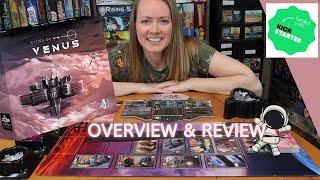
Click to watch at 0:02 · YouTube ↗
Overall sentiment (raw)
positive
Pros
- strong, cohesive sci-fi theme
- high variability due to modular drops, innovations, and events
- neoprene dual-layer mat and upgraded components praised
- replayability from changing card orders and innovations
- clear sense of progression and meaningful decisions each round
Cons
- some randomness from events and drops can feel punishing
- potentially fiddly setup and tracking of resources across rooms
- as with many euro-style games, balance and pacing can vary by player count
Thematic elements
- resource management and survival in a sci-fi habitat
- Venusian sky habitat with floating pods and a pressure-filled atmosphere
- procedural, event-driven with variable card draws and upgrades
Comparison games
none
Mechanics (from transcript analysis)
- Card-driven events and upgrades — cloud drops set up shipments of upgrades; events reveal penalties or challenges each round.
- End-game scoring via resources and room utilization — points accrue from v-nots, minerals, and room-related bonuses; strategic resource allocation affects final score.
- Population growth and upgrade customization — grow population by room demand and deploy enhancements via upgrade and innovation cards.
- Resource Management — manage v-nots, minerals, air, water, food, and shields to sustain population and operate rooms.
- Worker Placement — v-nots are assigned to rooms to perform tasks and activate card-driven effects.
- Worker/piece placement style actions — v-nots are assigned to rooms to perform tasks and activate card-driven effects.
Video topics + discussion points
No key topics recorded for this video.
Quotes (from this video)
- this neoprene mat is fantastic
- it's super fun, it's got great theme
- I love all of the Kickstarter expansions and upgrades and bonuses
- the game changes every time
References (from this video)
No references stored for this video.
Video hu7mXCrlwxk
Brains On Games Review at 0:24 sentiment: positive
video_pk 88771 · mention_pk 234798
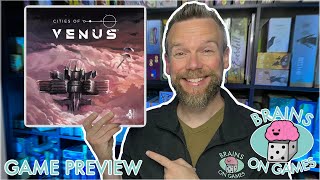
Click to watch at 0:24 · YouTube ↗
Overall sentiment (raw)
positive
Pros
- clever dual-layer player boards
- fun, thematic components (rocket, v-nots, neoprene mat)
- replayability due to multiple innovations and randomized cards
- simple to learn; approachable for players new to heavier games
- short play time (30-60 minutes for 2-4 players)
Cons
- hiccup: no first-player marker to track who drafts first
- low direct player interaction; some players may prefer more conflict
- prototype may have minor component orientation issues that are addressed in final version
Thematic elements
- city-building and resource management in a Venusian colony
- Venus, future colonization
- educational context with scientific theories about Venus
Comparison games
none
Mechanics (from transcript analysis)
- asynchronous turns and simultaneous draft — much of the action happens in parallel; minimal direct player interaction
- Card Drafting — draft cards from a deck and place them into your city tableau to gain resources and points
- dice-based mining — mining produces minerals using dice when you sacrifice a v-note to mine
- End Game Bonuses — when the earth card appears near the bottom of the deck, the game ends after final rounds
- end-game condition via earth card — when the earth card appears near the bottom of the deck, the game ends after final rounds
- event cards and negative effects — event symbols cause negative effects that may reduce population or resources
- Events — event symbols cause negative effects that may reduce population or resources
- innovation cards and innovations — innovation cards grant powerful bonuses but require sacrificing v-nots
- resource currency and management — v-nots function as currency used to deploy actions and upgrades; also serve VP at end
- Resource Management — v-nots function as currency used to deploy actions and upgrades; also serve VP at end
- Tableau Building — slot drafted cards into a personalized board with windows showing VP and required resources
Video topics + discussion points
No key topics recorded for this video.
Quotes (from this video)
- cities of Venus
- You are budgeting meeples to draft cards and grow your city
- the v-nots are your currency
- the components are fun
- it's simple to learn and teach
- the rule book is skinny but informative about Venus theories
References (from this video)
No references stored for this video.
Transcript Navigation
Showing 1–2 of 2