How Board Games Exude Theme - TCbH Podcast
Games in This Video
2 games are featured in this video — they unlock as you watch.
Transcript
Hello and welcome to the Cardboard Herald podcast. I am Eric, joined as always by my lovely uh traveling co-host. Traveling co-host Jack. Yes, you might notice Jack is not in his normal spot. he has decided to uh abandon hometown of Juno and go visit some family. So, he is recording from outside his normal his normal doicile. Um, but we're still here. We're still going to record the podcast. His audio at times could be funky, but we think it's going to be all right. We think it's going to be good. We trust in Discord. Hello and welcome to the Cardboard Herald podcast. I am Eric joined by Jack who is back in his actual house unlike the clip that was just shown where I absolutely jinxed it and we had very terrible audio for the entire thing.
This is our MIA culpa, you know. Yeah, this is sometimes things happen. we, you know, I there there there was maybe a recording of my audio onto Jack's audio and also my audio separately being recorded to my audio. So, I was just so loud and blown out and it was not good. And Jack's audio was just recorded the once and so in it was not as loud. It was uh you know maybe live, laugh, learn. There's a lot of hy jinks I go on to audio and video production and we the Eric tried his best to get around the fact that I was up staying with my brother. We planned on recording something. I tried a bunch of things. I thought I could get away with just my tablet up there rather than bringing up all my recording stuff. And then it just it was a whole thing. Um yeah, and I I think if if that had been the only thing we it still would have been fine, right? And I think if my I recorded the audio poorly, but your audio was like with your full setup, we might have been able to make it work. But but but but it's but it's a no. It's a no. So we're back and everything's a-ok. Okay. Here. We definitely didn't jinx it. We definitely
did jinx it. Um Oh, no. Now I feel like I'm jinxing this one. I think you got to stop saying jinx. I think you're you're just going to have to move on. Trust in the cosmos. Eric, what do we talk about last week where we didn't actually publish a podcast and are going to run through uh again like what what what are we talking about here? What what do we do on this podcast? We are chatting about uh how games exude theme. Um so this is a little bit of an expansion of a previous uh recording uh before Jack had his lovely conversation with uh threeinut games. Uh we were chatting about uh the best IPbased games and how those games exude theme. Uh and now we are at the point where we would like to chat about kind of like the broader concept of what so first of all what is a thematic game and how does a game tell you its story? Like how does a game exude that theme in the ways that different board games are able to and games that are particularly good at it and some games that we feel are particularly bad at it. Right. And I I saw when we asked this question uh some people trying to quibble a bit with the word exude. Uh, and I I've used
interchangeably here express uh theme, but I did think about it a little bit more because exude is usually uh radiation or you know like oozing or something escaping and you know like expressing theme uh to me would be the the the ways in which a game directly conveys theme. And so you know that is intentional. It is something that is manufactured which games are manufactured products. Um but I think uh exude uh as uh you had put it up on the channel is more the like ephemeral like just the the whole way in which you can have yourself thematically captured to feel that resonance when playing a game. There's a bunch of different ways that that can happen. Um, so we're going to get into expressing theme, exuding theme, radiating theme.
Uh, I don't know, a bunch of different theme. We we we got some thoughts. We had some thoughts last week. Maybe we have different thoughts this week, but you didn't get to hear last week, so you won't know what's original or not. Um, in the meantime, you've been playing any games, Eric? You've been pretty busy. You're getting ready for coming up to Juno, but uh, what's shaking? um coming up to Juno soon. So, less time for gaming as we just kind of get some things squared away for the travel. But I did get um I got to show some of my friends who are very much not not board game enthusiasts uh Things and Rings. Okay. I loved by the end of that was like by by I've played Things and Rings a handful of times. We've talked about it on the channel before. Um, that was, I would say, by far my most successful. Oh, this is a game that I'm playing for people who aren't like core gamers, right? Very successful. They were very, they enjoyed it a lot. And then we also played uh Hitster, which is a party game probably uh is a absolutely like a big mass market game. Sure. You have like different songs and you have to try to place the year it happened.
um like a deck of cards that is a QR code on the back and you scan it and it plays the song. Kind of sounds almost like timeline. Have you played timeline before? No. So timeline is kind of interesting in that it's defined information like you you have a uh set of cards and it you know you start by playing something and then someone else has to play a card in association with that in the correct slot in the timeline. Um, and so it might be like invention of the bicycle or the big bang, you know, uh, and those two are really easy to assemble, but eventually it gets more and more complex as you go because you might be like, well, steam engine versus cotton gin versus the uh, American civil rights movement, you know, like of course, you know, for some people this is going to be really easy depending on your area of expertise. There's a bunch of different themes for timeline. Uh, and it's very approachable uh, and enjoyable for anyone. You don't have to feel like you're good at board games. It's just kind of like a um, a trivia game, but it's also relying on some sort of nuance deduction skills. You know, you can reason. H, does this wedge in here? Does this wedge in here?
Um, it's not so much a game, you know, like in the end it almost becomes a cooperative endeavor because everyone's just like, "Oh, let's let's try to figure this out together." Um, and once you've played it a couple times, you pretty much know everything. So, you got to find a new audience to play it with. But, um, you know, I I have an appreciation for that kind of stuff. And yeah, Things and Rings, what's cool about that is it brings the subjective into it, right? you know, like it it has a lot of room for you to, you know, kind of associate uh certain meanings together when there's a lot of subjectivity, you know, like uh and that that creates the discussion and I think that is what's going to make or break that game for a lot of people. Some people want literal finite things. some people are cool with like well technically maybe kind of in a way this uh this fits into this category. Yeah, I think that was the they they enjoyed that there was a bit of subjectivity where they were like you know what do you consider a hose to be typically found outside?
Probably. Probably. Yeah, we're going to say yes. We're going to say yes on this one. Um, I think they they enjoyed the like slight flexibility and the fact that as the like knower, you are you kind of have a little bit of impetus in the game. You know, this just occurred to me. Uh but one of the things about things in rings that is very distinctive and I think attractive to um a casual audience is you're trying to put into these ven diagrams these cards which are just concepts into categories trying to understand what the relationship of these uh cards are but the visuals are clearly Dr. you know, like it is absolutely 100% that is the style that it's aping.
Now, I find that extremely endearing. Um, on the other hand, recently, uh, there was the game Settlers of Nav'oria. Uh, and there was a huge amount of controversy over that because it was uh an art style that absolutely was copying the style of Kyle Faren from Leader Games. Like it looked like someone was trying to make a Leader game but not Kyle Faren. And so I mean on one hand I would say Things and Rings is closer in visual style to Dr. Seuss than Explorers Settlers something of Novoria. I actually reviewed the game and I made comment on the the similarities. Um like there there's a more onetoone uh this is copying this exact uh style. I guess it's kind of different because Kyle Faren is an active illustrator in this hobby in this medium whereas Dr. Zeus is a dead guy uh who uh there's been time for his work to breathe and he wasn't making board games in the first place.
But it is interesting that that some things strike controversy, some don't. Uh and I'm going to have to parse that out a little bit more in my brain. Yeah. Well, in my mind, I think that it would make sense. I mean, I'm looking at Explorers of Neoria now and yeah, that's pretty that's pretty Kyle Farahesque. Um, right. I think the big difference for me at least is first of all, Dr. Seuss is not board game. Like that's it's a different medium entirely. And second of all, Kyle Faren is like an active artist making the product that you are selling. Totally. feels like you're trying to rip him off versus Things and Rings feels like an homage to Dr. Seuss because he's not like an active artist in the industry you're currently publishing in, right? Um, no one is going to accidentally think that uh Dr. Seuss Dr. Seuss illustrated this game. Um whereas you could argue that on Explorers of Neoria that um the the illustrator might capitalize a bit on people mistakenly thinking this is in line with Root or Fort. Um yeah, if you had not told me Kyle Faren didn't illustrate this, I I don't think I would know off rip that this is not Kyle Faren. Yeah, I think my assumption would be that this was Kyle Faren. Yeah. Uh
and you know, it's been dissected uh uh a plenty. Um speaking of new thoughts, what I have played, uh I gotten some Ohoy uh to the table with the new expansions. I should have a review up for that, not this coming week, but the following week. Um there's four new factions. There's like a deck of treasure cards that adds like a a new asymmetric power that each uh that that you can have. It's compatible with all the factions. You just draw two and pick one and it's just a little extra thing that you have uh for that game. Uh which in some ways I think is a cooler addition than the additional factions. Um and then an upgrade pack. I I think it's all great. Um, AOY is a temperamental game. Uh, and the expansions kind of don't address that.
It gives you more variety, but the game is still always reliant on having exactly one blue faction, exactly one yellow faction, and then at higher player counts, you can have a mix of these other ones. Um, but it's also got a lot of charm, uh, and a lot of quirkiness, and I love that it gets into weird board states. So, I I'm here for it. And, you know, like, uh, the the expansion materials are great. The Leviathan is ridiculously cool uh, as a faction or character. I I don't know. You're just one thing. You're a giant sea monster uh, who is playing Tetris across the seas. Uh, and it's great. I love it. We got nothing better to do other than play Tetris. Yeah. What are you going to do? Um and then other than that, uh I'm really excited uh because I have Emerald Echo, which is uh the latest Post Curious game. Um fans of this channel know that I've been uh a huge fan of Rita Orlov's work since uh The Tale of Or, which was Post Curious, his first game. Um, and I think this is one of the most exciting new directions uh that she's taken game design particularly in that all of the former games that uh she's published um or that she's taken part in uh even outside of that because I reviewed Pandora's Legacy have relied on digital
access to uh for verification of like clues and entering things to be able to move on to the next uh uh level. And this bakes into it a uh a clue system uh that's in these folders that's revealed as you go, but it's a narrative. It's a text exchange between two people who are also researching it. So, you're kind of taking the part of these two people, no matter how many players are playing the game, but you're you're trying to figure out how to solve this puzzle and you can use that text exchange to make sure that you're right on the right path. Or if you're able to solve it entirely, then you can just get to the end of that text exchange and verify that you did it correctly.
Now, this does take away u some of the the open-ended nature of these types of games, which is uh this is a very linear game. You are going to be playing it in sequential order. You don't just kind of have a bunch of materials and dive into it. So, there is a sacrifice in handling things this way. But having the clue system instead of feel like a um like a concession uh that it's like well I guess we got to get a clue. It now feels like the game is in on it with you. Like the narrative is tied intimately to the clue system and it's all in physical form. um and it's helping you along and weaving that all together I I think makes for a much more natural experience, a much more forgiving experience. Um and you don't have to rely on it entirely uh to to deal with some of these really um challenging puzzles. So I I'm having a great time with that one. Um, yeah, Emerald Echoes is a sequel to the Emerald Flame. Uh, so it's also cool to have like the first, you know, continuation of a story line that, uh, was in one of their other games.
Yeah, I need to first of all, I would like to play I would like to play one of Rita's games because she's cool and I would I I haven't played I haven't played a puzzle game like hers. Like I've done Escape Room in a Box, but that's it feels like this is a significant jump up from that that I would really like, but I just haven't got gotten my hands on one from her. I think um when you're up uh maybe I'll get you and cop uh you and copy get you and Mim a copy of The Light in the Mist, which I think is uh to me still my favorite of her games. I think it's deeply emotional uh and a very interesting game that uses tarot cards uh as the puzzle medium, but a lot of the tarot cards are um multiuse. So like it's not immediately apparent that this set of tarot cards goes together, but some of those may also be part of other puzzles. So it it it feels like you have a ton of information, but as soon as you start seeing certain patterns or things develop or you have recollection from things that you've done in the past, uh it all kind of weaves together. It's also probably the most sandboxy of all of our stuff, you know, like there is no linear uh working through. You just have that and you are working through it one step uh at a time
but in any order you choose. Um but uh yeah. Yeah, definitely worth checking out. With the tarot cards, is that like tied into the theme of the game? Yes. Um would you say it's like exuding its theme? I would say it is uh exuding, radiating, permeating. I mean it's mist. It's the light in the mist. Uh permeating through. Yeah, the light is the theme. The mist is the permeable barrier. Yes, I guess so. Pass to become a thematic game or that light is passing through. Um I don't know. Suddenly uh the speed of light is not real because I've been reading uh the the memories of earth past trilogy. So I uh let let's move on from the light in the mist. Let's talk about theme.
Yeah. So we are going to be talking about theme this week. And uh Jack here has a few different ways that he sees as like the way that a game can convey theme. Um and we're I I'm in agreement for the most part. I think there was like a slight wording issue that we went over last time um that uh we're going to stick with No, no, no. We're sticking with it. No, no. Don't delete that. I see you on the Google Docs. No, no, no, no. You know where it is. Okay. I was like, "Oh, man. I didn't change that. I I probably should have." Okay. Well, then then I I I'll go through these here. So, um, what I'm hoping we can do is just kind of talk about, um, different ways that designers can, uh, or publishers or anyone who's involved in a game, um, can, uh, convey theme that they're trying to display, uh, or that we receive it as the the audience that's playing a game.
Um, and broadly speaking, non-exhaustive. Uh, I broke it down into there's like visuals. Uh, so that's illustrations, that's artwork. Um, that could potentially even be uh the components. Um, tone. Uh, this is more, you know, like style than just the the illustrations itself. Uh, it could be the way that the game um uh describes itself in a rule book, all kinds of things. uh uh the the the tone of the experience overall. There's a lore which is, you know, like some games, most games in fact, will just straight up have a blurb. This is what's happening in this game, right? But that can be great or small. Some games, especially, you know, like a lot of campaign type games will have a substantial amount of lore. Um but almost every game will have some sort of this is what's happening. Um then I have resonant mechanisms. So you know like when you do something in a game and you recognize that this is a metaphor uh for something that's happening. This is an abstraction but when I do this I'm kind of understanding that this is representative of some other concept.
Um, so that's thematic resonance that's coming through in actually performing the actions of the game. And then logical reality. Th this is the big one here. Um, what did we reality? What did we end up settling on for logical reality? What what was this? Did I have an explanation that was satisfactory to you, Eric? Um I think logical reality the the way that we I think were we discussed it was that it is how does the world of the game like it makes sense that this happens because it is thematic like Yeah. So I I think a good example you got Sky Team on your shelf there. Yeah. in Sky Team. Um, you're in a plane, everyone understands that, uh, planes are a thing, and if they are breaking, then they're going to be going down. And so, the descent of the plane is uh the the altitude that's happening is giving you the sense of this impending conclusion of the game.
Um, so there's something that the game doesn't even really need to tell you that you as a layman still have a baseline understanding of. Um, and it is relying on that baseline understanding to give you a sense of dread, conclusion, uh, logic. Um, same thing with fundamental concepts. you know people understand gravity or when I do this you know this other thing happens. I think logical reality is just the laying relying on what a layman would understand to be the logical conclusion of something happening and then using that to springboard other thematic concepts off of. Yeah. like things that a person who has never played this game before will ask, "Wait, do I I need to make the plane land level though, right?" Like without having any mechanical reasoning behind it, they just it naturally makes sense that this would be the thing that happens. Um either because of the real world or because of the world of the game, right? and and that sense of fidelity um and may maybe that's uh what it is uh I think is slightly different than um just having resonant mechanisms
um resonant mechanisms I think are the metaphor where you're doing something and uh and you realize that this is supposed to be representative of a certain action and you're like oh okay that makes sense I I can feel this coming through. Whereas logical reality is that something happens in the game and that is the logical conclusion. You would expect that because you've already bought into the magical circle that is this game and that thing happened and then you you were like, "Oh, hell yeah. That's that makes so much sense." Of course. Uh I I think uh uh if we are wanting to go ahead and start dissecting some of these um another great example of this might be uh Forbidden Island where the the water is continuing to rise. Uh, and um, the the moment you see that the the tiles that have flipped over to their flooding side, if you don't do anything about them, then they start going away because they're completely inaccessible. They can no longer be shored up. That is such a brilliant moment where I've had tons of new gamers, casual gamers play that game and go like, "Oh, I get it." That suddenly underscores the pressure that
you have, the desperation, the the sense of excitement that you have a hand in these things happening. And it it it underscores that the same areas that have already come up are going to come up again and again and again. And that's not necessarily something that you're taking action on. That's just working with someone's understanding of how water works, how if flooding might work, and the the mental picture, the sense, the feeling is coming through beautifully. and they understand the game better even if they don't fully have a grasp on all the mechanics or the underpinnings that are making this happen. Yeah, totally. And I think that there are a ton of games that can do that that can do that well. Um, I think to kind of get started on the bigger discussion, I think we should start with visuals just cuz I feel like that's the easiest way for a game to exude its theme. I mean, I think that the the board and the components that you're interacting with are all like the easiest way to go, hey, this is the theme. We're going to be a bit in your face about it because this is like important or something, right?
And you know, like I I've heard before that uh like on a book, a book, the cover to a book is the first tonal promise that you're going to make to the uh reader. It's essentially an advertisement for the uh book. You don't necessarily have to have it as literal. Uh you are making a tonal promise on if you read this book, this is what's going to be the result of it. Now, you could dissect that uh with all kinds of book covers and whatnot, but uh board game covers uh are essentially trying to do the same thing. And there are a lot of games where the illustration uh on the box is a different artist than the uh illustrations within or the most prominent distinct illustration is going to be the box art. whereas the rest of the illustrations in the game are not nearly as um uh luxurious. Uh but it is making a tonal promise and that is the entry point for a lot of people of like what is the setting? What am I going to be doing? What type of game is this? You know, like um like Wingspan's got got the scissor tail fly catcher.
Yes. Gloria. Yes. Gloria. Gloria, this is a tail flyer. It also has other birds on the on the outsides of it, but like this is it's promising you, hey, this is a this is a game about birds and they're going to they are going to be beautifully illustrated. That's like illustrated. That's the big takeaway that you can get from the box. You kind of don't get any rule like any idea of how it like how difficult this game is going to be to learn or like what are the primary mechanics in this game. It is just this is a game about birds that are beautifully illustrated. Uh and you have the thing on the back and games also the box itself gives you it it gives you an idea of how difficult a game is going to be or like how crunchy a game is going to be. Not always but right like I'm not going to expect the same amount of difficulty from like witchcraft as I am from Spirit Island. Right. Well, I mean, and you know, like art uh can go a long way. Um, an art style can go a long way to convey that. I I think, you know, like Spirit Island is a a great example of I'm not sure that from the the box art itself, what you would expect from the game.
Yeah. And I think actually a lot of the illustrations in the game, they're are really inconsistent. It kind of reminds me of the early days of Magic where there were a lot of um they just needed art assets and so some of them weren't always going to be bangers, right? Uh and uh the same thing is true with uh Spirit Island. The spirits themselves are gorgeous and those are definitely tonal promises. the first time that you're going through, you're looking at them and the combination of the name of the spirit as well as the spirit themselves is already giving you so much to kind of imagine what uh what each of these spirits do. And almost always, you know, one of the great successes of Spirit Island's uh thematic um majesty, cuz I think it's one of the most thematic games that I've played is that uh almost always what you imagine that that spirit does is kind of being done, right? You know, like uh if you have some sort of timeshattering spirit that looks like an ethereal black hole nightmare in the sky and you're like, "Oh god, what is this thing?" And then you look at the cards and you're like, "Oh, it's exactly what I thought. I am breaking the very essence of time and space. It's black hole time guy." Yeah, black hole time
guy or big rock guy. Very defensive. Big rock guy is great for being defensive. Hungry hungry ocean sweeping in, ebbing in, ebbing out. Um, but I I think that um I I love uh when illustrations uh are played around with. Um especially a game that I think about a lot when it comes to game maps and game boards is Lords of Water Deep. um which has uh to me one of the best maps of any game. Uh and it got a lot of criticism when it came out as being you know themeless or painted on theme. And I think it's because there were a lot of people who were used to uh you know like high fantasy not being something integrated with Euro games whereas I think that it it beautifully uh integrates with um uh the theme and the worker placement mechanics. And a lot of that is that it uses a a gorgeous detailed city map that almost looks like Victorian London.
And you know, like that's trying to help convey. You're not the hero. You're not the paladin who's going out and doing these adventures. You are a, you know, like provincial governor. You're, you know, an underhanded uh, you know, like a uh, shadow uh, puppeteer in this city. You're, you know, like a the quest giver, not the quest doer. Exactly. Exactly. You're a tavern owner. You're a politician. And I think the map really does a good job of cementing the the distance from what typically would be thought of as, you know, like a Dungeons and Dragons type of game. It very much feels like an artifact of that world.
However, is trying to already just from the time that you lay that out give you a different perspective. Though though I would say the box art for Lords of Water Deep very much might give you the impression uh if you uh were doing a uh a Dungeons and Dragons uh type of thing and you were like Lords of Water Deep Dungeons and Dragons, you might think that you're the person going out on that quest. Uh so I I I could see the mistake there. This is This is maybe not. Yeah. Yeah. Yeah. You probably think you're doing quests. Um let's look at the back.
No, that also kind of looks like you're doing quests. I get gold and double dealing flow freely in the City of Splenders. That's a different game. City of Splenders and is an expansion. Um, you know, now that we're on Lords of Water Deep and it's on your shelf right now or in your hands right now, we need a second edition of this game, dog. Like, so much more could be done with this. I I don't know. This is just how much I know that all of the pieces in here have been completely disarranged now. But but it would be great if there was a second edition that just had better like storage storage. It'd be great. Yeah. Th this would be a game especially I'm kind of surprised with this feels like it would have been a very good slam dunk for when Honor Among Thieves came out. Mhm. To like re-release with with like some assets from that movie. But I guess there's not really too many quest givers in that movie. Yeah, not really. Um I don't know. I think they'll get back around to it sometime. Maybe they got they got they got other Whiz Kids has things to do. Yeah. Well, you know, like I I I think that would be the smartest thing.
Give Whiz Kids Lords of Water Deep rather than making it a Hasbro in-house production. Yeah. Um, before we move on from visuals, are there any games that you think have outstanding theme that just like to you immerses you completely or games where you think like you just a complete rejection of theme? Like looking at this game kind of takes me out of this and just reminds me how much it is that I'm playing a game instead of being immersed in it. Mhm. Uh, I have two I have two games that come to mind for both of these prompts. Uh, Treasure Island, I feel like just you put out you put out the game board and it looks like a treasure map. I think that just visually looks great.
The whole point of it is you're scouring this this land to try and find treasure. And I think that the board does a pretty good job. Uh, I think that the miniatures do a reasonably good job being like, "Oh, this is your character moving around the map." Um, I think there are parts of it that end up being a little bit underwhelming that that do feel very mechanicy where it's like the they have like the very big borders of like you can't put the treasure here, so we're going to put a really we're gonna put a red line around there so everybody knows you can't put treasure here. I don't really know a better way for them to have done that. Um, but I think that's a game that I think fits both those criteria where it's it is a game that I think of as visually it does really feel like the pirate game that it is and also it feels like it gave away a little bit for the mechanics. Um, and the other one that I think I is both is furnace.
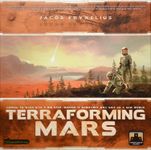
Um, yeah, that game being like the you are playing as a capitalist and I feel like it could have very easily have been a a very boring Euro that just is like you do this thing to get oil and it kind of is. I love it. But the artwork I feel like does a pretty good job just like showing like, oh, you're horribly polluting the world making this oil. Like it really leans into the you are a like turn of the century capitalist trying to pollute the world as much as possible in a way that visually it isn't like an appealing thing to look at but it's not trying to be like it definitely doesn't pop off the table like when I'm look if I see somebody playing it I'm not going to be like oo what's that game I'm going be like oh that's beige and boring uh but in a way that's thematic you Terraforming Mars uh is horrible um in that it looks like Disco Thanksgiving.
Uh it it does not capitalize on its edutainment type of sticktick, you know, like I originally when I was playing I was like are they going for like this, you know, 1995 edutainment early Mac software, something that would be in a school um type of look. but they don't even lean into that. And so it doesn't have a cohesive theme. The the components that you have are kind of ugly. The the illustrations are ugly. Um it doesn't feel very fitting uh to have all of these uh like um doctorred um photographs uh that are in it. like it it's using a lot of uh stock imagery, but it feels like it's also then been photoshopped to kind of be in space or, you know, whatever. But um and the UI, oh god, the UI just looks terrible. The UI is is horrible. Um and none of it feels cohesive. Uh, and so like when I'm playing that game, I'm already kind of disappointed in the game itself and I'm thinking about how I'm disappointed in the game. Uh, and its success is only dependent on just how revolutionary and great Terraforming Myers is as a game that it overcame uh, all of these uh, setbacks.
But, you know, from the moment that where I originally played it, going back to my original written review of Terraforming Mars way back in the day, uh, something that you were talking about with Furnace really made me think about this. Terraforming Mars to me, it thematically is like a depressing concept. like but it doesn't have the gull to to um interact with it in any meaningful way. You are capitalists, you know, like latestage capitalism capitalists who are undertaking the most Oh, I I have a I have a barking dog out there. um who are undertaking the grandest uh endeavor of humanity to terraform an entire other planet so that you can have habitable ecosystem for humanity and yet you're doing it so you can get profit to make profit and the game fails to engage in that in any meaningful way. Mhm. It just it really feels like a missed opportunity for them to have not like they have a card that's like colonizer camp.
You could have you could have leaned in hard into how like wretched this like the goal of your company is, right? and and and even if uh it's trying to not take a position on, you know, like um profiting off of minerals, off of, you know, like is there a philosophical conundrum of having like a a Bean Freeze dog on Mars? You know, exactly. Um, even if you're trying to distance yourself from taking any position on that, it doesn't even ask interesting questions about um the uh economics of doing this of you know like what medicine would look like for a society uh what a better government structure would look like. It just seems like an extrapolation of um of latestage capitalism and and trying to sell consumers on something. And yet it doesn't even ask interesting questions about that either. Like it doesn't lean into that as almost like a parody of itself. It it offers no room for uh you know something interesting.
Anyway, I just went on a big tyrate about that. A great great uh theme I think um that bridges us into the next one which is components. Uh but visuals is done really well is Pax Premiere by WHLY Gig Games. Um I think more than their other games uh PAX Premiere just does a fabulous job of having an art style uh in all of these illustrations uh that feels uh period appropriate. um to uh what it's trying to depict. Uh feels very well researched um and feels, you know, like tonally evocative like it it it makes you curious about the setting. It makes you curious about the the point in time.
Um they're they're very superbly done and it's very cohesive uh throughout the entire thing. And then that is underscored by just the components in general. Cloth map. Okay. Well, you know, clearly they're trying to convey, you know, something about, you know, that gives it a a gravitas or looks like it's from another time period. Totemic clay standes that represent your soldiers. They're not plastic dudes. You have just like a flat block that is like boom. This is either a road if it's on its side or if it's standing tall, it's a soldier. Um, it does such a good job at making you feel uh part of this period in history that uh the game is trying to wrestle with, which is the great game in um in Afghanistan and the Middle East and kind of the meddling that's happening by Russia and uh Britain and uh how the uh people from the area are also trying to wrestle with those forces to to potentially either come out on top, exploit it, or just survive it. Yeah.
And I think that the I agree that the components being the these big totemic pieces as you have so eloquently said I think is very helpful in abstracting the fact about like the the game is the soft and hard power that is being put into this uh battlefield. Not battlefield that's not the right word theater. this theater, this political theater that is being played, right? Um, and I think it almost looks like the the, you know, like when you'd watch an old war movie and you'd see someone like push some pieces or something. It does make it feel like you are strategists uh rather than directly controlling the troops or something. Exactly. And I think that's it. It it just fits so well with what that game is. Um, and I think components, that's kind of like our next subtopic here in visuals, but components just can go so far in helping you with with the helping helping everybody feel involved and engaged in the theme. Um, they give a tangibility, you know. Yeah, they give a tangibility. We have a whole podcast about topics which I uh will link to in one of the corners of the screen once I figure out how to do that
on YouTube. Uh I know that there's a way to do it. I've done it before. I always forget how to do it because I do it so infrequently. Cards, dog. It's all in the cards. It's all in the cards. But we'll have uh that podcast come out pop up here. Um, but I we've talked about components so much in that they are the thing that you interact with. Like they are the most immediate object you are interacting with to play this game, whatever that game is. And there's a lot of things that are important in conveying the theme uh that I think components can do a great job with. Like um you just mentioned Spirit Island. All of the like player pieces being made out of wood or something natural and all of the invader and blight pieces being made out of plastic is like that is a such a subtle but just perfect perfect way to exude the theme of you are the natural world fighting back against invaders.
Um, and there's a lot of different components that we've talked about and discussed in that podcast and others that do a great job, but um, it just it doesn't feel right to mention visuals without also talking about the components since they're just such a big part of it, right? Yeah. I I think another um good uh example of this would be uh in Ironwood uh which recently came out and uh that has two factions and uh both of the factions are the same peoples just split up culturally uh and one of the factions all of their components are heavy metal components.
Uh and then the other uh faction is all wood components. Um and that works thematically uh but it also you know like subtly uh intrinsically um starts separating you out from your opponent. Not only does it give you a good read on the table, but it gives you this feeling of uh the nimble flexibility of the woodland characters as opposed to the um stout and entrenched uh defensiveness of the metallic characters. Um that's underscored by even the weight of holding these different pieces. Uh which I I think is so cool. Yeah. And I think I still haven't played Ironwood.
Um, but I think that is a amazing way to demonstrate like first of all just right off the bat, which pieces are mine, which pieces are yours? Metal, mine, wood, yours. It without having to like really think about it, and I think that that's one of the things that components can do best in terms of exuding the theme, which is helping you recognize things without thinking about it. Right. And and this kind of weaves into tone, which really is the the bigger um next uh topic, you know, like tone can be, you know, the art style. Uh but it can also be expressed in other things. And like that to me is, you know, a tonal element. Um it's giving you uh a certain feeling just by manipulating uh the components, just by looking at it.
There's a certain identity, a difference. Um, but tone can be so much and is probably the most abstract or nebulous of of all of these. Um, I I think probably um more nebulous than logical reality, I think. So, yeah, I think logical reality there there's there's a nugget in there that's hard to target. uh but it it's uh like the old uh uh you know I know it when I see it type of thing whereas tone is nebulous in that everything in theory is conveying tone one way or another right um but you know when I talk about tone really coming out in a game I'm thinking about uh say Mysterium you know like there are a lot of mechanics in Mysterium that are really gamey there are certain uh aspects uh that uh may contradict the theme even. Uh but just the the essence, the art style, the way cards look, um the certain components that you're given and the conceit of the game itself. you know that one player is a ghost and they are trying to uh communicate things about their murder to the other players by way of dreams and then getting them to to do something um
tonally all works together and uh while you can have a completely silly time playing uh Myrium because you got rounds to burn um you you still nonetheless uh I I think everyone kind of engages it in it at at like a thematic level like they they feel that this is trying to be like a ghost story that we are are taking part in. Yeah. And all of the artwork and the artwork, the components, the rule book, all of it feels like it is it is a tonally consist tonally consistent like it's taking the ghost aspect of it very seriously. It's not playing really anything for laughs like it is very much a we are all playing as oracles.
Uh and it it does that really well in a way that I think um it just I think the fact that it's consistent it comes through in everything it's doing um it works really well and Mysterium is a great game because I think all Mysterium Park does the exact like it's the same thing. it is still tonally consistent and you can tell that Mysterium Park is a continuation of that tone. Uh like they and it's neither here nor there, but I don't see Mysterium Park discussed much. People should get it. If you like Mysterium, Mysterium Park is just a more consolidated version. I think it's a better version. You should get it. You should check it out. I agree. Yeah, we we're in agreement here. We're in agreement here. But I think that that's I tone is one of the reasons, not to continue dunking on it, but Terraforming Mars, the tone is just kind of all over the place, which is the reason why the art style doesn't work.
Like the the visuals don't work because the tone it it doesn't have like a it doesn't feel like it has a very considered tone. This is what we're going with. It's not quite edutainment. It doesn't lean into like the oh, we're going to be silly capitalists, but we're going to take it seriously like Furnace does where it's like we Furnest is you are playing as capitalists. It acknowledges that. It leans into it. It's not playing it necessarily for laughs, but it is like tonally consistent, which I think is one of the reasons why Terraforming Mars doesn't work very well. You know, Terraforming Mars would have been served uh better if it had uh more consistently leaned into a tone, even if it weren't uh for last. for example, Hell Divers, uh the recent video game or um like a a great comparison uh to that would be uh Starship Troopers or um the the uh the Fallout series of video games.
Now, those are all um subversive uh satirical works. Uh, but when terrifying Mars has an expansion that's like Venus next, um, to me that's almost like the unstoppable hunger for humanity to consume all things in its solar system. So, there is a satirical element, but I'm not sure that the makers uh that Frixelius uh really saw any degree of humor uh in that. And had there been that kind of like, oh, we're bringing managed democracy to the rest of the galaxy, uh, that hell divers has or, you know, like um, uh, for for capitalism, any man would give his only begotten son to the stars or, you know, something like that. And we would I mean, goodbye, Syrian. Goodbye. Yeah, exactly. Uh I I think it it really could have had something more cohesive there. And it wouldn't even have to be, you know, like uh uh satirical. I think uh Ark Nova uh is a great example of a similar type of game that has a very consistent theme uh consistent tone. Uh it does play with some of the elements of uh conservation versus uh profit. Ultimately, those are two arms that need to work in concert.
Um, but are you putting all of your uh eggs in one basket versus the other? And the realization that you need to generate funds to be able to participate in conservation efforts. Um, and the the the photographs uh that are used uh I said that word kind of weird. Uh photographs. The photographs. Yes. Um I I think even those look a lot more consistent like yeah the UI is presented in a way the the how animals are portrayed how the the helpers are portrayed tonally way more like it it knows what it's going for and it's using all of its thematic strings that it can pull uh to work in concert with that overall theme.
Yeah, and I think Arc Nova does it is a game that I have noted here of it does a really great job in in telling its story. Like it does a good job in telling the story of your zoo that needs to needs to do conservation. Like you have to that needs to get some freaking pandas in it. Also needs to get some pandas in it. Dude, you're you're missing out on your pandas. in that petting zoo. Well, probably shouldn't have a panda in your petting zoo. They're probably safe to have in the petting zoo. Yeah, they're kind of idiots. Stick a bamboo. Yeah. To, you know, hand out some bamboo. Everybody dress up as a stick of bamboo. You'll just get climbed on.
Dude, I saw the pandas. We just got the pandas back in DC. I saw them. One of them came out. First thing it did climbed a very large tree, and I'm like, there's no way it's getting down from that safely. It's like you are in the most prec you sprinted from your safe door up a tree. You looked like you were about to fall three times. A branch you were standing on broke off and you had to climb up it. Yeah, it at a weird angle. It did. It was fine. It was fine. It did fall like at the end, but it fell just a little bit. just like I pan pandas may be they're not doing themselves any favors. They're not doing themselves any favors here. Uh yeah, put them in petting zoos. I don't know.
Maybe that'll make them smarter. Uh all right. This I think lore does kind of go hand inhand with tone because I think lore gives you the base to work with for your tone. And I think one it helps you your lore and like having that be very figured out and very present to the audience especially if it's a already existing IP helps inform the tone. Like I wouldn't expect a I wouldn't expect a Dune game to be like the subversive Fallout series like type shtick where you're like well we got conquered again here on Arachus. Such is life. I'm not expecting that to be like the theme of the game or the tone of the game. And it's different with games that have like very well established lore like Dune. any Dune game I I think has a pretty clear idea of what you're going to be doing. I think that the the lore has the ability to open up the door to whatever weird situation that your game finds itself in. Um speaking of pandas, uh Takanoko is a great example of a game where you know like if someone was like, "Okay, what are we doing in this game?" It's like, well, there's a panda and we're growing bamboo. Um, and the panda has to
eat the bamboo and we get points for doing it. Um, that doesn't really have any basis in reality where someone's like, "Okay, so the am I the panda?" Like, what's happening here? The theme does kind of fall apart if you pull on it too much. But to try and help with this, uh, because I imagine Antoine Baoza when he was making the game was like, "Well, I want a game where you're growing bamboo and it looks really cool." Um, the rule book is a comic book. Uh, and it establishes that the emperor of China gave as a gift to the emperor of Japan this panda. And uh the emperor of Japan assigned his gardener to grow bamboo for this panda uh but in such a beautiful way that it's also you know like a Japanese garden estate that you want it to uh flourish and look beautiful but the gardener is at contention with the panda who's just eating everything. And so just explaining that I think gives this kind of silly hijinks uh that are are about to happen that explain away everything that you would otherwise be like wait why am I doing this so what's happening um it it just gives it this poppy fun vibrant almost like Looney Tunes setup
vibe uh that's reinforced by the artwork it's reinforced by everything else in the game. Um, and you you wouldn't really think that Takanoko the Panda game needs to have some lore, but without that lore, I think uh it wouldn't have the structure uh to thrive in the way that it does. Um, and that's just an abstract panda game, you know, let alone uh you know, I'm wearing my Frost Haven shirt right now. You know, like we often associate lore with uh you know, big fantasy races and events and things that happened 10,000 years ago because everything in fantasy is descended from Papa Tolken saying this is how we are going to talk about ancient things that happened in our secondary world fiction. But lore can be the blurb on the back of a box that just helps someone have some sort of understanding for why am I doing what I'm doing beyond it's a game of checkers. Yeah. And I think that there's we we talked about it when we discussed this last time, but like the blurb in there's usually a blurb in the rule book on like the very first page that just gives a here is the world we're playing in. hears generally what you're doing.
Um, and I think the the biggest example we had was Clank, which I'm not going to get back out because we did it last time and I right I don't want to I want to do uh too many Groundhog Day things here, but I do think that one did a great job of letting you know, hey, you are dungeon delvers. You're going to go into this dungeon. You want to get the biggest treasure, but you want to get out before you get attacked by the dragon. Like just reading that blurb would tell you for the most part what your primary objective is and what your secondary objective is in this game. You need to get into the dungeon. You need to get out before you die. like that is I think I I think lore um especially on the the connotation of uh oneandone games, not campaign thematic storytelling games, but one and done games. um when you can describe what's going to happen in the game thematically and then the mechanics then have that sort of follow through that makes sense you know that that logical reality type of thing um that I think that's where lore can be greatly in service um I remember when I was working on a review for uh Lord's Water Deep,
which was a few years ago, but it was, you know, like meant to kind of be a retrospective on uh Lords of Water Deep. And I I wrestled with the idea that people thought of it when it released as a very unthematic game. Uh and to to demonstrate that I think it's actually a very thematic game. It's just a game type that's more abstract than a lot of other game types out there. Um, I described everything that happens of the game on a thematic basis and you have a pretty solid understanding of what that game is. You are politician like we already established or maybe a business owner or someone who is one of the political movers and shakers in this city and you are going to hire various uh heroes, attract them to complete quests that are going to further cement your influence over this city.
Eventually, you're going to own different establishments that'll give you res uh residual income. Uh you're going to uh compete over certain resources that become available. And your agents who are working on your behalf know that they're going to have to work around the efforts of the other agents who are also in this city. and you might end up having to do some underhanded things to force certain tasks upon your political rivals uh or to capitalize on other pillars of interest that you can through the cards that you play, your intrigue cards. And that alone I think is if someone was sitting down with you and was like, "Okay, what are we doing in this game?
You give them that, then everything else just falls together. Well, how do I make that happen? Yeah. And it becomes the mechanical underpinning. But as long as they have that one paragraph of text, they can refer to that in their brain as what what's driving them to do, you know, the the lore is the why other than winning, of course. You know, you're trying to win. And I think that is a really good segue into resonant mechanisms because that to me is the the why and the lore helps inform you of like, oh, this is my bigger overarching goal, but it also, I feel like, helps make sense of these resonant mechanisms or things that you're doing that are like, oh, okay, this is meant to represent this in the lore. Oh, okay. So, like when I'm playing Sky Team, this is me communicating to air traffic control that I need that plane out of the way, right? And it like can help take some of these things that are like a little bit abstract like for for such for Sky Team when you are calling air traffic control and saying, "Hey, I need that plane taken out of the way."
We sometimes think of it as we've shot the planes out of the air. At least John John thinks about it that way. John's like, "No, we're calling in hits on these planes." Um, but I think for people who are new to the game, I can see why you might think you are shooting these planes out of the air because you just are calling you like place your dice somewhere and you pick up the plane and it's no longer there. you've shot that plane down. Uh, which is not what's happening. And I think that the resonant mechanism of, oh wait, we're landing our plane. This mechanism is us confirming with air traffic control that we are going to be landing, right? Uh, more important now than ever when there's like two air traffic controllers in the entirety of the US. I have to take off from DCA here soon, next week.
Good luck. Um, to take another example of a game where I think it very unsuccessfully does this, uh, is Ticket to Ride. You know, Ticket to Ride is a great game. It's a very successful game, but I think the, uh, mechanisms are often at odd with what you're uh, attempting to accomplish or or the thematic conceit of the game. Um, there is lore. There's a blurb. You are trying to uh make it around the United States, hitting as much as you can in like this this like race which is before the end of the game, but none of that really feels like it comes through in the mechanics at all. Uh, and if you just brought your logical reality, you know, like I have trains, there are train systems, I'm establishing routes between different places in the United States or whatever ticket to ride setting that you have, it starts to betray itself because you're like, wait, so is this a route I have ownership of or can someone else use this route? Like, I I don't really understand what I'm doing. uh and the the mechanisms of you know I have to collect a certain number of cards that match the colors on this route like what makes this a blue route versus a pink route versus a green route none of that plays into a
thematic essence in the game at all. Uh, and so even though I like Ticket to Ride, I think one of the great failures of that game is that it it doesn't do anything interesting on a uh thematic sense uh with its story or how you play. The only thematic uh resonance that you get out of that game is through the the components, through the visuals, through the look. Um, you just have to be like, "Well, I like trains." And you you play with trains in this, but nothing about that game successfully makes you feel like you own trains, you're riding trains, you're having to contend with something unique about trains. Um, yeah. So, you know, like is the story that you're buying are you buying the routes or are you building the routes? You're not doing any of that. Yeah. The the story.
That's neither of what you're doing. No, I just play str. I don't You're the characters on the front. If you look at the front of the box, there are different characters uh who are like a kid, an old dude. Uh let me see here. Yeah. Um you're these different colors, though even that doesn't really come through. Uh those are the player colors and the idea is um okay the Wikipedia here game play based off of the format the original setup okay we have setup play scoring standalone versions accessories train pieces uh we have ticket to ride original I don't think anywhere on the Wikipedia which is a vast Wikipedia has anything to do with the theme of what this game is, which I think goes to show uh that that betrayal. But if you look at what the blurb is, ticket to ride. Um I'm going over here. Players collect. So again, it's a mechanical uh 15 minutes types of train cards. Uh the longer routes, the more points they earn. Continues the tradition. Blah blah blah. Becomes board games. Epitome of a gateway game. Do I have a ticket to ride rule book? I swear this isn't a fever dream that there is a
story to ticket to ride. It kind of sounds like it's it kind of sounds like it's a fever dream. I'm also I'm kind of just looking for the rule book right now just on board game. What do I literally have? On a blustery autumn evening, five old friends met in the back room of one of the city's oldest, most private clubs. Each had traveled a long distance from all corners of the world to meet on this very specific day, October 2nd, 1900. 28 years to the day that the London eccentric Phyious Fog accepted and then won a $20,000 bet that he could travel around the world in 80 days. When the story of fog triumphant blah blah blah group commemorated circa navigating blah blah blah each succeeding year they met to celebrate the anniversary and pay tribute and each year a new expedition always more difficult with a new wager was proposed. Now at the dawn of the century it was time for a new impossible journey. The stakes 1 million in a winner takes all competition. The objective to see which of them could travel by rail to the most cities in North America in just 7 days. the journey would begin immediately. So, why can I not drive on your rail? Like, why can I not go on your your road here? Why is an old friend Why is this child an old friend with these other old people?
I I I don't know. Um, point being, uh, this isn't necessarily like to criticize that, uh, Ticket to Ride is a failure of a game, but I honestly think by giving it that story, that lore, it it sets up a tonal promise that is undermined by the mechanics of the game. And so in talking about mechanical resonance, um, nothing about what you do even feels metaphorically linked to what the concept of the game is supposed to be. And that that betrayal or, you know, that that being at odds with itself prohibits you from feeling thematically immersed at all.
Yeah, I think that you could easily just re if this was just rethemed to be like your Rockefeller trying to buy as many train contracts as possible. That would make sense why you have ownership of this route. You bought the contract for this route. Mhm. Why is Why am I playing as a child adventuring the world in seven days? Does he have parents? Exactly. Is that Is that kid like is he a kid? Fog. Who is this? I'm a mandatory reporter. If this kid is just like cruising around on these tracks like he's going to duth. Let him go to Duth. Oh, that Duth is so not where Duth actually is. Like, oh man.
Uh that that's another thing. The moment you sit down with someone who knows some geography and they're playing uh Ticket to Ride, they're like, "Wait, what's what's going on here? Hold on. Wait, where is Duth? Wait, hold on. Now I'm like I really I did think Duth was there." I think the uh the anniversary edition, which I have, um makes a nod to that though. Uh in the map, it actually has like a sign that's a little tiny sign that says like here is the actual location of Yeah. Hey, that's that's just Minneapolis. Mhm. Yeah. Duth is just What is this? Yeah. Well, you know, it's all Listen, it already did it already did pretty good.
You know what? Tick did pretty okay, even without being tonal like having mechanisms that resonate with the theme and lore that it is trying to portray. Um, I think that there's a lot of games that we could point to as good examples of this. Um, I think the uh root I think does an amazing job of this where it is the mechanisms do a really good job uh extrapolating out and they make sense like tonally with you as the Woodland Alliance are like these scrappy upstarts that are trying to start a rebellion, right? Uh the Marquita are like very rigid because they are a formal power structure and you only have so many actions that you can do because you are like you have bureaucracy to contend with.
Then you have the eerie which is you know Rome uh which is falling and in constant turmoil because you know you have these desperates who are announcing this is the new uh decree of how things are happening. But when that decree falls apart, then they're just overturned by yet another leader uh and has that eb and flow. Yeah, Root is is a great example of how it tries to um paint a picture uh but then support it mechanically in a way that's both, you know, very interesting mechanically to play. you know, like the game itself is like, oh, I have my own sort of miniame, but you can see how that's informed and trying to be reflective of what the thematic pitch is for each faction. Um, uh, Game of Thrones, uh, does a great job of this with, uh, the, uh, the the action tokens that you put out face down and then everyone reveals, but then the order of, uh, resolution is kind of up to you. Um it it I think does a really good job of giving like a fog of war uh and then you start seeing what other people's capabilities are and having to take turns in operation and then having certain um uh elements of the game, certain powers uh that are contended with apart from the actual board state of the game. um that give
you decision-making process when it comes to breaking ties or or more information uh or even uh added combative uh benefits that feel very in tune with the lore of Game of Thrones, but um they also give you like tangible benefits that even if you were completely divorced of the game uh or divorced of the theme from it being an adaptation, I think you still would have this sense of like possessing this sword, you know, is representative of me being, you know, uh, charged with some sort of military uh, power. Uh, and I have some decisiveness in battle, but I also call upon additional resources. Uh, and that's a a soughtafter thing that's going to be an important thing for you to be able to rely on in the future.
Um, when you do something in a game and you're like, "Yes, I want to do this and it helps me better understand what the game is trying to say as a theme." That's when it's thematically resonant. Yeah. And I think one mechanism that I want to talk about because I think it also ties into logical reality. Um, and this is a game that we talked about quite a bit uh when we recorded this initially. Um, is Dune Imperium. And I think the the mechanic that I specifically want to talk about are the entry cards where it is the lore of the game is that these entry cards are like either political dirt you have on somebody or like some sort of soft power you have over another faction.
uh through the Benjamin leverage leverage leverage and I think the thing that works really well to help uh enunciate on the theme in a way where it's like these cards are helping reinforce the theme of the Benzerate are like these leverage they deal in secrets. um is that the intrigue cards can do a lot of different things and it's very difficult to tell exactly what these intrigue cards people have are. Uh and it's like you have no clue if that intrigue card is something that will let your opponent jump up with one of the factions or is it just swords? It might just be swords.
They might have like an army that you're not aware of, but maybe it's they can trade a certain amount of spice for something else or maybe it's an end ofame bonus. Like the fact that these entry cards have so many possibilities means that they they keep you secondg guessing in a way that fills out like the lore of these cards are leverage that you don't know what it is. You are going to get backstabbed by these cards. So, you know, like in in the story and in the game, the same thing is essentially happening. You as the player are looking at someone else who you know has been working with the Benzerate. You know that they have intrigue cards. So, you know that there are things there and that's causing you to hesitate and have to gamble based off of what you can tell from visible information about what you want to do when it comes to your relationship with that faction. And it could have dire consequences which could completely separate from the game be exactly something that's happening in the story where you know that you as an atrades or the house corino or whatever have to gamble with the fact that this opponent may have more information than you. Yeah. And they may have
resources that you don't have access to. uh and that unknown is going to be a critical part of the equation in how you interact with that faction. So there's that resonance that logical reality. You you expect that someone who has worked with the Benzarite, if you have any understanding of Dune whatsoever, that they're going to have that sort of political leverage in their back pocket. Yeah. So yeah, that that's a that's a great example. Yeah. the just the concept of with e even within the world of the story if you've if you have formed a soft alliance or an alliance with the Ben Jesuit which is is maybe a little bit visible more visible than like in the world of Dune you you would know like house of trades wouldn't necessarily know exactly how much leverage somebody has gained with the binar but just right this person is dealings to the benes it. Things are going to go down when those cards get played. Like those cards are going to be influential. At the same time though, because they could have easily made those just like I I don't think that it would have been great, but they could have easily made those things that just give you swords for combat. And they could have easily made those be things that just give you like bumps in different political factions or like a discount on something, right? The fact that it is like these cards really
truly interact with so many different aspects of the game means that you you cannot know what your opponents have based in the cards. And I think that to me is like the really big this is it works one because of the lore of the game and two because of the implementation the mechanics resonate really well with the story and also just logically it makes sense that within this world that you don't know what the bind to Jesuit have planned. So I I think in the end, you know, like the the things that we wanted to explore with this episode was just that there are a lot of different levers that uh game creators can pull to convey certain things about a game that make it more thematic. and theme. Even though there are going to be some hardcore people out there who are like, I don't care about the theme at all of a game, I I think for the most part, theme is going to be the access point uh in which uh a game is going to uh first uh get into someone's uh uh life. you know, they're going to hear about a game and they're going to get the thematic concept and go like, "Oh, that sounds like something that I want to play." And it's going to be the difference between someone liking a game and someone absolutely loving the
game. Um, clearly it's how a game is marketed. It's, you know, oftent times there's emotional connections to them. And these are just different ways that uh game creators uh can uh exude, can express theme. Um and then the ways that we as uh players, you know, can pick up on that stuff, can feel it, you know, why we like the things that we like. Um and sometimes why we reject uh things or games that overcome that. you know, we like them in spite of how poorly they do in one or more categories. Yeah, totally. Um, we posted asking about what is your favorite way a game exudes its theme. Uh, we have a couple comments that are just stating their favorite games that are thematic. Uh, so from Marius Milliocus, we have John Company.
Mhm. Yes. Another another whirly gig. Whirly gig typically I think does a really great job with theme. Uh they're a publisher that I think is of note as being good at that. Um QRLD.6608 uh said for me it's Twilight Struggle and probably Root. Uh we talked about Root. Uh when we discussed this comment last week uh I stated that I had not played Twilight Struggle. Um and you had mentioned you're not missing much. you would mention your favorite game, but that a lot of people do consider this like a very thematic game because of the era it came out.
It's it to me is one of the quintessential um historical games that uses the coin like structure. I don't know. It's not a counterinsurgency game. Uh, but the idea of you're playing events that are real world events that are action cards. Um, for my money, if you want a twoplayer war game that uses historical uh, lines to um, kind of represent more political theater and political war as opposed to literal, I'd just go for uh, Votes for Women. Uh, I think it's a a more modern implementation of the same thing. Twilight Struggle is incredibly influential.
It is thematic. I didn't love it. Um, the paper components, uh, I think I mentioned last week as well, the paper map that you unfolded, at least in the version that I played, I remember thinking like, man, this is just like unfolding a map that you'd buy at a gas station or something. Uh but um you know uh the leading the world to uh uh terrifying ends uh in in a cold war struggle uh is really what it's trying to depict and I think it does a good job at doing that. Yeah. Um from Greg White, we said it needs to come from the rules. Sure, the visuals help but the rules need to evoke the theme. Um, I think that we're both in agreement on that. I mean, I think that's a lot of what we were talking about with the resonant mechanisms, the logical reality, and honestly, even the tone to me where it's like the the game has to have like a clear vision of what it's trying to tell the players. And so even the visuals help aid that, but the the mechanics of the game have to supplement or like create the theme that you're building, right?
Um, Blue Se Pearl uh listed off two specific mechanics that they uh enjoy uh that do feel thematic. um which is in Nemesis. I love how the noise markers in event deck escalate the plot with the more and more things going wrong and it usually ends up being a minute before an alien pops out. Granted, some early bad dice rolls can make that go sideways. And this is the thing I am always in disbelief that anybody survived alien like like I I understand. What do you got against Ellen Ripley? It is nothing against Ellen Ripley. It is just that the they make this monster to be so powerful and like able to kill people.
So like the monster has like no a like it has no urgency of man I really got to kill these people. I just think that it makes it makes sense that things would go bad very quickly. Uh is my thought. But then I think things did go bad. Yeah things she made it fine. She made it fine. She had no trauma. She's fine. Uh in the other uh specific mechanic that Blue Se Pearl uh mentioned is in Spirit Island. I love how as you get stronger, you get you get slower at reacting to invader threats. You start with two lands and impacted by invaders which grows to three lands playing with an adversary and then four lands by the end of the game. The balance is that you have more powers to wipe them off the island. So, just like as your spirit grows in power, you do have more things that you have to react to, but also you get powers that allow you to react in more powerful ways. Um, yep, totally agree. I think that especially with Spirit Island, that is a good thematic representation of the threat never like just it feels like it never stops and you have to have so many more things that you there are more teeny tiny fires that you have to react to. So sometimes you get slower at reacting to all of the fires, but you get better and better fire extinguishers hopefully.
Um, and then the last comment is from F. Brock, who said, "Ug, this is such a nice question." Thank you. I pride myself on asking good questions. Uh, I could chat about this for hours. There's exuding theme in itself, and then there's what I'm tentively calling thematic cohesion, which is when the theme not only comes in strongly, but also reinforces the mechanics and rules. And I think that's pretty much what we're talking about with tonal consistency. Uh thematic cohesion and tonal consistency I think is is one and the same. Um for example, lots of games use the pick one card then pass the others to the next player and repeat with the cards the other player passed on to you style of closed drafting. But only Sushi Go has the thematic cohesion of this mechanic that is afforded by being thematically about picking sushi from a conveyor belt restaurant.
Um, and I fully agree. I think Sushi Go is a great example of the mechanic of the closed drafting where you're passing the cards works really well with the theme of you can only grab what sushi is currently available to you and you can only choose one because is is going. But you things will eventually loop back around to you hopefully. Um, God, I just want to eat some sushi right now. Dude, I could crush some sushi. But just but not the seafood sushi. I don't like seafood sushi. I don't like seafood. Oh, okay. It's a sad thing. It's very sad. No wonder you moved away from Alaska. Yeah. I have only lived in places with great seafood and I don't like seafood. It's so sad. I lived in Florida, Boston, Alaska, Los Angeles. Now I'm in DC, which is like crab. Crab is good here. I just don't like seafood. And it's I really I could crush some I'd crush some like rice balls with you. Yeah, you and me, we're gonna eat some jelly donuts.
We're gonna have a great time. Okay, sounds good. It's the Pokemon Pokemon reference when they were Americanizing one of the episodes of the anime calls like a rice nigiri or not [ __ ] uh but like a rice ball. He's like, I sure do love these jelly donuts. Perfect. Um that that you know uh Brock is a special guy. He's using his frying pan as a drying pan. I love Pokemon. Uh the my uh the to continue the comment that I was reading. Um my favorite example is Root. The entire game of Root is pretty much entirely made of this thematic cohesion. But my favorite example is the Marshall Law rule for the Woodland Alliance. It's a very specific, seemingly arbitrary rule that says the cost and cards to do an action is raised by one depending on the board state.
It's extremely easy to forget until you explain it thematically. The action you're taking is spreading sympathy for your factions goals in a non-militaristic manner. The cards you're spending are civilian supporters willing to band together to build that sympathy within the region. And the cost is raised by one if there are three or more warriors of an enemy faction in that region. Uh three is the maximum amount of warriors that can deal hits in a battle. So it's pretty ingrained in any root player that a region with three warriors has good warrior presence. It makes complete sense that you'd need extra support to make a region sympathetic to your faction's goals if there is already a significant military presence from an enemy faction in that region. The theme alone turns what would be an inscrable and arbitrary number tweaking rule into something that just makes complete and natural sense, contributes to world building, and makes you look at the board through the particular lens of your faction. It's perfect.
I mean, I agree. I think I can't argue with it. Yeah. You and I have already talked about Root and how we think that it does a very great job making I just played Root this week and I agree. Did you? I just played it. Uh yes, I I won. You can speak then. Okay. Yeah, I'm an authority. Uh I I I won uh as the birds played uh played the uh and um I I had an advantage. I was playing against two people who had played a learning game once before. Uh, and that learning game wasn't with me. They were playing uh with uh all new players. So, none of them really knew. So, it wasn't even like me shephering it along. They told me go hard. Uh, and I was like, I'll go medium. Um, it's a lot to gro. But point being, yes. I completely agree. It's very thematic and that game still rules. Yeah, I think that it's it just does such a great job of letting you tell a story using your your actions and your mechanics. Uh, and I think the theme of it for each each faction has a set of mechanics that just fits thematically in a way that re reaffirms the theme that it is trying to tell. Um, so yeah, we fully agree. Rude is definitely our uh a game
that we think very highly of, especially in terms of being a thematic game. Um, so thank you everyone for your comments. Uh if you have any thoughts about uh what we've talked about so far or if you would like to um suggest a theme uh for our podcast uh or if you want to just give us some questions that you have that are not related to any theme that we have going on. Uh, feel free to email us at cardboardherald@gmail.com or comment on this video if the platform you are on allows you to comment. So, if you're on YouTube or Spotify, uh, feel free to comment there. Uh, and let us know your thoughts about how you think games best exude ooze uh, represent theme uh, radiate radiate theme. Um, and thank you for tuning in. Thank you for being an awesome community. Um, I have been Eric with the Cardboard Herald, joined by Jack.