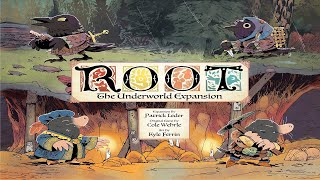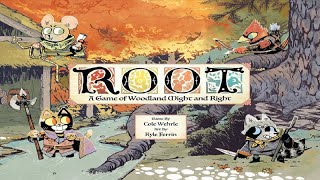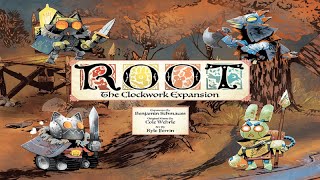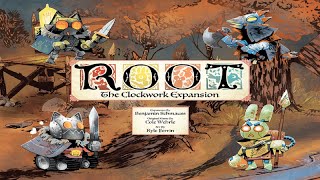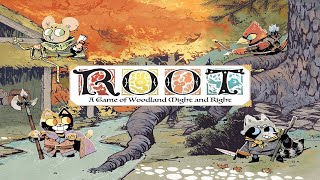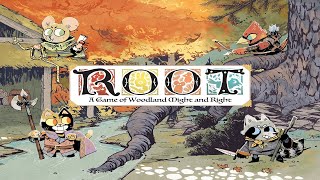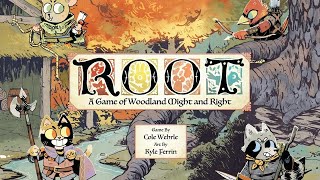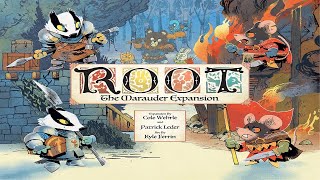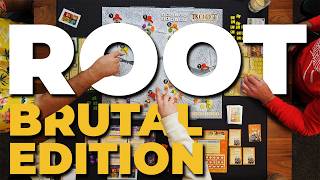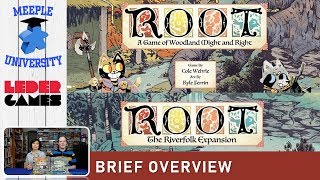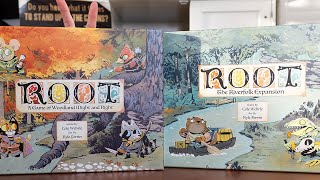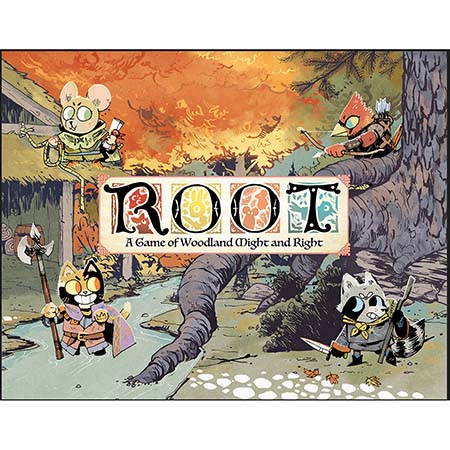
Find adventure in a marvelous asymmetric game. Root provides limitless replay value as you and your friends explore the unique factions all wanting to rule a fantastic forest kingdom.
Play as the:
Marquise de Cat: Dominate the woods, extracting its riches and policing its inhabitants.
Woodland Alliance: Gather supporters and coordinate revolts against the ruling regime.
Eyrie Dynasties: Regain control of the woods while keeping your squabbling court at bay.
Vagabond: Seek fame and fortune as you forge alliances and rivalries with the other players.
Each faction has its own play style and paths to victory, providing an immersive game experience you will want to play again and again.
Per Leder Games, Vendors may not advertise any of the following Leder Games products on the 'Leder Games MAPP List' at a price that is more than 20 percent below the MSRP. The Leder Games MAPP List is available at this link:
Leder Games MAPP List
The full MAPP Policy may be viewed here:
Full MAPP Policy
Mechanics (from transcript analysis)
Video topics + discussion points
Quotes (from this video)
- it's the meanest game in my top 10, no question
- there's just always something exciting to do on your turn
- it's an absolute hit
- it's the best social deduction experience I've ever had
- the shortest playing time
References (from this video)
Mechanics (from transcript analysis)
- area control with asymmetric factions — players control different factions with unique abilities and victory conditions.
- Asymmetric Mechanics — players control different factions with unique abilities and victory conditions.
Video topics + discussion points
Quotes (from this video)
- Trust us.
- Verify everything, trust nothing.
- The biggest lie board game companies tell might be the simplest. Trust us.
- You're buying version 1.0 that needs patches, but there's no disclaimer saying software may require updates.
- The app has potential for gamebreaking bugs, especially in stretch goal missions.
References (from this video)
- Heavy strategic depth with distinct factions
- Unique character abilities and artwork
- Cooperative variant adds variety
- Engaging when played in real time
- Aggressive player interaction can be off-putting for some
- Steep learning curve for new players
- Array
- Fantasy woodland realm
- Asymmetric faction-driven conflict
Mechanics (from transcript analysis)
- Area Control — Players compete for control of regions on a shared map using faction abilities.
- Asymmetric Mechanics — Multiple factions with unique abilities and win conditions create varied play experiences.
- Asymmetric play — Multiple factions with unique abilities and win conditions create varied play experiences.
- Cooperative Game — The session includes a cooperative variant in addition to competitive play.
- Cooperative Mode — The session includes a cooperative variant in addition to competitive play.
Video topics + discussion points
Quotes (from this video)
- it's one of the few of this style games that are this heavy that I'm willing to play the art cute helps and the very unique characters obviously helps as well
- we did a co-op game and I got to play my favorite lizards
- it's very simple to play but it's really clever
- travels easily
- not the type of game I like to play with anybody because people get pretty aggressive
References (from this video)
- Strong, engaging asymmetrical design that genuinely makes four different games feel like one system.
- Thematic cohesion between adorable woodland creatures and brutal area control warfare.
- Excellent components and table presence; modular maps and art are standout.
- High replayability, with many expansions and map/card variations enhancing variety.
- Rulebooks and quick-start materials help mitigate the initial learning curve.
- Steep learning curve, especially for new players; dense full-rule book requires patience.
- Two-player experience is less balanced and can reduce the multi-faction dynamic that drives the game.
- Some factions are not equally strong out of the box, leading to potential imbalance without some adaptations.
- Lots of components and setup can be intimidating for casual players without dedicated time to teach and learn.
- Asymmetric faction warfare with a cute, woodland aesthetic contrasting brutal area control and strategic diplomacy.
- Fantasy woodland forest where four distinct factions vie for control of the woodland realm.
- Multi-faction epic where each faction effectively plays its own game within a shared map, requiring checks and balances to avoid runaway leaders.
Mechanics (from transcript analysis)
- Area Control — Players compete for control of woodland clearings, scoring points and shaping the balance of power on the map.
- area_control — Players compete for control of woodland clearings, scoring points and shaping the balance of power on the map.
- Asymmetric Mechanics — Each faction has unique abilities, goals, and win conditions, effectively playing a different game within the same framework.
- asymmetric_factions — Each faction has unique abilities, goals, and win conditions, effectively playing a different game within the same framework.
- card_driven_events_and_resources — Cards influence events, timing, and capabilities, reinforcing theme and providing tactical options tied to each faction.
- combat_and_battle_resolution — Engagements are resolved through a combination of planning, positioning, and outcomes driven by faction abilities and resources.
- faction_mats_action_system — Each faction uses a dedicated action mat that guides its possible actions (move, battle, build, recruit, craft, draw), adding depth and mechanistic distinction between factions.
Video topics + discussion points
Quotes (from this video)
- Root is the epitome of an asymmetrical game.
- It's a steep learning curve.
- It really is like learning four games at once.
- The wooden meeples have a lot of personality with their little faces and expressions.
- Root does a terrific job of providing a way into war gaming for people who never would have even looked at the genre.
References (from this video)
- Strong Souls-like tonal direction with tight combat puzzle
- Accessible, fast, and meaningful combat decisions
- Lore-driven exploration with notable environmental storytelling
- Flexible build potential through runes, weapons, and gear
- Solid core concept for a boxed experience with potential deluxe upgrade
- Visual aesthetic and graphic design felt underwhelming to the reviewer
- Not perceived as a true solo RPG; more board-game-like in practice
- Out-of-the-box setup can be heavy; might require PDFs or extra components
- Deluxe boxed edition is highly desired but not currently available
- Array
- Dark fantasy realm with scripted realms and islands
- Environmental storytelling with scripted realms and lore cues
- Dark Souls: The Board Game
Mechanics (from transcript analysis)
- 4x4 Battle Grid / Battle Board with Terrain — Combat occurs on a 4x4 grid with permanent terrain that blocks movement and line of sight.
- card crafting — Weapons, armor, runes, and items are represented on cards; the design emphasizes a deck-like approach to equipment.
- Card-based Equipment Design — Weapons, armor, runes, and items are represented on cards; the design emphasizes a deck-like approach to equipment.
- Combat: Damage Based — Combat requires maintaining range; you must be in the same row/column or adjacent to deal damage; range is tracked and movement matters.
- Lore progression and learning — Lore increases through learning and exploration, enabling access to more options and triggers.
- Range-based Combat and Positioning — Combat requires maintaining range; you must be in the same row/column or adjacent to deal damage; range is tracked and movement matters.
- Realm Clocks and Death Penalties — Each realm has a clock and a death penalty; death does not end the game outright but resurrects at a sigil with potential penalties.
- Rune System and Gear customization — Runes are earned from Rune Lords and can be equipped (up to three) to create builds; runes interact with weapons and gear.
- Scripted Realms vs Open Exploration — Realms are tightly scripted adventures rather than open-ended quest generation; there is a Realm Atlas with multiple realms, many of which are one-time plays.
- Stamina-based Dice Resolution — Combat turns are resolved by rolling stamina dice (2d6) and assigning results to weapon, spell, or gear actions.
Video topics + discussion points
Quotes (from this video)
- roon is awesome this game is so much fun
- this game is fantastic
- I would love to see a deluxe version where everything's a little bigger with a nice spiral bound book
- I completely forgot about that so moving into a specific range is very important in this game
- I highly highly recommend roon
- it's like 15 bucks on hio and you will get the complete rules
References (from this video)
- Satisfying and escalating multi-jump action that yields a strong sense of achievement with epic moves.
- Clear setup with visual hooks (white stones and center area) that adds strategic depth without complexity.
- Supports 2-4 players and offers team play options for varied social experiences.
- Quality components (foam insert and neoprene mat) that make setup and play feel premium.
- Not explicitly criticized in the video; potential drawback not highlighted.
- Some players may need to manage lengthy multi-jump sequences and track complex move histories in larger player counts.
- Elimination and multi-jump strategy on an abstract board; players compete to remove opponents by performing strategic jumps.
- Abstract, grid-based board with quadrants and a central elimination zone; components include a foam insert and a neoprene mat, and play is centered around a central black area where jumps land.
- Educational, enthusiastic, demonstration-heavy commentary guiding the viewer through setup and play.
Mechanics (from transcript analysis)
- Center landing to eliminate — Jumping over a piece and landing in the central black area eliminates the jumped piece and reduces the opponent's presence on the board.
- Jump over pieces — Players move by jumping over one or more opponent pieces and landing in an empty space, capturing the jumped piece; jumps can be chained across a line of pieces.
- Multi-jump chains — A single turn can feature a sequence of jumps, with each jump potentially enabling further jumps and altering the board state quickly.
- Ordering — Turns proceed clockwise, with certain spaces (the four corners) restricted; players must plan ahead to avoid landing on blocked or occupied spaces.
- Piece accrual via jumps — For every stretch of jumps completed in a turn, a player earns additional pieces and sometimes white stones to place, fueling future jumps.
- Quadrant setup and team play — Players place their initial pieces in quadrants and can choose to play solo or in teams with matching colors to promote cooperative play.
- tile placement — White stones are introduced onto the board as rewards; they can be placed strategically to block opponents or enable future jumps.
- Turn order and board geography — Turns proceed clockwise, with certain spaces (the four corners) restricted; players must plan ahead to avoid landing on blocked or occupied spaces.
- White stones placement — White stones are introduced onto the board as rewards; they can be placed strategically to block opponents or enable future jumps.
Video topics + discussion points
Quotes (from this video)
- It is like checkers turned up to 15.
- If you always wished like, I wish I could make like eight jumps at a time, this is the game for you.
- And when you have that epic move, it feels so good.
- Roo, which is checkers, like I said, turned up to 15.
References (from this video)
- Rich thematic asymmetry
- Strong 4-player balance
- High replayability due to asymmetric factions
- Steep learning curve
- Requires substantial teaching for new players
- Asymmetric strategy and political power dynamics
- Fantasy forest with asymmetric factions
- Array
- mixed
- Camel Up
- Downforce
- Heat: Pedal to the Metal
Mechanics (from transcript analysis)
- Asymmetric area control — Different factions control different parts of the map with unique actions
- Unique faction actions — Players execute faction-specific actions that shape scoring and positioning
Video topics + discussion points
Quotes (from this video)
- the first one we are going to talk about is root
- this is a very cutthroat mean game
- the awesome thing about space base is you're always involved no matter what the player count is
- next up is Clank and we're not really going to specify a Clank the photos are probably going to be of Clank in space
- the super fun old timey bicycle race
- Terra Mystica is such a simple like a weirdly simple rule set I'm always amazed at how easy it is to explain this game even to fairly new players
- you're working towards building a cathedral
References (from this video)
- highly replayable with distinct faction identities
- expansion-enabled two-player viability
- engaging asymmetric design
- learning curve to grasp all factions
- combat-focused sessions can feel tense
- asymmetric combat and faction-specific goals
- fantasy woodland with competing factions
- emergent, faction-driven
- Vast: The Crystal Caverns
- Earth Ancient
Mechanics (from transcript analysis)
- Asymmetric combat — each faction plays very differently, creating unique strategic footprints
- territory control with temporary allies — expansions like Marauders add NPCs to enable two-player play and diversify tactics
Video topics + discussion points
Quotes (from this video)
- it's a race to points when someone breaks through that point barrier they win the game so it's really fast it's really tight
- it's a game about magic that feels a little bit like magic
- the tension of when do I take a dice to actually move a camel thus giving other people information
- one of the smartest ways dice are used in any game at all
- it's so mean but it's still so lovely
References (from this video)
- Asymmetric factions with diverse play styles
- Excellent for replayability and variety
- Steep learning curve for new players
- Factions can be unbalanced without careful setup
Mechanics (from transcript analysis)
Video topics + discussion points
Quotes (from this video)
- it's legitimately pretty cool
- it's a really cool game
- it's a starter worker placement game
- it's surprisingly thinky for a game that's one page of rules
- it's asymmetric and the factions play very differently
- the theme is absurd
- it's thinky because of planning ahead
- it's a flicking game, it's a dexterity game
- the artwork is beautiful
- it's purposely mean
- it's a great space game
- it's a big epic adventure
- every time you put a tile in and it affects everything else in your area
References (from this video)
- Deep strategic depth and high replayability
- Distinct factions with flavorful visuals
- Expansions extend the game without breaking balance
- Steep learning curve for new players
- Can be confrontational due to conflict mechanics
- Power, territory, and faction asymmetry
- A woodland realm where animal factions vie for control
- Coin-style war game embedded in a cute aesthetic
Mechanics (from transcript analysis)
- Area Control — Players vie for strategic parts of the woodland map.
- area control / conflict — Players vie for strategic parts of the woodland map.
- asymmetric factions — Each faction has unique actions and win conditions.
- Deck building — Powers come from faction-specific cards that drive turns.
- Deck-building / action programming — Powers come from faction-specific cards that drive turns.
Video topics + discussion points
Quotes (from this video)
- it's so streamlined to like perfection where you can explain the rules in like 15 seconds
- this is the peanut butter and chocolate that we can like totally agree on
- parade is a classic feeling card game that could have been invented in the 1960s
References (from this video)
- high degree of faction variety
- two-player viability with hirelings expansion
Mechanics (from transcript analysis)
- Area Control — asymmetric factions with varying play styles
- area_control — asymmetric factions with varying play styles
Video topics + discussion points
Quotes (from this video)
- this is specifically for two players
- it's moving cubes around um it's like chits that are hidden
- the panda you're moving and you're chomping away at the bamboo
- it's a great theme
- it's just such a beautiful relaxing game
- two players so i think basically everything on our list does work pretty well for two
- this is a terrific gateway game absolutely
- you can feel his pain as the panda continues to gobble up all of his bamboo
- it's a 10 minute game that does tend to take us half an hour
- it's so pretty and i think the standard edition still is really pretty as well
References (from this video)
- Very compact and portable; compact footprint
- Easy to learn; fast playthroughs
- Two decks available for replayability
- Short play sessions (about 20 minutes per run)
- Card draws can be disappointing ('these cards aren't very good')
- Requires careful planning and spatial reasoning
- Sometimes struggles to reach high scores (e.g., not reaching 40 in the example)
- Array
- Forest / grove
- abstract/puzzle
Mechanics (from transcript analysis)
- Card placement — cards are placed to overlap tree icons on the board to build patterns
- Compound Scoring — points are earned by overlapping cards with matching tree colors; more overlap yields higher scores
- dice placement — dice are placed on top of cards; values can be adjusted by overlapping and combining effects
- Dice placement and value manipulation — dice are placed on top of cards; values can be adjusted by overlapping and combining effects
- end-of-round scoring — after placement, dice on trees are counted for scoring; non-tree dice are not scored
- hand management — players draw cards into their hand and place them on the board, refilling the hand between turns
- hand management / card draw — players draw cards into their hand and place them on the board, refilling the hand between turns
- Pattern-based scoring / overlap — points are earned by overlapping cards with matching tree colors; more overlap yields higher scores
- Squirrel tokens / penalty scoring — squirrels impose negative scoring on their space and adjacent dice
- Theme-based constraints / Glades — empty spaces (glades) do not score dice because no tree is overlapped
Video topics + discussion points
Quotes (from this video)
- super easy to play very compact
- two quick playthroughs in about 20 minutes
- you score for dice that are on a tree
- the squirrel is -1 and all the adjacent ones also minus one
References (from this video)
- highly thematic and asymmetrical with deep replayability
- smooth gameplay for an involved strategy game
- rich political and strategic depth
- king-making can be a turn-off for some players
- territory control, political maneuvering
- asymmetric woodland warfare with multiple factions
- strategic, negotiation-driven
- Twilight Imperium
Mechanics (from transcript analysis)
- Area Control — Players vie for control of map regions to gain points.
- asymmetric faction play — Different races with unique abilities create varied playstyles.
- expansions add races — Expansions (e.g., eight races) boost replayability.
- negotiation — Endgame cycles and alliances influence outcomes.
- politics and negotiation — Endgame cycles and alliances influence outcomes.
Video topics + discussion points
Quotes (from this video)
- the theme is so cool you don't really see a lot of games with this fast-food burger
- the decision space is really good I really like how my decisions feel like they have weight
- it's so addicting that's just so fun
- there's just something about a route where the asymmetry just works and it plays very smoothly
- the biggest complaint about this game is that there's a lot of king-making but for me honestly that's what makes it
- I've played this game 20 30 plus times at this point
References (from this video)
- Beautiful digital presentation with animations and sound effects
- High-fidelity UI, clean menus, and helpful tutorials
- Useful undo feature and good zoom/hover details
- Great for testing different factions and expansions in digital format
- Strong base design and thematic flavor
- Core political maneuvering and diplomacy are simplified or missing in digital
- Tutorials can be brisk and incomplete; rulebook needed for full understanding
- AI robots lack meaningful communication and strategic nuance
- UI and control small icons; difficulty on handheld; some responsiveness issues
- Performance bugs (rare freezes) and inability to pause turns
- Asymmetric faction-driven conquest with evolving victory conditions
- Forest woodland realm with factional control and political maneuvering
- Faction-driven, multi-path goals with area control
- Twilight Imperium 4
- Sid Meier's Civilization
- Proxy of Kings
- Catan
- Munchkin
Mechanics (from transcript analysis)
- Area Control — Players attempt to control regions on the board to gain points and enforce their faction's strategy.
- asymmetric factions — Each faction has unique abilities and win conditions leading to different playstyles.
- Card-driven actions — Cards grant actions and events; some cards create surprise or alternate win conditions.
- combat and conflict resolution — Combat results depend on unit strength and special abilities.
- endgame variability — Multiple victory paths including direct scoring and special objectives.
- Table politics — In-person play encourages deals, alliances, and betrayal; digital removes some of this.
- Variable battlefield dynamics — Smart board interactions with faction-specific moves and terrain effects.
Video topics + discussion points
Quotes (from this video)
- root digital feels great for brew gamers
- the app is just pretty with dancing animals
- the tutorials for a quick refresher on the factions and the AI feel like reasonable competition
- playing this just felt like playing root light
- my holistic root personal score after playing digital is still four out of ten
- root is a great game can't say enough good things about the design
- the politics of root digital is gone and that feels antithetical to how root was designed
References (from this video)
- Rich thematic setting in a modular, asymmetric system
- Encourages diverse play styles across factions
- High complexity for new players
- Longer play times depending on faction and scenario
- Array
- fantasy woodland realm
- Asymmetric, story-driven
Mechanics (from transcript analysis)
- Area Control — Players vie for control of map regions to accumulate points and sustain influence.
- Area control / territorial influence — Players vie for control of map regions to accumulate points and sustain influence.
- Asymmetric gameplay — Factions have unique abilities and goals, creating varied play experiences.
- asymmetric player powers — Factions have unique abilities and goals, creating varied play experiences.
Video topics + discussion points
Quotes (from this video)
- board games are cooler than you think
- BSG is the best game ever
- it's all part of the process
References (from this video)
- Distinct faction asymmetry
- High player interaction
- Steep learning curve for new players
- Can be lengthy and heavy to teach
- Array
- Fantasy island
- Catan
- Arkham Horror
Mechanics (from transcript analysis)
- Area Control — Players vie for control of map regions to gain strategic advantage.
- Asymmetric gameplay — Each faction has unique abilities and victory conditions, creating different experiences within a single game.
Video topics + discussion points
Quotes (from this video)
- this is definitely not a virus
- Squarespace please sponsor
- please sponsor
- please go to our website it's really super duper awesome please bro thank you
References (from this video)
- Array
- Fantasy
Mechanics (from transcript analysis)
- asymmetric strategy — Each faction has distinct abilities and win conditions driving different playstyles.
Video topics + discussion points
Quotes (from this video)
- house rules are in my opinion one of the best parts of board games as a medium
- we almost never do house rules this isn't because we're like opposed to them
- it's really easy to break something and destroy a game's balance
- i encourage you all to think about what you're looking for in board games
- it's technically possible to be playing a board game incorrectly because you got rules wrong
References (from this video)
- Distinct factions with strong personality
- Strong thematic cohesion
- Rule complexity can be daunting for new players
- Array
- Fantasy woodland realm
- Mythic conflict among animal factions
- TI4
- Frosthaven
Mechanics (from transcript analysis)
- Area Control — Factions compete for control of the map’s clearings and paths.
Video topics + discussion points
Quotes (from this video)
- Safety First safy last safety third
- this video is brought to you by ascension
- we bought from Costco a long time ago
References (from this video)
- Complex rule set due to asymmetric factions
- Can be hard to learn and teach
- Asymmetric strategy, empire-building among animal factions
- Woodland realm with factions vying for control and power
- Asymmetric, story-driven though abstracted
- Wingspan
- Ark Nova
Mechanics (from transcript analysis)
- Area Control — Players compete for control of woodland clearings and score points.
- area_control — Players compete for control of woodland clearings and score points.
- asymmetric_strategy — Each faction has unique abilities, goals and victory conditions.
- combat_resolution — Conflict between factions resolves through combat and maneuvering.
- Combat: Deterministic — Conflict between factions resolves through combat and maneuvering.
Video topics + discussion points
Quotes (from this video)
- I still don't get Wingspan
- I'm still trying y'all.
- I understand why it's popular, but I personally hate that there's not really any agency in the decisions and I'm just I'm just not a fan of that.
- Um when I when it first came out and people were going crazy about it, my buddy got it and he loved it.
- He played it like 50 times.
- I played it four times with him by the time last time I was like, "Okay, I just can't I can't play this with you. I'm getting too frustrated."
- I don't really like Root.
- Not as fond of On Mars. It's a counterintuitive for me engine builder
- This game is killer. Like people love that as a party game. The idea sounded so fun in my brain and I wanted it to work.
References (from this video)
- Fun, unbiased method for setup
- Adds variety and unpredictability to play
- Array
Mechanics (from transcript analysis)
Video topics + discussion points
Quotes (from this video)
- here's a really fun way to pick a random faction for rout
- trust me it is super fun
- game over
References (from this video)
- Encourages deep strategic learning as players grow into the system.
- When learners engage, strategy discussions and discovery can be highly rewarding.
- Imbalances can emerge if not moderated by group dynamics or reading the room.
- New players may require guidance to avoid frustration from challenging interactions.
- asymmetrical faction design, territory control, and faction-specific goals
- A fantasy woodland realm where factions of animals vie for control of a modular forested map.
- Array
Mechanics (from transcript analysis)
Video topics + discussion points
Quotes (from this video)
- it's okay for me to let new gamers win
- read the room properly
- positive reinforcement to keep learning, keep understanding, keep experimenting
- I think it's a really important one to discuss
- we can get more people into the hobby
- placebo
References (from this video)
- Marvel Dice Throne
Mechanics (from transcript analysis)
Video topics + discussion points
Quotes (from this video)
- Great for a game like Marvel Dice Throne.
- for a game like Root where I can rest the playerboard just like that on top.
References (from this video)
- Thematic coherence across factions creates a memorable identity for each player’s playstyle.
- High level of player interaction and strategic depth that rewards long-term planning.
- Strong community support, with abundant fan content and expansions.
- Thematic commitments can be a barrier to casual players.
- Rulebook density may slow initial adoption for new groups.
- Array
- Array
- Asymmetric warfare and area control set within a high-contrast, character-driven political landscape, where each faction has its own victory path and narrative flavor.
- Array
- A sprawling woodland realm where rival factions of anthropomorphic animals vie for control, influence, and survival across a modular map of terrain types and strategic objectives.
- Array
- Array
- Array
- positive
Mechanics (from transcript analysis)
- Area Control — Control of territories drives scoring and strategic leverage; control can shift through battles, influence, and card-driven events.
- area_control — Control of territories drives scoring and strategic leverage; control can shift through battles, influence, and card-driven events.
- combat_resolution — Combat relies on dice and modifiers, with outcomes influencing board control and tactical options.
- faction_specific_abilities — Each faction has a distinct power curve and toolkit that affects movement, combat, and victory pacing.
- Unique player powers — Each faction has a distinct power curve and toolkit that affects movement, combat, and victory pacing.
Video topics + discussion points
Quotes (from this video)
- are you like me and have been enamored by root ever since you found out it even existed
- did you devour game plays watching the screen longingly hoping you would someday have a game group that would appreciate the Nuance of root and happily invest the time to learn all of the different factions so you could get the most out of this beautiful game
- two-player version of root
- root feel in AOY
- I feel the same exact way
- the core concepts are presented in a way that makes the game approachable even if you’ve never played an asymmetric game before
- the two factions are totally okay to play two-player you really don't need a third or fourth player to get this game to the table
- The Smuggler delivers chaos in a way that directly changes endgame scoring and map control dynamics
- this game might suffice at least some of those desires for someone who can’t always get Root to the table
- low rules overhead and light asymmetry make it accessible to families
- the expansions are exciting because they replace or augment the existing Smuggler and offer totally different playstyles
- the modular map growth keeps the game feeling fresh across plays
- the two-player base faction set plus future four-player expansions seems to strike a balance between depth and accessibility
- the crew cards are a brilliant parallel to Root’s crafting system and add meaningful variability
- this is turning into kind of a mini-Root in my mind
References (from this video)
- territorial control and faction-driven strategy
- Forest with asymmetric factions
Mechanics (from transcript analysis)
- Area Control — control map regions to score points
- Asymmetric play — each faction has unique abilities and goals
Video topics + discussion points
Quotes (from this video)
- I opened up Wingspan and I saw the unbelievable art on the thick cardstock.
- I love the idea of On Mars
- twist my wife's arm to play a game of Root
- Katan are already there but the problem
- Apple Vision Pro or just AR technology in general are going to make board games more accessible to people
References (from this video)
- Masterclass in asymmetry and faction design
- Interconnected, emergent strategy across factions
- Can be lengthy and heavy for new players or with higher player counts
- asymmetric design and faction balance
- asymmetric woodland realm with factional conflicts
- combat- and strategy-driven asymmetry
- Wingspan
- Castles of Burgundy
Mechanics (from transcript analysis)
- Area Control — Conflict and control of map areas drive scoring and strategy.
- Area control / engine interaction — Conflict and control of map areas drive scoring and strategy.
- asymmetric factions — Each faction has unique actions and win conditions.
Video topics + discussion points
Quotes (from this video)
- Wingspan absolutely slaps it is a great game
- Katon being ranked at 554 is criminally underrated
- Pineapple does have a place on Pizza
- Unmatched is not a good game all right
- Heat is boring
References (from this video)
- dense puzzle in a tiny footprint
- high puzzle density for a microgame
- satisfying moment of discovering a better solution
- very puzzle-dominant; some may prefer more thematic cues
- puzzle-crafting with modular movement and distinct abilities
- A compact 18-card pocket game about arranging modules into patterns
- abstract puzzle flavor with tactile, hands-on placement
- Warp's Edge
- Coffee Roaster
Mechanics (from transcript analysis)
- Once-Per-Game Abilities — Each module has a unique ability usable once per game.
- one-use abilities — Each module has a unique ability usable once per game.
- pattern assembly — Six module cards must be rearranged into specific patterns to achieve goals.
- Pattern Building — Six module cards must be rearranged into specific patterns to achieve goals.
- point generation via movement — Movement points from cards let modules interact and reposition.
- Point to Point Movement — Movement points from cards let modules interact and reposition.
Video topics + discussion points
Quotes (from this video)
- AP doesn't exist in a Solo game; only a analysis paralysis isn't a problem when no one's waiting for you to finish your turn
- it's all very simple but the puzzle itself is crunchy and interesting
- the puzzle itself is brilliantly constructed but solving it leaves me a little bit cold
- No better solo only game than Final Girl; it's my number one
References (from this video)
- rich theme and great art
- high replayability with multiple factions and maps
- offers meaningful decisions at all player counts
- high complexity for newcomers
- rules heavy, can be intimidating
- asymmetric area control and engine-building
- A woodland fantasy with anthropomorphic factions
- immersive, lore-rich world-building
- Concordia
- Forever Home
Mechanics (from transcript analysis)
- Area Control — Factions vie for control of map areas with special abilities
- Asymmetric play — Each faction has unique abilities and victory conditions
- Map/scenario variability — Different maps and factions create replay variety
Video topics + discussion points
Quotes (from this video)
- Raiders of the North Sea
- it's a work placement game which does clever very very clever things with workers you have one worker and that is it you place a worker do an action you pick up another one and you do that action
- Cascadia cuz he's I think it's simple as a banger and MH but delivers a lot I like it it's very simple to to put on the table
- Root is a world that I I it's the closest to a board game world I just want to live in
- Pizza Pizza you can't beat Pizza Pizza is always you can't argue with your genetics
References (from this video)
- satisfying, quick-to-play puzzle
- high replayability with level-based structure
- easy to get to the table
- mechanics may feel repetitive over time
- theme is abstract and not highly narrative
- results-oriented exploration
- abstract, table-top puzzle environment
- level-based progression with modular cards
Mechanics (from transcript analysis)
- card placement / pattern formation — players place modules to form formations and advance through levels.
- Once-Per-Game Abilities — each card provides a single-use effect to progress.
- One-time abilities — each card provides a single-use effect to progress.
- Pattern Building — players place modules to form formations and advance through levels.
Video topics + discussion points
Quotes (from this video)
- this is a wonderful little puzzle game
- it's easy to get to the table
- I absolutely love this game
- Legacy of You has captured my heart
References (from this video)
- asymmetrical factions with strong theme
- high player interaction
- learning curve for new players
- rival factions can feel unbalanced at times
- Calico
- Cat in the Box
Mechanics (from transcript analysis)
Video topics + discussion points
Quotes (from this video)
- Number one ranked game is of course Azul.
- Number one is Dead of Winter, a crossroads game. I get 27 points.
- The Crew Mission Deep Sea is the number one trick taking game on board gamegeek.
- Number one is Root.
- Calico.
- Thunderbirds.
References (from this video)
- portable, easy to bring to a table
- elegant, satisfying puzzle
- can be stressful for some players
- card placement with movement patterns
- quiet, portable puzzly play with cards
- elegant, contemplative
- Aqua Rove
Mechanics (from transcript analysis)
- card movement patterns — cards have distinct movement patterns you must exploit
- Once-Per-Game Abilities — flip cards to reveal one-time effects
- onetime ability flips — flip cards to reveal one-time effects
Video topics + discussion points
Quotes (from this video)
- Chakra is wonderful
- I absolutely love it and I'm so freaking happy I didn't get rid of it
- Dutch Blitz is the best time
- Rove is absolutely amazing
- Witchcraft is a fantastic card based game
- Azul I am so excited to talk about my number 72
- Role Player is wonderful wonderful game
References (from this video)
- rich thematic flavor and high replayability
- strong for players who enjoy deep strategic planning
- great table presence and variability through factions
- steep learning curve for newcomers
- player interaction can be punishing for new or casual players
- asymmetric faction warfare with variable board layouts and faction-specific goals
- A dense, forested woodland realm where anthropomorphic factions vie for control
- thematic conflict with a strong emphasis on faction identity and strategic positioning
- Kemet
- Teritories (Territory)
Mechanics (from transcript analysis)
- Area Control — Players vie for control of regions on the board to gain influence and points.
- asymmetric factions — Each faction has unique abilities and victory conditions, creating divergent playstyles.
- Asymmetric Mechanics — Each faction has unique abilities and victory conditions, creating divergent playstyles.
- combat resolution and conflict — Engagement outcomes are determined by card play and strategic positioning, influencing board state.
Video topics + discussion points
Quotes (from this video)
- Ultimate Railroads because I'm trash at that game and I deserve uh, to learn and try to get a little better.
- this beator right here is my favorite thing of all time.
- This might be like a top 10 game for me. I love word games, spell games, and this is Slay Fire, but with words.
- really enjoyed it. All the dice mitigation and stuff.
- Let’s play Root.
References (from this video)
- great pocket-sized brain-teasers
- very satisfying when you solve a module efficiently
- some solutions can be quite tricky
- not as replayable for those seeking heavy themes
- puzzle-routing with modular components
- compact spatial-puzzle playground
- playful, snack-sized brain-teasers
- Sprawlopolis
- Nature Opolis
Mechanics (from transcript analysis)
- spatial puzzle with modular movement — Six cards/modules on the table must be moved in unique ways to achieve certain configurations; efficiency matters.
Video topics + discussion points
Quotes (from this video)
- these games tend to fly off the shelf because they just work so well they have few components so setup is super easy
- I love the coziness of this design and how quickly it can spiral completely out of control
- The Twist here is that police meeples are being randomly placed in locations as well and at the end of the round your workers need to be able to trace a clear path back to your hideout
- Cascadia feels super casual and when you're feeling bad a nature theme is exactly what the doctor ordered
- it's my ultimate comfort food game for so many reasons
- everything about this game is quirky from its theme to its artwork to the gameplay which is really unlike anything I've played before
References (from this video)
- deep thematic flavor across factions
- high replayability
- unbalanced perception if misplayed
- steep learning curve
- asymmetric area control
- asymmetrical woodland fantasy world
- storytelling through faction-specific goals and mechanics
- Scythe
- Terraforming Mars
Mechanics (from transcript analysis)
- Area Control — control territories to gain points and power
- Asymmetric gameplay — different factions with distinct rules and win conditions
- combat with unique factions — combat outcomes depend on faction-specific rules
Video topics + discussion points
Quotes (from this video)
- I try to do reviews through the lens of the perfect board game formula... the five attributes I talk about it all the time
- I only want to review board games that I want to play
- I love teaching games and matching board games to the right person
- the spirit of the video is to not to to make fun of everdale but to say here are some alternatives
References (from this video)
- Beautiful artwork and high-quality components
- Strong asymmetry with thematic flavor
- Can be complex for new players; balance can be intricate
- Asymmetrical faction design and territorial control
- Forest realm with competing woodland factions
- Array
- Raiders of the North Sea
Mechanics (from transcript analysis)
Video topics + discussion points
Quotes (from this video)
- This is a really fun workout placement game
- I absolutely love it
- Bottom line, Carly, if you have any watching this, thank you for saving this game for me
- I replaced it with much cooler workers
- I think they might even be the same makers of it, which makes sense because the animations and everything are so clean and seamless.
References (from this video)
- Incredibly asymmetric; each faction plays as its own game
- Exceptional replayability and legs due to many factions
- Beautiful production and artwork by Kyle Farin
- Thematic and tense, with a strong narrative through play
- Steep learning curve for new players
- At higher player counts or newcomers, complexity can be daunting
- Expansions can further increase option swamp and setup time
- asymmetric warfare and political intrigue among woodland species
- Wilderness forest realm where animal factions vie for control
- anthropomorphic woodland factions with a dark, brutal undercurrent
- Twilight Imperium (TI4)
Mechanics (from transcript analysis)
- Area Control — Players compete to control forest clearings and key locations on the board.
- asymmetric player powers — Each faction has unique abilities and win conditions, making every faction play very differently.
- combat resolution — Conflict involves tactical decisions and dice outcomes that are influenced by faction traits.
- hand management — Turn actions and resources are planned based on faction needs and hand contents.
- hand management / action selection — Turn actions and resources are planned based on faction needs and hand contents.
- Unique player powers — Faction-specific engines and strategies lead to divergent game plans.
- variable player powers / engine design — Faction-specific engines and strategies lead to divergent game plans.
Video topics + discussion points
Quotes (from this video)
- it's the most asymmetric game I own and have ever played
- loads of replayability and legs
- the artwork is absolutely amazing
- it's a war game it's a tactical game it's a strategy game
- to me this game is Robin Hood meet Warhammer
References (from this video)
- deep strategy with approachable play
- great with mid-sized groups
- can require logistical setup and teach time
- political and military conflict in a forest
- fantasy woodland realm with asymmetric factions
- dramatic and strategic
- Dune: Imperium
- Vast
Mechanics (from transcript analysis)
- Area Control — control key woodland territories to score
- area control / area influence — control key woodland territories to score
- asymmetric players — each faction has unique abilities and goals
Video topics + discussion points
Quotes (from this video)
- this is where it's at
- Scout has this really interesting aspect of you can only play cards that are next to each other in your hand to try to beat things
- it's a great escalation
- such an amazing feeling of like oh my gosh we're gonna go another round
- you either lose because you miscommunicate with your own team twice or you win because you intercept the other team's code
References (from this video)
- High thematic integration
- Rich replayability due to asymmetry
- Learning curve is steep
- Complex rules
- Asymmetrical faction interaction and conquest
- Fantasy woodland realm with animal factions
- Thematic, evolving board state
Mechanics (from transcript analysis)
- Area Control — Factions compete for control of territories and resources
- asymmetry — Each faction has unique abilities and paths to scoring
Video topics + discussion points
Quotes (from this video)
- I'm a huge fan of Uwe Rosenberg.
- Root I think root is a very interactive and and fun game.
- This video should have been called my top nine favorite designers other than Rosenberg.
References (from this video)
- Distinct, highly thematic factions with divergent playstyles
- Deep strategic puzzle-solving and negotiation opportunities
- Beautiful art and components with strong production value
- Expandable depth via official expansions and community variants
- Steep learning curve with many moving parts and faction interactions
- Endgame can feel abrupt or overly punishing if dominance cards are played
- Expansions can add complexity and variability that may not suit all groups
- Availability issues: base game and expansions are out of print, complicating access
- Asymmetric faction warfare and political dynamics set in a cute-but-deadly woodland setting.
- A woodland realm where four factions—the Cats (Marquee deat), Birds, Woodland Alliance, and the Vagabond—vie for control of the forest.
- mythic allegory with puzzle-like strategic depth
- Cirial Confluence
Mechanics (from transcript analysis)
- Area Control — Units are deployed into forest clearings and engage in combat to influence control and scoring.
- area control and combat — Units are deployed into forest clearings and engage in combat to influence control and scoring.
- asymmetric faction design — Each faction has its own distinct mechanics, goals, and win conditions, creating highly variable play styles.
- Asymmetric Mechanics — Each faction has its own distinct mechanics, goals, and win conditions, creating highly variable play styles.
- Domination and endgame thriller — Dominance cards can drastically alter scoring momentum, potentially removing VP or changing victory conditions.
- Mandate / Decree action system — Players add decree cards to a personal Mandate deck; each card outlines actions that can be performed on a turn.
- Open-hand card interactions — Cards have different suits and effects depending on faction; players trade or leverage them to influence outcomes.
- Resource chains and building — Building sawmills, recruiting units, and crafting artifacts create a cascading resource loop that drives scoring.
- Sympathy and alliance dynamics — The Woodland Alliance uses sympathy tokens to gain leverage, while the Vagabond acts as a wandering agent affecting multiple factions.
Video topics + discussion points
Quotes (from this video)
- Root a game about cuty Critters slaughtering each other for Woodland Supremacy
- it's a Me candle to the Roaring forest fire that is this game's High concept
- this is a war game that refers to no real war
- we undeniably recommend this game
- Dominance cards in most plays especially if you're new then the dominance cards will just feel like cards
- as soon as somebody reaches 30 victory points that's it the line is cut and they are declared the Victor
- the river folk expansion AKA all the extra stuff that was unlocked as part of roots Kickstarter
- you can play as the Beavers or the Vagabond
- what this game really is is a myth
References (from this video)
- Highly replayable due to strong asymmetric design
- Deep strategic variety across factions
- Rich thematic integration and immersive components
- High value in production and table presence
- Steep learning curve and potential for downtime
- Asymmetric faction warfare, territory control, evolving alliance networks
- Fantasy woodland realm with shifting power between asymmetric factions
- Mythic, story-driven with faction-driven asymmetry
- Twilight Imperium
Mechanics (from transcript analysis)
- action_cards — Faction-specific action cards determine available actions each turn.
- Area Control — Players attempt to control map regions to gain points and influence.
- area_control — Players attempt to control map regions to gain points and influence.
- Asymmetric Mechanics — Each faction has unique abilities and victory conditions, driving divergent playstyles.
- asymmetric_factions — Each faction has unique abilities and victory conditions, driving divergent playstyles.
- combat_resolution — Conflict outcomes resolve through a combination of tactical positioning and card effects.
- Combat: Deterministic — Conflict outcomes resolve through a combination of tactical positioning and card effects.
- engine building — Players develop capabilities and resources to unlock more powerful actions.
- engine_building — Players develop capabilities and resources to unlock more powerful actions.
Video topics + discussion points
Quotes (from this video)
- we could have just kept at the fivepoint category
- it's not for us and that's fine
- the Board Stupid Seal of Excellence
- we're going to move away from our fivepoint category to make it more modern
- we want you to watch an enjoyable review of the game
- this is not a job, this is a side hustle for us
References (from this video)
- one of the designer's favorites
- rich theme and table presence
- steep learning curve
- requires a dedicated group
- storytelling on the shelf with woodland critters
- woodland warfare with asymmetric factions
- Gizmos
- Wingspan
Mechanics (from transcript analysis)
- area control / faction asymmetry — Each faction has unique abilities; gameplay emphasizes faction-specific strategies.
- Asymmetric Mechanics — Each faction has unique abilities; gameplay emphasizes faction-specific strategies.
Video topics + discussion points
Quotes (from this video)
- Shallow Sea is my king.
- The production is insane. It's very expensive and I don't think the bang for the buck is there.
- Bomb Busters is a deduction game where you and your fellow bomb busting experts are trying to snip wires on a bomb so you and your friends don't blow up.
- Ready Set Bet is another crazy racing game.
- Shackleton base is a space-based euro that has a ton of depth and replayability.
References (from this video)
- distinct factions feel radically different while playing on the same board
- strong design philosophy around asymmetry as the core mechanic
- balance can hinge on faction mix and number of factions in play
- faction-based asymmetric warfare
- woodland fantasy
- story-driven with faction-specific rules
- Arcs
- Blighted Reach
- Dune Imperium
Mechanics (from transcript analysis)
- faction-specific rule sets — each faction plays its own unique way with shared base rules
Video topics + discussion points
Quotes (from this video)
- asymmetry is The Game's capacity to encourage and force different decisions from players by creating unique advantages or disadvantages
- turn order is the plague the kill of so many otherwise symmetrical games
- it's a pure unfiltered symmetrical game and it's a perfect example for our base level
- a single difference will create a Cascade of changes that dramatically changes the play style and strategy between each player
- asymmetry lets us express and connect to a very human feeling of having personal strengths and weaknesses
References (from this video)
- highly asymmetric gameplay with distinct faction identities
- each faction plays and feels unique, enabling many playstyle fits
- excellent teaching guidance for new players that eases onboarding
- evocative artwork and theme that strengthens immersion
- expansion adds trader otters and lizard cult, broadening options
- Vagabond mechanic provides flexible play and interaction opportunities
- learning curve can be steep due to deep asymmetry
- can be difficult for new players to track or predict other players’ actions during setup and play
- asymmetric warfare, factional power, and a contested ecology where different groups pursue distinct victory strategies
- A mythic woodland realm in a ongoing power struggle among animal factions (Marquise de Cat, Eyrie Dynasties, Woodland Alliance, and Vagabond) vying for control of the forest.
- mythic-fable ambiance with dark strategic undertones, illustrated by evocative woodland imagery
- Everdell
- A Distant Plain
Mechanics (from transcript analysis)
- Area Control — players contest territorial areas on the board to gain points and strategic influence, shaping the map’s balance.
- area_control — players contest territorial areas on the board to gain points and strategic influence, shaping the map’s balance.
- Asymmetric Mechanics — each faction has a unique rule set, victory conditions, and action economy, creating radically different play experiences.
- asymmetric_play — each faction has a unique rule set, victory conditions, and action economy, creating radically different play experiences.
- building_and_recruitment — production buildings (sawmills, workshops) generate resources to build more structures and recruit forces.
- card_management — cards serve multiple roles across factions—crafting powers, enabling actions, and altering or extending win conditions.
- combat_and_conflict — military actions and engagements determine control and can shift the board’s balance through force.
- vagabond_mechanic — the Vagabond is a single-hero element that can trade, quest, roam, and interact with other factions in various ways; equipment can be damaged but the Vagabond itself is difficult to defeat.
Video topics + discussion points
Quotes (from this video)
- adorably murderous
- the asymmetric gameplay is key to enjoying Root
- each faction plays and feels completely unique and that's a real achievement in design
- the single best thing about this game is that there is a faction that will likely suit any play style
- it's a war game of sorts
- If cute woodland critters are your thing but you want a lot less bloodlust check out Everdell
- and if you want asymmetric gameplay and a real world scenario you should try a distant plain
References (from this video)
- highly accessible for casual gatherings
- great with kids (even a 4-year-old can join in)
- physical dexterity can be a barrier for some players
- setup and alignment can be fiddly in crowded spaces
- dexterity and fast-paced disc flicking
- family-friendly flick-and-score disc game on a large wooden board
- casual, party-friendly
- Crokinole
Mechanics (from transcript analysis)
- Flicking — players flick discs to score points and execute shots
- flicking/disc-shooting — players flick discs to score points and execute shots
- team play — 4-player mode supports 2v2 play with a partner
- Teams — 4-player mode supports 2v2 play with a partner
Video topics + discussion points
Quotes (from this video)
- Agricola came out in 2007 there are so many people that have gotten to the Hobby in recent years that like should be considering Agricola as a game you know
- the coolest variable player power ever
- Awaken Realms is going to be deluxeified, replacing our treasured revised editions of Agricola
- it's such an easy one... the rule set moves fast and the game can accommodate a large group
- Arkham Horror the Card Game is campaign-driven and has that fail-forward mechanism
- Quacks of Quedlinburg is such a versatile evergreen in the collection
References (from this video)
- unique
- innovative
- neat idea
- requires balanced group
- boring after a while
- hard to get to table
- woodland
- asymmetric
Mechanics (from transcript analysis)
Video topics + discussion points
Quotes (from this video)
- hey everyone who just kind of made it in time i'm not going to say it was a shall we say the easiest time to get here
- come on seriously i need to get on with a stream in a minute
- what is going on at fantasy fly at the moment they're just not bringing out any major good games
- every time they try to do a spin-off game that isn't a card game they tend to fail
- root's okay but i think the fact that you've got to have a balanced group of players who know what they're doing to play it i think it's just too much
- i just i'm okay with rue but i would never seek it out
References (from this video)
- strong asymmetry creates varied experiences
- beautiful components and thematic vibe
- learning curve for new players
- scaling of player count affects balance
- asymmetric strategy with area control
- anthropomorphic fauna vying for control of a forest
- Gloomhaven
- Spirit Island
- Wingspan
Mechanics (from transcript analysis)
- area majority — positions and fights shape control of different clearings
- area majority and conflict — positions and fights shape control of different clearings
- asymmetric player powers — each faction has unique goals and abilities
Video topics + discussion points
Quotes (from this video)
- the three new solo games that I have played this last period since I have played these since this is coming out somewhat irregularly
- this is a fantastic solo game and the fact that the Box unrolls in order to become the board through which you have the camp and that's your fire
- it's a cooperative game and one of the things that would frustrate me as a higher multiplayer count game is that the solo and the multiplayer are exactly the same— you just divide up the components among other people
- there are a lot of really good games out there with just okay solo modes
- lean into those solo efficiency muscles and feel great about it
References (from this video)
- Widely regarded as a rich, thematic title with depth
- Offers highly varied faction play
- Rule complexity can be a barrier for some players
- Asymmetric faction warfare and territory control
- Fantasy woodland realm
- Thematic, asymmetric gameplay
Mechanics (from transcript analysis)
- Asymmetric area control — factions have unique reigns and abilities to influence the map
Video topics + discussion points
Quotes (from this video)
- i left my job and i'm going to be going full time in content
- this is something that we've actually been discussing with our patreon community for the past couple of months
- we're going to be doing sponsored content right because we have to make our time worth it
- our three-year channel anniversary this month
- we are going to do a live stream it's going to be primarily like a live q a
- we want to thank you all for the support
References (from this video)
- Strong, iconic asymmetry that scales with player count
- Expands through minor factions and accessible two-player variants
- Highly thematic and deeply emergent gameplay
- Steep learning curve for new players
- Endgame can linger if players balance differently
- asymmetric warfare with distinct faction identities and victory conditions
- woodland realms where animal factions jostle for control of clearings
- Array
- Oath
- Vast
Mechanics (from transcript analysis)
Video topics + discussion points
Quotes (from this video)
- the community has made that game better
- transparency with iterations is awesome for audience engagement
- Root is modular and designed to be extended with minor factions
- the two phases of playtesting are essential to avoid overfitting early changes
- voidlitch is a continuation yet different, with a strong core action system
References (from this video)
- Rich thematic atmosphere with deep political storytelling
- Strong asymmetry that rewards diverse strategies
- Robust expansion ecosystem and ongoing development
- Engaging and meaningful player interaction
- Can be lengthy, especially with more players
- Steep learning curve due to asymmetric rules
- Some players feel assemblies can slow game flow if not balanced
- Political strategy, war and diplomacy within a forest-dwelling ecosystem.
- The Woodland real-time political landscape where factions maneuver for power and peace.
- Asymmetric, card-driven storytelling where mechanics reflect faction goals and woodland politics.
- Chaos in the Old World
Mechanics (from transcript analysis)
- area_control — Control of clearings and strategic regions influences scoring and influence.
- asymmetric_factions — Each faction has distinct abilities, win conditions, and playstyles.
- card_driven_actions — Decks and suits drive actions, with strategic tension around timing and alliances.
- combat_and_conflict — Unique combat resolution tied to faction-specific capabilities and card effects.
- political_interaction — Player politics and diplomacy shape the course of the game beyond combat.
Video topics + discussion points
Quotes (from this video)
- The number one piece of advice that I can give to anybody writing a rule book or any publisher is that you have to play test your rule book.
- The big Square floppy Rule books suck.
- Rules are like code that is compiled with infinite numbers of compilers; each reader brings their own preconceptions.
- We want to present the Woodland as a character to present politics as a way of cooling down the war and ending the war by means other than armed conflicts.
- There are a lot of tight ropes to walk when instrumenting a faction that tries to cool down the war through player politics.
References (from this video)
- strong asymmetry with thematic coherence
- presents a refined take on area control
- steep learning curve for new players
- scales variably with player count
- empire-building and territorial control in a forest realm
- fantasy woodland with four/five asymmetric factions
- story-driven, rich theme integration
- Game of Thrones Second Edition
- Chaos in the Old World
- Inish
Mechanics (from transcript analysis)
- Area Control — controlling regions yields points and sometimes instant wins
- asymmetric factions — each faction has unique goals and playstyles
- Voting — faction interactions and strategic collaborations add depth
- voting/agenda dynamics — faction interactions and strategic collaborations add depth
Video topics + discussion points
Quotes (from this video)
- Diplomacy by email explicitly by email
- i don't want to sit at a table with you and play that game
- it's such a minimalistic game where the players themselves drive all of the fun and interaction of the game
- it's the first time in a game where i felt incentivized for certain strategies to die
- a box of cardboard chits that does everything that i want a game that is full of Twilight Imperium-esque plastic armies marching across the board
- there's room for betrayals, there's room for deal making
- the apex of like pure dudes on a map area control games
- my blood rage to me is where area control was starting to get played with
References (from this video)
- engaging asymmetric strategy
- strong player interaction
- steep learning curve
Mechanics (from transcript analysis)
Video topics + discussion points
Quotes (from this video)
- no one's made a game about that
- decorum is a co-op yes it is not too co-op
- we would shut the game down