Valencia Board Game Review


Transcript
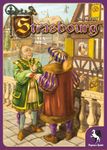
Hey everybody, today I am sharing my thoughts on number nine from the Stefan Feld City Collection. Uh this is Valencia. So, this is a brand new out. I've just got it off managed to play it. Um I'm here to share my thoughts. So, if you're not familiar with the um with Valencia what it is or get the general idea of the Stefan Feld City Collection. Uh this series is basically not only reprints of um Feld's previous designs that are maybe harder to come by, um but they are also new games as well. Now, this happens to be a reprint of one of Feld's most rare games called Strasbourg. Now, Strasbourg is one of the only Feld games that I've not managed to play up to until this point. Um so, Valencia is my first experience with the system and I am not going to be able to compare between the two. So, I'm sure a lot of you who have played the two will be able to tell the differences and what's better, what's worse, and so on. Um but I can't do that because I don't have the experience.
Now, I think up to this point I have played maybe 99% of Feld games. There might be one or two that I haven't tried, but regular viewers of the channel will know that I am a huge fan of his school of design. I mean, you know, my shelf consists of a ton of his games and when you watch my, you know, top 50 games, maybe a good 20% of those are Feld games because I his style really suits me and I just love what he does with the kind of board game sphere. And his kind of mechanically driven games. Now, Valencia has an older Euro feel to it. Um you know, the the bygone age of where most Euro games consisted consisted of some kind of bidding or auction mechanism. It was kind of a way to self-balance games. Uh Valencia does that, but it does it in a really unique way. And I have to say, probably my defining feature and my most enjoyment from this game is actually from that concept of the almost like a push-your-luck bidding system where throughout the entire five rounds, um you have one deck of cards to play through and those are your your bids.
So, you do need to pace yourself and make sure you're not kind of um you know, spending all of your cash before you might need it uh later. Uh let's first we'll talk about the actual um what you're trying to do in this game. You are essentially trying to um have coverage of this royal palace by gaining points each each round for each person you have in the palace. Uh and you're also trying to work towards these goals that are allocated to to you at the start of the game. So, you're going to have five goal cards. You can choose to keep as few as one of those or you can or as many as five of those. You'll probably end up keeping maybe three or four. Um but if you want to be really optimistic, you can take five. And the reason you might not want to take them all is because um any objective that you do not complete is going to count as negative points at the end of the game. And as a general blanket rule, that is a mechanism I do not like at all and I really don't like that in games like Ticket to Ride where you are given contracts and if you don't do them, then you are going to suffer negative points. Um and I have to say, I also don't like that in this game. I'd rather just say like you get your five contracts, do the best with them.
Uh if you can't do them all, then you're going to lose anyway. So, what's the point? I really didn't understand that idea of, you know, use them or lose them or, you know, even suffer the consequences of not completing them. It's something I just don't like. I think it's a really kind of a psychological thing that just doesn't sit well with me. I don't know I don't know why. But um the actual kind of the mechanisms of the game is pretty straightforward. So, you're going to go through this um these phases pretty systematically. You're going to um simultaneously be kind of top decking cards from your personal deck, looking one after another to see um if you want to keep drawing or if you want to stop. Now, once you're happy with the amount of cards you have in your hand, you're going to divide them out into piles. You can you can stack them on top of each other to increase your bids and so on.
Um but you are going to have to put them into fixed bids. Not necessarily what you want to spend them on, but you know, the bids you're going to have to work with throughout the entire round. And once everyone's done that, you're going to go through this kind of A to I system, to A B C D E F G H I, um each of which is going to give you an opportunity to bid on doing something. Now, these are mostly the same in what they do as in acquiring these goods and putting presents on this map of Valencia. But some of them do work slightly differently where you're bidding for the kind of crown or the church um piece where you can modify the board space by putting fountains down in places that will benefit you or these trees down that will increase the yield of points of where your uh current people are on the board.
But yeah, generally speaking, you'll be going through this system, going through, you know, do that round, bid, onto the next one, bid, and so on. If you don't win um one of your auctions, you're going to have the chance to um tuck one of the cards back into your deck so you're you're not completely uh shut out, but a lot of the different phases will not only reward first place, but also will reward kind of less potent prizes for the second or third bidder. Um which I must admit is one of the other slight weaknesses in the game. For me, I thought that when you are bidding for these different items, uh not winning them wasn't really a big enough consequence because the only difference between winning and coming second or third was the fact that you don't get to put a person down in the palace, which is essentially just a point at the end of the round. Now, it does that can be important because this isn't a terribly high-scoring game, but I thought that the the way that the points are drip-fed throughout the game are pretty subtle and it feels a little bit too slight for me and it doesn't feel like you're taking big clever turns to get, you know, loads of points or rewarded for clever decisions. It just feels a little bit too uh incremental. Um quite an interesting take on this game is that when you acquire these goods, you aren't just they're they're not just like sellable. You can't just trade them in for money, which of course you need to keep going in the game in order to buy more locations on the board. You do actually need to win a bid using your cards in order to sell the goods.
[snorts]
Now, again, on paper, that sounds quite interesting because you could have a ton of goods that you just can't get rid of because you can't win that selling auction. So, it's kind of just clutter and dead weight. Um but at the same time, it feels like you're just going through an extra hoop for the sake of it. It feels like a mechanism tacked on top of a mechanism that didn't really need to be be there in terms of ironing the game out and smoothing off all those rough edges. So, for me, it felt like a a kind of one step too many um maybe from a logical standpoint, but mechanically, I understand why it's there and it is actually very important to win um one or two of those um auctions around so you can actually shift those goods off. Now, as I said, one of the main parts of the game is going to come through those objective cards.
And those are going to be things such as well, make sure you have a worker on uh two of the types two of these types of buildings or against six different fountains or um on each of the tiles or on several buildings um at two value and so on. So, and of course, you can try and bleed those objectives into each other so that a single worker is completing several objectives and that is how you're going to play this game optimally and do well uh in it. But of course, you are at the mercy of the cards uh in your hand. So, you might not have cards that synergize uh too well with each other. So, then after you've gone through these several almost repetitive bidding um phases, acquiring goods, um selling goods, uh putting people down on the map, and putting palm trees down, um and putting these fountains down which will give kind of points based on adjacencies and even ongoing objective um goals or little boons if you place next to them, things such as um you know, maybe you can take a card that you've already played and tuck it back into your deck somewhere.
Definitely worth having, but I wouldn't say monumental in terms of their significance. Um yeah, once you've gone through a phase of that, you're going to go onto the next round and and so on. Now, one of the interesting takes in this game is that the actual bidding system is done in turn order. So, you know, if you won the previous bid, you are going to start the round placing your cards down so the next person can decide whether they want to reveal one of their piles or not and raise the bid or just back out of the round. Now, this does create some interesting decisions because you can kind of try and intimidate your opponents by thinking, you know, I put I put my maybe my six and my five cards. I'm willing to bid 11 to win this particular action. And they might think, you know, I'm not going to waste my 11 on that. I'm going to sit out of the round entirely and just let you waste your high bid and hopefully catch up um down that um that method um methodology uh track and do it later.
So, I do quite like that pacing of when do I spend my bids? Do I sit back and win later? Um have I used too many cards this round because if I draw too many, I'm going to have to use them all or or lose them. So, do I draw fewer and maybe later in the game I have a huge deck of cards to play with. Um so, there are some interesting wrinkles that, you know, that should come into play here, but I have to admit, I don't think they're as as significant as the game is trying to make them. For me, it feels like there's almost too many cards in the deck and that you go into each round a little bit too tooled up. And more often than not, you're probably only interested in a couple of the the lots anyway. So, that what you'll normally do is you'll take just create a couple of really strong stacks, almost guarantee yourself the victory, um and win that way, win what you need to do that way. And if you don't, you're pretty much screwed. So, it's for me, it just didn't quite feel right in terms of how am I going to use these bid bids in a clever way? When can I just sneak in and get a secondary bonus?
For me, it felt like you know what you want, you know you're going to have to win it. And if you don't, you're going to have to go to a very distant plan B. So, for me, it was a little bit too almost predictable in what you needed and wanted to do, uh rather than being a bit more tactical and being being able to kind of zig and zag and do things later and maybe change your game plan as you go because, as I said, you are given those objectives at the beginning of the game and you don't really have any wiggle room from there. You are going to have to stick to that course of action um or you know or be at your peril, basically. The game itself is only five rounds and each of those rounds do tick along quite quickly. So, you are looking around at an hour. I'd say that, you know, the box says an hour. I would say that's accurate. It does work along, you know, pretty brisk um pace. Um so, I wouldn't say our stays as welcoming. Also, the game arc is quite nice as the the board is populating, the more fountains are appearing which you might want to get next to.
Um but I must admit I do feel like the uh again, the meticulousness of the game does start to fade away in the later rounds because you you probably find you have a ton of cards left and you'll just think, "Well, that will do. That will do. I'll just put those bids down there, those bids down there. Um I'll go next to this fountain just because it's got the most points." Uh it doesn't really feel like you're building towards anything and it feels like you're just kind of throwing stuff at the wall and seeing what sticks. So, um as you can probably tell by my over overall thoughts here, this didn't really work for me this game. I uh which is very rare for me to say with a Stefan Feld game. You know, I've played a ton of auction games, a ton of bidding games. And while on paper, I really like that push-your-luck bidding mechanism, this game though didn't utilize it to its um to its optimum standard, I think. I think there's another game out there that could use that mechanism much much more interestingly. And all in all, I just thought this game felt pretty pretty bland and pretty soulless.
Um which again is complete blasphemy to say when it comes to a Feld game because, you know, his designs are my you know my taste just fit together like um like they dovetail perfectly. So, um yeah, this one was sadly a big miss for me. I'm not I'm not going to say the game is bad because it's it's not bad by any stretch. But from the standards that I hold Feld to, it falls far below that. You know, I'd put this at probably about a five out of 10, you know, average at best. Um again, which is a very rare occasion for me to say with a Feld game. They normally sit around an eight or nine out of 10 for me or even some 10s um in the past. So, um of course, this this Feld city collection has had some critiques over the years um based on affordability, which I completely understand.
Uh you know, this game is priced, I don't know. This this probably cost me like 80 pounds or something, which is obscene considering the component quality and what you get in the box. Don't get me wrong, it's all produced perfectly fine in terms of the the component quality, but it does lack a certain polish. The board itself is very bland. Uh there's no real kind of synergy in terms of the art style. Like you know, the the front of the box here looks like this traditional Euro, but the cards have this kind of like the Miko style artwork to them where they have these wacky cartoon characters. The board itself looks like it's been done on clip art. And it's just that lack of attention to detail or that lack of care that sometimes shines through with this. Um now, some of the games in the past have overcome that, you know, games like Marrakech, for example.
For me, the game was so strong that it you know, some of the design flaws were just completely forgettable. You could just ignore them because the game was that good. This one, I think, has fallen prey to that lack of care, that lack of attention to detail that has really hurt it. Um you know, the balancing of things I've got no issue with. You know, this is Stefan Feld we're talking about. But the fun factor for me certainly um has fallen to the wayside. Again, I haven't played the original Strasbourg, so I can't compare the two. Is Is this one missing a fundamental ingredient that the original one had? I I don't know. I know the original one was um quite well respected and well revered. This one, I think, has been kind of being reviewed at slightly lower level, so there might be something to that. But I can only go on what was presented to me with this Valencia edition. And there is no doubt about it, this is not staying around in my collection. I've got no desire to play it again. It's just a little bit too again, throw stuff at the wall and see what sticks. You're a little bit too much on the rails when when it comes to those cards. The way that the points are drip-fed to you throughout the game is just too incremental and too small and kind of slight.
You're you're too much at the mercy of those cards. Uh again, I hate the the fact that you get punished for not completing cards um especially when things are so out of your control. And again, I like games when you have to really consider about what you are bidding for things, you know, the consequences of your actions. When you think about games like Ra, if you misspend something, that can really come back and haunt you. In this one, it doesn't really feel like that. You're going to be fine. You're going to have enough fuel to get you through anyway. And I would have really have loved to have seen that kind of war of attrition shine through a bit more when you really do have to pace yourself with the bids you have. You know, think of something like uh maybe the King is Dead or uh games like um uh I've forgotten now. But games where you have to really pace yourself with what you're given at the start of the game. This game is trying to do that, but it just completely fails in the practice, in my opinion. So, uh yeah, I'm not going to bang on the drum anymore. Again, I didn't really get along with it. It didn't click with me.
I will be parting with it. Um but I think it's important not only to um not only to blow smoke when it comes to Stefan Feld games because, you know, I do generally um completely praise his designs. This one, I have to admit, was not for me um by any stretch and I would not uh recommend it to anybody. So, uh that is uh Valencia. Uh not the most pleasant to um to speak about, obviously, my favorite designer's games in this respect. But again, you have to get all sides and it means that when I do praise a game, um I'm going to mean it that much more and hopefully that will resonate with you guys a bit more. So, uh hopefully you've enjoyed the video even though it hasn't been the most positive of uh reviews. But uh if you have, please be sure to hit like and subscribe to the channel and check out my other content, too. But for everybody else, I'll see you next time on Chairman of the Board. Bye-bye.