I was WRONG about Agricola.
Games in This Video
1 game is featured in this video — it unlocks as you watch.
Transcript
I love a good classic Euro game. Mainly because I just love how focused the mechanics are, but also how cool some of the themes are and also the puzzly nature of the games. And so when there is a chance to play a classic Euro game by Stephen Feld or Rosenberg or Kenitzia, I'm not going to turn it down. Mainly because I know I'm going to have a really good time and I really appreciate their designs and the sort of choices you get faced when you um approach one of their games. There's one board game in my collection that has often given me a lukewarm response and actually quite a few times I've put this game in the cell pile and then kind of retracted it uh shortly afterwards. The game I want to talk about in this video is a Uve Rosenberg game called a Gricola. Hi, my name's Danny. I'm an avid modern board gamer from Australia. Love sharing my passion for this hobby with you, my friends, and my family. And don't forget to subscribe for more wholesome board game content.
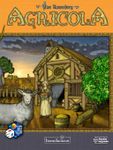
Now, about a decade ago when I got into board gaming, uh, a lot of people said, "You've got to play Grilla." I think when I first heard about it and I saw the cover, I was like, man, there is a lot of beige in this game. And farming, I'm not sure farming is really that exciting. In fact, this cover looks kind of bleak. And I guess this sums up the tone of the game for me and my excitement level for the game. I was like, "All right, I'll buy Grola just because I've heard so much about it. I've heard so many people talk about the game. I've heard people, you know, rave about some of the choices and the mechanics. And then I kind of got the rule book and the first thing in the rule book, it says Aricular the 17th century. Not an easy time for farming.
And I thought, h I'm not feeling this game at all. In fact, I'm like, that's actually kind of deterring me from the game. I think when I think of farming in my mind, I think of like harvesting, growing crops, plentiful amounts of food, and being able to trade and dabble in agriculture. But this kind of gave me a very tiresome look, like as if like I was going to be put through some level of board game euro torture. And I was like, "All right, I might just put it on the shelf for a while. I might just leave it and get to it one day." And so one day did come around not for about like a year or so and I thought this is the day I'm going to get a Grier out. And I guess you got to kind of have in mind the context of which I've got this game is that it's surrounded by all these other modern fancier games that have pops of color, uh, cool little uh, tech tracks, uh, themes that are a little bit more immersive and exciting and cozy and, you know, grandeur on their scale. And then I look at a Grile and I think, wow, that's a little bit old school, a little bit old-fashioned.
H I don't know if it's going to hit my table very soon because of all these other cool fun games that are already in the pipeline or already sitting on my shelf. And then one day I decided, you know what? I'm going to read the rule book. Didn't even watch a video. Read the rule book and I was like, ah, okay. Uh there's a lot going on. They kind of just dabble in a few bits and pieces in terms of some of the concepts. And then [snorts] I saw Uf Rosenberg's face and I thought, not many designers put their face inside a rule book and I was like, I don't know about this. This gives me kind of a weird feeling. And you know what? After I saw that, I was like, I'm not sure I really want to play this. Not to mention that this game came with two books, one with an appendix. And anytime a board game comes with an appendix, I'm like, uh-oh, this could be overwhelming. I don't want to be flicking through two different rule books just to find, you know, the answer to one simple question.
Anyway, so back to the subtitle of not an easy timing for farming. This was not an easy time to learn a gricula for me. In fact, when I got a Gricola, I hadn't played many other Euro games. I think the only other one I'd played was Castle's Burgundy. And even that I was very trepidacious about. And if you want to see my video about how I was wrong about Kas Burgundy, uh, please check that out. And so I got partway through the rule book and it seemed like there were little gaps in the rules that I didn't quite grasp in my head because the way the rules are set at a gricula is that you've got this kind of summary quick guide version and then you've got an appendix of all the cards and action spaces in greater clarification and detail in this appendix. And so I'm looking through, I'm like, "Okay, there's new worker action spaces. Oh, you know, here's an example of what happens on your farmyard. Here's how you score." And they kind of go through that before you even go through the phases of gameplay. I think with this kind of rule book, I would rather have gone through the phases of gameplay and then this is how you score at the end. And so there are a lot of different concepts. I I think the game felt to me more complicated than I envisioned in my head. And so I was it took a while to plow through and sew my interest into a gricula. Uh more so than enough that I finally got it to the table. And so I started
playing a game of a gricula. This was at least 3 or 4 years ago with my hubby. And I was like, "Oh my gosh, this is incredibly tight. What? I can only get, you know, three wood for that space? Oh my goodness, I can only like sew, you know, two seeds." And it felt incredibly punishing. I think the card options that you have at the beginning game felt really overwhelming. And I was like, "What does this symbol mean? What does that mean? What does this do? how does this work? And so what seemed like a simple kind of approachable farming worker placement game started to become an intricately woven nightmare of rules, questions, gaps in my knowledge.
And then, you know, we did get to the end of the game and I ended up getting like a measly 19 points. And now that I've played quite a few u Rosenberg games, you know, 20 to 40 is actually a pretty good score.
um it just really didn't leave a very fruitful taste in my mouth. And there were many countless times where I thought, you know what, I really didn't like that play of a gricola. Uh my hubby said it felt really really like old school and needed felt like it needed to be finessed in some ways. And I think even the presentation of the game just really didn't get me across the line. And so I shelved it. And then I put it in the cell pile. Then I shelved it. Then I put in the sale pile. Then I shelved it. Then I put in the sale pile. And then I was like, uh, I don't know if I can actually bring myself to sell this game. And so I sat literally with the game for quite a quite some time. It's been on my shelf for years. I've looked at it, gone past it when I've chosen games. And it's more recently where I've had this ignite ignited interest in these classic Euro games, the ones that kind of set the benchmark for a lot of the popular modern Euro games that we have now. And it's not it's not since that I've gone back to playing, you know, Stefan Phil's back catalog of classic games that I've realized actually maybe I should give a Grile another chance. I've got uh some friends who play Grier a lot and love a grile and they're like, "Yeah, it's really punishing, but this is what we really love about it." And then it made me think and it made me think, what if I just took away the dressing of the game?
What if I approached the game with a fresh set of eyes and a fresh set of experiences? And so recently, I decided to give a Gricola another go. And this is where my perspective has really really evolved and changed. So upon my recent play, the evolution and the thought process that I had all those years ago when I first got a gria just evaporated essentially. And I think the biggest difference was that I had a lot more experience under my belt with the way these sort of older Euro games were designed. And over the time from my first play to my most recent play, I've kind of developed my pallet for a lot of these uh older style games a lot more. I've developed my experience and my understanding about how they work and a newfound appreciation for like how these games are designed and their functionality and how they express their theme through the mechanics that are in the game and why those mechanics are there. And so when I played this game with my hubby again, he was like, "Did we play this game and I'm I'm like, "Yeah, we played it ages ago." He had no recollection of our initial play until I dug into the box and pulled out the little score sheet where it had our scores and he's like, "Oh, we did play that game." Anyway, there are
quite a few things that really resonated with me on my new play. And this is where I think I was wrong about a Gricola. I was wrong about trying to sell this beautiful puzzle of a game that I would think I would have regretted. And so I think these are there are some reasons why I think my perspective has changed. And there are some newfound things that I think the game has really connected I've connected with that I want to share with you. And if you're someone out there who's like new to board gaming, or maybe you've heard about a gricula, but you don't really know what it's about, maybe this video can help you help you develop kind of a shared understanding of where I was, cuz I was like, a gricula? No way. And now I'm like, a griculara? Heck yeah, let's play it. And I think uh the beauty of it was understanding how the game operates and really just thinking about the puzzle itself. And so one of the big things about a Gricola is that you get a hand of minor improvement cards and a hand of occupation cards at the very beginning of the game. There's seven of each. And I think when I played it years ago, I found this to be quite overwhelming. Oh my goodness, look at all the text. Oh my goodness, there's two types of cards. Oh my goodness, there's 14 cards. I have to kind of wrap my head around, understand how each and every one of those works. And for a new gamer or someone who's not as experienced,
that can be incredibly intimidating. And I hand on my heart say I was intimidated. And I think I thought the game was going to be easy, but it ended up being the opposite. And I was like, I don't know if I like this. There's too many options. But now having played it, you know, years later, I realized these hands of cards create this very unique asymmetry in the way you approach the game. And so the game system is relatively simple. You have 14 rounds which um kind of go through various stages and each round you will flip over a card which reveals a new action space. You have your workers. You send them to different things to get resources. And the resources can be used to upgrade your house, expand your house, uh sew the fields, plant vegetables, plant crops, build minor and major improvement cards that help you turn some of your produce into food. Uh you can also you know get cow cattle, pigs and sheep and then you breed them and then you're trying to build little paddics or pastures and you're trying to fit everything onto this very small board. And so whilst that puzzle remains relatively the same, the fact that you've got these 14 unique cards means that what you choose to do and how you time everything is going to be different every single game.
And when I first played in that first play, I was like, "Oh my goodness, why do they have this? This is making it so much harder." But now, having played so many, like hundreds of all these other games, I'm like, "Wow, this is the best thing about the game." the fact that I've got these occupations. Some of these mine improvements need me to play certain occupations. Some occupations allow me to put food out onto particular um future rounds. When I use this particular card, I'll be able to get this particular benefit. And all of those like mine improvement cards are things that change the status of what you are able to do as you progress from basically two rooms, two workers into a fullyfledged functioning farm. And it is a fantastic design element in the game that actually is brilliant for the time it was released. And the amount of different variability in the combinations and I know there are massive amounts of expansion decks that you can just add into the game which li literally increases the replayability like 100fold. But the combination of those occupations and then how they might complement some of the mine improvements you've got or how the mine improvements require the placement of certain occup occupation cards out early on in the game and then those occupation cards kind of kickstart and then help you play mine improvement cards later through the game. You know, there are cards like, you know, upgrade your
house straight from wood to stone and stone houses. If you house is made of stone at the end of the game, you're getting certain high value victory points. And the design in here is infused in these cards. And a lot of modern games today when they say asymmetries is like here's a player power, here's another player power. But this game is like, hey, this combo of cards you got, this is your player power. This is your variability. This gives you the choice to kind of cherrypick which combo you want to play, how you want to use those powers, and time those powers at the time that is going to best maximize the amount of resources you get, but also the endgame victory points. It's brilliant.
Those card combos are absolutely brilliant and they do add 50% value to this game. Without the agricula mine improvement occupation cards, the game would not be as good. The replay value would be much lower. And so I really appreciate having these cards at your disposal and being able to choose these cards as you play. I guess on future games, uh, the more I would play, I would probably choose to, you know, incorporate a little drafting element at the beginning of the game where you get to pick and draft your initial starting hands. But really, that would be my only minor quibble with these cards. And you think these cards can be really powerful or off balance, but surprisingly the game itself is so restrictive that you do need these cards to equalize the game. you do need these cards to balance the game against the powers that the other player uses. And so you you build this really cool tableau of mine improvements. You have your little workers on your farm. It's just sensational. Second element of the game that I think infuses a really great level of dynamic is the worker placement. Now, in a lot of worker placement games, you basically have all options to all these number of spaces. You go there, you block another player out, you get some resources, you get a card, you get to do something. But I think a gricula does it in a very restrictive way. And restriction is a good thing. And I like
restriction because it means you have to focus. You have to double down. You have to play strategically. You need to be aware of the potential consequences of not taking something now versus, you know, on your next turn. And so I really like the idea that in this game the worker placement spaces are slowly revealed over time and in different stages the the order in which certain spaces appear will also vary from game to game. I like this because it gives the game a sense of progression. At the beginning of the game you can't have children. You've got to dabble in getting resources. You've got to go to the forest to get your wood. But then later on you can start having children. Get that third worker. You know, at the beginning you can only access sheep as your
um animal, but then later on you can access pigs and then near the end of the game you can access cattle. I really like that sense of progression because this progression all leads up to that end phase of the game where scoring happens and basically everything gets scored in a particular way and if you don't dabble in everything you're going to get a penalty of some sort. So the first area of scoring is your player board. you need to fill up your playerboard because if you don't fill up your playboard, you haven't really expanded and developed your farm well enough. So, you get a penalty for empty spaces or if you've got pastures that are really small, you're not going to get any points. If you don't have a certain number of each of the three different types of uh animals, you're going to get a penalty.
If you don't invest in the two crops, you're going to get penalty. If you uh don't have pasture or sewed fields or pasture sizes, you're going to get a penalties. This game is full of penalties, but the penalties is what you're trying to build your farm to avoid. And so, as you're building your farm, you're like, "Okay, I need to get cattle at some point. I need to get these pigs at some point." And it basically is a giant juggling act. You're juggling all of these things, but you know that because the different spaces reveal them over the turns, you're not going to be able to get those cattle straight away. You're going to have to wait. You're going to have to wait till that card is revealed and someone might go there before you, or you might have to wait for that important mining space to open up so that you can get the stone to build your stone house or get those major improvements. This game has this infused level of timing and the fact that there's only certain numbers of spaces means that there's a high level of restriction when you're playing, you know, against another player or several players. That worker placement competition has this indirect play-to-play interaction, but feels incredibly tense.
And the tension is always high in this game. In fact, at the beginning of the game, the game arc kind of goes like this, where at the beginning you're like, "Oh, I only took my two turns. Oh, is that it?" "Oh, the next round, oh, I only took two turns. Is that it?" But then by the end of the game, if you've, you know, expanded your rooms in your house, expanded your family, you're like, "Wow, I can now take four four actions on a particular round, and that is great." But then on the balance side, you've got to feed those four people. That is not so great cuz then you're now balancing how do I get food to feed these four people but I'm getting extra actions. This game has you juggling left, right, and center, balancing the scales, balancing the seesaws, and it makes for a brilliant game experience. The third thing I really want to talk about is the thematic touches in this game. You're playing in the 17th century. I think it's 1670 AD. you know, the famine has just passed or the plague has just passed and now you're struggling to rebuild your farm. This game has a great way of making you feel like you are struggling and you get this sense of feeling because you've got so many things you want to do but limited number of actions to do it. And so this game kind of puppeteers you along the way as you try and pull certain strings to kind of get the resources that you need and then convert them into what you want. And so you're going to have to dabble in major improvements because you need to feed your people. If you have a
surplus of particular resources because there's certain resource spaces that replenish or pile up or accumulate over certain rounds if nobody takes that action, you might get a surplus of reed so then you can now upgrade your entire house or surplus of wood so then you can build your fences around your pastures. There's that real sense of like struggle but also constriction because your playerboard represents your estate. The idea that you know your sewed fields need to be adjacent to each other. You've got to partition and place a little barn so that you can double the holding size of your um pasture. And so all of these things really add up to an experience where you're like, "Okay, I see what I'm doing. I'm using this occupation uh worker to give me this benefit. I'm sending I'm creating children so that I can in you know they can inherit the farm when I grow old. I'm sewing these plants so that during the harvesting phase you can take those seeds and you can reso them elsewhere. It has a beautiful flow on chaining effect in the game where when you invest in one little area, it kind of infuses and kind of ricochets into the next area into what you do further on. And so you see your farm grow from this really tiny house and being a couple and then just expanding it to this really cool farm.
And I really love all those little thematic touches in the game where you use the fireplace or the oven to bake bread and then convert your livestock into food. And so it has that real satisfaction of like, yep, we need to feed the people. We don't want to experience hardship again. How are we going to get this hardship? And that makes the game fascinating. It's not a game where you're just going to be given bonuses all the time or you're creating a chaining combo. [snorts] This is a game about working hard, gritting through the dirt, biting your nails as you're like crawling to the end. And then when you compare the scores at the end, you think, "Oh, there is no way I can win." And in the game that me and my hubby played, I beat him by like six points.
And that's only because I built the world to get four points and I had like one extra like animal that he didn't have. And so it was incredibly close. It was incredibly tense. And the game strategies and pathways you can take in this game from beginning to end are so numerous. Like my hubby and I play completely different games, yet our scores became really competitively tight. And so every decision and in hindsight on reflection, every decision we made really had an impact on the endgame. And that's what makes a Gricola so so so good. And if you're someone who hasn't or is on the fence with trying a Gricola, I definitely recommend maybe getting someone to teach you or watching a couple of videos because this is a game that takes a while to appreciate. Like now I play that. I'm definitely playing, you know, multiple games in a row of a Gricola and just wanting that fuller experience and getting to see some of the intricacies that the game really has to offer. And I'm really really excited to go on this new Gricola journey. So, I'm happy to say everybody that I was wrong about a Gricola. Um, I'm glad I didn't sell it.
Uh, I'm glad that, you know, it still lives on my board game shelf and it's one that, you know, I think is going to is going to continue to grow on me and now that I'm a little bit more experienced with modern and classic Euro games. It's one that I'm going to actually cherish for a long time to come. So, what are your experiences with Uve Rosenberg's game Agricula? Is it a game that you really love? Uh, are you team Caera, team Agricula? What are your thoughts? I'd love to hear and start a conversation with you in the comment section below. Now, if you really found this video super helpful and insightful, please consider liking subscribing to my channel. And if you want to really help my channel grow, please consider buying me a coffee a month over on my Patreon page. Otherwise, I hope to see you soon for another I Was Board Game Sanctuary video. And enjoy your next board gaming experience. This is Danny signing out. See you soon. Goodbye.