AZUL DUEL | What's to Like? A LOT! Check Out My Overview & Review (with some caveats...)
Games in This Video
1 game is featured in this video — it unlocks as you watch.
Transcript
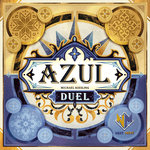
Hey everybody, Kimberly here and something I've been doing recently it is now like spring clean beginning of summer for me. My turn just ended at school and I have been essentially trying to gather and play all the jewels in my favorite two-player games because now I have time to play with my husband which is awesome and I was up in Spokane shopping at one of their bookstores their game stores and I realized I had not gotten Azul duel. Now I have all the other Azul games and some of the jewels hit and some of them miss and I want to tell you what really hits for me with this game but also just talk about how I'm so excited about these dual games like what this kind of game offers players and how replayable it is because I am starting a two-player collection in a special bookshelf on my main floor which we have kept board games off our main floor and just in the gaming basement but I'm bringing games up to the main floor now and this is going to be one of them so really really excited to share with you my experience with this and really what makes this a fantastically designed dynamic for two players. So this is dual great name Azul dual couldn't have thought of a better name.
Same designer you've got Michael Kiesling and this is a 45 minute game. It is abstract if you've played the base game you are tile drafting and then designing into a beautiful mosaic. Those abstract games don't always hit for me so for a game like Azul to really work for me it's more of a puzzle than anything I think is fantastic. So here's what you get. This is going to be your player board there's a yellow versus blue and I've got my player facing that direction cuz you're probably going to play across the table from each other. This is going to be your scoreboard these are going to be the available tiles that you build every single time you play you're building out tiles into this space. Everybody starts with one that you draft from the central area one at a time. And so, I've got this all set up and ready to go. Out here I've got these tiles. These are going to be the tiles that have all those lovely discs. So, instead of squares, you're going to have these guys, which are circles. Kind of fun. I like that it kind of changes up just a little bit, not too much. They feel really good in the bag. So, you've got a bag full of all of these different colors. They have different designs, so they are colorblind friendly. There's the yellow, the red, the dark blue, the gray, and the light blue. So, those are going to be your colors. You've got a moon portion, then you've got a sun portion of each disc, and that's important. As well, you have these little discs out here and you'll see that I've placed one in those moon spaces on the three small
or four smaller discs. And we are essentially ready to go. There's these basic objective tiles that you have in the game. More on those at the end. And kind of like my favorite of Azul, um I will put that up on the screen right now. Has that tower where you drop all your things in it, and it kind of makes a really nice delicious sound. So, this guy pops up and then you've got your tower where you put all your discards before you refill the bag. So, there are going to be five rounds in this game. Um and players have more choice than they have in the past. They can simply take one of the same color of any of the discs in one sun space. So, if I wanted to, I could take these two yellow and I could place them into one of the six rows.
That's my one choice. I could take this blue. That's okay if I just want to take one blue and I pop it in there. Then what I'm going to do is I'm going to stack these in any order that I like. I can put those guys like that and I can stack it up and you put it on top of the disc. And when that disc is revealed, which there's going to be a moon action in this game. Um it flips over. Now, players are going to have a choice to take from the sun section, just like I did. Take any all of the same color, put it into one of your six columns, put the remaining discs onto stacks. If you take from here, you are going to take the same thing. I'm going to take those and put those in there. Then all these slide down to the bottom and they are all in the moon section available at once, unlike these little smaller discs.
So, if I want to take an action, again, we're doing this one at a time, going back and forth, back and forth. Take from the sun, then my opponent goes and they do something else. I took from the sun again on my second turn and I was able to do this. Um what I can do on my turn now is take from the moons. I look at the top disc and also the spaces out here of all the moons and I take the top one. Now, if there are multiple stack like this that are yellow, you don't take all of them in a column, uh which is a stack, you just take the top one. But when you take from the moon section, you're the first one to do it, you take this number one and it goes down on the bottom, it's negative two points at the end of the round, but you do get to begin the next round. And again, I'm going to take these and I'm going to place them down in here and that is the second possible action you can take.
Okay, so the third possible action you can take on your turn is putting your disc out here and you take one of these tiles for free or you take the top tile for minus one victory point. Every player starts at five, so you can lose victory points in the very first round before you even earn points. That's why you start there. Now, let's say I take this tile and I flip it over and it's still not what I'm looking for. I can take an That was one hit. I can take another negative point and look at the next one and I can go, "Ah, this is the one." And you're going to put this guy underneath on the deck, and you're going to keep this one. Now, what you do when you take a tile is you place it anywhere you want. Now, this is not necessarily a red space here, but I was already banking on getting some red going. So, let's just put it right there so I can put that. That is a wild. So, there's going to be two different types of tiles. I'm going to take this one right here from the center for an example cuz these are going to be the two different types of tiles. You'll see that the backs are different, so they tell you what's coming up if you're really searching through the deck for one particular type. So, the one that has this has a wild. This could be filled by any of the colors. That's your dark blue, that's your light blue, and that's your red. And these are going to You can have as many of the same color in a particular row as you want. But when you complete, which I'm not there yet, you're going to be putting those matching the spaces there, or if this case you've got a wild. Now, this one's
really interesting. This one has three color spaces, and then it's got this guy. This guy is not a tile that you can essentially earn. You earn the filling of that space once these three have a disc on them. And when you do, you will put this on here once these three have been filled automatically. And then it's going to earn the points that are in the column. So, it's going to be one for one, six for six, and everything in between. So, that's what these little discs are over here if you were wondering. So, I'm going to put that guy back there. I'm going to put that guy right back there. And then the last thing. So, let's say over a certain amount of turns my fellow player has taken this. This reveals, and it shows two halves of a disc. It shows the dark blue design, and in this case nothing. Sometimes there's two on each side. So, when you flip these over, they're going to show up. Here's one that has a blue. Ah, here's one that has two. It has a red and it has a light blue. This one just has, again, a light blue and then a dotted line, which means nothing.
So, when you take uh your turn, you can do the sun, you can do the moon action, which is taking tiles and placing them in your area. You can do this action, taking a tile, which in this case, I took that top tile for uh two I paid two victory points for that tile. Um or you can take this. So, there's four out here. It's just getting to the ones you need because these are going to help you complete your rows. Now, if you are one short, let's say I've got Where's that one I just put back? Uh uh man, okay, here we go. Let's say I have these two. And then in a future turn, I've got these discs like so. I've got here, here, and here, and I need to have a dark blue. So, I'm going to have to have this guy here. Otherwise, I can't place it.
So, this is a future future turn. I can say I'm taking these two blues and I'm making one whole blue uh disc with it, and it fills that space, and now I can complete. So, I'm going to move into the completion phase um because we were just in acquisition phase, and then I'm going to say, let's go into our we we're going to get everything done. Now, every player is going to receive two of these tiles. So, these two would then go to my fellow player, and you don't replace your uh tiles because there's always a cost of one uh victory point at least for the player who gets there um last, or someone really wants something that's not there. So, you're going to have played all of your discs, taken all those things, and you're going to have taken the stones, and then also taken each of these for every player, that's going to end the round. Now, what you do is you take your right-most disc of a completed row and you put it on there and then you score your points. That's one point. That's all I get. But, this guy comes over and I get one, two points. Aha! This one comes over here. I can put it here or I can put it here cuz it matches red or wild and I get one, two, three points. One, two, three points. And this one goes all the way over here or here, whichever one, and I get one point. Now, you get to count your rows and your columns. So, I was getting columns here, but the next time I go across, I'm going
to start counting across and I'm going to start counting above. So, you're going to start getting more and more points the longer you get in your columns and your rows. These guys are going to discard and these guys go woo, into the tower, which is really, really satisfying. You are going to lose points for any of those tiles that you took that you were not able to put or didn't want to put in just one row, which could happen an overflow. You fill up one space, but then you have an extra tile that you can't place cuz it's only worth one, two, or three or you have this all of filled all the way up and you only needed two, but you're forced to take three. You're going to put it over here. You take four max minus one, plus minus two for the second one, plus minus three for the third, and plus minus four. So, it's cumulative. You will lose all those points, but you get to keep all of these guys from round to round until you use them.
So, your universal goals are here. This is going to be three points for every column. This one or sorry, row. This one is seven points for every column. And then the classic diagonal, um both ways you can get 10 points if you want to do that. And that just means you've got discs in those spaces. Discs across, discs down, and then discs going like this. There are back sides to each of these, so you can actually say, "Wow, four points if you've got all five represented in a uh row." This one says one point for every disc that's on the perimeter. How cool. This guy, you've got three points um four all of your um corners. This is like a four corners with um bingo. So, if you get the top four corners in this side and the top four in that side with discs, then you get three points each. And if you can put discs in either of these corners down here, that's going to be eight points each.
And then there's one more tile. This guy is here. So, this one is the multi-color symbol. So, remember I had those multi-colors on my board. I actually have a handful of them. If I can fill every single one on my board, I get two points per. But if I have any single one that is uncovered, I get nothing. So, it's really an all or nothing, and you might really bank big, or it might push you to take the other kind of tile um which is the one that has this guy, which gives you the one thing. So, you won't actually be taking any of those requirements. And then the last thing is this is every single one of those tiles that I just talked about, those uh empty special tile space. This is if it's not filled in. If you have those spaces on your board and you haven't put the disc in it, it's minus three.
So, you can do any combination of these, which I find really, really helpful for replayability. I also find that the design out here is super duper replayable, and the actual gameplay here gives you so much more choice than the original game because you're really trying to see, "Okay, pecking order. There's only three available, but we each have to take one, so someone's going to be paying a point." Going first is good, but it's always worth negative points. Taking the discs out of the sun and or the moon space is really offers a a dynamite strategy. At first, you're taking a moon the sun, and then you're putting those guys in there. But, at a certain point, you're going to look at all the moon spaces, and you're going to go, "That's a really good deal." Or, that's exactly the right amount of tiles I want, and you're not activating a sun space.
And then lastly, whenever you take these guys and then you reveal what's there, you really want to get those those tiles that give you the versatility to make one. Now, let's say you've got uh you have things that you just don't have matches for. Let's say you want to do any tile, you take three, and you just make three into whatever tile you want. Um it it's not because you This one makes you one dark blue, cuz it's two. Um but, if you don't have the right numbers, you don't have the right pairings, you can do that. that's really helpful, too. So, put that guy right there. Um really really great. I do have one critique, um and it's about the quality of the boards. I wish that they had invested just a little bit more in boards. This is cardboard paper.
It's just cardboard paper, and they're kind of flimsy, and they don't stay totally flat. Like, my board is actually bowing right here. Um and I just don't see why they couldn't have made these small boards. It would have been a little thicker, but there is space in this tiny box, and I don't think it would have added too much with weight. And then the same thing with this this guy, he folds down, um and it's kind of actually really nice. It's helpful. Um so, you just pop this guy in, and he folds in half, and then he goes back in the box. But, these components and then this disc right here, this tile is made of that kind of flimsy cardboard stuff. Meanwhile, these are made of the hard cards the cardboard. And they're really sturdy and they look nice. And so I'm like just make the rest of those components. These are hard card stock, right? These guys are the card stock. They're thicker. And the discs are even the the thicker cardboard. So these guys feel great. The bag is really lovely. I just can't I just don't know why they weren't able to make these components just a little bit better, a little bit sturdier.
Um but I love the color scheme. I love the discs. It all works incredibly well and this is a fantastic two-player game. It does last a little bit longer. It's a 45-minute game because you've got five rounds of clearing essentially the board with the discs and with getting those tiles. Now whenever you put a tile out, you get to decide where you want to put it. But once you've placed it somewhere, it's done. Um so you're kind of designing as you go, figuring out where you need tiles, looking out here and trying to figure out can I can I make it work? Um but it's super super fun and I love the versatility with the objectives and those global things that everybody can go for that you have in front of you. Uh you pick three of them and that's going to be your game. So replayability, uh versatility, great great two-player variants of Azul the game. If I'm playing two players, I'm using this. I'm playing Duel. I am not pulling out Azul to just play a two-player game.
Just a little bit of those components kind of frustrate me a little bit with the quality, with the kind of flimsiness of it. So that's going to be it for me. I will see you later, folks. Bye.