How to Play Darkleaf Gambit | How to Game with Becca Scott
Games in This Video
1 game is featured in this video — it unlocks as you watch.
Transcript
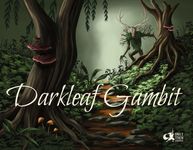
We're journeying sages and vanquishing royals. That's right, it's Darkle Leaf Gambit from Only Then Studios. In this asymmetrical duel of deeds and darkness, two players take the role of clan leaders, each commanding a retinue of units in a fight for the soul of Hagadorn. That's the name of the forest realm we're waring over. Utilizing a chest set, cuz it's basically a chest expansion, along with added clan boards, tokens, and dice, Darkleaf Gambit brings a new type of tactical tussle to your table. Players move and activate their unique units over a series of turns, and the first player to complete their individual victory condition wins the game. Setup begins with a chess board. In addition to the tokens, boards, and dice from Dark Leaf Gambit, you're going to need a standard chessboard with squares at least 1.5 in in size if possible, and all 32 pieces. If your dog ate one, you need a new chest set. In fact, if you don't have a chess set, you need to go get one. Everybody should Everybody should own a chess set. Everybody should own a chess set. The next time I see you, I want to see a chess set in your background. Anyway, if you can't get one immediately, a print and play chess board and pieces are available from the Only Thin Studios website. Set the board in the middle of the table. The chess battlefield is now the mythical forest of Hagadorn. Each player selects a clan to play for the game and takes the corresponding clan board, clan guide,
and six dice known as the bones. They also take one player aid card. Players then follow their clan guide instructions to place chess pieces in the starting position on the board, keeping leftover pawns, knights, and bishops off the board nearby. That area is known as Hagadorn's graveyard. They also take sets of fate chips, which come in six colors of six each, adding one of each color to each of the round skill slots on their clan board. The chips are not clan specific and any color can be assigned to any skill. Each player also takes one relic token and places it in the Hagadorn's will slot of their clan board, setting the remaining relic tokens in a common supply nearby. The player who last lost a game of Darkleaf Gambit or some other game if this is your first time chooses one side of the Hagadorn's will card to play either blessings or curses. Set this nearby with a 12-sided bone. Before we get into gameplay, let's look at some of the game's terminology and the transformation of the pieces. A glow up, if you will. The chessboard or the forest of Hagadorn has six types of zones. Each space is known as a territory. A file is one of the eight vertical columns of the board. A rank is any of the eight horizontal rows. The seat is the rank nearest to the player.
The range is the rank farthest from the player and thus the opponent's seat. And the woods is all the territories between the seat and the range. In addition to the dice being known as bones, here are some important vocabulary changes in Darkleaf Gambit. Pawns are still pawns, as are knights. However, kings and queens are each known as a royal. Bishops are known as sages. A journey is the movement of a unit between territories or spaces. And a deed is an action some units can take specific to each clan. The clan board features a clan name and art, a path to victory, the win condition for that specific clan, a number of bone slots, and skill listings, the descriptions of which are on the clan guide. relic slots, a slot for Hagadorn's will, and fate chip slots. The guides feature the clan name, a listing of clan skills and their descriptions, a unit listing, along with each of their rules for journeying and deeds, which we'll get to more of shortly, the clan's deed description, their clan trait, and starting placement of their units. Game play occurs in turns which begin with the player who commands the clan highest on this list and then alternating between players.
Each turn is divided into five phases: upkeep, declare intent: roll and execute, slot bones, and acquire power. First up, in the upkeep phase, the active player may resolve the following effects in an order of their choosing. Advance any counters on their side. Bones are used to track skills or abilities with multi-turn durations. Any counters that would reach zero resolve their effect immediately. They can also spend relic tokens on their board to activate any skill effects. We'll learn more about that shortly. And they may spend a Hagadorn's will token and roll the d12 bone to determine which blessing or curse Hagadorn bestows upon the game. After resolving or passing on these options, the upkeep ends. Then in the declare intent phase, the active player chooses either journey or deed. Journey involves one unit moving on the board, whereas deed is a clan unique action one unit can take. When journeying, the moving unit doesn't need to be specified in this step. But when committing a deed, the player must declare which unit is attempting it this turn. Then the player rolls and executes, rolling a bone and applying the result to the declared intent. When journeying, the value is applied to a unit's movement ability, factoring in any clan traits.
If the destination territory isn't available, or if the player doesn't wish to move one of their units with that role, they can choose not to move. A few notes on movement in Arleaf Gambit. Each unit has their own movement rule for journeying. Once the bone is rolled, that is the exact number of territories a unit may move in the direction allowed according to the clan board. Additionally, journeys are always in a straight line, and if another unit is in the path, that journey cannot be executed. Some units have abilities that break this rule. Some units have this less than or equal to symbol, allowing them to move less than the rot total. All units have directional indicators, including all directions, limited directions, and sometimes no journeying movement at all. When executing a deed, the player applies the role value and the deed's rule to determine if it succeeds or fails. Deeds usually vanquish opposing units based on their positioning and role. For example, the Merg's destroy deed vanquishes an adjacent rival unit by rolling a three or higher. Upon a successful destroy, the Merg unit moves into the vanquish rivals territory. Or the Huldra's Hunt. This vanquishes a rival unit occupying a territory at distance equivalent to the roll value, provided they have line of sight, meaning no units in the path. Then in the slot bones phase, the player places the rolled bone into a slot matching
that number on their claim board. Some slots have a range of values and others have slots for even or oddnumbered bones. A few slots have this sum between designation, which means the sum of all the dice slotted must be within the range in order to power the skill. If multiple bones are rolled on a turn, only the last rolled bone is slotted. A player can choose not to slot a bone and instead return it to their available pool. Once fully slotted, these powers will activate in the next step, returning the bones back to the pool. A player must have at least one bone left in their pool at the end of their turn. So, if their last place bone wouldn't activate a power, then it cannot be slotted. Finally, in the acquire power phase, the active player returns bones in any completed rows and gains the listed effect. There are four main types of powers. Miracles, which provide an instant effect. Relics, which allow the player to place a relic token in an open slot in the row. This can be spent on a later turn during the upkeep phase for its effect. Auras, which place a fate chip in Hagadorn on an applicable unit or territory. A single unit can have multiple auras, but only one of each type. And finally, laws, which also place a relic token in its slot, but the effect is ongoing for the rest of the game. And that's the turn structure.
Turns alternate with players declaring intent, rolling bones, and vanquishing enemies. The first player to complete their unique path to victory wins the game. And that's the basics of Dark Leaf Gambit from Only Then Studios. I'm Becca Scott. This is Good Time Society. And if you know what inat means, then like this video, subscribe to the channel, and come on back for more great games and good times. Bye-bye.