


Darkleaf Gambit Deep Dive
What the Community Thinks About Darkleaf Gambit
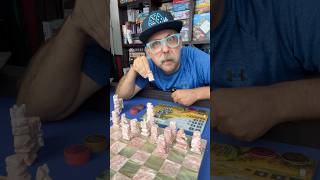
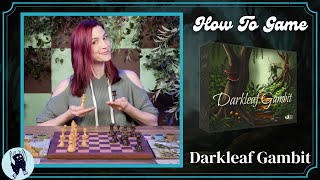
Reviewers agree that Darkleaf Gambit, published by Only Then Studios, takes a standard chessboard and chess pieces and uses them for a different game. Grant Lyon expects the design to split chess players, with some enjoying the twist and others rejecting it. Good Time Society presents the game as a structured tactical duel with a clear turn sequence. The Brothers Murph played a full match and describe a game built around asymmetric factions, close finishes, and frequent swings driven by dice results.
Where the reviewers diverge is in how much the rules load and the dice randomness shape the experience. Good Time Society spends most of its video explaining terminology, setup, and the five phases of each turn, which signals a game with a meaningful learning curve. The Brothers Murph treat the swings as a natural part of the tension, though their match shows how a run of poor rolls can decide a close contest. The overall consensus is that Darkleaf Gambit rewards players who enjoy tactical planning and can tolerate uncertainty, while players seeking a pure chess experience will find the dice a major departure.
Core Mechanics That Define Darkleaf Gambit
Journey and Deed Turns
Each turn, the active player commits to either a journey or a deed, then rolls a bone to resolve it. Good Time Society explains that a journey moves one unit the exact number of territories the roll shows, in a direction its clan board allows, and that the path must be clear of other units unless an ability says otherwise. The Brothers Murph point out the practical consequence: when a unit must move its full rolled amount and no legal destination exists, that move is simply lost. A deed is a clan-specific action. The Merg‘s destroy deed removes an adjacent rival on a roll of three or higher, and the destroying unit moves into the vacated space. Grant Lyon contrasts this with the reclaim goal of the faction that wants to hold the center of the board, which requires a roll of six or higher and places a token that opponents can pass through but never stop on.
Bone Slotting and Power Rows
Rolled bones are not simply spent. Each one is placed into a matching or conditional slot on the clan board, and filling a row returns those bones to the pool and grants a power. Good Time Society describes four power types: miracles, which take instant effect; relics, which are placed in a slot and spent on a later upkeep; auras, which attach a fate chip to a unit or territory; and laws, which remain in force for the rest of the game. The Brothers Murph show how this creates planning around timing. Nick explains that an electromagnetic loop lets a player take two turns in a row, and that a relic can be held for a future turn. Grant Lyon adds that each chess piece has its own special abilities, and that filling a row unlocks more abilities, some one-time and some ongoing.
The Darkleaf Gambit Experience
A Tight Race Decided by Single Rolls
The Brothers Murph‘s match feels like a race, with both sides pressing toward a winning condition while the dice often refuse to cooperate. Several moments turn on one roll. A noble can be taken on a five or six once the right law is in place, and a unit that sits beside a rook becomes invulnerable and cannot be removed. Nick calls one stretch "do or die," because the remaining pawns were too far from useful positions and could not move backward to fix the situation. The tension is sharp and often punishing, and the match ends as a close game settled by a narrow margin rather than a dominant position.
Chess Familiarity Turned Sideways
The experience begins with recognition and then shifts into surprise. Grant Lyon describes the first impression as a chess board with chess pieces that are doing something else entirely, and the Brothers Murph stress that a player does not need to know standard chess to play. Good Time Society spends its opening minutes on the vocabulary change: pawns and knights keep their names, kings and queens become royals, and bishops become sages. That linguistic shift makes the game feel like a new tabletop experience rather than a reskinned chess match, and reviewers describe the first few turns as a process of relearning familiar pieces.
What Makes Darkleaf Gambit Stand Out
Six Asymmetric Factions With Distinct Win Conditions
Reviewers consistently point to the six clans as the game‘s main draw. Good Time Society notes that each clan has unique abilities and its own path to victory. The Brothers Murph contrast the Merg, whose goal is to destroy the opposing noble, with the Aird, who must reclaim the four central spaces and then move their noble onto one of them. Grant Lyon says the variety gives the game a lot of replayability, because exploring the factions is a reason to return to the box.
A Chess Board Repurposed Through Dice
Good Time Society calls the chess battlefield the mythical forest of Hagadorn, and the rules reinterpret each board file, rank, and zone with new terms such as seat, range, and woods. Reviewers praise the way a familiar board becomes the setting for a different tactical language. Grant Lyon describes the design as taking chess and giving it many interesting twists. The Brothers Murph note that the board needs no special equipment beyond a chess set most players already own.
Potential Drawbacks
Dice Variance and Rigid Movement
The most common concern is luck. The Brothers Murph spend stretches of their match reacting to streaks of misses, describing a run of rolls that failed a roughly even chance several times in a row. They also highlight the rule that a unit must move its full rolled amount when a legal move exists, which can strand a unit in an awkward spot and force a bad position. Reviewers present these features as part of the game‘s identity, but they can frustrate players who prefer to plan several turns ahead without a dice-driven reversal.
Setup Demands and a Heavy Rules Load
Good Time Society stresses that a full chess set is required, with all 32 pieces and a board whose squares measure at least 1.5 inches if possible. The reviewer notes that a print-and-play board and pieces are available from the Only Then Studios website for anyone without one. The video also spends considerable time on terminology, the five-phase turn structure, and the four power types. Grant Lyon acknowledges that chess players may react strongly to the premise. The game rewards that study, but casual groups may need a full teaching session before the first turn feels comfortable.
If You Enjoy Darkleaf Gambit
Players who enjoy Darkleaf Gambit‘s asymmetric factions will find a similar satisfaction in Wicked Cribbage, another release from Only Then Studios that The Brothers Murph covered by playing on a standard cribbage board with new rules. Players who like the chess foundation and the tactical positioning of the classic game may appreciate how Darkleaf Gambit reshapes that starting point. Players who enjoy planning dice placement to fill rows and unlock powers will find the bone slots especially engaging, and may also enjoy Sagrada, where drafted dice have to satisfy a pattern before they pay off. Anyone seeking a pure chess duel should look elsewhere, since reviewers describe this as chess-adjacent rather than chess.
What Reviewers Are Saying
"Turns alternate with players declaring intent, rolling bones, and vanquishing enemies. The first player to complete their unique path to victory wins the game."
— Good Time Society
"In Darkleaf Gambit, two players will battle it out over Hagadornne by using asymmetric factions, each with their own way of navigating the board and unique victory conditions."
— The Brothers Murph
"Here‘s something chess people will either love or hate. The game is called Dark Leaf Gambit and it is played on a chessboard with chess pieces, but it is not chess."
— Grant Lyon