Games of the Month - August 2024
Games in This Video
1 game is featured in this video — it unlocks as you watch.
Transcript
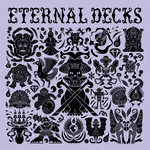
welcome to Jong get games this is my games of the month Vlog where I'll be discussing the two best games that I played over the last month now I covered 12 games in my patreon exclusive opinions episodes and what you're going to be seeing today in this video are the normally exclusive segments for those two games that I'm discussing now you can gain access to all of this by becoming a patreon supporter of the channel I discuss every new game that I play and if I continue to play them then I give updates for those games as well now the two games I'm talking about today are Eternal decks and dolman got one of these is actually not out yet I played a prototype and I'll discuss that in the segment and the other one is quite old in fact I think around 20 years old and I really enjoyed playing both of these as you're about to see now before we go into that the last thing I want to ask is if you have thoughts about these games that you please leave a comment down below also if you like the video then please click the like button for it and the Subscribe button for the Channel all right let's talk about those games let's start things off with eternal decks now this is a fully Cooperative hand management card game type system and I'd never heard of it until about a week ago when I went to the Portland games Collective convention uh now this is not like a trick taker or a climber or anything like that it really is a Cooperative hand management style game and technically I played a prototype it's going to be going up on Kickstarter in September I believe uh so keep that in mind but this is a really nice prototype I love the look of the art and all that kind of stuff now mechanically this is a pretty simple game in a lot of ways uh at the
beginning of the game everyone starts with five cards in a deck in front of themselves with values one through five you're going to draw three of those cards randomly into your hand and then when it's your turn you're just going to go clockwise around the table you take an action now there are three main actions that you do and the most common action that you will do is just take one card from your hand and place it face up into the middle of the table on this big cloth board now where you place the card matters because there are various restrictions in particular in the middle of the board there are three main rows that you're putting cards into and you always place them into the leftmost open space and there is a universal rule for all three of these rows that says no two cards of the same color can be directly adjacent in that row and no two cards of the same value can be directly adjacent in that row so for example if you put a yellow seven down then next to it you cannot put a yellow card or a seven now there are three of these rows one of them you ascend and another one you descend with the values and the third one changes as the game goes on if you're looking at the video version of this one right now the Restriction there says the adjacent cards also cannot be plus one or minus one from what you played so again if you put a yellow 7even down you can't play a yellow card like usual you also can't play a seven like usual or a six or an eight that's kind of the extra restriction and that changes as the game goes on now again on your turn you're taking one action and one of those is putting this card down but you're not allowed to talk and that is really what makes this game work is um you are hand managing things and you're working all together at the same time time but you are trying to figure
out what other people are want to do based off of what they are actually doing and the main goal of these rows in the middle is to complete them once the final card of the row is placed down then the person who played that card is going to get access to a new deck of cards now as I mentioned everyone starts with a five card deck and you draw three of those into your hand what I didn't mention is at the end of every turn you draw cards from your deck until you have three or more cards and that means you will quickly go through your deck and one of the ways that you lose this game the primary way you lose is if it's your turn and you have no legal plays then everybody loses and the main way this actually happens is because you run through all your cards in your deck and you don't have any cards in your hand which means you can't do anything and everybody loses so everybody at the start of the game is essentially under a pretty tight clock you have just these five cards and you personally have to complete one of these rows to get a new deck of cards and that new deck has eight cards in it you Shuffle those up you put it to the bottom of your deck and then you will keep drawing from that and so you're trying to spread things out so like I get a new deck so that I'm further away from having us lose the game then you do and then the other person does and the general flow of it at least the early game is let's get everybody with one new deck so that we don't just lose this game really early the interesting thing though is every time you take one of these decks you you remove it from the row and now another card is required to go there so at the beginning of the game four cards will get you a new deck the next time that row happens you'll need five and then finally six because each of these rows
has three of these decks in them now on top of all of this each of these decks is different and you can actually see everything in that deck on the card that's kind of face up in the middle of the table you can see the full deck composition and every one of these cards has a restriction now as you take this deck you take the covered card and you put it into a row at the very top of the board which shows the various Decks that people have integrated into their game and it will say something like no one can play any twos or eights while this is out there or nobody can play a red card or red/ green card various things that can be quite restrictive and another thing that you can do on your turn instead of just placing a card into a row is you can unlock a crystal which negates one of these negative effects the cost to do this is listed at the top left of the board there's a variety of different ones to go with um some of them are easy like just discard two cards to get a crystal but you can only do that once per game the next time you do it you might need to spend three cards or three of the same card or three cards with the same rank that kind of thing and when you put the crystal onto the unlocked deck essentially it negates that restriction so that you can play better and as you unlock these decks and you put crystals on them you will get access to victory points now at this point I'm going to do a slight digression to say that I believe there are six main scenarios that you can play with this game and we played with scenario one where you win the game if you get four victory points it's my understanding this is the only scenario where victory points are a thing the rest of them have different endg game conditions with like keys and other things one of them actually involves uh
taking down a boss like a dragon I think it is and you deal damage to the dragon based off of how you put cards down so this really is like an eternal decks system overall with a variety of different actual goals and whatnot and components that go along with those goals within each of the plays so now I only played the first scenario I played it three times in a row and um so that's what I'm speaking to right now I'm not speaking to the other things so in this scenario you need these points and you can get up to three victory points by just unlocking these decks which makes sense because again you trying to not lose the game by continuing to get decks and an interesting thing kind of happens where again at the very beginning you know the fourth card in one row gets a deck you can do the same thing again and again and you're going to get to the point where one person hasn't pulled up a new deck yet and they might be getting really close they might have like one or two cards left in their hand and this brings us to the last main action that you can do which is just trade a card you can do this up to three times in the entire game and you just take a card from your hand and you give it to somebody else so if somebody is really struggling and they're about to run out of cards you can use these trade actions to get them that card that they need to complete one of these rows to get another deck of their own now an interesting thing about the timing of this is as you're building towards these things it seems like once the final person gets a new deck so it's like yay we're not about to lose the first person to get a deck you know way back at the beginning is now probably just about through their deck already and I think that's really where this eternal decks idea comes comes into play where you are constantly trying to manage your deck
size and everyone's deck size and keep in mind where everyone is because again as soon as it seems like all right cool we all got a new deck somebody is already running out again now if this was the game it'd be a good game um I would definitely enjoy all these things but the reason why this was the best game that I played the convention and honestly a game that I'm really excited to play more of has to do with communication I mentioned way back in the beginning that you're not allowed to talk to each other and that is true but each player has two discs wooden discs in front of them and these are communication discs and they are very flexible you can put them down anywhere on the board space in the middle of the table like literally anywhere on that board space there's no like position for your communication tokens and you can use these to creatively try to communicate things to your partners for example let's say you are running out of cards you need another deck and you have a card in your hand that fits with the final space of one of these rows you could take one of your communication discs and put it into the empty space thus signaling to everyone that you got this like don't place here please I need to go here or let's say that looks like it's the best position but you don't have a card that's going to work in your hand maybe you put your second communication disc next to those passing action spots so that people might be like oh that person is communicating that they need somebody else to pass them a card that fits into that space um you could also put like both of your discs onto a spot to really emphasize what you want to do um there's just a huge variety of things that you can communicate with these discs it honestly really reminded me of the game concept
which is a fully Cooperative game where technically there's points but who really cares about the points um where you try to communicate a concept by putting tokens down onto a big board with like color and shape and size and you know various Concepts like that in this game though the board the concept board is the main board of this game and it has all these cards everywhere and you could do a lot of things like for example um in the third game that I played uh I was playing with Jessica in that play she put one of her communication discs on top of the um deck that she pulled up because each of these decks also has a special card for example and one part of the card shows that icon and she put her disc on top of that and I correctly read that to mean her saying that I have that card in my hand I've also seen situations where people put their U discs on top of other cards that have been played already like on top of a four and a seven and the reason able assumption there is that they are telling everybody that they have a four and a seven in their hand but maybe they're not obviously there's going to be kind of group think things that come into play here and this really is where the joy of the game is now as I mentioned I played this game three times in a row um the third play had no one from the previous two plays there was a little bit of overlap in that second game and in the first two games we did not get close at all to winning and I was trying not to get frustrated I was enjoying myself but it was a you know first time play for a lot of people and you know my first and second and then third plays and people were not using their communication discs and and we lost and it's not surprising because there's a lot of ways that you can find
yourself where you don't have a viable play into any of those main rows and you can always take a card from your hand even if it um is being hit by a restriction and you can put it at the very bottom of the board into the river as as almost a pass turn honestly like it's technically something you could do so nobody loses and once a certain number of place down there one person gets a a wild card which is nice but it doesn't feel good and when we went into that third play I actually taught it which is kind of interesting and right before we started playing I said listen everybody uh there's something I've noticed and that is that it's very easy to forget to use your communication tokens and I said if at any point both of your communication tokens are in front of you you're making a mistake like you have to be communicating at least one token worth of something at all times and in order for us to actually pull this off and so you know I kind of said that as like some advice essentially because I'd seen us lose two games in a row because that seemed like that wasn't happening and we proceeded to play that third game and we won by the skin of our teeth like it literally couldn't have been closer uh I won the game on my turn and Jessica was to my left and she had zero cards in her hand so if I hadn't triggered the win on my turn we would have lost and it felt amazing and we were so in tune with these communication discs again you have these rows in the middle of the table with like us sending or descending uh we were finding ourselves like putting like I put my disc down in the far left space to kind of in tone I have a really big card cuz we're going from high to low and then another person would put a token next to that and another person next to that and I'd put a token there and we'd look at this row and it would
be empty but there' be four tokens in it as we've essentially communicated to each other okay we have a plan here like I am signaling I have a big card next person says they have a pretty big card but it's probably not as big as mine going all the way down and oh man that felt so good it felt really interesting to do these things but I do also want to emphasize that these are not binding like there are many situations where somebody would put like two tokens down and then somebody else would play on to that spot and the first person was like G you know like I put two tokens that I really needed to go there but the other person had a different plan and they tried to communicate that as well and we definitely made mistakes like we did not need to get that close at the end but it was also the first time playing for essentially three out of the four of us in that play and it felt so good it felt so good to actually win this game and I I always really like concept I played that game a decent amount way back when it came out uh we owned it for years and we ultimately got rid of it because we don't play fully Cooperative party style games all that often um and then seeing that idea the like free form communication idea of concept built into a speechless fully Cooperative game was super cool and just the stresses and the various levers and stuff that you could pull were just fascinating I genuinely thought we were about to lose until suddenly it was like oh my gosh no actually we can win I like I said you need four points and I got our fourth point and the person to my right got got our a third point so when Jessica played her final card and we all knew that we had just last round we only had two of our four points but we were really close to the other ones and we were able to pull it off so this is I guess a
somewhat long way of saying that I'm really excited about this game I really enjoyed playing it back to back to back I was I wanted that challenge to actually win it and I am super curious to see what these other scenarios are like again there are like keys that you can like unlock in various ways one of them actually has pattern matching like with those rows like a a two-dimensional pattern going from one row to the next needing like a diagonal of red cards and a up down of yellow cards and various things like that and again there's also this like boss battle one which sounds crazy where I think the boss like has one or more cards that they put down onto the board and when you play cards on top of the boss cards you deal damage equal to their value or something like that anyway obviously I'm just excited to give this game a lot more tries uh also not with the Prototype the Prototype was nice but it's my understanding the actual game is going to be even nicer than this version that we played so right now um it's one of my more anticipated games to play more which is surprising because I don't really play cooperative games all that often but this one really really worked and I hope I've been able to communicate why that is well enough anyway and as I play this game more because I'm I'm sure that I will be playing this game more I'll definitely give updates um as I experience some of the other scenarios that come in the game for the next new game we have D dolman GD now this is an older game it came out in 2005 and I heard about it for the first time probably about three years ago from the hidden gems podcast they covered it and they really liked it uh so I've been kind of keeping my eye out for it to try it for a while now and then I put in a
really big uh import order from uh Europe and this was super cheap it ended up being in shrink when it arrived I think I got it for under €20 um plus probably like you know five or seven EUR for shipping but it seemed like a really good deal for a game that I've been curious to try so I I do want to point out that um the game that I played is the dolman GD it came out in 2005 there was a new version that came out in 2015 called just dolman graphically they look different but they are essentially the same game with a couple slight tweaks in the rules and speaking of the rules everyone that I've talked to about D Dolan godder said you have to play with the variant there's a variant that was posted in the forums not by the designer but by people who really like this game and so I did so I'm about to talk to you about this game but keep in mind I'm teaching it with a fan variant that everyone seems to collectively agree is the way to play the game so imagine a board in front of you with a octagonal hexagonal Square grid kind of jammed together honestly look it up take a look at the video version of this one or just search for D dolman and take a look at Board Game Geek to get this into your mind because it is a strange one to internalize it's essentially an octagon Square grid they tesalate really well together four octagons around a square and then obviously four squares around an octagon but every other octagon has essentially had two of its nodes removed to squeeze it down into a hexagon so you have all three of these different shapes in a tessellated grid and then at every
one of the intersection points you know around the squares hexagons and octagons there's a location for figurines to be placed now each player has three Druids and the way the game works is when it's your turn you either move one of your Druids to one adjacent space or you could skip over other Druids that are there already and then you optionally can put a stone where you left so you essentially leave a spot and put a stone down if you don't put a stone down you actually lose a victory point you start the game with four victory points so you can only do this so many times before you're forced to put these Stones down and that might sound a little weird like okay well you should just put your Stones down but you'll see why you might not want to in a minute so again you can either move your Druid to one adjacent space or skip over other Druids you cannot move through Stones though or you can lay the Druid down to quote unquote pick some herbs and that's whole turn and then in a future turn instead of walking one Druid to an adjacent space you can fly a herb picking Druid I guess thematically they got high or something like that um so you essentially you can spend two turns to teleport one of your Druids to any space on the board which lets them get out of a hard spot so that's essentially the game you're just on turn moving Druids around in a variety of different ways putting these Stones down and as soon as a player has a strict majority of their Stones around a shape on the board board they can put a dolman down now dolans are square tiles and you put them face down onto the table but on their Hidden Side they have a value that ranges from one to four yeah I'm pretty sure I got that right and the number of these varies you
got a bunch of ones a decent amount of twos a couple of Threes And I think only one four now again you put this face down and then you know we all keep playing and if anybody ties you for the majority so like you know let's say somebody puts one down then you put one down and then you put a second one down well you just got a strict majority so you can put the first dolman down I do want to mention there has to be at least two colors to have a strict majority so again in this example we have two an opponent has one and let's say they put a second one down so they now have two and we have two in this case when a tie happens between players around that shape then that player who just tied takes one of their dolans and they put it to the bottom of the stack so underneath all the dolmans that are there already then if a new strict majority happens let's say I put a third one down to get the majority again or that opponent puts a third one down to take the majority away from me then you take a dolman from your supply and you put it on top of that stack so as you're vying back and forth and fighting you're putting dolans down either on the bottom of the stack or on the top of the stack and as soon as that shape is completely filled in with stones on every one of its nodes you score that stack you flip all these tokens over and the way it works is depending on the size of the shape you will get bigger multipliers for the octagons the topmost dolman is going to be worth five times its points so if you got a four there congrats you just got 20 points that's amazing maybe it's more likely a two and you got 10 points then the next tile underneath will get a 4X multiplier the tile under that will be a three then two then one and then finally zero if it gets down to that so being on top of the stack is great but also being at the bottom of
the stack could still get you some points when it comes to the hexagons the top tile is multiplied by four and for the squares which of course only have four nodes around them the top token is only multiplied by three so if you're chasing big multipliers you're going for the octagons but of course it takes eight stones to complete an octagon whereas only four for the squares now of course each time you put a stone down you are putting it into multiple shapes because you are traveling on the edges of each of these shapes so by putting a stone down you are frequently putting it into essentially a square and a couple octagon or maybe a square and a hexagon and an octagon so you're vying for multiple majorities essentially by putting these Stones down also like I said you score these dolans once every spot is filled in and then here's where the variant kicks into play the variant has everybody get their doans back that were just scored so you can play them again in the original rules you score them but you just leave them out there and this is a really big change because what it means is You're motivated with this variant to put your big numbers out there even early like your fours and threes because hopefully you can score them early and then put them out again and then put them out a third time to get a lot of points out of those big values as opposed to spending the entire game posturing and trying to get your four on top of an octagon and then you know hopefully that happens by the end of the game and uh that's kind of the game hopefully that makes sense uh you keep playing until somebody runs out of their stones and then everybody takes one more turn something like that and then you do score all of the dolans that are still left on the the board for their full value so that's fine like if you start stacking up dolans into an
octagon that's never going to complete by the end of the game I guess that's okay you just have to be comfortable with not getting those dolmans back and you know working with other things as you are continuing to play so we played a four-player game of this one because it was heavily suggested to me that this is essentially a four-player game my version of the game supports two to five players and I've been told that three is okay but that two and five are downright terrible and should not be supported I cannot corroborate this I've only played this one the one time it was four players and I really enjoyed it but you know keep that in mind so we played a four player game and I lost by a single freaking point I was so bummed I mean like I had a great time it was like a a fun kind of bummed like are you kidding me kind of a thing U but the scoring was so as we were going through all of these dols finishing the mount and one thing that really stood out to me about this game was its speed Board Game Geek says it's a 30 minute game and yeah it is it's like a 30 to 45 minute game our play was probably more like 45 minutes it was a first play for all of us and for some reason I just expected this to be like a 90-minute game I didn't look online so like my expectations were just flawed I guess but we you know we sat down I taught the game it was the first time for all of us to play it and we're we're going and we're going and you have 12 Stones in a four player game and I remember I had put like five Stones down and I was like wow this is a fast game like I'm we're almost halfway through it already uh you obviously don't put a stone down every single turn because you can sometimes put your jids you know have them pick herbs and then fly and whatnot also you can burn points to not
put stones down and I mentioned earlier you might want to do this and part of the reason for that is because you might find yourself in situation where you need to move a druid but if you put a stone behind you it will actually score that shape and maybe you get no points for it so you would maybe rather sacrifice one of your points so that it doesn't score now so that maybe maybe it scores later on it will definitely score by the end of the game but you're essentially helping trap good dolmans if you think there are good dolans there so that's a thing to keep in mind um the the scores were I think 90 to 89 I think I had 89 so losing one point you know I never did it I never spent a point so I can't blame that for my loss but you know one point is not nothing but also not like the biggest thing in the world and yeah it's just a really smart interesting game like your decision space is huge while also being so simple like it's your turn cool move a druid which Druid that is the question where that is the question but there's nothing else really going on there's no extra actions there's no bonuses there's no there's no anything else it's just a very elegant game with this Kookie map and the scoring system that just makes sense and it incentivizes you to get greedy but then you also kind of have to work with other people and other people might see through your greed and then punish you by not helping you complete one of these things again you need to if you want to score in the middle of the game every spot needs to be occupied and there was at least one octagon that I put like five of my Stones down around it I only have 12 Stones total and so I don't think I was playing that very well I mean I almost won the game so I guess maybe I wasn't playing terribly but that
felt bad and obviously if I'm in the majority and I put another Stone down that doesn't affect things you only add new dolans when you tie the majority or you take a new strick majority so as I'm laboring to walk around this uh shape to get the stones down to actually score at Mid game so I can get my three or my four back people can see that um and that that doesn't feel necessarily great but of course every one of these stones that I'm putting down is next to other shapes so yeah while it's not great for that octagon that I feel like I'm single-handedly uh finishing I am also vying pretty well in all these other adjacent shapes so the way that you VI for these things is fascinating the brain space is really interesting I haven't had a chance to play it again but I am really looking forward to it I think I have a lot of friends that are going to be a little bit brain explody like what when it comes to this game and the fact that it is so fast to play means I realistically should be able to get this one played again I'm hoping to toss it in my game bag when I go to open game nights I haven't done that since I actually got this one played but it's a pretty thin box and so I do intend to do that I want to show this to more people it's you know it's an abstract game in a lot of ways it's a multiplayer abstract there's a bit of hidden information with the dolans that are face down but you can also kind of figure out by how people play where the really good stuff is versus the not so good stuff and I think there's just a lot of uh brain space to explore here and I'm looking forward to doing just that well I hope you enjoyed learning about both of these games as I mentioned at the beginning if you have thoughts about either of them then please leave a comment down below
all right that's going to wrap this one up as always I'd like to thank everyone who's been supporting this channel including these producer level patreon supporters if you too would like to directly support the channel in the creation of future videos just like this one then please go to jungus games.com Support also if you enjoy this video then please click the like button for it down below as well as the Subscribe button for the channel thanks for watching