Money
Games in This Video
1 game is featured in this video — it unlocks as you watch.
Transcript
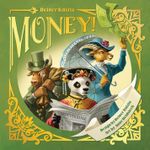
Hello. So, today I want to tell you about another smallbox game from Allplay. You know, I'm a huge fan of these. They were kind enough to send me this with the deluxe scoring components because yes, I love all things deluxe. And this is money. This is a game from Rhino Canitia that has been out for a long time, but this is the new version. It looks great. This was on a Kickstarter. So, if you backed the Kickstarter, you probably have gotten your copy by now. And if you missed out on the Kickstarter, it will be available starting mid June so that you can get a copy for yourself. This game is quick. It plays about 15 20 minutes and that's at all player counts. It plays two to five players. Two players you have to make some adjustments. So I definitely recommend it at the 3 to five player count. But I really enjoy this game. So let me tell you about it. First of all, every player is going to get a player aid that is going to walk them through the steps of the round. And then on the back is how the game scores. So everything is super clear. Love that.
You are going to deal out a hand of cards to each player. And they have different types of currency on them. And basically the color of the currency indicates what set it belongs to. And I think the artwork on this is just gorgeous. So everybody's going to have their hand of cards. And then there's going to be a market in the center that the rest of the cards go on. And there will be four cards face up on each side of the market. Side one and side two. Oo. And this is a set collection game essentially. So the more cards or the more value you can get in any one set is going to give you more points at the end. The cards in your hand are going to be multi-use. You're going to be using them to make your bid each game, but at the end of the game, your hand of cards is what you are going to use to score.
So, how does all this happen? You are going to look at your hand and you are going to decide to make a bid. Essentially, these are the cards that you want to trade away for something better. You get to choose how many cards you're going to put out in your bid. And you also have one fake money card that you can put out in your bid because maybe you're wanting other players to think that you're putting out a lot of cards, but really this card's going to go back in your hand. So maybe I want you to think I'm putting out four cards for my bid, but in actuality it's only three. So let's see. I have a lot of these lion cards. So, I maybe don't want to trade those away. And I'm noticing there's a lot of green cards over here. So, I'm going to keep my greens and I'm going to create a bid of let's do this. So, I'm creating a bid of 30 30 and 20 and 20. So, this is 100 is my bid. So, I'm going to put this down in front of me. We're all going to reveal our bids at the same time.
Whoever has the highest bid, meaning amount of money, currency, what have you, they're going to go first. So, if I was that person, I can look at the two markets that are available, and I can look at every other player's bid. I can then decide to swap all of my cards with all of another player's bid or all of my cards with one of the markets. Or I could say, just joking, psych, I'm keeping my bid. So, let's say I decided to swap with the market. So, I would swap my four cards. Those go into my hand. And now the person who still has a bid, cuz my turn is done with the highest amount will go next. They can swap with the market or with a current player. So, you're not necessarily going around the table in a set order. It's whoever has the most cards in their the most value in their bid at that time because you might play two really high value cards and someone else could play three low value cards. It's always about the value. So, everybody goes around. We swap. Great. If, let's say, somebody only put out two cards for their bid.
Let's say this was their bid and they swapped with the market. So, they just gained cards, which is also great for them. We then refill the market back up to four on each side. And we now do another round. And we continue this way until we run out of cards in the center. When that happens, you finish the final round and then we go into scoring. And this is where it gets exciting in my opinion. So, we have a handy dandy little score card and a dry erase marker. The scoring is a little weird at first. So, what you're going to do is you're going to figure out each of your sets that you have. So, you kind of lay them out. any of your currencies that you score 200 or more in, you're going to get that many points for your currency. And if you're using the um optional expansion, like this one says 200 plus, and only one person will be able to get 200 in any given set. So, I could take this to remind me that I got that. So, that would be great. If you get between 110 and under 200, you get that value minus 100. So if I had 180 in one of these sets, I would actually only get 80 points because there's a penalty. If you get less than 100 in any 100 or less in any set, you get nothing. So you have to be very careful in how you're bidding cards out and what you're taking into your hand because you're having to make these big sets to get points. But if you
then don't have anything to bid, it's really hard to get more cards into your hand. So it is a balancing act. Um, and then the other thing is if you get sets of three in any currency. So for example, let's see if I can find there are for example for in the golds if I get three gold cards then three gold of the same denomination. So 20s or 30s, I get that bonus. And as the scoring tells you on the back, when you get three of the same currency, you get its full value plus 100. So this instead of being 60 points is now 160 points. And I know this kind of sounds complicated the first time you're doing it. And the first time it's a little wonky, but again, you have this great card that literally walks you through everything. You write it down.
Whoever has the most points at the end wins. So the big thing is you want to try and get over 200 in any given currency if you can because you're going to get the full value. And then here moderate it tells you if you get 110 to 190 you get the value minus 100. Anything under that you get nothing. And then for your sets you get the full value plus a bonus. And each currency denomination has two sets you can get. So there's a set of 20s and a set of 30s in every denomination. So, the points can really change quickly in this game. Again, the wooden animals are totally optional, but they're just a great way to help you remember to get your bonuses because you can score up all your values and then you can count how many of these small ones you have and just know that each one is 100. So, I think this game is fantastic. It sounds a little weird at first. Once you play one or two rounds, you're like, "Oh, got it. Good to go." Super fast game. Really fun.
Again, I prefer it at kind of that four to five player count because I think it's more fun to have more bid options out there. But this game is excellent. So, I would love to know if you've played it or played any of the AllPlay smallbox games. Let me know what you think. Give me a like and a follow, and I'll keep bringing you more board game content. Thanks. Bye.