Computer Junkyard: Home Brewed Tiles!
Transcript
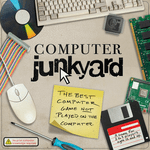
Question of the day, what is your favorite untapped theme? Well, today we're talking about a game all about building home brew, or not even home brew, but building homemade computers or putting together computers. And you can tell they're a little bit older in the '90s era cuz you got CD-ROMs, you got things like that. This is Computer Junkyard. Now, I'm pretty excited about the theme of this game because I love watching like people make new versions of old machines or old machines made into new things. Like I I love that kind of stuff on YouTube. In fact, my YouTube playlist is basically woodworking at night, Metal Gear Solid 5 history, and people making computers and stuff. So, it's just fascinating to me. So, what's your favorite idea of an untapped theme that you think would work really well? Cuz at the end of the day, let me give a quick um diatribe really quick.
This could be city building, right? The way this game plays, it could be city building. It could be I don't know, chef preparing a table. But, there's something about this theme that just works so well with the mechanics in this game. So, let's take a look at Computer Junkyard right now.
All right, this is Computer Junkyard. There is money, there are computer tiles that go with the junkyard. This is where you buy tokens from. You have your chassis here, and you will start with the motherboard. Everything else has been added onto. Meanwhile, the reason why is cuz I didn't want to show you at the beginning of the game. I'm going to give you a rough overview of how to play. The phases are actually pretty simple, and the actions you can do are pretty simple. First is the pre-build. So, you will take two tiles out of the bag over there, and they're they're sorted by player count. So, two players, this one plays in two players. You'll take them out of the bag and put them in the junkyard. Then, after you do that, you can choose to If you draw a bug, you can choose to play it on somebody else's thing. Bugs are just things that can't be You can't complete the game with a bug in the software, so you have to get rid of the debugging. Uh number two is the actions you can do while in the pre-build phase. You can visit the junkyard, which means you can buy these computer pieces, and they are set based on scarcity. So, if in the junkyard there are zero things out there Let's say I'm going to sell um this bit of RAM here. I think that's RAM.
Yes, that is No, that's it's it's a hard drive. So, if I was to sell this here, I would get $12 for it. If there were already, let's see, in this case, one, two, three sound boards sound cards, we would sell it for $2 a piece. But, conversely, that's how much it cost to buy them. However, it is not a at the moment of purchasing, it is per purchase. So, what that means is I may have said that backwards, but what I mean is this. If there are three there, and I buy one for $2, well, now the next one costs four, the next one costs eight. So, it kind of moves with it. Then, once you bought or sold up to two pieces, you can The other actions you could do would be to debug or to attempt to thief. So, you attempt a theft of somebody else's part. To debug, you're going to roll this dice. If you roll a 10, you take the bug off and put it on someone else's computer. If you roll a 6, 7, 8, or 9, you just debug the machine. If you roll one through five, you add a bug spray to your hard drive here or sorry to the motherboard here, and that is a plus one. It's a little RPG action, right? It's a buff. So, then, if I roll a four, that becomes a five. If I had another bug spray, it would become a six. So, that's what that does. It helps you not just be stuck in that over and over and over. Same thing with theft, you choose a piece from someone's workshop or chassis, and you can pull it from them doing the same rules essentially. But, instead, as you get stolen from, you get locks.
So, that makes it harder to roll against. Once you start building the computer, you are looking for a couple different things. This is what you're looking for, this configuration. Doesn't have to look like this, cuz obviously it's in a computer chassis. It can go like I've watched a ton of people make homemade home brew computers in any configuration as long as it follows this. So, case in point, notice that the tabs here match the color they're going into. So, this piece right here of a database or sorry, a data bus would have to plug into the motherboard because the colors match. Then, over here, you'll notice you need three CPUs, you need three HDDs, hard drives, and three things of RAM. Those will have to plug into data buses. Now, notice it says at least because that is 3 6 9 things. They cannot plug into 1 2 3 4 5 slots. So, you're going to have to have more data buses.
Which is good because these have more slots around it. Everything else it'll show you how it has to plug in. So, you need a PCI board, so your video card, audio card, USB card goes into PCI board, and you follow the flowchart here. Well, the monitor plugs into video card, speakers into audio, and then your peripherals go into the USB slots. You got a mouse and a keyboard. Up top, you've got software. Everybody starts with the software at the end of the game. It tells you what you have to have in your chassis to run the game, which is pretty cool. I love this. It's like a computer game here. It tells you the different things. And you'll plug that into the CD-ROM, which is right here. You can use splitters to extend things out, but you can never use a splitter for the CD-ROM drive. And essentially, you're going to play until someone win building in the building phase says install. You'll then check to make sure it's installed correctly. That person wins the game.
All right, that's Computer Junkyard. Couple things really quick. The production value in here, I really like the way the pieces look on the board. I love the fact that the chassis looks like you're looking down into a chassis, bolting things on. Um [snorts] the only thing I wish I'd like to see him like a soldering mechanic or something like that because there seems to be a little disconnect of get piece, put piece in, get piece, put piece in. Now, the scarcity of the market actually makes sense when you think about computer parts and scarcity like video cards are out of stock, they're hard to find, they're through the roof. So, I do like that the market actually kind of works, but the pieces are very cheap, right? It's 12 bucks as opposed to $1,200 for a piece. That being said, uh let's go through the the gameplay and everything like that. When it comes to taking there there's one piece of frustration, though, is you draw tiles and you put them in the market at the beginning. It's like, "Oh, I need that tile. Shoot. I don't have enough money for that tile."
But, I like the mechanical or the the economic mechanic of this game where you do have to manage your money pretty carefully, but it's not too so terrible because it's you know, you can get 12 pretty easily by selling off extra junk pieces. And I find that the bugs and the stealing is not that problematic, either. So, at the end of the day, what tends to happen, especially at two players, uh but what tends to happen is a whole lot more, "I need that piece. I need that piece. I need that piece." as opposed to, "Oh, I'm going to win, so I'm going to steal that piece." because it's it's not that kind of game, right? It's really not that mean of a game or take that a game. So, when someone just does out of the blue steal a piece from you, you're like, "I just want to knock your chair over." You know what I'm saying? Like, it doesn't it doesn't fit to me with the rest of the game. So, if there was a way instead of mitigating getting a piece that I need instead of stealing it, I would do something where it was like, uh go to the flea market, right? Call it a flea market action. Draw four tiles out of the bag, keep one, right? Um something of that aspect where maybe it costs you some money. Hey, pay $4, draw four tiles out of the bag, keep one tile.
Something of that that aspect. The whole like debugging thing I actually really like. I think that's pretty cool because as you're building, every video you've ever watched, anytime I've ever seen anybody talk about making stuff, you see problems and bugs in the code and hardware issues. So, that actually makes sense and works really well. And it's a frustration mechanic, which is built in. Uh the production value it like I said, it looks good. The pieces look nice. The rulebook's interesting like I think it's supposed to be trying to do this aesthetic, but it looks a little flat. Uh and it's a little too big. It's one of those rulebooks that like it's too big in size. So, it's almost like the information is just like hitting you too hard. But at the end of the day at the end of the day this game is a neat niche game that for people who are into building home brew computers and building computers themselves, I think there's a great um game here for that. Um not my favorite game on the planet, right? I think there're frustrations that are there, the lack of being able to get the pieces I need or to get the pieces drawn out of the bag that I need.
Uh to me it slows it down a little bit. So, solid seven, uh fun game, could be a little better in a couple tweaks in other places, but really interesting game. So, that is Computer Junkyard. I'm Brian Drake here on the Dice Tower. Make sure to follow us on Takes by Drake's on Instagram. Until next time, we'll see you.
Hey everybody, thanks for watching another video from The Dice Tower. Hey, do you want to learn more about us, communicate with us? We have a Facebook group, we have a Discord channel. Lots of different ways to get involved with The Dice Tower. You can find that in our link tree link below. So, just click that, it will take you, and you can communicate with us on Facebook, join our Facebook group. So, there's lots of cool things that you can find and become part of The Dice Tower.
Thanks so much for watching. I'm Tom Vassal.