



Computer Junkyard Deep Dive
What the Community Thinks About Computer Junkyard
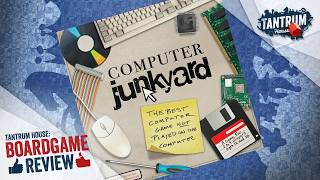
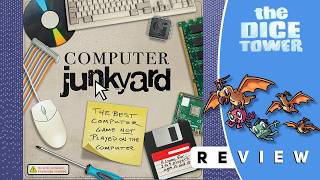
Computer Junkyard has struck a chord with board game reviewers, particularly those who recall the nostalgia of building computers by hand in the 1990s and 2000s. Publisher Dream Egg Games, a father-son-daughter team, launched this tile-laying puzzle game through crowdfunding and it is now entering retail. The game presents an unconventional appeal: it combines a technical assembly challenge with aggressive player interaction, making it polarizing depending on playgroup preference. Some reviewers embrace the chaotic sabotage mechanics as thematic flavor, while others find the constant player-versus-player interference at odds with the puzzle-solving core.
Core Mechanics That Define Computer Junkyard
Tile Assembly and Hardware Puzzle Design
At its heart, Computer Junkyard is a spatial puzzle where players assemble hardware tiles onto a 9x9 chassis grid, connecting each piece to a central motherboard. Each tile has specific connector points with color-coded inputs and outputs, meaning a green connector must plug into a green slot. Reviewers praised the physical quality of the tiles and the clever use of color-coding to guide correct assembly. The remarkable feature is flexibility: players can rearrange, disassemble, and slide their entire computer around the board during the simultaneous building phase, provided they do not have bugs locked into place. This flexibility creates opportunities for tactical restructuring and last-minute reconfiguration to squeeze pieces into the tight grid. One reviewer noted that replaying the game feels fresh because while the hardware requirements mostly remain the same, the specific tile configurations demand different spatial solutions each time.
Scarcity Economy and Dynamic Pricing
Computer Junkyard manages resources through a scarcity-driven market. Tiles drawn from a central bag are placed into a Junkyard display, and their prices fluctuate based on supply. A tile with three copies in the Junkyard costs two dollars, but as pieces sell out and supply drops, the price climbs to four, then eight dollars for the last remaining copy. Conversely, when a player needs cash, they can sell unused tiles back to the Junkyard at prices that reflect the current glut. This mechanic creates genuine tension: reviewers observed players constantly evaluating whether to buy at a high price or wait and hope the tile reappears later. One reviewer noted the scarcity system made thematic sense, comparing it to real-world shortages of graphics cards and computer components, though the pocket-change pricing kept the economic pressure manageable rather than crushing.
The Computer Junkyard Experience
Deep Nostalgia for 1990s Computing Culture
The game taps into genuine nostalgia for players who built their own computers or worked with vintage hardware. Reviewers spoke fondly of recognizing CD-ROM drives, floppy disk references, and component names like CPU, RAM, and sound cards. One reviewer revealed that when teaching the game, other players had to correct them on component names because they had forgotten how to distinguish hardware pieces. The thematic language throughout, bugs referencing actual insects that famously disrupted early computers, bug spray tokens, and the goal of running vintage software, reinforces this lived-in computing history. The rulebook even includes educational information about what these historical components actually do, turning gameplay into a casual lesson in computer archaeology.
Chaotic Take-That Sabotage and Trading
Computer Junkyard embraces aggressive player interaction as a core experience. During each round, players can attempt to steal tiles from opponents' work benches or outermost computer pieces by rolling dice. If successful, the victim gains lock tokens that make future theft attempts harder. Additionally, if a player draws a bug tile, they must immediately attach it to an opponent's computer, forcing that opponent to spend actions debugging rather than building. The game rewards making deals: players can negotiate alliances, trade resources, and collectively agree to gang up on the player in the lead. One reviewer compared the chaos to Galaxy Trucker, where external forces, pirates and meteors in that game, bugs and theft here, derail carefully laid plans. Reviewers noted this interaction level is a feature, not a bug, for groups that enjoy negotiation and social gameplay, but a dealbreaker for players who prefer focused, uninterrupted puzzle-solving.
What Makes Computer Junkyard Stand Out
Historical Authenticity Woven Into Rules
The game's rulebook explains that early computers experienced actual bug infestations, real insects that would short-circuit or damage components, which is why the debugging mechanic and bug spray exist. This detail delighted reviewers because it grounds the seemingly silly bug mechanic in actual computing history. The color-coded connector system mirrors how real motherboards and expansion cards work, and the need for specific bus components, data bus, PCI bus, before a player can attach peripherals reflects genuine hardware architecture. This marriage of thematic authenticity and mechanically sound puzzle design makes Computer Junkyard feel like more than a random reskin of tile-laying games.
A Time-Constrained Building Phase That Keeps Pace
Computer Junkyard includes a two-minute sand timer for the simultaneous building phase, which one reviewer credited as a smartly paced design choice. While the overall game can stretch toward or beyond the advertised 60 to 90 minutes, depending on tile draw luck and player group deliberation, the building phase itself does not drag. Players scramble to place and rearrange tiles in real time, keeping the action brisk and preventing the simultaneous-play section from becoming a slogging analysis phase. This pacing choice prevents the puzzle element from becoming tedious, especially at higher player counts.
Potential Drawbacks
Random Tile Draws Can Leave Players Stranded
The most consistent complaint across reviewers centers on dependency. To build anything meaningful, players need certain foundational pieces like data bus and PCI connectors. If these pieces do not appear early from the bag, players spend the entire game waiting and unable to make progress toward completing their computers. This creates a feast-or-famine dynamic where drawing the right connector piece feels like winning a lottery. One reviewer summarized the frustration as needing that piece over and over becoming the entire game experience when crucial components stay hidden. This randomness can make multiple plays feel similar in the worst way, not because the puzzle changes, but because availability throttles options.
Game Length and Momentum Drag
While the rulebook promises 60 to 90 minutes, reviewers frequently observed games extending well beyond that window, especially with three or four players. The culprit is not rules complexity but decision paralysis and tile scarcity. When money is tight, the Junkyard is empty, and stealing is risky, players can find themselves spinning wheels, unable to afford the pieces they need and unable to generate income because nobody wants to buy their scraps. One reviewer noted they played a game that lasted longer than was comfortable and wished the box acknowledged that higher player counts would stretch it further. Managing money and piece availability can feel like an economic puzzle on top of the spatial puzzle, and this double complexity occasionally overwhelms the satisfaction of solving either one cleanly.
If You Enjoy Computer Junkyard
If Computer Junkyard resonates with a player, reviewers suggest exploring Galaxy Trucker, which shares the same spirit of assembling a physical structure from random pieces while external chaos, pirates, meteors, wreaks havoc on careful plans. The puzzle aspect and the chaotic player interaction mirror what Computer Junkyard delivers, though Galaxy Trucker leans harder into the frenzy. For those who enjoy the economic scarcity and tile management without the aggressive stealing, Factory Funner offers a similar tile-placement puzzle where players construct machines by matching colors and managing limited resources, though with lower player interactivity. Both comparison games share Computer Junkyard's vintage nostalgia or mechanical complexity, making them natural follow-ups for players who want to explore neighboring design spaces.
What Reviewers Are Saying
"There's definitely strategy on what pieces you're leaving in your workbench and what pieces you're trying to get on your board, because pieces in your workbench are much more vulnerable to be stolen. You can sort of strategize to make it difficult for other players to steal pieces on your board."
— Tantrum House
"The scarcity of the market actually makes sense when you think about computer parts and scarcity. Video cards are out of stock, they're hard to find, they're through the roof. So I do like that the market actually works."
— The Dice Tower
"Now, so computer junkyard, the whole job that you have is to build a computer that can run a specific software that you are beginning at the game. It's going to tell you about select number of pieces that you need to have. Maybe two RAMs, maybe three CPUs, and um CD ROM."
— Rolling Dice and Taking Names