Similarities and Differences - The Lord of the Rings Fate of the Fellowship vs Pandemic
Games in This Video
1 game is featured in this video — it unlocks as you watch.
Transcript
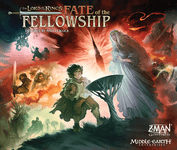
If you like Pandemic, there's a new game in store for you, which is The Lord of the Rings: Fate of the Fellowship. Yes, this game is a new game under the pandemic system. So, this is the first time I've seen the name Pandemic System written anywhere. So, it's uh endorsed as its own system, I suppose. And it is by Matt Leok, same designer. And today we're going to give you similarities and differences from this game to the usual pandemic system. And hi everyone, it's Stella and Tarant. Welcome to Maple University. If you know where we are, we are in a cold cold me Melbourne. I think a lot of our viewers are in the US. So they like why are they wearing like jumpers, jackets? And that's why we've got like electric blankets under here as well. It has been uh not unseasonably cold, but because it's winter, but it has been cold. Very chilly. Very chilly.
Hope you are all well. Now, we're going to start with the overview of the game and the similarity and differences and then we're going to give you a bit of review of the Lord of the Rings Fate of the Fellowship. So, here we have the game roughly as it is during setup. And you can see it's a map with a whole lot of locations. And much like other games under the pandemic system, you're trying to achieve four things. And we've got these four objectives that you need to complete. And they're various types of objectives. you need to bring characters or specific characters to certain locations either to achieve something on the board or as in pandemic to collect cards of the same type or of the same color. And in this case, it's of the same resource which is showing up at the top of the card. Each individual player is going to control two characters in this game. And on each turn, it's an action point allowance game. Each of your characters, one gets to do four actions and the other gets to do one. You'll move them around and then you'll draw more player cards and then you'll draw shadow cards which will make the forces of shadow, the enemy, work against you and they come in the form of these little shadow troops. So, you have your own troops and there's these shadow troops. They're kind of like the cubes from original pandemic and they will go around fighting each other while you've also got the Naz Ghoul. These are the uh the ring wraiths. They're going around
the board trying to look for Frodo and the ring and also the eye of Sauron. And so you always play the game with destroying the one ring as one of your objectives. There's a whole lot of objective cards that you can choose from, but you always use destroy the one ring and it's always the last objective that you have to face. And so after doing your other three objectives, you have to get Frodo to Mount Doom where he throws the ring in by uh discarding five cards that have this ring icon. As the game goes on, the enemies are going to draw more and more cards. So, it's going to become stacked against you or certainly escalate against you. And if you can achieve all of those before hope drops to zero, then you'll win the game because every bad thing that happens ultimately results in a loss of hope.
And so this is the only lose condition. It is running out of hope. So don't get hopeless. Yes. Are we up to the similarities? So you probably when you heard and you played pandemic in your head, the overview, you can already picked up a few things. So what are the first main one, Taran? So the most obvious similarity, the thing that is most similar is how the deck of player cards works. It's fundamentally identical. You've got cards that have, in this case, their regions, which are the larger areas instead of specific locations, but each of them has a resource in the corner, which is the equivalent of the color from Pandemic. And a lot of what you're trying to do is get those get sets of those cards into a single player's hands and you have to go to the location on the card to exchange them. And there's also flavor text here.
Um the Lord of the Rings. The deck also has event cards which you can play at any time on or off your turn. And layered through the deck is the skies darken cards. This is the escalation card. It results in the threat rate going up which means you draw more of the bad cards every round and a few other nasty things happening. So all of this is very very much pandemic. It's the core thing which is pandemic system. Looks almost like you stack the cards. It's like came out the right time of your explanation. Taran, I did stack the cards. I was just want to see what's next. Prepared that one. There you go. Oh very good. And the second similarity is that we are still doing this cooperatively. We're still fighting fires trying not to get things to escalate and ultimately working together for the same goal. There's no semi-ooperative. There's nothing like that. Um so that's that has got similar feeling. Yeah. How it manifests is a little bit different to basic pandemic where you're trying to protect every location from getting three cubes. In this case, you're trying to protect your havens, which are these specific uh brightly yellow colored locations on the board because as you lose those, which will happen when these enemy uh units advance, that's one of the major ways of losing hope. And so going in and fighting to make sure you don't get those big chunks of enemy units going into those havens is a big part of the
firefighting element of the game. And the third similarity is in terms of mechanic. It's still action point allowance where you get certain number of actions and you do whatever you want and the actions are to certain degree are similar. Yeah. Other than the fact that you've now got those two characters and you can spoiler, but yes. Yeah. But one of them still gets to do four actions. A lot of them are going to be spent moving. A lot of them are getting to those locations to exchange cards. And yeah, those will have a very similar feel to all the other games in the pandemic system. Now up to the differences. Now we have actually more differences than similarities. So let's start with the first one. Tarant. Yeah, the differences are what makes this quite a an interesting different take on the pandemic system, which I guess we'll get to in the review side of things. And so, the first and most obvious difference, which we've mentioned already, is that each player is controlling two characters, and one of those characters is getting four actions per turn, and the other one is getting one.
What is most interesting about that? Uh you you have one hand of cards, so it's shared between your characters. And one of the things you quickly work out here is that there's no rapid movement capability like you have in Basic Pandemic. The board doesn't wrap around. No. So if you're over here, it's hard to get over here. And there's no uh plane ticket action. You can't discard a location card to go straight there. So each individual character is much like in the 11 hours of Lord of the Rings movies walking on foot over very long distances and where that you know that feels very restrictive to start with but that's really where the second character comes into its own. If you keep your characters separate, you've got one who can one who's very slow, but who can meet up with someone else and do the exchanges so that your other character can catch it. So that I think is a very interesting different take on the long range movement elements of Pandemic and I think find that quite interesting and the fact that a character can move while picking up other characters automatically. Every character can do that. Like it's not just one special ability that one character can do that.
No, everyone can pick can picks up another character or you know the soldier we'll talk about it later to another location as part of their movement. Yes. Another thing that which uh gets around that uh tyranny of distance. So the second one talking about taking these little dudes on the board is the battle and recruitment. Yes. This is a a game where if you again think back to the theme of the books and the movies, you've got all these big battles between orcs and elves and their huge sceneries and then you've got all the the characters are kind of there, but a character is a small part of the war. And even on this board, all right, the characters are these huge pieces, but the battle is being fought by the troops and that's all these little cubesized pieces. They have that pandemic cube feel because they're very much cube sized instead of the old pandemic style where cubes are popping up of different um diseases and you're going and curing them. In this one troops are popping up of the enemy and you have to recruit troops of the good sides which are all the other colors and let them fight for you. Let them fight for you. And they are they have different color cube depending on which location you recruit which color cube or troops which is thematic. Yes, it's mostly only thematic because
each type of troop fights the same but certain characters are easier to recruit than others. Yeah, if you've got an elven character, it's going to be cheaper for them. It's basically going to be free for them to bring elven troops onto the board, whereas it would normally cost you resources. So, you got to kind of manage that. And the only resources is the only resources are the cards, which is this logo at the top corner the other way. So, speaking about battle, they actually require you to use dice. Yes, you can see some dice here. There's also some uh battle dice over there to the side. bring them in with the uh fancy dice tower that comes with the game here. Yeah, we tan assembled this one.
Well, I actually like lean it forward like that. That's why it's not a dice tower design issue. I promise. Yes. So, this is it is not like your original pandemic where you know that you go in, you spend one action, you remove one cube. In this one, you're setting up battles. You're rolling dice to see how those battles goes. They're mitigable dice rolls, but the dice rolls will remove your units. They'll remove enemy units. They can go well or badly for you, and you have to spend the uh resistance resource, which is the rings to roll to roll dice, or you can spend the valor, which is the swords, to remove enemy troops as well. Oh, here it is, finally. Yeah. So, you're going to find that, yeah, not everything is going to be predictable.
It's not all your math in math because there's much more probability at play. That's correct. Well, speaking about probability, the next different is the resolution cards. So, which is the shadow cards in pandemic. You just open the cards based on the, you know, danger level. Well, I just say danger level and then you resolve or resolve what it says in the card. But in this one, you resolve depending on what is on the back of the previous card on the deck. So, for example, this one. So, there's a banner there. That means you resolve the bottom part. For this one, the flag is at the top. You resolve the top part. I forgot to layer that. So, I'm glad it turned out that way.
Yeah, the deck still reforms the same way as the normal pandemic system. So when skies darken, discard is going to be shuffled and put back on top. And again, in pandemic, that has a really semi-deterministic uh outcome because you know what's going to happen, you know, over the course of several turns. In this one, there's so much more variability on what could happen because you don't you have no idea whether it's the top or the bottom half of the card that's going to result means that how the enemy attacks you is a lot less predictable. You're you're going with the flow a lot more. And that flows on to the next difference, which is you really don't have that explosive outbreak mechanism that you had in pandemic. And it goes hand inhand with the lower predictability of the shadow cards.
Pandemic, you could see, all right, I've got two cubes there. I've got to manage that. That's my priority. Here, you can get a third unit. You can get a fourth unit. You can have 10 shadow units in one location. That's not going to be an immediate problem. Correct. What's And there's no outbreaks track that's going to bring you to the end of the game. What's going to happen is periodically when you draw these red banners, a whole lot of units are going to march and they're going to initiate battles if they come across any of your troops. This one for example, it goes that way, I think. Is that correct? Well, it could go that way. Yeah, with this with this card, it will go that way. And that's what all these colored paths are. They can go one way and then get moved off to another way. It's if you get a big chunk that you can't defeat before they reach a haven, they'll capture that haven and drop your hope. And that's kind of the closest thing there is to an outbreak. But it's a slow burn. It sets up this this mass of troops and this battle and it may or may not reach where you expect it to be.
It's not going to be this immediate thing where something will fall over as soon as a third uh thing comes out. So again, it gives this different different pacing to the game. You're still fighting fires, but you're not you don't have the immediacy. And so the next difference what we actually doing in this game, which is the objectives. So it's not all about the same thing. It's not about removing cubes. It has got more variety. The end objective always collecting five rings and go to certain location but the other three are could be you know there's a variety like a deck of the objective card that you can use. Yeah.
And the so the the final one getting five rings going to the same location that is pandemic because that is getting five cards of the same color and going to a research station. But you know here we have spend an action in northion with this combination of troops present. And so it's completely different. You don't need any cards. Well, okay, you might need some cards to generate those troops, but you don't need to get a bunch of cards in one player's hand to make that happen. I guess it kind of like perhaps pandemic legacy may have a variety of objectives. So maybe this is kind of like a fusion. Who knows? I'm not spo spoiling any of the pandemic legacy does have a little bit of that.
Yeah. Yeah, there are some there are many of the and you may end up with a combination of uh objectives where you are just getting the four different colors into four different players hands because those objectives are in there, but there's a lot of variability. A lot of them also require two characters to be in the same location to resolve them. So that you know you've doubled your character count, but you still have to put a fair bit of effort into getting multiple characters in the same place. So those are the the main similarities and differences. Now before we get to the review, please check out the link to the tutorial of this game by Taran. So we did a kind of like overview, we call it quick start tutorial where it is maximum 15 minutes and it will get you to the table very quickly while you can still look at the rule book for reference. So check out for that. I'll provide the link below once we published it. Now, it's a review and we're going to share you a um quite a funny story. Not the funny story. I mean, it's very very niche story if you know how to play the game. So, I will say this game really surprised me as I played it. And it surprised me because it was surprise wasn't quite what I expected.
You know, I expected all right, another game in the pandemic system, it will feel very pandemicy. But, and we've kind of alluded to it, it really doesn't feel like playing Pandemic. This has more of a story line. It feels like a story. It's not quite not quite in an ammerit way, but in a Nemesis kind of way. I was going to say Nemesis because Nemesis is one of your top 100 games of all time. Spoiler. Yeah. And I've always said that Nemesis feels it feels like you're tell you're using uh hobby board game mechanisms to live a story in the alien universe except it's the you know um non uh what's it called?
We're non-copyright alien universe universe that feels like it. Anyway, yeah. Yeah, I know what you mean. This is this feels like the same thing for Lord of the Rings. the rules that are in here and the extra rules you have to manage to me felt like I was going through the tale of Lord of the Rings. I was setting up these huge battles and sometimes there were giant battles in one location or sometimes I was just letting one enemy troop march along and just hoping it didn't go badly. and you've got the ring race. They fly around and it just kind of it feels like you're on that tail and it really fits with some of these objectives. Yeah, the destroy the one ring. We spoke about that. Obviously, thematically that fits the story because you're throwing the ring into Mount Doom, but it's more than just that. This whole mechanism and the Froto character has everything against it.
It's always in the game. Every time Frodo moves or do does anything, um, you have to roll these dice and these trees are going to cause you to lose hope. Yeah, you don't roll all seven of the dice. You roll dice based on how many enemies are present. And so it makes Froto this really weak character that all the other characters kind of have to help and have to hide them and keep them away from the ring wraiths which is very thematic as well to the Lord of the Rings. And then all these cards or many of these cards on the lower halves when they come up it's like move more ring wraiths close to Frodo. So all these things are the enemies attacking Frodo while all the other stuff is happening. And it's just that feels like what the story of Lord of the Rings is. It's fun and thematic.
That's what you're saying. Seems like or similar with Nemesis. Completely different game, but that sort of feeling is is very similar. And I agree. It's It's very fun to play this. The first time I played it, it was at UK GE with Matt Leok. I mean, he wasn't playing with us. It was probably the Sauron character. He was just like helping us. didn't give us any tips or gave us any tips but didn't tell us what to do. So, we experienced it and we die ourselves like okay spoiler we didn't win uh was just at the last battle which is always like I'm not going to spoil again but yeah it's it's very very fun. I love the different objectives that you can you can do. And this is the fun story, right? A real story. One of the games that we play is Boromi reclaims his honor. Now, in the movie, I assume that you've watched it.
He died, right? Sorry, it's spoiler for some people. Maybe at the end of the first movie. Thank you. So, it's like I don't know what's a what's a spoiler. It's like after 10 years, it's no longer a spoiler. I I mean this book was released in the 50s. Oh, that's true. So, Boromi passed away at the end of the first movie. So, in this one, Boromi needs to do something. He needs to go somewhere and then needs to be in the last battle and then no troops left and then one other character needs to be in the same locations as Boramir. And that character literally left the board and will be replaced by another character when the next objective is completed. Yeah. So it's like my recollection of watching the first couple of Lord of the Rings was, "Oh, Boramir is gone. Hey, who's that Aragorn guy that just turned up?" I forget when Aragon got introduced, but it was just kind of like, yeah, the character is gone and then someone else kind of replaced him, and that's that what that objective does. However, we wasn't we weren't planning I mean the other objective we completed but the last one. So at the time we complete this objective the other two objectives are done. So we ended up playing with just three characters all up. Well lucky we won in that game but it was like why did we do this? So timing timing timing but just at the first two objectives that we completed the timing was perfect to do it like then and there. So yeah, maybe
it was okay. And so I think what all of that kind of means is if you're a big fan of Pandemic and you've played all the Legacies and you really enjoy the the challenge of the immediiacy of the firefighting, this game may not actually be for you. This game is more go with the flow. there's still that pandemic puzzle solving in there, but there's a good chance that if you're a really serious pandemic player, this is going to frustrate you, okay? Because you can't really kind of like predict or forecast. So, which I actually don't mind this at all. I like both. And I I like a bit of unpredictability and the the dice roll is cooperative. So, you know, I'm I'm always like, okay, if I'm rolling the dice, I don't know about that. I always roll bad. But if it's cooperative, Yeah. Yeah. Yeah. It's okay. Yeah. I think it's a very It is a very good implementation. It is a It really achieves what it sets out to do.
It achieves something quite different within the pandemic system and I Yeah, I think it's a really positive uh review. So do I. So well done pandemic. Then again, if you want to see the tutorial by Terren for uh up to 15 minutes, check it out. And thank you so much for watching and have a great day. Bye.