This Board Game Feels Like A Modern Classic
Games in This Video
1 game is featured in this video — it unlocks as you watch.
Transcript
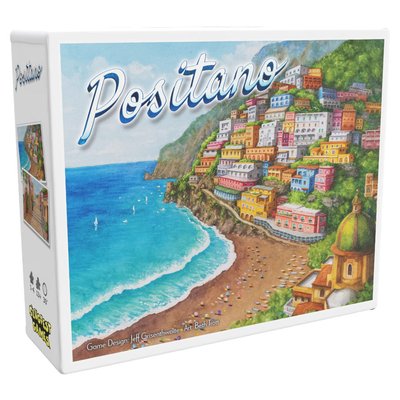
Hey everybody. Today I'm sharing my thoughts on a game that I think deserves much more of a spotlight. A game that left me very impressed. Um, one that feels much more like a a hybrid between old school Euro games but with a modern twist and a great table presence. And the game I'm talking about is called uh Positano by Slugfest Games. one to four players, a 30inut time frame to play this one. Now, um this one, it does say one to four players. I think due to the nature of the game and how interactive it is, um for me, I would stick to that three or four player mark just as a kind of a um an asterisk before even considering that player count. Um I've not played it at one or two players and I must admit I don't really have an interest in doing that. And once I explain the nature of the game and you see the nature of the game, you will definitely understand why. So, uh this is I suppose you can call it like a bidding um game with a bunch of I suppose you can call it area control going on. Um and this one you are basically building up this town which you can see from this lovely postcard box art. Um with these uh buildings and you're building them into the rock face which comes in tiers. So, you've got four tiers um on this rack that you are populating um with yours and of course your opponent's buildings. And what you're trying to do, it's a very clean objective, which I really like, is that you are trying to have um as most
presence visible um from that front view perspective. So, um, as you can imagine, as these buildings get taller, um, some buildings will cover up and block buildings behind it, which is, of course, what you want to do and what you want to prevent your opponents from doing, uh, to you. And the way you acquire and you um, kind of gain your spots on this rock face is through this bidding system, which comes in the form of these cards. Now, these cards will have three bits of information on them. Um, each relating to a different tile that you will draw. So, the top number will be relating to which plot on that rock phase you'll be building on. The second one is how many blocks you'll be getting from the general supply into your own supply. And the third one is um how how many blocks you can build or how how tall you can build and also um which roof you can put on the building which will dictate how many points that building is worth. The bronze roofs will be worth um one point per layer. Uh silver will be two and gold will be three. Um and a big part in this game is making sure you have this sturdy flow of building blocks available to you.
Otherwise, you will run out of steam and just have nothing to build. So, it really is about striking that balance balance and getting the kind of right lot for you at the right time. And as you can imagine, the way that these cards are broken down, it will normally mean that you're either quite well balanced or you'll be really strong in one field and weak in the others. So, you know, maybe you really want plot 3C. Um, but doing that will mean you're only going to get one building block this time because the chances of you winning that bid is going to be quite low. Um, but on top of that, you have this extra layer of these booster cards. So, when you play these bidding cards, not only are you committing to that one, you can boost it with another one which will add numbers onto it and which can push you above the other players, but again, once you've spent it, you've used it, you'll never get it again. So, you want to strike when the iron is hot, when it suits you, um, and not waste those more powerful cards. But at the same time, if you want to use weaker cards, you might get some few a few bonus points at the end of the game. So, I like the way that every moving part in this game is important. Um, I like the way that at the same time you are trying to of course have that visible presence from the from the front view. Um, you also need to factor in these public objectives. So these objectives could be things like um you know get two points for every different uh different height of building that you have or for every building you have on the ends or every ones you have in the middle columns or have the most buildings in a single column. All these things are pulling and
pushing against each other. And of course you want to minmax that with the bidding cards you have um to get as many points as you can. And this is all happening very rapidly. And the game only takes a few rounds to play. you know, a 30 minute time frame for a game like this is so impressive. You know, the the gameplay comes thick and fast, but again, it feels like you're playing a full game. And right now, those are the games that are really singing to me. I love having a full rich game experience in a short time frame, so we can get more different types of games played. And Positana might be one of the strongest examples of that. You know, feels that you're playing a really rich game um in such a short time frame. Um, as I said, the the production and the table presence of this game is fantastic. It looks great when it's set up. And it's cool that you can just look and think, "Oh, you're you're going to build extra here. You're going to cover this building up." And, you know, maybe you know that your opponent has a has a gold building here. Therefore, I'm going to invest really heavily in this building, so I can build as high as I can to block as many points from you as I can. Um, so it has that cool almost like barrage feel where you can build higher up the mountain or or you know in this case lower down in order to try and not only help yourself but hurt your opponent but not in a particularly malicious way. You're simply trying to help yourself by weakening them. It's not it's not just um reckless take that um style of gameplay. So yeah, the time frame spot on. Um three or four players scales brilliantly. Um, I know there is an expansion to add more players on,
which I'd love to try, but I don't think my group would be that big. Again, the time frame is amazing. Um, I love the way that, you know, each game you're going to play this, the tiles will come out in a different order, meaning that sometimes you can use those weaker bids and still get a good um good um lot from that as well. So, again, it's all about trying to leverage those cards at the right time for their maximum output, and I tend to really like games that do that. So, I think this game has a has a really clean rule set. Has a nice fun um kind of energy to it. A great table presence, as I said, good decisions, but not not like paralyzing decisions. Um and it's kind of those games that you can play well, um but at the same time, you're not going to be racking your brain getting bogged down in analysis paralysis. It just kind of has that lovely approachable vibe to it.
um which I think works perfectly for this game. So um definitely one of the surprises of the year so far for me. I think it's a wonderful design. Again, if you like those old school clean rules um style games, I think you're going to get a lot from this one. And I think even like non-gamers or gateway gamers are going to get a lot from it as well because it looks so cool and that rule set is so approachable. So highly recommend it. Um hopefully um if you didn't know about it, you might know about it now. um as you know, as I did, I wasn't really sure. I thought I'd give it a go. It looks up my alley and it ended up being that way. So, again, definitely recommend um Positano. So, hopefully you have enjoyed that video. If you have, please be sure to hit like and subscribe to the channel. But for everybody else, I'll see you next time on Chairman of the Board. Bye-bye.