Middle Ages Review - Balance Is Important...But So Is Power
Games in This Video
1 game is featured in this video — it unlocks as you watch.
Transcript
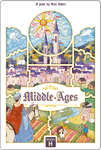
Hey, I'm Alex Wat from Board Game Co. Today I'm reviewing Middle Ages by Studio H. Middle Ages is a two to five player tile drafting game in which across four ages, sort of ages, there's 16 rounds, four tile drafts per round, events, all those things, players are trying to optimize their score by placing tiles into their own grid and seeing how they all interact with each other and the other players. Before we dive further into the game, this channel is currently sponsored by Allplay. More about them at the end of the video. But with that said, in Middle Ages, like I said already, you are playing through 16 rounds. Each round, you're going to have a row of tiles. You have one more tile than the number of players. So, a three-player game, we have four tiles. Players are going to be taking their lords, placing them on tiles. In order to take those tiles and place them onto their own display, this is going to be a player's display board, and you're going to draft a tile. Let's pretend I'm red over here. I'll take this tile, and I'll put it into its matching row. Then, I will take my person and I'll move it somewhere to the next row. In this case, looking at this row, I definitely want some of these. this. No, I want I want this for later at the end of the game.
So, let's go ahead and place this down here. Also, my cat wants one of those as well. So, you're going to place that down onto your grid. And then from there, you take this doing the instant effects of this tile. So, for example, you always have an income effect. This tile says that you get one coin for every single one of these person symbols. You can see them on a variety of tiles across the board. So, if I had any of those, I would get one coin for each of those. Then, you also are going to get two coins over here. This is the always income effect. These are sometimes income, sometimes other things. I'm going to get two coins for every one of these tiles. In this case, I have one. So, I'm going to take two coins from the display. That's a turn. You take a tile, you do its effect, you do its income effect, and then move your lord to the next row. And then repeat that that system across 16 rounds of play. So, for example, place this over here, place it over here, remove all these tiles. They'll go off to the side, and then in the next round, that player's going first. Now, these tiles are ordered from least powerful to most powerful. There's numbers on the back in which you can see the relative value of those. So, there's a degree of going first guarantees you earlier access, but it means you're getting a slightly worse tile as you draft those onto your grid.
Now, the reason you're taking all these tiles is you're trying to build a cohesive strategy both around the tiles themselves as well as around the cards that are going to be happening at the end of every of the four tile drafting rounds. Like I said, there's 16 tile drafting rounds grouped up into groupings of four. You have four tile drafting rounds, then an event. Four tile drafting rounds, then an event. Do that. That's basically the game. So, you're going to take these other tiles over here, and we'll just go through some of the abilities of how these all operate, so you understand the basic back and forth. But for the most part, they all give you an income effect, giving you income for their own tile, and sometimes for other tile types. For example, these two tiles pair nicely together because this will give you two points, two coins, which points are coins within the game, for every one of both of those. So, getting a bunch of those can be very, very helpful. going for that and then possibly trying to get over here over here. There's two of them in the next row. Possibly trying to get that. That could be a nice strategy that you build your up toward build your way up towards. Then as far as the abilities, because the abilities are not always income, but they can be. This one gives you one coin for every one of these symbols you see. This one has you stealing two coins from every player who has less windmills than you, fewer windmills than you. Over here, this allows you to rebuild a tile that was destroyed. There's a few things that will destroy tiles, both various events as well as attacks from other players.
This let you rebuild one of those tiles. This one allows you to reserve a tile. You take your marker and you put it onto any future row and you reserve that tile so you can have it for the future. It's also worth noting, by the way, you do refill the rows as you go. So even though you're working your way towards the bottom where the event will happen, you do see the future things. We would have placed more tiles out and you could have reserved from one of those as well. Then over here, this one's going to give you a coin. So it's another one of those income abilities for each treasure chest symbol you see on the board. And over here, this one's going to have you taking coins and destroying a tile from anyone who has fewer. This is a little more complicated. You have this attacking war tile. This is a defense rampart style. Anyone who has fewer ramparts, then you have warfare tiles. That's the gauge there. So, you're not comparing like tiles. You're comparing offensive tiles versus defensive tiles and possibly destroying their tiles and taking money as a result. Over here, these two are my personal favorites.
These one modify your personal uh scoring. So, for example, if you take this tile, you get to take this and you can add it on to the bottom of anything. Now, I get three coins for every one of those. And this one is the same idea, but this time you can add tile types. Now, I get three coins for every one of those three tile types whenever I place one of those. So, it allows you to modify the basic income structure of those tiles. That's the general back and forth. The only other thing to cover is really the events. Events take place at the end of every four rounds, like I said already. And they give you things like this. This one will give you three coins for every church or three coins for every palace that you have. Sometimes they'll have you destroying tiles. Some will have you giving you points or things like that. Coins. Again, coins and points are interchangeable. And that's basically how you play through a game of Middle Ages. Which means it's time for my review of what I like, don't like, and see others not liking and all of that. In general, this is a simple, straightforward tile drafting game. And it it comes with the charm and the fun of a simple, straightforward tile drafting game. You draft tiles, you work your way towards your strategy. It's fun to try to focus on certain things and build your way up towards getting a lot of points, but also, and I didn't mention this, at the end of the game, you lose 10 points for every one of the eight tile types that you don't have.
So, if you only have five of the eight tile types, you're going to lose 30 points. You also have to weigh out a little bit of variability to make sure you're trying to hit as many of those as possible. You want to build defensive so you can both get the points for building those tiles and also so you can not be attacked by other players. The windmills are nice because they can kind of be an offensive and a defensive play because if you don't go for windmills, people are going to be stealing from you. If you do go for windows, you'll be stealing from others if you are able to have the most. And so it's basically just trying to tie in, okay, I'm going to draft this tile. And then you try to think through, okay, well, on this row, I really want this one over here or this one over here cuz it's earlier. The problem is on this row, I really want this tile or I really want this tile. In order to guarantee that, I have to go earlier. So there is that that push and pull of do you take the tile you really want or how many turns in advance are you thinking to try to sequence through guaranteeing the right order of tiles.
both guaranteeing through guaranteeing, but also reading the other players and seeing what they're doing and making educated decisions about which tiles they're likely to go for. So, there's a lot of trying to push or pull as far as how you build things out, how you plan several turns in advance. And again, these variable events, that's going to give you a lot of additional strategy towards playing towards because one game you might like going for again these two. These two are a fun little pairing over here. On the other hand, based on the events, that might not be the most efficient pairing. So, you do have to try to figure out the best way to make the patterns happen. given the variability of the events and given the variability of what other players are drafting for. You can't just walk in with a strategy. You have to be able to pivot and adapt to what the other players are doing in the game as well. As far as what I can see others not liking, as far as what I don't like, don't like is first. As far as what I don't like in the game, first of all, I don't think it's great at two players. I think some of the back and forth, you could argue there's an extra level of strategy for some of the back and forth stuff. I just find it less less fun overall as a two-player game and a little more chaotic at higher player count. So, like this is a two to five player game. I think the sweet spot is really three to four players. And honestly, I think three players is what I like the most, but three to four players is where I would call the sweet spot. Also, the bigger issue with it for me is that even though the events add variability to the game overall, I don't think they really change up the gameplay. Meaning, I do think Middle Ages is a very charming game, and we'll come back to this more in final thoughts, but I think it's a very charming game that it's like, oh, look, a fun new tile drafting game. But then when the shine of a new game wears off, I don't think there's a lot of actual extra things keeping this here. This just a good tile drafting game. There's nothing wrong with it, but there's not a
lot that makes it variable. The strategy, you can kind of get a sense of it after a few plays. I think I've seen most of what this game has to offer after a few plays. It's still light and fun and charming, but it's not wowing. As far as what I can see others not liking, in general, the game can be a little mean. Like, you have to be okay with the fact that this is a game where you're going to lose some tiles, lose some money. like there is some back and forth interaction between the players. There are some really clever moves you can pull off that make me like the game but might be less fun for you where depending on how you draft certain tiles. You work your way through a sequence. You plan around things. You might go through a run where you get like two or three attack tiles in a row and just really destroy other people's kingdoms. This game does have that. For all that is a light, fun, accessible tile drafting game. It has a little bit of a bite to it. As far as final thoughts on Middle Ages, I kind of touched upon this already, but Middle Ages is a good game. I've enjoyed my plays of this. It's a fun, simple, easy to play game and it's one of those games like shout out to Board Game Arena. It's on board Game Arena as well. And I imagine it's one of those games that'll go into my board game arena rotation because those are easy, fun games to play in the background. And this is an easy fun game to play. But I do think that it took like I don't know three, four plays for me to feel that I'd seen the main things that this game does. And again, that shy is there of ooh fun new like I like games. So sumi this is why I do what I do. I like board games. And so I find something new and I'm like this is fun. But then I also have to weigh that up against all the games I personally have, the games I've played.
Games that are so many amazing, incredible games out there. And I don't think Middle Ages does anything amazing and incredible. It is a good game that checks the right boxes. It's fun to play, but there's not a ton of variability to the experience, so it doesn't really keep you coming back to it once you've seen what the game has to offer. Overall, it's a 3.5 out of five. I think it's a fun game. If this is your first tiled drafting game, I can see you falling in love with it and uh holding on to it for years and years and years. For me, it's just another good game. As far as other game recommendations, first out, check out, first of all, check out Let's Go to Japan if you're looking for another kind of game. You have to build all your symbols that's a little bit more peaceful and easygoing, a little less attacking other players. Also, check out Cities from Dvere Games. Cities is another tile drafting game, another fun, light, charming game. And then lastly, I mentioned that Allplay is a channel sponsor. If you go to allplay.com, you can find a variety of games from both Allplay as well as a variety of other publishers they work with. You can check out Sorcerer City from Ju City Games for another tile crafting game with a little bit of real-time element as you rapidly try to build your own areas out. It's somewhat unique in a space that has a ton of tile drafting, tile building games. Sorcerer City manages to feel pretty distinct despite that. In any case, and until next time, I'm Alex Radcliff from Board Gameco. Hope you found this review helpful and as always, I hope you have a good one.
Cut it.