Moon Colony Bloodbath - Friendly Ties Podcast
Games in This Video
1 game is featured in this video — it unlocks as you watch.
Transcript
Hey, it's been a minute since our last episode. Welcome to Friendly Ties. We're going to jump into the abyss together. Today is Moon Colony Blood Bath.
So, Moon Colony Bloodbath is a Donald X game of of Dominion fame uh that that just came out this year. And he still said to himself, "I'm going to do a deck building thing, but what if I did it in a strange way and everybody shares the same deck?"
Yep. And everybody dies. That, too. I'm just envisioning putting one of those spherical helmets on.
Yep. Getting ready to go die on the moon. Oh god, the theme doesn't sound as good out loud.
Yeah. Yeah.
The theme is aggressive, right? like it's it's this very
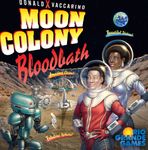
retro art style.
You are all going to die because the robots are are rebelling and and are going to kill you. So, the way that this happens in the game is that you shuffle into the this public deck these events that say, "Oh, there's a leak or this killer robot is on the loose." and, you know, cleans cleans up all the the trash, but also cleans up the humans on their way. And so everybody loses, you know, such and such many people. Um, and then you run your way through the whole deck where there's a combination of good things, normal actions that you can take, and then horrible things, people die, and then you reshuffle the deck and run through again.
Yeah. Yeah. And mechanically, I think that's fascinating. It's the first thing that really drew me to it. But I do agree that the art style in the setting can pull a lot of um attention. First of all, I love the art style. I like retrofuturism anyway, and I like tongue-in-cheek uh humor, which this game has uh just coming out of every single centimeter of the cardboard in my opinion. But
including the rule book.
Yes, including the rule book. Yeah. Um but from the mechanical perspective, you have to put yourself in the mindset of destruction. Uh this uh somebody actually brought to mind Empire's End when I was playing this once. Yeah.
Um as another game where you are spending the game destroying whatever you have and Empire's End, which we talked about in an episode long time ago. Um you started with a great thing and it died.
Link in the bio.
Yeah. In in this one though, like you start with nothing and you make it and so you feel even more ownership like look at my baby. I got this little combo going and then it all it all it all goes
well. There's there's kind of like three things going on here, right? First, you have this this theme, love it or hate it. Some people are going to love it or hate it. Then you have what we just talked about this destruction, which I have been calling the Empire's End mechanic. And then the third thing it's got going on is this communal deck building concept that's happening, which is how I have often pitched the game because it's a very for me that is the most truly unique thing that I've never really seen. You know, every turn you have one deck in the center of the table. you're going to flip it over and you're going to do what that card says. And just just the makeup of every single game is so different because of what you add.
Yeah. Mentally, I've sort of uh I've I kind of describe every shuffle of the deck as a new round in the game and there's there's an indeterminate number of rounds.
Interesting.
There can be like a finite number where the game will end, but usually will end on some other end trigger um before then. And what happens is you run through there's four cards in there you really care the most about. That's where you get to take like your actions and you get to decide, do I want to get money? Do I want to get food? Do I want to draw cards? Do I want to play a card? You know, your sort of like basic euro decision- makingaking point honestly in terms of that like action selection. Four of those in the deck that never ever changes. And then everything else that you get that gets added into the deck is either positive events that you're putting in maybe just for yourself or maybe for everyone or more likely just negative events that everybody needs to share. So all of the rounds of the game, quote unquote, basically just get longer over the course of the game and the amount of the the density of bad stuff versus I get to take these actions I care about um dilutes over the course of the game. And so uh I that round structure has really helped me to think about how do I want to approach this, you know, game in this reshuffle. What are the things that I need to be worried about? And then how many actions am I going to be able to play to to like build up my system before I get there?
Yeah, it's kind of a a tricky thing as in it tricks you or it tricks me anyway where the beginning of the game, the deck only has eight cards and you know, four of them are the works. So every other card flip you're like, I get to do something. I'm going to take some money. I'm going to build something. Everything's awesome. And slowly but surely you realize, wait, how long has it been since a work has come out? because you're like four cycles into the deck and and yeah, you could pull like eight ten cards or something like that off the top of the deck. And I mean, we just played a game right before we started recording this episode and uh it was the worst play of a player I have ever seen and that player was me.
You keep playing.
I feel like unfortunately this is a bit of a theme. Didn't we just have this happen in like one of our last episodes where we were like maybe? Yes, it is. It's true. I just noticed that.
It might have even been uh El Paso, too. or John.
Spoilers about my feelings on this game. I still had a lovely time playing this game. But um the game ended really quickly cuz the game ends as soon as somebody's entire moon colony has been bloodbathed and nobody nobody is left alive and that happened to me very quickly. But a part of that was because of the shuffle in that last quote unquote round. We actually looked through it and you know all the good stuff was buried at the bottom and the bad stuff was on the top and and I just kept getting beat down beat down and then and then the game ended and we could have maybe gone another round or two like I was really close to stabilizing but um but that didn't happen. I was like teetering on the edge and then a robot came along and shoved me. Well, I think it's important so to step back a little bit and and we'll we'll talk a little bit about the components that kind of go into this deck makeup, but the kind of arc of the game to kind of pay to build off of what you were saying, Nick, about the rounds, indeterminate end, but what the endgame trigger is is when you run out of colonists on your moon or people basically. So as you everyone starts with the same number of people. All of your buildings that you build house a certain number of people and then you slowly destroy that's how you're destroying your engine is you end up starting to destroy those buildings for people. And as these cards come out they just kill a number of people. They just continuously minus people is is what's happening as the game goes. And so the endgame trigger is when one player at the table runs out of people. And it's
funny that, you know, you talked about that idea that we, you know, we could have gone on because in this particular game, you know, John,
you two were doing great.
Yeah. We both were had engines that were going, we were both like sad the game was ending because we our engines had not reached the kind of like if you're thinking of this like the mountain, right? We hadn't crested the summit and gone down, right? Like I mean, we we were starting to, but yeah. Jonathan had like fallen off a cliff. And it's it's funny because that that that happened in the two-player game that Nick and I played uh the first time we play first time Nick played this and I just, you know, fell off and died. And Nick Nick had like built this beautiful engine and he was like, "Uh, are you are you cool if we just kind of like keep going? Like I want to see how far I can go." And I was like, "Absolutely." And so then it was like almost like co-oping. And I mean, I was just sitting there like flipping the cards for him being like, "All right, can we make it? How far can we go?" Cuz you know, like, and he did.
He made it. Cuz there are two ways for the game to end. The other thing that can happen is you can make it through all 13 events. And when I say events, again, it's like they're just the first couple do something interesting, but the the rest are just like killing more and more people all the way to the end. And that is the other way the game can end. Yeah. Exactly. 13 events that come over and over and over again. To to abstract it slightly, people are points. Like if that wasn't super clear, this is a game where you start with 30
points and you will go up and then and then yeah, the second half of the game is just the game
punching you in the points like losing points, losing points and and that's definitely a mindset that you have to be prepared for, but that's a that that's something else that we'll discuss.
Yeah, I I really like Anastasia. you said like crusting a mountain in there and that definitely fits like my mental schema of of how this game is looking right cuz it's a little bit of this like you know tableau builder you're better at actions you know and as Anastasia was saying when you play these buildings they have people on them so you're getting more points as Jonathan is saying and you're getting better at the actions that you can take over the course of the game and so you're you know rising everything is getting stronger this feels like your traditional Euro game and then the deck just gets so stuffed with bad things that you kind of hit this point where things are getting destroyed. You have to start tearing apart your engine. The part of this game that I think is really wonderful is that that engine tearing apart component may become a flat nose dive like Jonathan was just describing for this game. Everything starts falling apart. Things continue to be bad. You can't pull out of it and boom, game is over pretty much like immediately for that player and then by extension for everybody else. But it's also possible for you to kind of hit this um equilibrium it seems where your engine is getting torn apart and ultimately the speed of it getting torn apart is likely to overcome the speed that you are playing new things. But it is possible for a while for those two things to be in like kind of direct tugof-war with each other. And that's the part of this game that for me is the most satisfying.
um you know, we haven't hit the acceleration of death. We're not just getting stuff and it's the it's the part of this game that feels the most unique to me and I really enjoy that phase of the game.
Yeah. The kind of staying alive like element of it, especially as you're pulling things apart and then suddenly you're like, "Oh, and then I put this card down and it's it's it's got a ton of people. Okay, I'm safe for a while." Or depending on what comes out of the deck. It it is it's just it's just kind of a wild ride, frankly. um and and a very unique game experience
to uh lean into the point that you just made, Nick. Um that like sweet spot in the game, which you know, before it all goes downhill, which is also fun. The way you can keep up with this is synergy. Uh you know, we've talked about the deck building a whole bunch. Um but it's I think also easy to overlook that fact that this is a tableau building game. Uh, one of the primary things that you're doing is um some hand management with a hand of potential buildings. You have to discard them a lot and then spending money, which is the main resource in the game to put them down. And they do stuff. Sometimes really cool stuff. Well, I mean, generally cool stuff, but sometimes you can get combos that are particularly awesome and almost seem broken's the wrong word, but it's all about trying to make a combo that makes you feel like you're broken as you're trying to, you know, keep up with these robots that are just amassing and amassing and getting worse and worse, trying to stem that tide. And the reason this game was so short that we just did is I drew air. I just could not find a synergy.
I have my game in Nick. Yeah, it does.
Yeah. And you know, there's there's a lot of randomness in this game. Um, you shuffle up the draw deck and then you draw randomly buildings from the top of the deck. So, again, that's another thing. You have to go into the game knowing, you know, sometimes if you're even highly skilled, you it just might not be, you know, in the cards, so to speak. That being said, I'm pretty sure I pushed it. I I I I definitely could have played this one better. I'm not going to blame the deck entirely on this one.
Yeah. I mean, there might be those little edges that you could or could not get along the way, but I agree that the randomness of this game, and I don't mean from the deck that you reshuffle, the event deck. I mean from the, you know, the tableau card deck that you're drawing from, which is a different deck. This is not the deck that's shuffled. It's the cards that you draw that you get to play. And those cards are all over the place. They're all exciting in certain contexts, you know? It's not like I've I don't think I've drawn any card and been like, "Wow, this is a total dud." like every one of them does something neat, but if you don't draw into those synergies or if your opening hand is, you know, very expensive or very cheap, you're going to have a very different experience throughout the course of the game. And I do think that it is worth acknowledging that like no matter how good you get at this game, it is going to be quite volatile. I think that the game can get away with this level of randomness because of the speed of play.
Yeah.
Yeah. Yeah. I totally agree with you. I think the the length on this game is kind of perfect and it and that that is because the tension of that tempo like how long do I have to kind of build before I before either the game is going to start causing me to lose people or the play space is going to cause me like I had actions that I was like I had was building my engine and things were going really well for me and I was like cool I'm going to do this at the next work and then I'm going to do this and I can survive anything bad that happens and I kind of John is over in the corner being like, "Guys, the game's going to end soon. Like, I'm really I'm dying. I'm dying." I'm like, "Yeah, yeah, yeah. John, like you're fine." Like, I know, you know, I played this game a number of times.
I'm not saying I'm not whining. I'm just telling you this game is about to end.
Yeah. I was like I was like, "Yeah, people say that. Like, it's fine. I know it's hard to lose people. You'll be fine." And then I was like, "Oh, no. He really means it's going to end. Like, I then needed to adapt and like I got to get I got to do this now. I don't have time. But again, it's like, you know, it's one of those games where you finish it and you can easily reack or be like, cool, let's go to the next. Like it just it it just fits that midweight.
I'm not even going to call it. It's like light. I think this is like this is the kind this is my kind of filler these days. My kind of fillers are 45 minutes like
quick teach like 15 minute teach. Yeah,
it does require like knowledge of games like gamer maintenance. It's like I don't think I'd want to like sit down and play this with my grandma who's like and I add how many money when I take the mind action like oh
yeah I said my kind of filler Yeah. Not this not this is not a filler for non-gamers now.
Yeah. Yeah. And and you know it it does speak a little bit to the game's uh interactivity. the fact that most of the actions are simultaneous, right? Like it's it you can see how other people are playing and you want to have a sense of how they're performing so that you can see this arc of the game. That's kind of the primary interaction. You can throw cards in the deck that you think will be slightly worse for them and better for you, but for the most part, it's like bad for everyone. You know, like we're we're all sinking or swimming together in terms of the deck construction. And so you are really just trying to like build your own little system. When John's saying he's dying, there's no way for me to be like, "Oh, let me extend the game by giving him, you know, there's no interactivity in that kind of way.
It can't save him. Can't save you, buddy."
Yeah. Yeah. And sorry. And and you know, it the game I think just acknowledges that like the again the speed of the game. it can get away with the fact that it's kind of this low interaction because uh you're just gonna you're going to whip through and then be able to compare and then there's sort of like an ahaha or like oh nice little combo you had going over there or Jonathan told a story where you played a game where someone was like explain your combo cuz I have no idea how you just pulled off what you did.
Yeah.
Yeah. Yeah. It's definitely the interaction is that play space, right? Like it is it is it is being with a bunch of people where like the card comes out and you're like no we got hunger like or whatever you know or this is killing my people or this I had to destroy this building like it
it's not that interactive in the game but it is in terms of the the the being around the table.
Yeah. Exactly. This actually brought an interesting thing up in my mind in the game we just played and it's kind of a combo thing to something that Nick mentioned as well because you said that the WBC is actually going to have this game.
Yeah.
This year, right?
Uh the World Board Gaming Championships and it brought to mind some things that hadn't occurred to me when considering playing this game competitively. Um, I think you could play this game really well, of course, but from an interactive perspective, the the pretty much only interactive point is somebody's going to trigger the end of the game and when does that happen? And you know, this game doesn't come with shields or anything like that. And Nick, you've only played this on tabletop simulator so far where all of our tableaus are next to each other, like literally like an inch away from each other. They're all in the same orientation. So, it's very easy to glance over and see how much stuff that person has, maybe even take a look at their combo. But this was my first play on tabletop simulator. All my other five or so plays have been in person. And it's even more solitire than what you've experienced essentially. Like you're looking across the table and you're like pretty much the only thing you can track is wow that's a big pile of money and you have how many buildings
and it kind of
it kind of ends there. And again going back to the the competitive aspect I in this play I I was leaning in. I was just like red alert, you know, I'm dying. I'm dying. But like I didn't need to do that. I could have died in silence and because I but you know, I could have just been like, "Oh, by the way, the game is over." And both of you might have been like, "What?" Especially if we weren't playing on TTS, if we're playing in person around a table,
you can get so like if you're doing well in this game, you are so focused on your combo and the card you desperately want to get out, you not caring at all about what anybody else is doing. And like I think Anastasia would have still won this game if she hadn't played that card. Um I think it was a 16-point card and you had 38 points to 18. But still without that you had like 22 points to 18. And if I had been silent radio silence, you might have put like a twopoint card down that was good for engine and then been surprised. And that could potentially have even tipped the arc of the game. So, I leaned into the fun of of the the theme, the atmosphere of the the getting brutalized by all these robots, but it actually it actually affected things like like it it potentially pseudo kingmade, which is just funny. Like I could imagine the atmosphere being so different I guess for most games in a ch uh in a competitive truly competitive tournament type setting, but I could just see like the silent version where like you know there's no radios on the moon and and I think a huge thing about being competitive in this game would be how many how many people does everybody have like all the time. Like that would probably slow the game down to a certain extent. the more competitive you are at this game, the the the longer and maybe worse experience it would be. I don't know.
No, I mean I think that's a really interesting point because in a lot of ways like I consider this game to almost be like a party game like like again a gamer's party game, right? like because it is one of the the rare games that I have that I think plays up to five and still feels like and can be played in 45 minutes and still feels like a real game. And
does it go up to six? Actually,
no, it goes up to five, but actually five.
I'm going to make an argument in a minute that it could go up to six.
I I could make an argument that it goes up to 10, right? You just get two copies of the game, play them at the same time. Like, what would get in your way?
Well, sure. But I've actually played two, in quotes, six player games of this. Oh,
it's it's actually kind of
one of which I was in.
One of which Anastasia was in. It's kind of funny. I was like, how many games of this have I played? Two of them I did not play. I really like this game. And so in two different settings, we had six people and I was like, I want to teach this game and I will watch everybody play it and I'm going to have a great time. And and people like, no, no, we should split up, do a three and a three. I'm like, all of y'all want to play this game and I would love to do this. And yeah, so the the first game that Anastasia played, you were one of the five people and I flipped the cards. Uh, you know, and I I read the the dungeon.
Yeah. I was like, "Yeah, and I like I read the flavor text on the cards." I was like like leaning into it. I had a freaking blast.
I had such a And I did it again like just a month ago or so. Same exact situation. I was traveling uh six people. I taught it to five and I spectated essentially the whole game. And I I had so much fun because we leaned into that partyish game vibe. Again, that's a big overstatement. Like it isn't party game, but we're laughing, you know? We're like leaning in and I had a great time.
That that's what that's the unique space that it that it fills for me. Like because I So I will So I'll put this out there. I so I played this two-player with my partner and we did not have the experience I had playing it two-player with Nick where I just died and then you know the game was over and then you know then that was fine. What we had was just a slow painful death where I was clearly winning and she was not winning and but she was staying alive just enough for the game to go an extra 15 minutes, you know, or just longer than it, you know what I mean? Like
just to give you more points.
Exactly. like it was like she was not coming back but the game was also not ending like an entire another reshuffle or round as we've been calling it and that I think is a byproduct of two players because you don't have I I personally feel like I'm sure there people disagree but I personally feel like this game is best three plus because there isn't that fun there isn't that laughter of like five people around the table and someone is clearly losing and like they don't care because it's hilarious like my experience is playing this. Now, to be fair, I played it twice at five, once at three, and twice at two. So, that's all that's all you got, but that is five plays. And I my five player games and my three-player game tonight was just so much more fun. Like, it just, you know, we we had a lovely time with it. It was a good game, but I just think the laughter and the just just leaning into that party game element is what made the game for me.
And I think that kind of actually is what gives it the the shine uh even more so because the the mechanics themselves are cool, but a lot of the their coolness is their uniqueness and their newness. And then after that kind of wears off a little bit, you know, it it is that table experience for me that that that makes this, you know, such a lovely game to play.
I think that the um the rule that the game ends when one player dies is doing a lot of heavy lifting here. First of all, I think it's just a pretty standard like modern game design thing with a game that has player elimination that you'll call the game once the first person gets eliminated. So, you don't have the I'm sitting there for 20 minutes problem waiting for everyone to finish. Y
great. That to me seemed like just the baseline reasoning behind this, but I actually think that there's a couple more additional emotional things that that's doing. So, one is especially in like a goofier theme like this one with the sort of like subtext of violence or just o overt text of violence. There's no subtext here.
Blood bath.
Yeah.
Um you you you have a little bit of that like, well, I lost, but I took you all with me, which isn't really true cuz your bases are still there. But the fact that the game ends feels like there's kind of like a finality like my death made the moment. So even though I know I know I'm dead last place right now, but I still have some people. Yeah. Yeah. We all went down together. There's a certain sense of like that sinking ship there that I think, you know, is a little bit better than that sense of
the long plauded towards loss. And then I want to cosign that I think that this game is
uh far more interesting at multiple players because in in a tableau building game like this one, I think particularly with the kinds of cards that I've seen in this deck, you can look very early and be like, "Oh my god, Anastasia has this great setup there. I don't have absolutely no idea how we're gonna catch up. Like we are gonna lose this game
to her. Yeah. But because of the fact that the game ends when some player dies, you actually have plenty of circumstances in this game where someone can have the most powerful system, the most powerful, you know, stockpiled resources and everything like that, but then the game ends before they get to like really come online or bring the full system to bear. And so that player may not win. Having the best start uh does not necessarily snowball you to victory because if the game went on forever, yes, it would. But because there's sort of this finite nature not controlled by the player who is leading. Uh there there can be a volatility to it. And I imagine that when you're very skilled, you're supposed to pay attention to that. But at the level that I think most people are going to be playing this game, you you can't tell that. like it's going to just feel a little bit more chaotic. I think that's fun. Uh but it's it's definitely something that that changes the the the flow of the game.
Yeah. Yeah. And I think we should like take a minute actually, this a little late in the podcast, but to just step back for a second and talk about the types of cards that go into this deck because that's the other thing that kind of changes that player count is that you're going to maybe add more events or more things are going to go into communal deck by the nature of it being a communal deck. And I actually think this is one of the other really simple but also very very smart things about the way this design has come together and the infinite replayability which of course you know has those echoes of Dominion. This is a very different game from Dominion but you can kind of see how there there is sort of similarities in terms of taking a single box game and giving what does feel like it's going to feel vastly different every time. And the reason why is because we talked about talked about the work cards. We talked about there's these 13 events and they come out in order and they're the same events every time. That does not change and the four work cards. It's always four work cards. That doesn't change. But the things that do change is there are three other types of cards in this in this game. We've got robots and one of the events adds a robot. It's an early event, so you're going to get several robots because again, each time you shuffle, each round, you're going to you're going to see that event, you're going to add a new robot. Well, this deck of robots is really thick. And robots are just bad.
I think there's like one that like maybe gives you like a, oh, we killed a bunch of people and here's like a little thing, but they're just increasing levels of badness and they uh they're also really funny when you read them. It could be super on theme. It's like minus seven people and you get a box and you're like, "What's in the box?"
Well, why? Yeah, exactly.
I read one and I I wish I could remember what it was, but it really is like it's like Yeah. The robot is like like like trying to like open the door for you and like just like it just murders a bunch of people while opening
a kitchen robot that somehow gives you food. Don't think about it.
Yeah. Don't go. I hope that like if the theme turns you off, you're not listening to this podcast anymore because like it's just like you you've just got to lean in. Like it's just where it is at. Like there is there's no coming back. So So you've got these robots and then the other one is developments. We keep talking about the buildings that we are building and many of those cards will let you add a development which is just again another set of cards that are static in the game but there's a bunch of them. And so that's what I was saying that could be, you know, these get added and with more players more developments might get added and those are sometimes bad and sometimes good. So it it again it just kind of changes but they again they change the game.
And the last thing though and this isn't driven by the players but by the setup is just this fat deck of twists. And in every game you're going to play with two twists and that's it. You're not going to add anymore. They're just They literally are what they say they are. They twist the game, right? And so it's just
two cards that
are gonna completely change. Yeah. That that are going to completely change the setup because they go in your initial starting deck. You've got four work, you've got you've got your two twists and you've got your first event or the card that adds an event and two cards that add an event, I guess, in that beginning deck. And that's that's it. That's your that's your setup. And so when we talk about the replayability in this game, it's just it every I played it five times, Jonathan's played it six times, Nick's played, like several of those games we were in together. But every game I played has been vastly different and I'm certain has been vastly different from the games that Jonathan has played.
Yeah. Uh I mean you know drawing the buildings that big deck that you know the building offers that you have to build your tableau that is going to give you different opportunities to do different things but the twists really change things. You you actually reveal them at the start so it's not a surprise to anybody. And uh for example in the game that we just played one of the twists said that you have to pay one money for every building card you have in your hand. There's no hand limit. So you could have a lot of cards in your hand. And we're like, "Oh, wow. That's scary." Because you have to have buildings in your hand to be able to play them to make your tableau because your tableau makes people and people are points and people are how you
The way you defend against robots is make more people so that you you out you make more people than the robots can kill. And and so right at the beginning, I was like, "This is probably going to be a quicker game
because we're going to have less money because we're going to get penalized for having cards in hand." And you kind of have to have cards in your hand and that is going to be a vibe for the whole game. Then the other twist actually gave you money if you had six or more cards in your hand or six or more buildings in your tableau or six or more boxes. So right there we're like, "Okay, well don't hoard your cards for that other thing, but it's definitely possible to like try to dodge this thing and make money off of that thing." Whereas other twist cards are just strictly happy. I mean, I guess the plus three money for having six of a thing is happy. And so in some games it takes longer for the game to end for somebody to nose dive because it's less punitive. And that's just fine. It's just like it's the puzzle. Like the two twists are a puzzle. By the way, there is a way for another twist to go in, but it's incredibly rare. One of the robots.
One of the robots add the twist. Okay. I don't think I've seen it before, but anyway.
I think you're right. I think I've I think I've seen it like going through the deck. So yeah. Okay. Amend, you know, amend what I said. I think the initial twists make the most impact because you can say, "Okay, we're going to play a game where we're going to have, you know, for instance, a very lean hand this game." And that's I'm going to have to make my game plan around that. And uh the first game that I played, it was like, "Okay, you got rewarded for having boxes. So, I'm going to focus a little bit more on like this restocking manufacturing type of strategy instead." uh by the time the robots are coming in, problems are coming at you so fast and furious and you've already built enough of your Tableau that I don't feel like you're going to maybe adjust your planning that much. So, the way the robots are constructed is very fun thematically, but I think the amount that you're going to adjust your game plan is like very marginal in comparison to the twists which come right at the beginning.
We had a robot that made us
pass cards to each other. We actually had more player interaction this game. I had no idea that robot existed. We flipped it up and we're like
I already blocked it from
what?
Yeah, exactly. And I had no idea that that was even possible. So, right before that happened, I was like, "Oh my god, I love this card. I have so much. It's a flag. It's a planter flag. It costs nothing to play. It just gives you six money. Just plant a flag." And I was just like, "Oh my god, I love it." And then we drew we got a card uh paperwork that that would have made me discard all the other cards in my hand basically by the nature of how it works. And I was like it's okay. I've still got this one card. I'm good to go. Nothing else can take this away from me. Next card robot that that yeah that made me pass it to Nick. And next thing he did was plant my flag this colony. But that also that's another mechanic of the game. Every time a card gets added to this communal deck, it goes on top.
So, it is the next thing that is going to come. And I guess someone explain perks because that is the other cool communal thing that I didn't even mention as I was explaining all the cards.
Well, perks are explicitly not communal, right? It's a they're cards that everybody everybody has a copy of the same possible perks, but if you have the if you get the ability to add a perk, which just comes from all these buildings you play into your tableau, then you shuffle in a or you add a card on top of the deck that gives you and only you a bonus every time it gets drawn.
Yeah.
Which feels good,
but it's still part of that communal deck building, right? Yeah. Like it does feel good. And when you don't I have played out of my five games, two games where I just never had cards that gave me perks or they just didn't play well with my strategy. And both times I've been like, I want perks. How come they have perks? And then I I've played other games where all my perks were in like too many perks. Like I was sick of getting perks. Like
but it speaks to that that communal because everything goes on top. And so then yeah, you're it if you add a perk card, the next card that comes out is going to be that perk. Or if you add an event, the next card that comes out. So
you add a robot, the robot immediately comes to visit, you know, everyone.
Yeah. So, I think we've covered this in general, but I do think it might be interesting to talk slightly more about the mindset of this game. Not necessarily like, haha, we're laughing and everything, but the the negative thing, the like losing points, the getting punched thing, you know, it's uh I think a well doumented phenomenon that people are a lot more upset about uh getting five bucks and then having two taken away versus just being given three bucks. And this game definitely leans, you know, partly because of the the the title and the theming of it into that taking stuff away uh element. Uh in particular, we didn't explicitly say this, but you have people tokens. And when you run out of people tokens, the only way to get more people is by destroying your tableau. So, you rip your tableau up, there's people on your your your the card you just removed, and they run back to the hub of your colony, and then they get slaughtered as well.
And I I know that a lot of people have bounced off of the game because of that feeling of like, hey, what are you doing? It would like how is it fun to like make a thing and then I just draw random cards and say - 7 -4 - 5 - 3 - 3. I think it's just an interesting thing to mull over. Like is it really just leaning into the the funny? Is it really just the emotional environment that you're fostering? like almost like a role playing game.
Yeah, it's I mean it's interesting, right? Like there's definitely a certain perspective like Feast for Odin, right? Your board starts off with all these negative points. You're supposed to cover them, but there's something about like you look at all those negative points. There's another older game called Last Will um by Suchi. And the the idea of that game is uh is Brewers Millions. You're supposed to spend as much money as possible. The first person who spends all their money who goes broke wins the game. Uh, and so it's got this same sort of negative victory point structure. Personally, it those kinds of things don't like affect me because I I'm able to like take the artifice um out of it. I do understand that it has sort of that like other people are are more negative to this impact. And I think that is probably why they landed on this particular theme for this game and the campiness around it. There's there's a and it's the same with Last Will. There's a making light of loss that uh I think makes it feel less bad or at least that's that's the idea with the campiness of the theming is is my perspective.
That's a good point.
Yeah. Yeah. I completely agree. I mean I I you know unfortunately I I've had several friends um bounce off of it. Um I it's actually my partner enjoyed the play but felt similarly like it's just like it the feeling of losing all of the stuff just didn't feel good like it it just and I think you know I already talked about that's why I think at two players you know it's not as good as three or four or five you know where you're having more of that table experience of just kind of leaning in or I I kind of like what you said John about the like role playing or just kind of like just really attaching yourself to that theme. And I think you're absolutely I think you hit the nail on the head, Nick, that that theme is what allows that to be, you know, by making light of that by laughing, by kind of experiencing this, you're not it's not just, okay, I'm building this thing. I mean, that that is unfortunately kind of what held me back from Empire's End is because it has a much more serious theme. And it's like I I thought it was so interesting to play a game that that that is destroying your thing and the tension and what you're feeling. And we we talked a lot about this in the episode that we made about it, but it's also like it is a mindset. You have to go into that game knowing everything is going to be destroyed. And and if that's an emotional experience you're looking for in, you know, in a game, then or or or willing to explore in a game game or gaming space, then then that's great.
But in Empire's End, like one of the reasons I haven't gone back to that game is because I I often find myself being like, do I want to go through that? Not really. Like, you know, like I experienced it, right? And it's sort of like I would rather play a game where I'm building something and, you know, and and and it's not being taken apart. And I think that that is very much at play in this game. And it's one of the positives of the game is, you know, we we talked about the work actions and that element of the game is actually really satisfying. The buildings that you build kind of augment the actions and so you can make a little engine. And so like I had something today. I was like, "Oh, when I make food, I also make money." And like all of that feels really good. So in a way, one of the strengths of the game is that that part of it is really fun. But then at the same time, once you start having to destroy your individual buildings, well, this beautiful engine that you put together is no longer going to function at its prime. So, you immediately feel this like, oh, well, I I was getting money every time I made food, but now I'm not anymore. And so, it's like I can see why that rubs people the wrong way.
Like,
yeah. Also, Empire's End, you're ripping it up all game long for like 90 minutes to two hours.
In this one,
100% barely.
You're ripping it up for like 15 to 20 minutes.
Yeah. And just the back end.
And there's also the emotional thing in Empire's End of like you flip the thing over and it's on fire. Here you just get rid of it, you know? Like it's there's there's like a difference of like looking at your failures versus like ah it's just getting small.
Yeah.
And this is a credit to the game. There's also a lot of the buildings have when it's destroyed, not a lot, but a good number have like when it's destroyed, do something great like and I love that too, right? So, the game does make it better as it's going. So, I don't want to like I don't want to harp on this destruction feeling. I just want to say that I understand why people feel like why some people feel that way and bounce off of it. That just hasn't I think been the case for any of us.
Yeah. I think that if you can't if if you if you know that you're a person who can't get past that, I don't think there's much reason to to like dive into this game and try to convince yourself to like it. Um, I do want to say though, we've talked a lot about like the theme goofiness of it and like that laughter as being a big part of the joy. I think that you can enjoy this sort of like theme if you're like theme agnostic and you're just kind of like looking at for a mechanical puzzle. Like it's not um the math is not like crazy tough, but there's that like quadratic equation of like I'm building up and now I'm getting pulled downwards and that like push pull there can be fun if you are a person who's just not into theme at all cuz we have spent a lot of time in this podcast like highlighting our joy has been in this like this this like silliness this theme of it. Um so true I do think there's a value if if if you don't care about that. Also, this game you could play solo. Like, it it technically supports one to five people on BG. A whole bunch of people have actually recommended it at solo. I'm not sure.
I can see it being really fun at solo. Like, just the challenge of it of just being like, cool. Like, let's run it. Like, I mean, honestly, I had the same experience Nick had in our first play after. I was like, "Well, can I just see how good my engine, you know, like you're not going to do that like, you know, often?" But there is that feeling of like I think that experience is actually going to be best solo like and I can see why this would be a really popular solo game or may may endure as that because that that feeling of being like what can I build and how long can I stay alive is going to be very strong um in in the solo game
and you can win. That's the thing. There's
exactly no Yes, you can win. there is a win event then it's like congrats you all survived the blood bath. So it's like it's this little this is this carrot at the end of a very long stick
100%. It's not just like yeah how many people they get. No no no you can win. You just and and it creates a great because those 13 events don't change. It does create this this this this like accomplishable thing that you can measure yourself on like oh I got to eight I got to nine you know we got to 13.
Yeah. Well, I think it's been a joy, honestly, introducing this to people and playing it as much as I did. Uh, I actually had a bit of a sneak peek on this game. Uh, that's because I got to play test it a year before it came out. And I remember being breathlessly excited about it uh when I played it in I think February of uh 24. And I remember in that play test, I was one of the people who died. And I had so much fun with it. I've been looking forward to it for so long. So, it finally came out and it's great that it wasn't just a one-off experience. Like, every time I've played this, I think it's been a great time for everybody. I don't think I've seen anybody fall off of it just yet. But also, I really lean into the laughing. Like, I laugh a lot and maybe that's contagious. I don't know. Um, the fact that I've taught and spectated this multiple times and would happily do that again is I think a factor for me. Like I can't really think of any other games on our shelf that I would happily do that for. Uh like actively push that as an option if people are curious. And also speaking of curiosity, I just love peing people's curiosity with it. Like I I like I want people to experience this to try it to see what it's like cuz I found it to be refreshing in a whole lot of ways. Even though the rules are pretty simple, uh it's just a raw fun kind of game that is still pretty euroy that gives you some cool comboy potential sometimes. I know the times it almost feels like uh you know yatsi and you just can't roll the dice to uh to save your life but it's just life. Yes, exactly. Literally save your life. Uh so
ultimately I'm super happy that I have it. I just talking about it right now gets me jazzed about it. I'm really glad we got to play it tonight.
As you could probably tell from us talking about it, I I quite like this game. I think that it um is good because it's short. I think that this if this game was longer that the um edges that I didn't like as much about it or weren't as impressed from like a mechanical standpoint would would stand out for me. But because of the arc of the game, I think it really nails that. Um again, there's like a really nice game design moment in this where when I win a game, I feel like I won because I was smart, but when I lose a game, I feel like I lost because I was unlucky. And so therefore, the game protects my ego as I play it. And like I I do actually think that's like a clever design on the game's part and like is something that um Donald has done a very good job with in in the feelings here. I also really like this single deck system and I would love to see other games try to do this.
I've seen this in one other game that completely fell on its face trying to do this, but other than that, I don't think I've seen this kind of idea somewhere else. And I think it's a very clever evolution uh in terms of figuring out like how sequences and like actions can be determined and played out that have a fair amount of randomness, but players have an understanding of what to expect and kind of try to play to to manipulate things around that. And so I really enjoyed that system and I'm hoping to see more of that in the future. To me, that is like the standout like innovation of this game that I'm I'm really excited about. So, um I do think it's it's well worth people's time, especially since it doesn't take a lot of your time. Uh and uh hopefully the the negative victory points thing and the the bloodbath theming is not uh too offputting. And just to be clear, if you haven't actually looked at the art of the game, the blood bath is like a name that I think probably does it a disservice because the art is very
is very like cartoonish. You know, there's there's nothing in it that you're like, "Oh god, like I I can't believe that's on here." I don't think there's a single drop of blood in this game.
Not one.
No. It's got that very like um 1950 This a video game that it kind of looks like uh the one
Fallout. Yeah. That kind of a Fallout like vibe. And it's funny because the the only time that I felt kind of weird about the theme is in the last hour us talking about it. Like somehow us talking about it without like looking at it. It just like it's a different vibe than when you're looking at it and and and playing it. But um I mean I think you guys said it perfectly. You know it it may not this may not seem this way uh based on how often I'm like I'm going to go buy this game when we we're recording but this is one of the few games that I bought in the last year or two like just just a new game I should say. I bought lots of old games uh in my endless quest for the hidden gem uh that I've never played. But uh this is my the one of the rare new games that I bought just completely set unseen just based on what Jonathan had said about it based on the mechanic. I just heard like communal deck builder Donald X like I looked at the art and I was like I'm in. I need free shipping. Like let's let's get this. And I I try not to do that frankly because I've done that, you know, I've been a gamer a long time. I've done that a lot. I have a lot of unplayed games on my shelf and I don't like that to happen, right? And this what I love about this game is that I did that and then I played it five times. Like I you know my copy taking it I took it to a game night. I got everyone to play. It's just a game that people once you start talking about it they're like oh that's really interesting and just like you said Jonathan like you want to share it.
You want other people to kind of experience this innovative mechanism. And if you do like the theme it kind of just draws you in. It's really easy to get to the table. I've really enjoyed my experiences with it. I The only thing that I will say is that, you know, this is probably a game that I have have played as much as I'm going to play my copy of. I'm never going to turn down a game. I love that. I think I've played it with everyone who wants to play it. Um or, you know, and it's I have zero regrets. I would buy this again. I would tell everyone to go buy it. Go buy it. Play it. It may be one that endures on your shelf and it's just like, "Oh my god, this is such a laugh. I want to pull out." And it may be one where you're like, "That was super cool to experience. I love that. I saw what it did. I had a great time. I played it with everyone." And then you're like, "Cool, Donald X. What's next?" You know, and great game.
Uh, so that's going to bring us to the end of Moon Colony Bloodbath. Uh, if you are checking us out in podcast form and you want to join the conversation, you can head over to YouTube and drop a comment over there. We'll have a couple things in the description as well, but thanks for listening and see you next time.
Bye
bye. Bam. Bam.