Natera: New Beginning First Impressions
Games in This Video
1 game is featured in this video — it unlocks as you watch.
Transcript
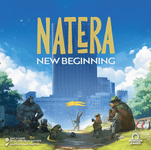
hello everyone and welcome back to the board gaming doctor my name is Phil and I'll be your board game doctor today now I normally space out my videos in order to give me myself some time to play games and to gather my thoughts Etc and just because I'm so busy but I've had the opportunity to play this game on tabletop simulator and I couldn't wait to talk about it and so that's a hint of how much I enjoyed it so this is nata New Beginning this is a 2024 game currently on Kickstarter and as you here are the stance for the game highly rated so far from the people who have played it I don't know how many so 80 people have rated it 54 have left comments most of them very positive I'll get into a little bit of a peer review later but uh yeah so this is published by Horizon games designed by Eric fugar and Hugo play Le do and now I want to show you what the game looks like so this is the game on tabletop simulator anyone can go and play it I think during the kickstarter event which is ongoing and you can play the intro version which includes these four factions I believe there are four at least four more that you can play with so as a quick overview in this game the theme is uh things happened and animals are now sentient and they rule the world very similar to a
situation like zootopia so you can think of this as zootopia the board game and this game utilizes worker placement and hand card management and Resource Management as well to have the most points at the end of the game it's played over four rounds and now to talk about some things that are pretty unique that I enjoy about this game first is the deck of cards as you might know I really enjoy games with a lot of uh decks of cards and so I haven't gone through all the cards but you have a basic deck that has about 70 cards in it and about or like 80 cards and 60 cards or so I don't know it's it's a a good range of cards that you have you have basic cards that give you more resource production type of effects to give you extra actions during the game as well as you know less points but you know for more ramping up to be able to to play these Advanced cards which give you more points and more not just straight up points but more ways to score points and other benefits as well you either have two or three workers depending on your faction that you can place out onto the worker placement board and the second thing that I want to mention that is somewhat unique to this game is the revealing of different worker placement spots during the game it's a dynamic system where as you you play workers onto a certain
quadrant of the board you advance along that track you can advance through card effects and Etc but as soon as you reach a certain tier on a track you can flip over uh two more variable worker placement spots that vary from game to game and the same thing goes when you reach tier three so there are variable ways to play this game you explore the uh worker placement spots that you have available and the other good thing about the worker placement too it's not just limited to the three but there are many card effects that I've found that let you take extra actions with your workers but you can also take actions to spend your resources which there are six of uh six different types of to place Cards into your Tableau which have immediate effects uh on ongoing effects for production from round to around as well as extra actions that you can take on your turn if you meet the requirements I also failed to mention that you can purchase these cards where um the there are certain helpers or animals that can help you with extra actions if you spend the right resource you can take that action as well in addition to activating when it's purchased the last thing that I want to mention is this uh variable re or Texture tree or science track basically it's a tech tree that you can advance on
where you start at the bottom which usually gives you a track to advance on for production and then you get a lot of onetime benefits typically during uh the advancement along this track and then at the top you can score points at the end of the game as well so and this is uh double-sided and modular that you could randomize or potentially even draft as well so there are other things to this game like Milestones that you can chase if you reach the top of the tracks you gain extra points uh if you're farther ahead than anyone else on tracks you get points at the end of the game and that is kind of it the rest of the game falls into the cards and what they allow you to do and what they allow you to pursue so with that let's go ahead and I'm going to switch screens over to some games that I think this game reminds me of now the first one that I thought of was revive more so because I after you know hearing the theme of the game as well as looking at my own Tableau I had uh reminiscent thoughts of the way revive kind of plays the action is different revive is more of a hand or a card action selection type of game but they're kind of is an element of exploration in both games more so in Revive on a shared map versus the work replacement spots that you're quote unquote exploring in Nera but there's
also kind of a little puzzle that you solve with your Tableau to reactivate effects on your own Tableau in revive to create a sort of engine to gain resources and points with and that was kind of reminiscent with the tech tree and now that I'm talking about this too the tech tree really reminded me of games from uh Jeffrey CCH that if you are following this channel you know that I really enjoy games like age of civilization age of Galaxy and his latest kickstarted game uh epochs so really like that but the more I played this game the more I thought of a lot of the comparisons that the peer review comments really made mention of which are games that utilize worker placement not necessarily just deck building in particular but games that allow for hand management and card play in addition to worker placement so that's going to include Dune Imperium you could talk about terraforming Mars which I believe is an inspiration for this game as well as arkn NOA a lot of those popular games that have large decks of cards plus some additional major component for driving the board game however out of those popular games I think this one lost runs of arnac is the closest uh reminiscent game uh to what I feel Nara is trying to portray or in how it plays because along in both games along the way way the beginning of the game is very tight right you don't have as much progression
where you you feel limited with the limited amount of workers that you have and the cards that you can play and the resources that you acquire and can use but as you play cards out and explore the board more and Advance along those tracks then the flow of resources will increase the more cards you acquire and place down usually the more uh cards you can acquire later on and have more options to play with and essentially both games occur in a set number of rounds where each round you take turns until you pass and can't take any turns anymore or don't want to and so there's a lot of flexibility to what your turns and rounds look like the order of operations in which you try to execute the options whether to place a worker on the board or whether to place a card onto your Tableau how you convert some resources to others in order to achieve what you want to both games allow for a lot of flexibility and a lot of abilities to feel clever in the way that you structure your turns together to create some sort of Combos and there there is an element of combo uh cascading in NATA as well that you might find in other games like lost rooms of arck and other and like arcn NOA for example but I really felt like the turn structure the sense of growth an exploration for different worker placement spots and different options that you have to take when it comes to placing workers out to converting
resources and advancing along tracks as well was it felt very similar to Lost Runes of far for me and then if I had to compare any Uber Rosenberg game as you know I love Rosenberg games and can try to make comparisons at any time I'm going to compare this to holler toow because Nara and holler toow really rely on the cards that you draw and the combos that you can create with them sure with ag grica you have a huge deck of cards and other Rosenberg games as well that you can draft from or play to create a lot of different card combos in the long run throughout the game but I feel like holler toow does something a little bit different compared to Rosenberg it gives you a lot of card flow or attempts to give you a lot of card flow also mixed with worker placement rather so it's very similar mean meally compared to Nota but the way that you draw those cards and the combos that you can potentially create with them allow for a sense of like that Rush of of excitement when you do finally put two pieces together and can chain a few cards and work replacement actions together in a Smart Way helping you feel like you've accomplished something pretty cool uh and and solved a little mini puzzle each turn in how you chain your your cards and actions together I get that feeling from holler toow where a lot there's a lot of emphasis placed on card draw and chasing after those objectives that you see on your cards
and in both games in Nara and holler toow the cards themselves are quite unique Nera here and so there are lots of cards especially the more advanced cards that have different ways to score points for example um this beloved leader card if you collect a lot of those helper cards you get more points by doing by collecting them and spending so it helps you focus on a certain goal very similar to the points cards in holler toow uh you've got icon set collection as well I failed to mention that earlier which is very similar to terraforming Mars and Arc NOA that help you reach certain Milestones as I've mentioned before and uh yeah some of these have onetime effects too that are very interesting and unique and sometimes very edge like they work in an edge case that might really benefit you or you might just play them for the points and so I love the flexibility the and I really enjoy some of the Thematic influence for some of these cards too like I mean you can like this High tail card for example move your tribe leader to any location occupied by another tribe leader that's one thing that I failed to mention as well with the worker placement is that uh each each faction has a tribe leader and so if you place a tribe leader on an open spot no other token can go there whereas if you play a normal worker you can place
another opponent can place their normal worker on that spot too to gain the action spot but you it it's like uh it's it's it's the opposite of the Grande worker in VI culture where um this blocks off everyone else versus the other way around so so the cards I haven't looked through all the cards but I assume that especially these Advanced cards have a lot of flavor to them depending on the artwork and the thing that they're trying to depict and that is something that I really enjoy in games so for the peer review a lot of people mention this as well they really enjoy the comparisons that are made to popular games such as terraforming Mars and uh and the like uh there were a few comments about how this game didn't really come together for them like At first I I and usually I can see the point of view of a lot of people's uh more CR critical comments on board games uh a lot of these comments that are made on Board Game Geek at at this moment talk about how this game just felt like boring or it the the complexity wasn't there it was too straightforward and I I just wonder if they didn't have a chance to really explore the game all the way through revealing more of the these Advanced exploration cards to add a lot of unique abilities and unique things to chase during the game because there are I feel multiple paths to getting victory
points in this game you can really Chase these Milestone objectives and race for them uh you can place uh you know play a lot of cards out for example and synergize them for points you can build these settlements out as well which is a a small mechanism where if you place out a a little house on an action spot and if anyone including you goes there then you reap that benefit and so uh you can kind of build a small engine that way as well and you gain victory points in that regard the your own Tory you know how does that mesh with your faction there are a lot of different factors in a lot of different ways for you to scare to to gain points and scale up and that I I I you know I think there's a lot of variability to this game and a lot of um Pathways to gaining points and to uh feeling clever and so I join a lot of the positive comments that I seen on Board Game Geek where I think this game has a lot of potential this is one of the few games that I've played in recent memory where I learned how to play it and played round of it and really wanted to get back into it the next evening tonight where um I was just thinking about all the positive things that this game has to offer the rules set isn't very light uh the weight of this game is about three out of five and I think that hits very you know straight home for me because it's not terribly difficult to teach or to learn and especially being familiar with games like terraforming
Mars and um lost runes barnack Etc it made picking up this game a lot easier and the the nuances of this game may not be as you know wholly unique to compared to other games that are doing more Innovative things but I think everything that comes together here uh with cozy familiar mechanisms such as hand management and Resource Management worker placement um it it all comes together very naturally and I really enjoyed it and see this game having a lot of legs to being very replayable and very popular as well so I hope that this game gets a lot of recognition and a lot of support because I think this is one of those games that has a lot of potential for being uh very popular as it that could you know hinder it as well because it's so reminiscent of games that are popular and so there's hard comparisons to make when you make a game like this you have to compare it to some of the tried and true favorites and so I I I think though this game feels unique enough and is a great enough game that it can stand on its own so those are my first impressions of NATA New Beginning hopefully it does well on Kickstarter and uh go ahe go ahead and check it out if you are interested so thank you for Consulting with me today and hope to uh hope that you schedule an appointment with your board gaming doctor real soon take care