Stamp Swap - Board Game Review
Games in This Video
1 game is featured in this video — it unlocks as you watch.
Transcript
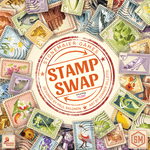
welcome to allies or enemies I'm Jess and I am Sean and today we are talking about stamp Swap and our copy was provided for review but the thoughts in this video are all our own stamp swap is designed by Paul Solomon with art by Connor Gillette and it is a one to five player I cut you choose game all about collecting and swapping stamps let's look at how it plays you start the game with an empty player mat a few tickets and a shared board full of stamp collecting goals at the start of each round draw one event card per player and lay out all of the stamps and cards shown also read out the special rule for the day then each round has three phases in the collect phase players take turns drafting one item at a time until they've got six new things in the swap phase each player reserves one of those things and puts the rest into two piles and then players take turns choosing any one pile from any other player finally in the show phase players add all their new stamps and cards to their player boards and score points for their exhibitor cards plus any one contest of their choice after three rounds of collecting swapping and showing players count up final points for the stamps in their collection Forever stamp majorities specialist cards and the finale contest card and then the greatest stamp collector is
named at its core this game is really about ey cut you choose that is the key thing you're doing you are drafting your tiles with that in mind of how you're going to split them up and then you're splitting them into two piles and it can be tough to decide what goes in which piles and a few key things that really make it interesting is that some of the tiles are upside down and what I really like is those tiles can lead to a bit of a metag game because no one well you know what's underneath them but no one else does so if you put one upside down tile on its own people might think oh that must be a rare stamp and must be worth a lot but you could be trying to fool them yeah yeah I I really like that and it's good that like you can't choose what's upside down they just come out upside down and then you don't even know until you've taken them then you see oh this is a minus three or this is a + 12 and then replacing them and it is so much about like past Behavior as well because Jess tends to try and trick me with the minus ones and so I just don't go for those and she knows that now so now every now and then she puts Something Awesome by itself and does exactly that and I and I'm just s such a sucker invol for it but there really is this interesting thing of like okay I know what these are so I can take those and I know exactly what I'm getting but what is that like that could really really be interesting and that so is like that human psychology that we're we're so like oh I think that could be
great and it is a risk as well because you could end up with either pile so you might just play it safe and try and keep both piles roughly even but there will be other things that will factor into how you split your piles as well because there are the different goals that you're gunning for so there might be ones that you're definitely more keen on getting because you haven't scored those yet there's also your exhibitor card that ties into your board or drafting a new exhibitor card and specialist cards as well those can make a big difference too although I will say some of those specialist cards do seem maybe a little overpowered particularly in like a two-player game yeah yeah I definitely thought that and the ones that I I don't love are the ones that actually kind of get rid of The Upside Down tiles because there's a couple of them that let you peek at those and it's I don't know if they're so overpowered I think they just they make it not as fun because that is such a fun part of the game and so I don't love taking that away and it two players cuz there's one that lets you look every turn and that means basically you're just going to know what they all are unless the unless the other player just drafting the upside down ones right away which isn't really the best way to play either so I don't love that one and then there was uh one other one as well that lets you put the rare tiles aside and those rare tiles are cool because they're worth so much and you're not allowed to put them aside those really become an interesting balance thing when you're making those groups cuz you can put put one of those by itself and put four other tiles that you want in the other group and there's a decent chance someone's going to take
that cuz it's like it's between eight and I believe 12 points so that's a lot of points when most tiles are going to be one or two and the other thing to look out for when you're drafting are the forever stamps cuz those don't come out often and there are big points for a majority but again those are like just one token tiles that won't necessarily help you with the gold cards yeah those can sometimes be really helpful though too all depending on those goal cards and that does play a bit into the replayability so maybe let's talk about that next so for the replayability I think probably the the biggest thing is those different goal cards and you've got endgame goals and then you've got four different asure playing goals and those endgame goals are quite a bit different so you can have ones that are for like differ sized holes and that's where those tiny ones can really come in handy because they can help fill in those gaps as well as ones for along the edge and there's all different kinds of scoring there the other four are a little bit more similar and there's four different styles of those theme shape color and cancelled but how those are going to interact and how exactly those ones work is going to be different each game and the other thing that will feel different too are the event cards at the start of each round event cards get flipped and that determines what's available for the draft and the last event card you read an instruction and they all have different effects yeah and those can be
fairly impactful too so those will do things like you just add extra things to the pool or you get to reserve extra things or you get to peek at things or all sorts of different stuff and there are quite a few of those and so those will make each of the rounds at least feel a little bit different but I think with this kind of game the main thing that's going to bring you back is if you just enjoy that core Loop because the main thing that doing is that I cut you choose and obviously every time you're going to have different piles you're going to be making different choices and you're going to have that metag game and I think that metag game for us is really the thing that has made us interested in continuing to play this yeah definitely the other thing that will make it feel different is the number of people you're playing with so let's move on to player count stamp swap plays for one to five players but we've played this almost exclusively at two and it works pretty well at two I think I cut you chose tends to work well at two at two players this moves at a real quick Pace because they're only three rounds in each round you're just doing one I cut you choose so you're kind of doing like three quick things of just drafting choosing placing three times that's the whole game so we can play a game of this in like 15 minutes obviously more players that's going to get a little bit longer yeah and at more players there's going to be more tiles available to draft so the drafting is just going going to take longer but it's also going to take longer cuz the decision of what to draft gets harder and then the splitting up
the piles there's going to be more people who are doing that and if you get anybody who has AP that can be a real challenge cuz it can be really stressful to decide like how to split your piles thinking about what each of the other players might want especially if you start trying to like math it out to like optimize it if you have any body who would do that that could slow it way down at least the splitting happens simultaneously though yeah and there CU there is a lot of mathing that you can do there's four different goals plus there's that endle plus there are the different cards that just score for certain cards or certain stamps that you have and there's making the shapes and there's getting groups like there are so many things this is kind of like a Calico is Al much much lighter than Calico but it has that same kind of decision space where you've got a lot of different things to think about sometimes there can be like a tiny bit of hate drafting or even like hatee keeping of tiles and so that can also get involved in that so you do I I would think you mostly want to play this with people who are going to play that a little bit looser unless all of you are playing like that and some people love that so then hey good on you go for it yeah it would just be a longer game also at more players there's going to be more competition for those forever stamps because those score by majority and so at more players you're more likely to have more of those come out out at two players we've had some games where only one stamp has come out the whole game and also at two you pretend like there's
a third player playing that has three stamps so you're probably only likely to score second overall there is also a solo mode though which I haven't played but you've played yeah the solo mode is designed by Morton monrad Peterson and the atoma factory and they do all of the solo modes in ston Meer games and they're generally pretty solid and this one has a deck of cards that is kind of deciding what the atoma does as well as you got three different boards that will decide you know which ones of the tiles that they're focusing on and they've got this interesting system where there's like a priority so they got these little heads you're putting on stuff and that's going to decide which ones they want to go for more but there is a thing that randomizes that as well but that does mean that there's a lot of mathing so we were talking about that in the multiplayer that you can get a bit AP this you can really get AP but it's just on you because there's no one you're holding up but boy I found I took a lot more time to play a solo game than I did to play a two-player game because I'm like how do I make them take this from the math and then that card comes out and it screws it all up for me and then I'm stuck with the ones I didn't want so it did work fairly well there is also a bit of a tricky that a lot of the scoring comes right at the end of the game and so which can be a plus or a minus but it just means that a lot of that scoring is going to be a bit of a surprise right at the end of the game in instead of it being kind of a more steady like your neck and neck all the way through the game so it just depends what you like but it is a full mode and a full
opponent in terms of components the star of the show is definitely the stamps which is what you want it to be I think they all look great I love the different themes and they all like captured the themes really nicely it's all double coated in terms of the theme and in terms of the color cuz our very first game we had a hard time just at a quick glance being able to distinguish the theme then once we realized like the double coating we were able to pretty easily tell them apart yeah I think the trickiest thing for me is I just pictured that I was using spaceships as Transportation all the time and space is one of the other themes so I would see that and be like Oh okay that's one of my vehicles and then I pretty quickly realized okay no in this game I'm not flying in spaceships I'm not I'm not a billionaire but yeah those those stamps are like they look really nice especially the special ones so the foil ones they all have chocolates on them I believe and they all have like a shiny foil that makes me it reminds me of collecting hockey cards yeah they are lovely other components include your player board where you're putting your stamps down I will say the grid is a smidge bigger than I would have liked it because you do want it to be a bit bigger than the tile itself but there are times like particularly when you're trying to score like the Four Corners matching that because of that extra WI wiggle room made it a little tricky yeah I definitely found myself trying to put it right into the grid and I was a bit frustrated that it wouldn't go exactly and I think for like normal people this
would be fine but remember we're dealing with board gamers who are also maybe stamp hobbyists this is like the most particular people that you could have I'm certainly one of those and so I I was a little bit annoyed by that also the tickets are great they look like actual tickets but are nice and chunky and I don't know what the link to stamps is but I do really like them as well the graphics and the iconography and the goals those are all really clear I will say the one thing and this is this is just a bit of a thing I've got with board games in general but I would have liked if there are numbers on all of the parts of the score track instead of every five numbers it just makes it a little bit harder to do your score and like Jump Ahead that eight when I can't just see the math it's such a little thing but please if all board games can just put numbers on all spaces I know it doesn't look as pretty but it sure does make life easier and that brings us to final thought so who do you think this game is for yeah so this is going to be for a few different folks I think the biggest group is well one of the biggest things we haven't mentioned about this game is it's a pretty light game I'd say this is one of ston Meyer's lightest games that they have in their catalog I put it kind of around the same space as between two cities and so this is really going to be for that kind of crowd for people who like a lighter quicker game but it is also going to be for people who aren't going to get too caught up in the mathing it out because you can really slow down this game if you want to which can be fine in some groups not so good
in other groups so just just know who you're playing and who you're playing with the other group that it's going to be for are for people who really like stamps I know there's a whole bunch of people out there who collect stamps or if you just want a different theme I haven't seen stamp collecting in board games before and I would say it's also for people who like a bit of interaction because the eye cut you choose mechanic definitely has that you are not in full control of what you do one of your piles will be taken so if you don't like I cut you choose this is not going to change your mind also we haven't really talked much about the tile placement but that part is interesting too cuz it ties into the goals and you only score three of the four round goals so it's an interesting decision about which one you score first cuz you're essentially giving up on that so there is a little bit of decision making but I will say overall this will appeal to people who want a quick light game with a bit of metagaming and that is it have you played stamp swap are you interested in stamp swapping stamp collecting are there other stamp collecting games out there we don't know about please let us know in the comments if there are and as usual please like subscribe and hopefully we'll see you next time for another game oh