The Hungry Gamer Reviews Millennia: Tracks of Time
Games in This Video
1 game is featured in this video — it unlocks as you watch.
Transcript
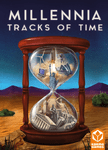
Oo, that looks tasty. Welcome folks. D the Hungry Gamer is back with another game review. And today we're talking about Millennia: Tracks of Time from Karma Games and designed by Juma Aluju, and I do apologize if I mispronounced that name. Welcome folks. Stay the hungry gamer is back with another game review. And today we're talking about Millennia Tracks of Time published by Karma Games and designed by Arestus Leon Titus, Mike Giorgio, and Juma Al Juju. And I do apologize for definitely mispronouncing some of those names. Additionally, thank you to Karma Games for sending me this copy so I can make this review. Now, this is a game that was not on my radar until one of my subscribers, Consumption Karen channel member, and she is Consumption Karen because she is the designer of one of the greatest strange theme board games out there, Consumption, now called Food for Thought. And she asked me about this game. Do I know it? What do I think?
Should she chase down a copy? And my answer was, I don't know what you're talking about. But I did a little research, checked it out, and I was like, "That sounds pretty cool." And as I said, they were kind enough to send me a copy so I can make this video. Now, what you see right now is a game in progress towards the end of a solo game. And what I thought I would do is kind of play through and what I thought I would do is play through my turn for this round to kind of show how this game works because there's a lot of things going on in this game and I thought that might be the easiest way to do it. But what this game is is a civilization game where you are building up your empire trying to get points. And it's called Tracks of Time because you're going up a whole bunch of tracks. And there's a little bit of stuff down here that I'll talk about later and little bit of stuff right up there you can't quite see. But to do that, you'll be drafting different technologies in each different era. And there's eight eras. You'll be building wonders. You'll be building buildings and going to war every turn and things like that. But at its core, this is a tableau building recipe fulfillment style game. Now, with that said, if you are not interested in how this game is played and want to jump into my final thoughts, then you want to go to the timestamp on the screen right now. For those of us still here, let's talk about how this game is played. So, each turn, you're going to have four actions that you're going to take and that will allow you to, as I said, draft cards or take other actions. And
that'll be the first phase of the game, which is called the drafting phase. And what I'll be using here, though, it'll be offscreen, is there's an app that you can actually use to facilitate the solo game. There's also cards, but I'm using the app right here, which kind of tells me what the bad guys I've decided they're bad and evil, what they're drafting. But so, it starts out with whoever's first, and currently in this game, that is me. I'm going to decide what it is that I would like to draft from over here. And meanwhile, you can barely see just up at the top of the board, there are two different combos of symbols up here. And as you can see, we have the two blue ones and the pink and the red right here. I'm sliding those back off the board like so, so I can see my tracks.
And those are going to be things that if I have them in my tableau at the end of the drafting phase, I'll get to go up this track right here. And that's going to be worth more points as I go through the game. And currently in my particular tableau, I have none of those. So I have to kind of decide, do I want to pursue those different symbols or not? And I think I do want to try to pursue those symbols. So what I'm actually going to do is I'm going to start right here. And I'm going to draft this card right here into my tableau. And then the AI will draft one and they're going to draft this guy right here. Then it comes back to me. And what I'm going to do is I'm going to come down here. I'm going to draft this money right here. into my hand. And you'll see I have these big coins here. That's just because in the two-player game, you actually that's just because in the solo game, you actually block out those bottom ones. And you should use components like these. But I just found this a little bit easier to do it that way. And it shows a little better on the screen. And the AI decides it wants this one. And next, I'm going to draft another one of these. I'm going to take this one here. And what this one does is in addition to being a technology I can use, it's going to actually give me the architect token, which means I get to build first and I get a little bonus.
I'll talk about that when I get there. The AI decides it wants this guy. Then for my last one, I'm actually going to hit one of these down here. And what I'm going to do is I'm going to use this special action right here, which is going to give me three research points. And I'll talk about those in just a bit. And then we move into the prosperity phase. And that's where we check to see if we've obtained the things that we need in order to advance this track. And as you can see right here, I have both of those symbols in my tableau. So, I get to go up one more, which means I'm going to get 20 points at the end of the game right now. Then we go to the income phase. And you're going to get paid out in various different ways. And for me, I'll get paid out because I have this telegraph technology which tells me that when I go up on this track, I get paid three money. But in addition to that, I look at my income, which is I get two for being here. I get three for being here with a total of five. And this is five, but it's locked.
But because I drafted the oil card, I've unlocked that payment. So I get 10 money for all of that right there. Then we move into the construction phase. And this is where I'll get the opportunity to build things from. Over here we have wonders up here which are going to give you point which are going to give you in-game points and they cost quite a bit of money. Then we have buildings down here which do various different things. For example, I get the embassy here. Every time I draw these diplomacy cards, I can draw two and keep one that I want. And what that means is anytime I draw one of these diplomacy cards, I actually get to draw two of them. Or maybe it is these yellow ones which are again in-game scoring type things. Though sometimes you'll have ones like this, this train station which is simply a technology that you have for the entire game rather not for the entire game until it expires. And I'll talk about that in just a bit. I'm going to use this here to pay three less. I'll flip that over and I'm going to spend 12 to get this flat tower. Then I go to the app or it would be a card and it tells me to discard this one right here. and it comes back to me, I can purchase again. And you see how that works. Then I'm going to spend eight more and get myself the radio station again for more endgame scoring. Then after that, we move into the action phase. And the action phase is something that is simultaneous when you're playing with multiple players. In other words, all of us do this stuff at the exact same time because we don't actually interact as we do this. And now there's a whole bunch
of things that you can do. And the bulk of it is are here on these tracks here. And you're spending your technologies. And again, you have these in your Tableau. And you can you tilt them or you flip them over or whatever it is you're doing to mark that you've done it. And that's going to allow you to go up on these tracks. As you go up on all these different tracks, you're going to get different benefits. I already mentioned up here. It's going to allow you to get more points. This here increases your income, which I forgot to do, so I should have actually gotten four more money. This one here, as you go up, it makes wonders cost less. This one does a variety of different things. It gives you money. It gives you diplomacy cards. Then you kind of choose which way you're going. Are you going the tyranny route or the non- tyranny route? And you get different rewards. You'll notice there's these books on here. And that's going to give you various rewards that change every single game. This is the war track. We'll talk about that in just a bit. Though, when you get to the end, every time you keep going up, you get points for doing that.
On the population track again, you're going to get a variety of different things as you go up. Importantly though, as you get here, it's going to unlock your ability to go down this way. The culture track will give you things like these joker technologies, which are used only on the turn that you have them, but they're wild again to use for all these different things. And then down at the bottom, you see the ways that you can use research. At the very bottom of the board, which you can't see, there are four of these cards which each player can purchase once. And then you're going to have some kind of bonus for the entire game. And they do a variety of different things. I'm not going to go through all of them, but this is what you have to spend in order to get those. And so what I'm going to start out with is I'm going to start over here and I'm going to activate this ability that I picked at the beginning of the game rather than the beginning of the round, which was get three research points. And so I'll just take one of these cards and I have three research points. And I'll go ahead and take that back. Then I'm going to spend this engineering to activate my university that I have here, which will give me three more research points. So now I'm up to six. Next, I'm going to spend both of these wheels again. Flip them over to get myself two more research points. And now I am all the way up to eight. Then I'm going to spend my food and my communication here to get a joker like so, which I will then use that tech to get myself one more of these research points. Flop that to here.
Next thing I'm going to do is I'm going to go ahead and spend three of these to use this diplomacy card that I picked up earlier, which is spend three research to get 14 points. Then I'm going to spend this six to come here. And I'm actually going to claim this spot right here. And that will allow me to claim one more of these research abilities. And I'm going to claim this one here, which makes this track a little bit cheaper for me. And now I have to do a quick pause because my other microphone has died on me. I need to change the battery. So, at some point in this video, you heard a shift in the way the sound is. And you're going to hear another one of those in just a moment. All right. So, back with the correct sound and jumping back into the game here. Hopefully, I didn't forget too many things. But, as I sped, I spent six to claim another card. And I claim the one that will make this track a little bit cheaper as I try to go up it in just a bit. Then I'm going to spend both of these to go up this track right here. And then because I got here, I will get four points for each one of these cards that I've claimed. And as I mentioned, I have now claimed two. And as I said, all the players will be doing those actions at the exact same time. I'll point out that down here you can spend seven to get one of those joker techs which actually I just realized I actually needed to do because
I did not have one of these symbols when I just spent that. I actually had this lightning bolt symbol instead. So instead of cheating there, I will spend the seven to get another one of these and that would allow me to advance up that track. Then I can spend any tech that I want, which I will spend that lightning bolt to get myself two bucks. Then once everyone has finished their action phase, you move into the war phase. And what happens is you look at this track here and the AI actually gets to advance one spot on this track. I didn't advance on this track at all that last turn. What happens is whatever player is furthest behind on the track, they reduce their track all the way to zero. So in this case, minus one. Then all the other players on the track, they reduce their total by that value as well. And so now I drop back to two. Then we go to the upkeep phase. And I'm not going to do the upkeep phase, but in addition to moving up the turn order, you would then get rid of all of the wonders that are on the board. This set kind of comes down. And so that's for this round. You replace all of the buildings with new buildings. All the tech cards get replaced with new tech cards for the next round. And these two kind of blockers slide down like so.
Additionally, you replace the prosperity things up here, which is going to allow you to move up on that track as well. And then the last thing that you do is you're going to check all of the technologies that you already have. And I'm going to zoom in on this so you can see. And so, as you saw, we just finished round six. And so, as I look at my technologies here, you'll see that it's good for turns six and seven. After round seven, I have to get rid of it. And so you'll see some of the other things that I've had. I had this medicine school which I had to get rid of last round. And at the beginning of the game, I got astronomy, which was only good for the first era of the game. And after these get used, you have a little put to sleep card. And you put all those cards there because a lot of the in-game scoring conditions that you're going to draft throughout the game will reference things that you have constructed or drafted throughout the game. And then after everyone has discarded any cards that are no longer valid and then they've refreshed all their cards, which for me is flipping them back over or untilting them, you're ready to start the next round. Hopefully playing through that gave you a decent idea of how this game works. But with that said, what do I like about this game? The first thing is this is a game that really has all of the parts that connect together really well. I'm not going to say it is easy to learn, but considering all the different things you can do and the relative length of the game, it is easy to learn because everything does make sense with each
other, I think. And that leads to a really good game flow to where you're just kind of playing through and then suddenly like, oh my gosh, we're halfway through the game. and you may have taken, you know, an hour to get halfway through the game or an hour and a half, whatever it is to get halfway through the game, but it feels like you're moving through at a really good pace. Next thing I'll say is the solo is very easy to manage and easy to play and it is fun because this is a game that is, and I'm going to talk about this later, that is mostly multiplayer solitire. There's a little bit of you can take a spot before somebody, but for the most part, this is a multiplayer solitire game. And it really lets you just kind of get in and play. And it's really easy. It's easy to do it with the cards that come in the box. And there's also an app that's been made that you can use as well, which is also very, very easy.
It's the same experience either way. It's just kind of what is it that you want to do? And I think it works really well to play that way. And I really enjoyed it. In fact, it actually rekindled a little bit my love of playing Euro games solo. I did a ton of it around the pandemic and before the pandemic. And then the past two years or so, I've done less Euro games solo. I spent more of my solo gaming time doing dungeon crawls and crisis management games and things like that. But what it really kind of reignited my joy in playing Eurogame solo because I think it is pretty darn good. Next thing I'll say is I really like the way the tableau building works both with the drafting and then also the purchasing. It's really really clever the way that it works out. But I like how you buy the buildings and they kind of go away into your I'm going to call it a graveyard.
It's not called a graveyard, but I'm calling it a graveyard. And you'll be able to get points for those at the end of the game. I like the choices that you're constantly making. And well, if I get this thing, that's going to give me the first player token, which that's really good. Or this one's going to get me the architect token. That's really powerful. But on the other hand, if I get this right here, this is going to give me more money. And then if I get this other one, I can even take the money that you get from the bottom section. So the choices that are in that draft of cards then and this stuff that you can buy is really really is really really satisfying and creates a really fun tableau that you're building and it's a constantly changing tableau. So I really really enjoy the way that that works. Next thing I'll say is I like the balance of the tracks. I mean this is a game about tracks, right? It's called Millennia Tracks of Time. So it's about the tracks and that's how you're going to win the game. And going up the different tracks is fun because stuff happens as you go up each track.
Different things are there. There's different things placed out on the tracks. The different tokens as they get placed out that really makes for satisfying gameplay and decently regularly. It's hard to figure out, well, ah gosh, do I want to go up this blue track? Is this going to do do this? Do I want to go up this kind of art and culture track or or this one or this other track up here? Do I want to really just kind of power up the military track knowing it's going to go back every time? Just the way the tracks work and what each track does as you go up. It is really satisfying. And when you combine that with the way the Tableau works and it's constantly changing, it makes for a nice bit of brain burn. But because of the way the tableau works and because of the way the tracks work, it's not an analysis paralysis inducing brain burn for the most part because you just don't have a ton of choices as you go through.
that tableau is going to be cycling itself through and you're going to only have a few choices each round and I think that's really really clever. And the last thing I'll say is as I just referenced is the way that your cards age out. They go away every few rounds. And thematically, I really like that because my biggest problem with civilization games is at the end of the game, I can be doing space travel, I can have a teleporter, and I never got beyond coal powered energy, and there's always that disconnect to me. But in this game, you get your technology or whatever, and it's yours, and it goes away after a few rounds. The way I view that, and I don't know if this was the intention, but the way it works for me in my brain is yes, you have an advantage of that. You created it. You're not sharing it, but eventually it gets out and now everybody actually has this thing now. So, it's no longer special. That's why you use the card.
And I really like how that works. It makes this the first Civ game I've played that thematically doesn't take me out of the game because of the way the drafting works. And that brings me to what are my quibbles with the game? Well, the first thing is it's not hugely thematic. This is a mechanics forward game. And even though the way some of the mechanics work strike me as more thematic than every other save game I've played, it's not a highly thematic game. Next thing I'll say is it's a little bit longer than you think it's going to be. It feels fast, but this is not a fast game. Now, this is not a 3 plus hour game. I think this is going to fall somewhere in between the 2 and three hour range. And for me, my sweet spot is around two hours. So, it's a little bit of a longer game. And if you watch the beginning of this video, it does seem like things move along at a pretty good clip. It is longer than you think it's going to be. Next thing I'll say is the game has a single arc. And kind of the big buzz word the past few years amongst reviewers has been discovery and replayability. And you're going to every and every time you play this game, it's going to be the same experience. The difference comes from what are you drafting? How are you attacking the different tracks? What are other people drafting? How do the cards come out? And they've done a good job of mixing it up a little bit with having the two sides of the board. I didn't show you that, but there are two sides of the board that can be used in all player counts, which changes up kind of the placement of some of those tiles that you put out.
Also, there's a whole bunch of different tiles. So, as you go up the tracks, there's different rewards. And so they've done a good job of trying to mix it up so it is a different experience every time. But this is a Euro game, so you're going to have the same experience every time. So there's not a ton of discovery in this game. There's not a ton of replayability in the way that we often think of replay-ability, which I think is a croc of garbage anyway, but whatever this and what you are left with is a game that really to me is about skill and mastery and reacting to the situation that you have, which for me as someone that enjoys the idea of reacting to what is on the table, I really do think is clever. I really like the way that that works. And the last thing I'll say is this game has a bit of a learning curve to it. I think the first three times I played, and to be fair, some of those were solo, but the first three times I played, I think my score improved by somewhere between 40 and 80 points each time. So, [snorts] you're going to find yourself getting a lot better game to game, which means you have to sink a couple of plays in before you feel like, ah, I know what's going on. Because this game has a plus 400 point token. That means in theory you can get to 499 points. Now, the best score that I had before recording the beginning portion of this video was I think like 187. Now, I've played several games since, but that's where we were.
And I've still not topped out past 250. But there you have it, folks. That is Millennia Tracks of Time. I like this game. This is a game that one of my channel members, Consumption Karen, she's called Consumption Karen because she designs this wonderful board game called Consumption. Now it's called Food for Thought because Consumption was a terrible name for a game, but I love every part of it. So, Consumption Karen, she happens to be local to me. And she asked me, said, "Hey, Hungry, do you know this game?" I said, "No, I don't know this game." And she said, "Yeah, I didn't back it and I kind of wish I did, and I'm trying to chase down a copy on eBay. I'm trying to decide if I should do it. What do you think?" And I said, "I don't know." So, I kind of looked into it a little bit and I just reached out and said, "Hey, can I cover this because it did look pretty cool and if there's a Euro game that Karen Knoblaw is saying is a good game, then I'm going to listen." And so, got a copy and she was kind enough to come over and play it with me and just was a blast. I really enjoyed it and I'm so happy that she asked me to cover it and I'm so happy that Karma Games allowed me to cover. In fact, they sent me another game too that I'm going to get to down the road, but really enjoyed it. And I think if you are someone that likes Civilization games and you are like me and are like, man, thematically they always kind of fall off [snorts] the deep end, this one doesn't do that. It's relatively quick.
It's very, very satisfying. You have lots of crunchy choices throughout, but because of the way your cards peel away, it's not a ton of analysis paralysis you're going to be faced with. It's just really tight, really strong, and a very good game. if you're looking for a civ style game and you like drafting and tableau building. So, there you have it folks. That is Millennia Tracks of Time. As always, if I made any mistakes in the rules overview, please let me know in the comments with the time stamps. Don't get that into clicking on subtitles. If you found this video useful, please like, subscribe, share, maybe become a channel member. As always, thank you so much for watching. Have a wonderful, wonderful day.